
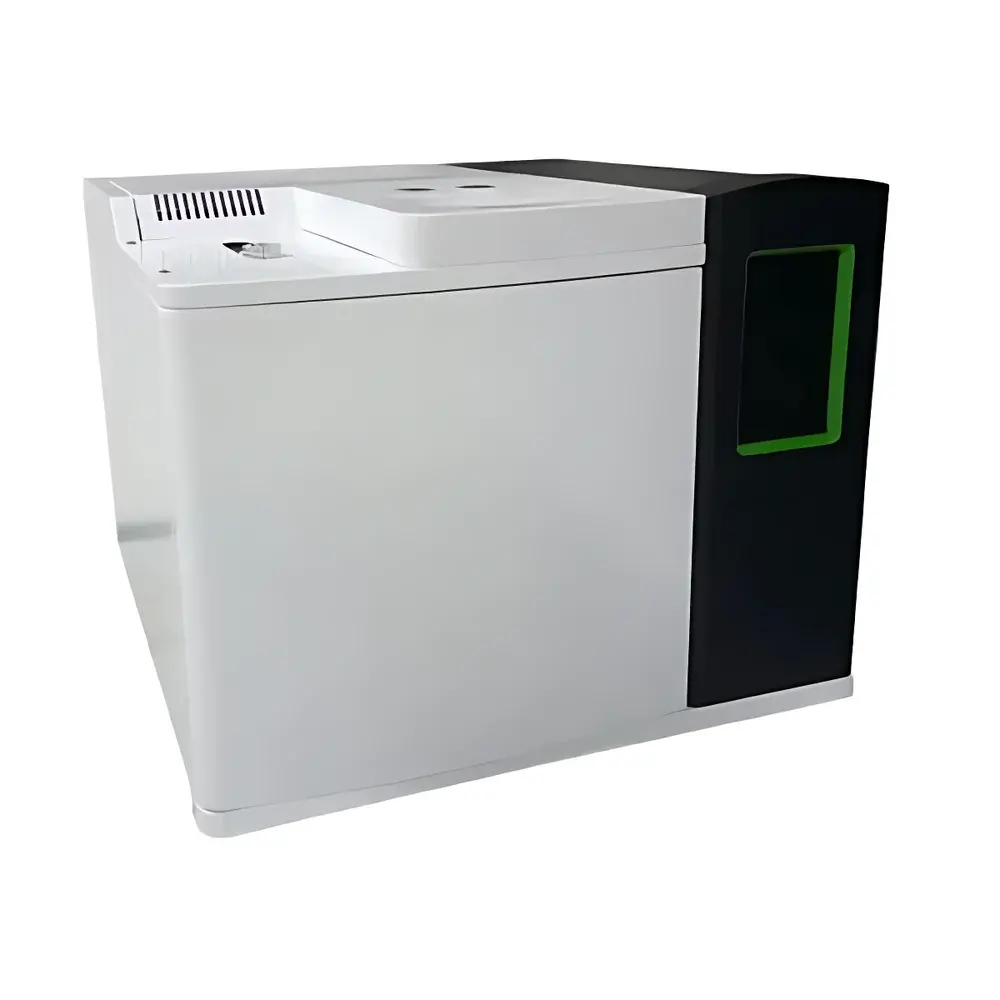
HuaShengPuXin HSPX Dedicated Gas Chromatograph for Blood Alcohol Concentration (BAC) Analysis
| Brand | HuaShengPuXin (HSPX) |
|---|---|
| Origin | Beijing, China |
| Manufacturer Type | Direct Manufacturer |
| Instrument Type | Laboratory Gas Chromatograph |
| Application Domain | Clinical Toxicology & Forensic Medical Testing |
| Temperature Control Range | Ambient + 5°C to 400°C |
| Oven Ramp Rate | 0.1–40°C/min |
| Cool-down Time | ~6 min (from 450°C to 50°C) |
| Carrier Gas Flow Range & Control | 0–1000 mL/min |
| Carrier Gas Pressure Range & Control | 0–970 kPa |
| Injector Maximum Operating Temperature | 400°C |
| Injector Pressure Setting Range | 0–970 kPa |
| Injector Total Flow Setting Range | 0–1200 mL/min |
| Temperature Zones | 8 independently controlled zones |
| Temperature Accuracy | ±0.01°C |
| Max Programmed Ramp Stages | 16 |
| External Event Inputs | 6 channels |
| Auxiliary Outputs | 2 channels |
| Detector Capacity | Up to 3 simultaneous detectors (FID, TCD, ECD, FPD, NPD configurable) |
| Injector Options | Packed column, capillary column, 6-port gas valve, automated headspace, purge-and-trap, thermal desorption |
| Software | Dual-language (English/Chinese) GC workstation with audit trail, method validation support, and CFR Part 11–compliant data integrity features |
Overview
The HuaShengPuXin HSPX Dedicated Gas Chromatograph for Blood Alcohol Concentration (BAC) Analysis is a purpose-built analytical platform engineered for high-reproducibility quantification of ethanol in whole blood, serum, or plasma matrices. It operates on the principle of capillary gas chromatography with flame ionization detection (GC-FID), optimized for forensic toxicology workflows requiring strict adherence to standardized bioanalytical procedures. The system integrates thermally stable oven architecture, precision electronic pressure control (EPC), and validated headspace sampling—ensuring compliance with international forensic guidelines including ASTM E2965, ISO 15197, and US Department of Transportation (DOT) 49 CFR Part 40 protocols for evidentiary BAC testing. Designed for clinical laboratories, forensic science units, and public health reference labs, this instrument delivers robust separation of ethanol from endogenous volatiles (e.g., acetone, isopropanol) and common interferents (e.g., methanol, ethyl acetate), minimizing false positives and supporting legally defensible reporting.
Key Features
- Eight independently programmable temperature zones—including oven, injector(s), detector(s), and auxiliary modules—enabling precise thermal management across complex multi-step methods.
- High-resolution color industrial LCD interface with intuitive menu navigation and real-time parameter monitoring; supports dual-language operation (English and Chinese) without firmware reconfiguration—facilitating global deployment and multilingual lab environments.
- Modular mechanical architecture allows field-upgradable detector configurations (FID, TCD, ECD, FPD, NPD), injector types (packed/capillary/valve/headspace), and automation interfaces—extending system longevity and protecting capital investment.
- Electronic pressure and flow control (EPC) with digital display ensures sub-kPa pressure resolution and ±0.5% flow accuracy across full operating range (0–1000 mL/min), critical for retention time stability and method transferability.
- Integrated safety logic: automatic flame re-ignition after extinction, carrier gas leak detection with shutdown protocol, and fail-safe oven cooling sequence—meeting IEC 61010-1 safety requirements for laboratory instrumentation.
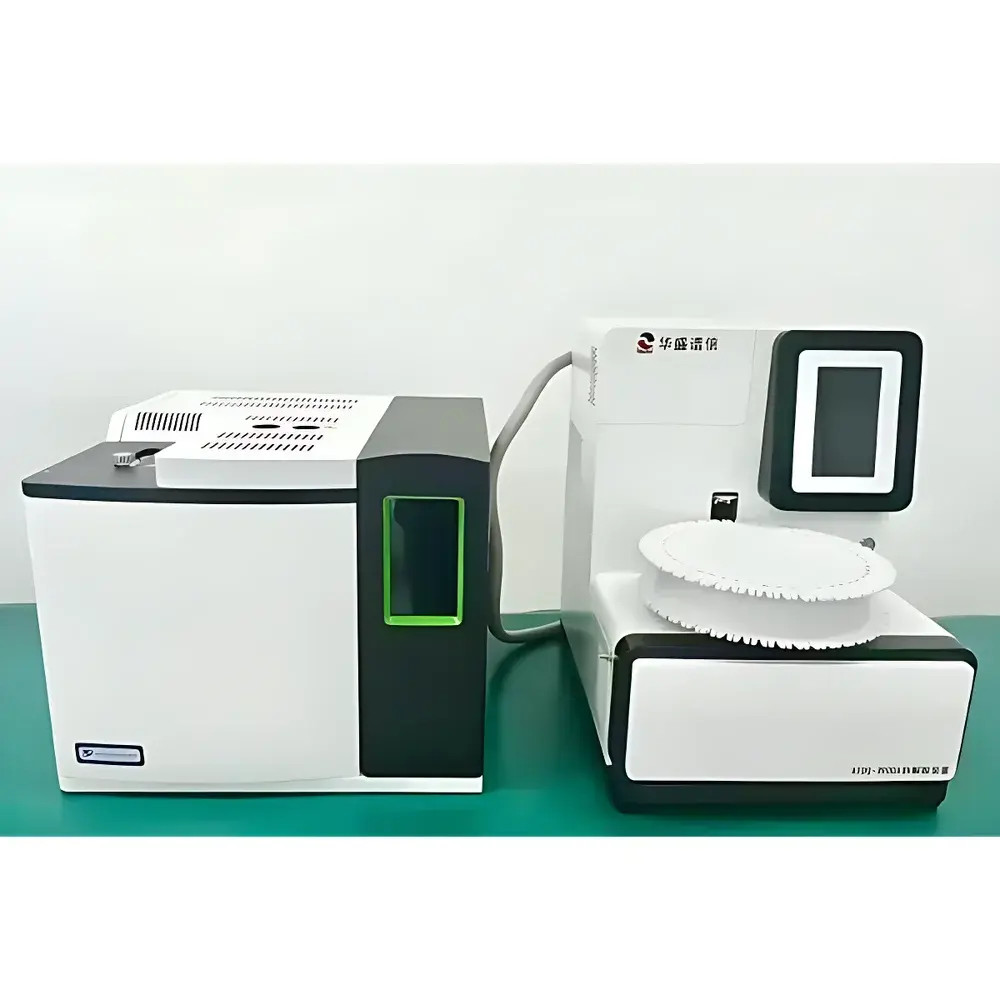
- Pre-configured timing engine supports unattended overnight analysis via scheduled auto-start routines; compatible with HS-12A and HS-20A fully automated headspace samplers for batched biological sample processing.
Sample Compatibility & Compliance
This GC platform is validated for direct analysis of deproteinized blood specimens following standard forensic preparation (e.g., internal standard addition, centrifugation, headspace vial sealing). It accepts 10–20 mL whole blood samples processed in certified 20 mL crimp-top headspace vials with PTFE/silicone septa. All hardware and software components comply with GLP/GMP documentation standards, and the chromatographic data system (CDS) includes audit trail functionality, user access levels, electronic signatures, and 21 CFR Part 11–compliant data archiving. Method validation packages align with SWGTOX (Scientific Working Group for Toxicology) recommendations and support accreditation under ISO/IEC 17025:2017 for forensic testing laboratories.
Software & Data Management
The bundled chromatography workstation provides full method development, acquisition, integration, calibration, and reporting capabilities. It supports multi-point linear and quadratic calibration curves with internal standard normalization, peak purity assessment, and retention time locking. Raw data files are stored in vendor-neutral formats (e.g., .cdf) with embedded metadata (instrument parameters, operator ID, sample ID, audit logs). Export options include CSV, PDF, and LIMS-compatible XML. The software undergoes periodic security patching and maintains backward compatibility with legacy method files—ensuring continuity during regulatory audits and long-term data reprocessing.
Applications
- Forensic post-mortem toxicology screening for ethanol intoxication
- Law enforcement roadside impairment testing confirmation
- Hospital emergency department alcohol level triage
- Occupational health surveillance programs (e.g., aviation, maritime, heavy machinery operators)
- Research studies on pharmacokinetics of ethanol metabolism
- Reference method verification in proficiency testing schemes (e.g., CAP, Randox, RCPath)
FAQ
Is this instrument compliant with U.S. DOT 49 CFR Part 40 requirements for evidentiary breath and blood alcohol testing?
Yes—the system’s method configuration, detector sensitivity, calibration traceability, and data integrity controls meet all technical and procedural criteria outlined in Part 40 Subpart G for forensic BAC analysis.
Can the GC be operated without a headspace sampler?
While direct liquid injection is technically possible, headspace analysis is strongly recommended—and required by most forensic accreditation bodies—to eliminate matrix effects and ensure reproducible vapor-phase ethanol quantification.
Does the software support electronic signature and audit trail for FDA-regulated labs?
Yes—audit trail logging, role-based access control, and electronic signature capture are enabled by default and configurable per 21 CFR Part 11 Annex 11 requirements.
What maintenance intervals are recommended for routine forensic operation?
Injector liner replacement every 100 injections; column trimming every 200 runs; FID jet cleaning quarterly; full EPC calibration semiannually—documented in the included GLP-compliant maintenance log template.
Is remote diagnostics and software update support available?
Yes—via secure HTTPS-based remote access with customer authorization; firmware updates and method library patches are distributed through HSPX’s authorized service portal.





