
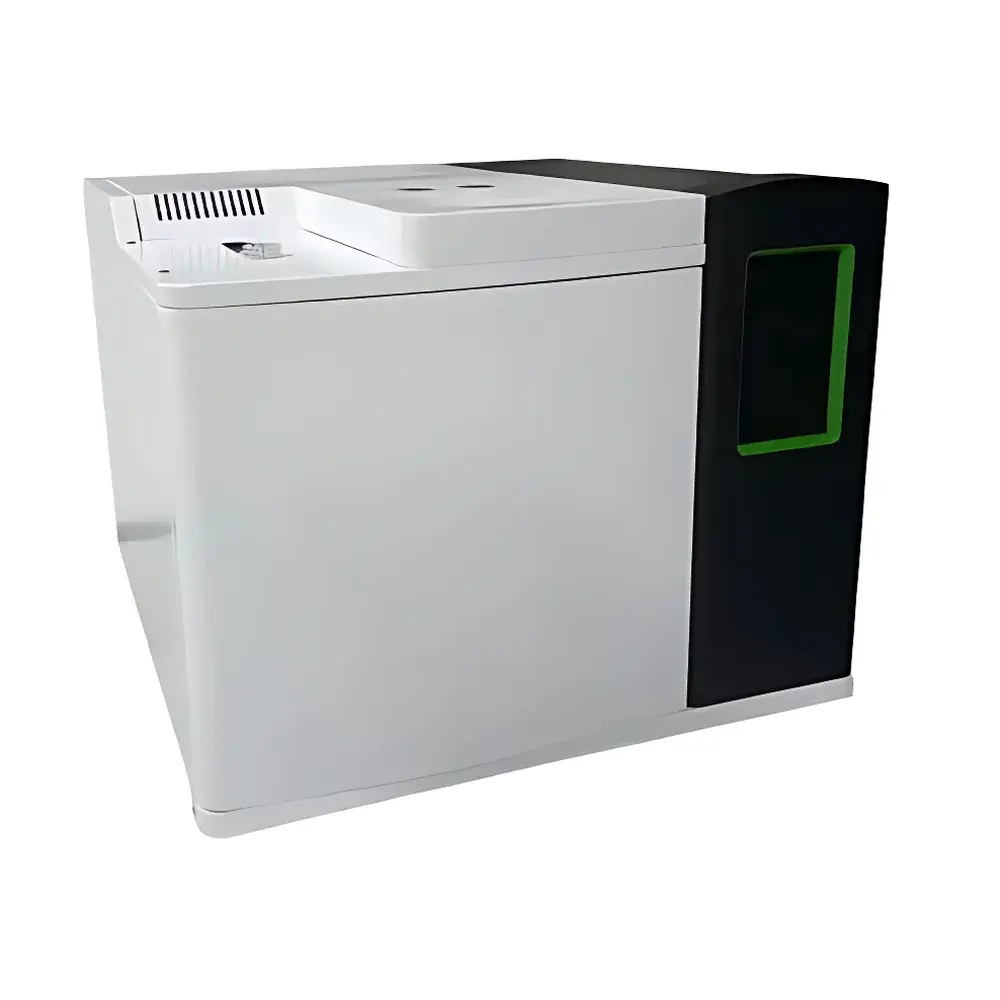
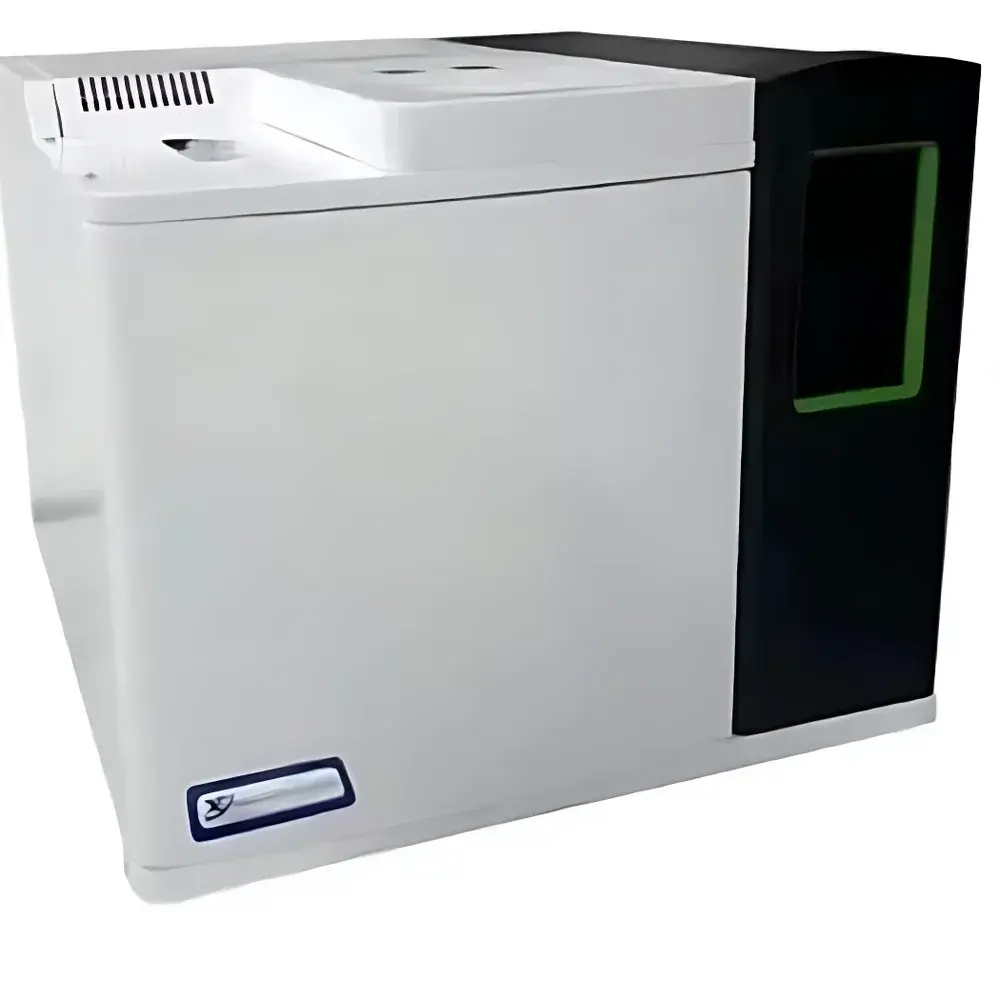
HuaShengPuXin HSPX GC-6210 Liquefied Petroleum Gas (LPG) Dedicated Gas Chromatograph
| Brand | HuaShengPuXin/HSPX |
|---|---|
| Origin | Beijing, China |
| Manufacturer Type | Manufacturer |
| Product Origin | Domestic |
| Model | LPG-Dedicated |
| Instrument Type | Laboratory Gas Chromatograph |
| Application Field | Petrochemical Industry |
| Temperature Control Range | Ambient to 400 °C |
| Oven Ramp Rate | 0.1–40 °C/min |
| Oven Cool-down Rate | 450 °C to 50 °C in ~6 min |
| Carrier Gas Flow Range & Control | 0–60 mL/min |
| Carrier Gas Pressure Range & Control | 0–0.6 MPa |
| Injector Max Operating Temperature | 400 °C |
| Injector Pressure Setting Range | 0–0.6 MPa |
| Injector Total Flow Setting Range | 0–1200 mL/min |
Overview
The HuaShengPuXin HSPX GC-6210 Liquefied Petroleum Gas (LPG) Dedicated Gas Chromatograph is a purpose-engineered laboratory-scale analytical system designed for precise, reproducible quantification of C1–C5 gaseous hydrocarbons in LPG matrices. Based on the GC-6210 platform—a robust, domestically developed gas chromatograph—the instrument implements dual-packed column separation with thermal conductivity detection (TCD), optimized specifically for compositional analysis of commercial and industrial LPG streams. It operates under isothermal or multi-step programmed temperature conditions, enabling full resolution of key components including methane (CH4), ethane (C2H6), ethylene (C2H4), propane (C3H8), propylene (C3H6), isobutane (i-C4H10), n-butane (n-C4H10), butenes (1-C4H8, i-C4H8, cis-/trans-C4H8), 1,3-butadiene, and pentanes (n-/i-C5H12). The system conforms to GB/T 10410.3–1989 for LPG composition testing, supporting quality control in production, import/export inspection, and regulatory compliance verification across refineries, gas distribution terminals, and third-party testing laboratories.
Key Features
- Dual-packed column configuration with a six-port gas sampling valve, enabling single-injection simultaneous analysis of all target C1–C5 saturated and unsaturated hydrocarbons (excluding acetylenes)
- Thermal Conductivity Detector (TCD) with high stability and linear response over 100 ppm–50% (v/v) concentration range
- Programmable oven with multi-stage ramp capability (0.1–40 °C/min), supporting rapid method development and cycle time reduction
- Fast cool-down performance: 450 °C → 50 °C in approximately 6 minutes, minimizing turnaround between runs
- Independent, digitally controlled carrier gas pressure (0–0.6 MPa) and flow (0–60 mL/min) modules for helium or hydrogen carrier gases
- Injector capable of operation up to 400 °C with configurable total flow (0–1200 mL/min) and pressure settings (0–0.6 MPa)
- Bundled 4-L aluminum cylinder of certified LPG calibration standard mixture for direct quantitative calibration
Sample Compatibility & Compliance
This system is validated for use with liquefied petroleum gas samples in both vapor-phase and liquid-phase injection modes. Sample introduction is performed via gas-tight syringe or pressurized loop injection, compatible with standard ASTM D2505, ISO 6974-1, and GB/T 10410.3–1989 methodologies. While not intended for acetylene or highly reactive species, it delivers trace-level detection (≥100 ppm) and high repeatability (<2% RSD) for routine QC applications. All hardware and firmware comply with CE electromagnetic compatibility (EMC) directives and meet essential safety requirements for laboratory environments. Data acquisition supports audit-trail-ready operation when configured per GLP/GMP guidelines.
Software & Data Management
The dual-channel chromatography workstation runs natively on Windows 98/2000/XP platforms and provides full control of instrument parameters, real-time signal monitoring, peak integration, calibration curve generation, and customizable reporting. Raw chromatograms are stored in vendor-neutral formats (e.g., .cdf-compatible), facilitating long-term archival and cross-platform review. Quantitative analysis employs external standard and/or internal standard methods, with built-in tools for retention time alignment, baseline correction, and multi-point calibration validation. While native software does not implement FDA 21 CFR Part 11 electronic signature functionality, it supports manual audit logs and export to LIMS-compatible CSV/XML formats for integration into regulated workflows.
Applications
- Real-time quality assurance during LPG blending and fractionation in refinery units
- Import/export compliance testing against national and regional specifications (e.g., GB 11174, EN 589)
- Batch release testing for commercial LPG cylinders and bulk transport vessels
- Root-cause investigation of off-spec composition (e.g., excessive C5 content, abnormal olefin saturation)
- Method transfer and validation support for ISO/IEC 17025-accredited laboratories
- Training and educational use in petrochemical engineering curricula
FAQ
What carrier gases are supported?
Helium and hydrogen are fully supported; nitrogen is not recommended due to reduced TCD sensitivity for light hydrocarbons.
Can this system analyze acetylenes or sulfur compounds?
No—this configuration is optimized for C1–C5 aliphatic and olefinic hydrocarbons only; acetylenes, mercaptans, H2S, and other heteroatom-containing species require specialized columns and detectors (e.g., PFPD, SCD).
Is method validation documentation included?
A basic method validation package—including system suitability criteria, precision data, and linearity ranges—is provided with the instrument; full IQ/OQ/PQ protocols must be developed per user-specific regulatory requirements.
What maintenance intervals are recommended?
TCD filament inspection every 6 months; column trimming and inlet liner replacement every 3–6 months depending on sample matrix cleanliness; annual calibration verification using the supplied standard gas.
Does the system support remote operation or network connectivity?
The workstation supports local area network (LAN) file sharing but lacks native remote desktop or cloud-based control; integration with SCADA or LIMS requires custom OPC or TCP/IP middleware configuration.




