
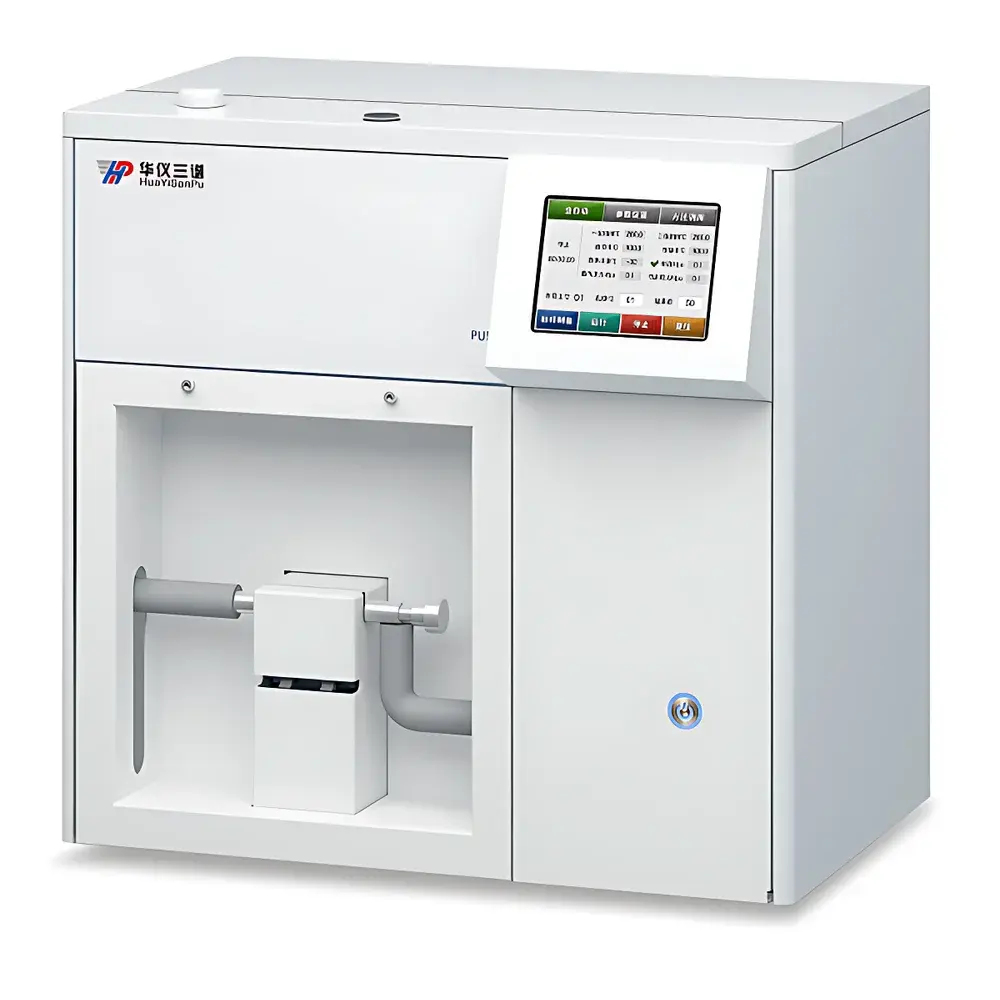
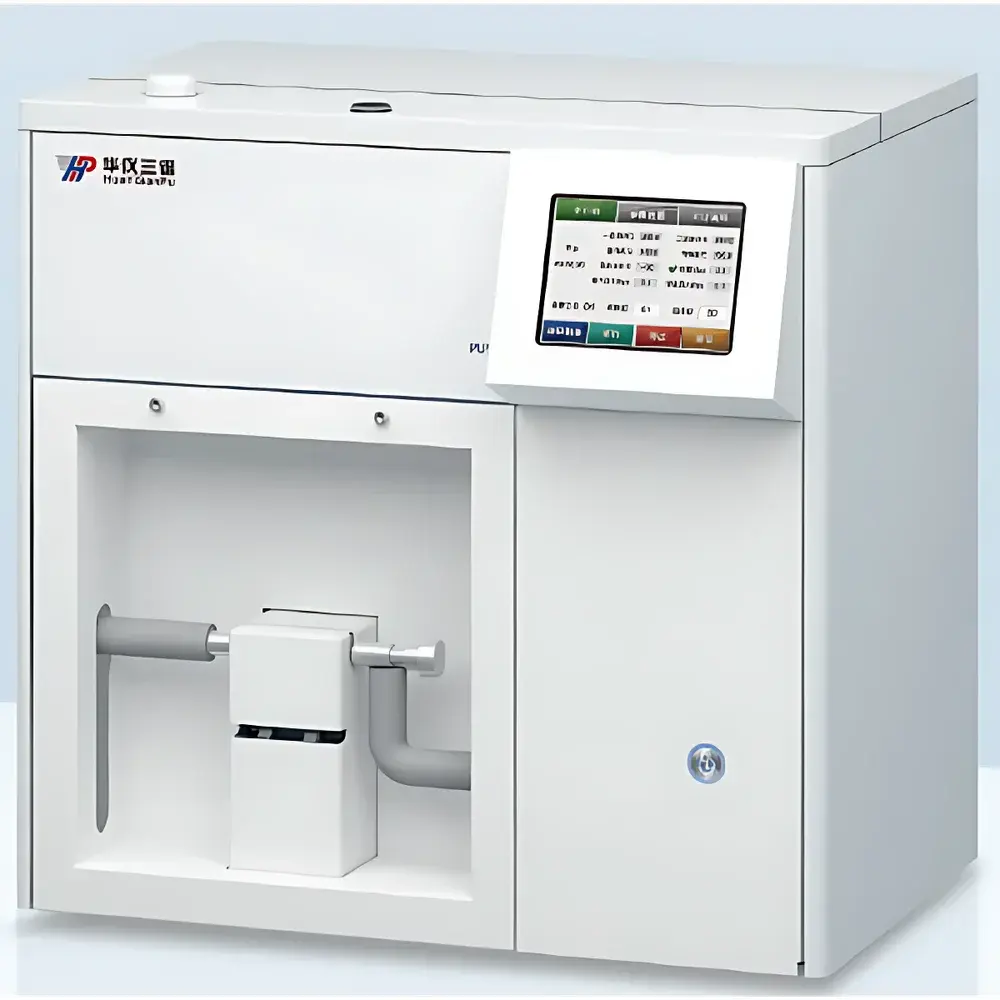
Huayisanpu ATDS-3430 Semi-Automatic Single-Stage Thermal Desorber
| Brand | Huayisanpu |
|---|---|
| Origin | Beijing, China |
| Model | ATDS-3430 |
| Instrument Type | Single-Stage Thermal Desorber |
| Automation Level | Semi-Automatic |
| Desorption Temperature Range | Ambient to 380 °C (±0.5 °C accuracy, 1 °C increment) |
| Valve Temperature Range | Ambient to 260 °C (±1 °C) |
| Transfer Line Temperature Range | Ambient to 260 °C (±1 °C) |
| Cold Trap Temperature | Ambient |
| Temperature Stability | < ±1 °C |
| Desorption Recovery | >98% (toluene, 0.1 µL, 10:1 split ratio) |
| Peak Width (FWHM) | <3 s |
| Sample Capacity | 1 tube per run |
| Carrier Gas Flow | 0–100 mL/min (adjustable, with flow indicator) |
| Pneumatic Actuation Pressure | <0.4 MPa (adjustable) |
| System Pressure Rating | >0.4 MPa |
| Timing Resolution | 0.1–99 min (timing error <0.1%) |
| Programmable External Events | 15 |
| Power Consumption | <1000 VA |
| Dimensions (H×W×D) | 470×500×380 mm |
| Weight | ~35 kg |
Overview
The Huayisanpu ATDS-3430 is a semi-automatic single-stage thermal desorber engineered for precise, reproducible thermal extraction of volatile and semi-volatile organic compounds (VOCs and SVOCs) from sorbent tubes prior to gas chromatographic analysis. It operates on the principle of controlled resistive heating to thermally release analytes trapped on solid-phase sorbents—typically Tenax TA, Carbopack, or multi-bed configurations—without chemical elution. The instrument is designed for laboratories requiring robust, cost-effective thermal desorption capability where full automation is not mandatory but analytical rigor, temperature fidelity, and method traceability remain essential. Its architecture supports seamless integration with mainstream GC and GC-MS systems via TTL/relay-triggered synchronization, enabling synchronized valve actuation, oven ramp initiation, and data acquisition start signals.
Key Features
- High-fidelity temperature control across three independently regulated zones: desorption furnace (ambient to 380 °C, ±0.5 °C), six-port switching valve (ambient to 260 °C), and transfer line (ambient to 260 °C), each with 1 °C programmable resolution and stability better than ±1 °C.
- Semi-automated workflow with manual tube loading and pneumatic actuation—reducing capital cost while retaining method repeatability and operator control over critical timing parameters.
- Programmable external event sequencing (up to 15 discrete events), supporting complex protocols such as tube conditioning (bake-out), back-flush, trap pre-cooling (via ambient air cooling), and timed venting.
- Adjustable carrier gas flow (0–100 mL/min) with integrated visual flow indication, ensuring optimal desorption efficiency and compatibility with both split and splitless GC inlets.
- Robust pneumatic system rated for >0.4 MPa operating pressure, with adjustable actuation pressure (<0.4 MPa) to ensure reliable, low-wear valve cycling over extended service life.
- Compact benchtop footprint (470 × 500 × 380 mm) and lightweight design (~35 kg) facilitate integration into space-constrained QC labs or mobile analytical units.
Sample Compatibility & Compliance
The ATDS-3430 accommodates standard 6 mm OD stainless steel or quartz sorbent tubes (e.g., 90 mm length, 1/4″ OD), compatible with widely adopted formats including ASTM D6196, ISO 16017-1, and EPA TO-17 sampling methodologies. Tube material selection supports high-temperature stability and low blank performance—critical for trace-level environmental monitoring (e.g., indoor air, workplace exposure, landfill emissions). While the unit itself does not include active cryogenic trapping, its ambient-temperature cold trap configuration is validated for direct coupling to GC systems equipped with cryo-focused inlets or for applications where analyte volatility permits efficient transfer without condensation. All temperature and timing parameters are user-programmable and logged via front-panel interface, supporting GLP-aligned recordkeeping when paired with laboratory information management systems (LIMS).
Software & Data Management
The ATDS-3430 operates via an embedded microcontroller with a dedicated LED/LCD interface for real-time parameter display, method storage (up to 10 user-defined methods), and manual execution control. No proprietary PC software is required; however, all timing and temperature settings—including desorption hold time, valve switch delay, and flow duration—are fully configurable and repeatable. Relay-based TTL output ensures deterministic GC triggering (<2 s latency), meeting timing requirements for compliant method execution under USP , FDA 21 CFR Part 11 (when used with validated LIMS workflows), and ISO/IEC 17025-accredited environments. Audit trails rely on external documentation practices, consistent with semi-automated instrumentation commonly deployed in contract testing laboratories performing EPA Method TO-17 or ISO 16017-1 analyses.
Applications
- Environmental air quality monitoring: quantification of benzene, toluene, ethylbenzene, xylenes (BTEX), C2–C12 aliphatics, and carbonyl compounds from canister or sorbent tube samples.
- Occupational hygiene assessment: compliance testing against OSHA and NIOSH exposure limits using validated TO-17 sampling trains.
- Indoor air quality (IAQ) studies: detection of formaldehyde, terpenes, plasticizers, and off-gassing volatiles from building materials and furnishings.
- Product safety screening: residual solvent analysis in pharmaceutical packaging, adhesives, and polymer coatings.
- Method development and validation labs: flexible platform for optimizing desorption parameters (temperature ramp rate, hold time, flow profile) prior to full automation deployment.
FAQ
Is the ATDS-3430 compatible with all gas chromatographs?
Yes—it provides standard TTL and relay dry-contact outputs for synchronization with any GC or GC-MS system featuring external trigger inputs. Timing latency is verified at <2 s, ensuring alignment with GC oven and detector startup sequences.
Can it perform tube aging or conditioning cycles?
Yes—its 15-step programmable external event scheduler supports automated tube bake-out (e.g., 320 °C for 30 min under inert gas flow), including independent control of desorption zone, valve, and line temperatures during conditioning.
What sorbent tube types are supported?
Standard 6 mm OD stainless steel and quartz tubes (e.g., 90 mm × 1/4″) are fully compatible. Multi-bed configurations (e.g., Tenax TA + Carbograph 1TD) are supported provided thermal stability remains within the 380 °C upper limit.
Does it meet regulatory requirements for accredited testing?
The ATDS-3430 meets hardware-level performance criteria specified in EPA TO-17, ISO 16017-1, and ASTM D6196. Full compliance requires integration into a validated laboratory workflow—including documented calibration, preventive maintenance, and operator training—as mandated by ISO/IEC 17025 or GLP frameworks.
Is cryogenic trapping available?
No—the ATDS-3430 uses ambient-temperature desorption and transfer. For analytes requiring cryo-focusing (e.g., C2–C6 hydrocarbons), pairing with a GC inlet equipped with liquid nitrogen or Peltier-cooled traps is recommended.



