
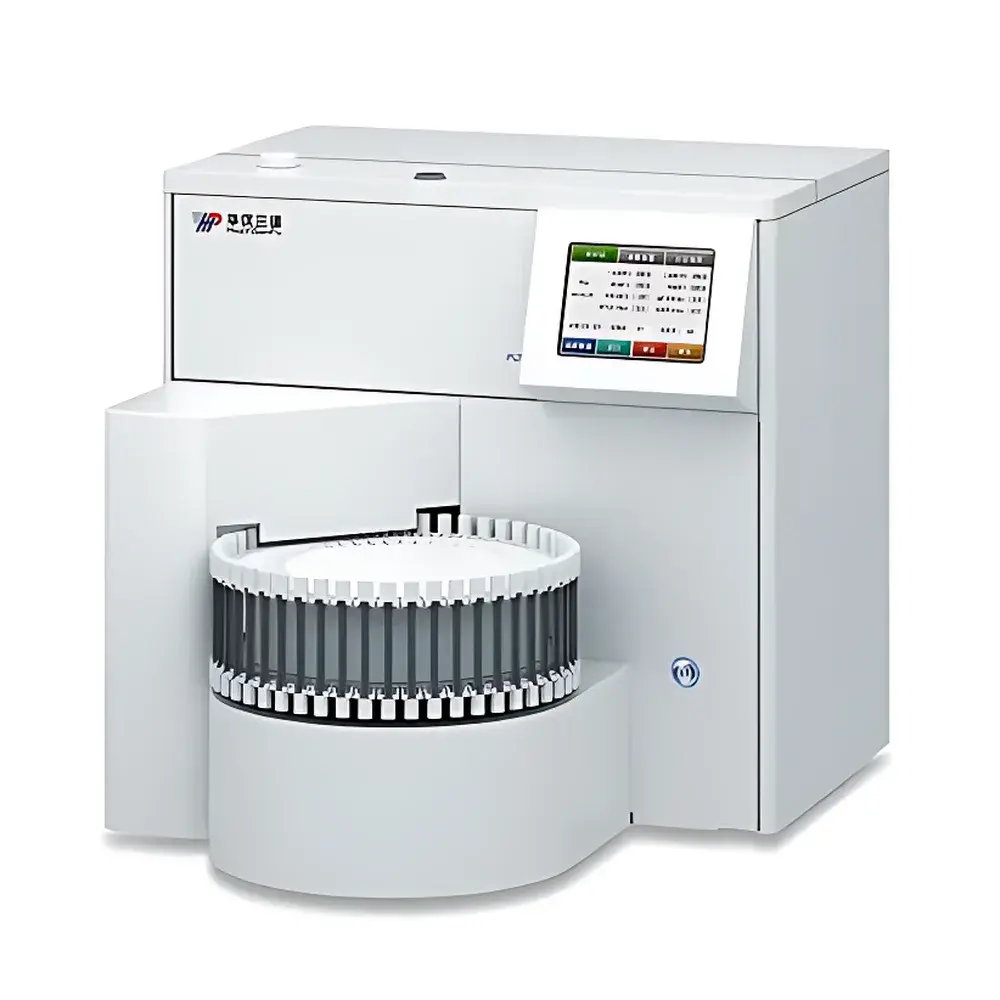
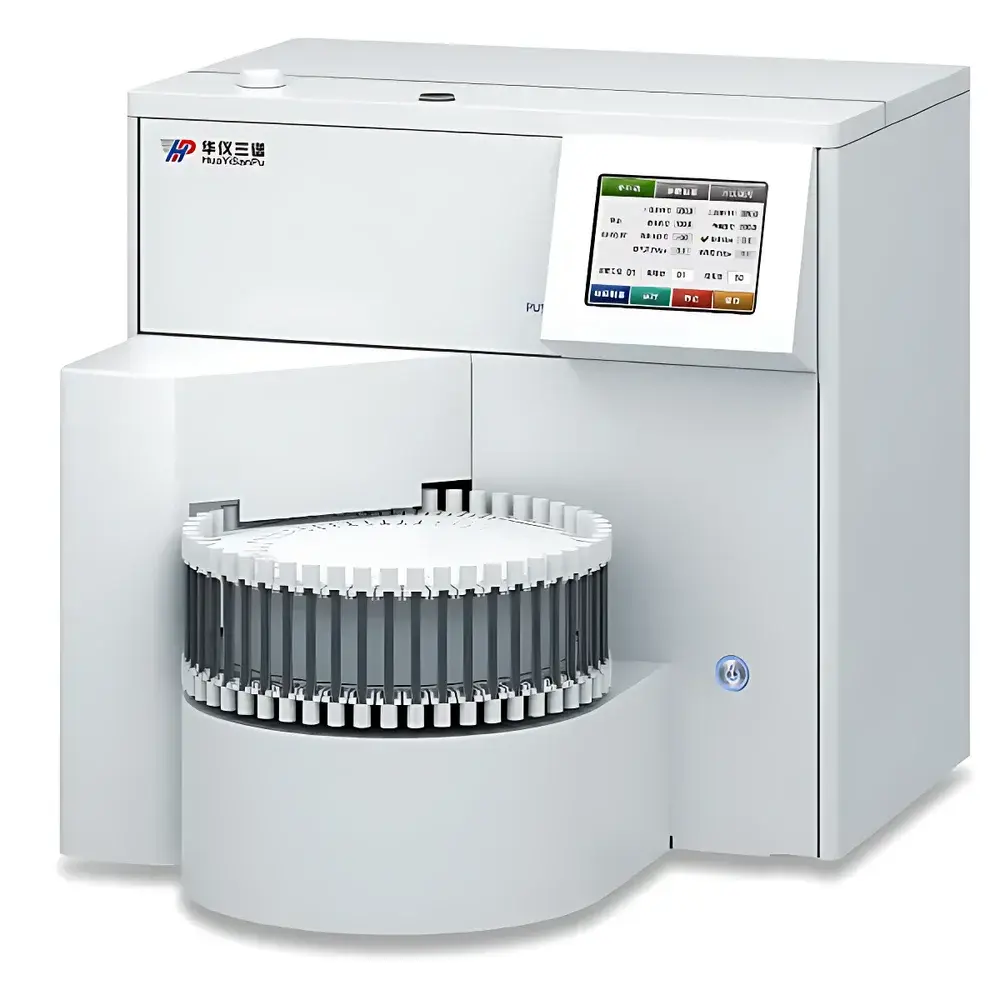
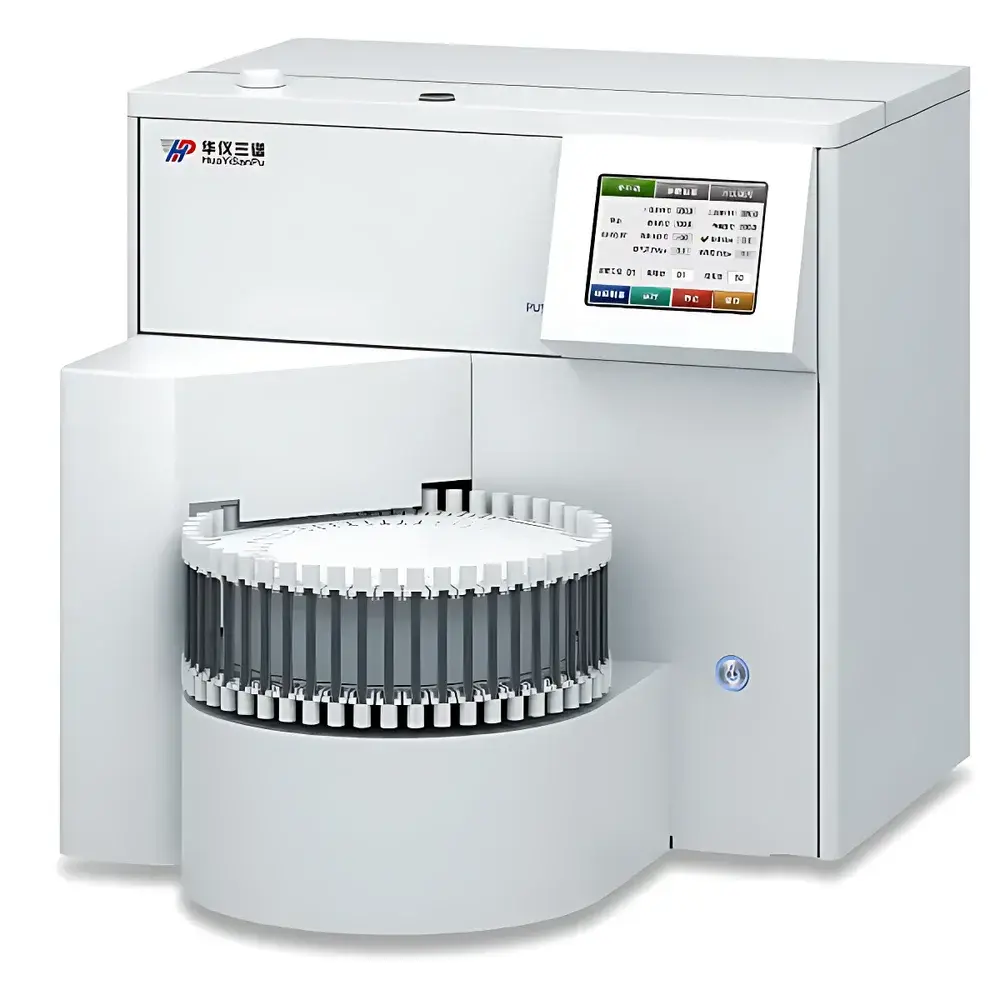
Huayisanpu ATDS-4133 Fully Automated Two-Stage Thermal Desorber
| Brand | Huayisanpu |
|---|---|
| Origin | Beijing, China |
| Model | ATDS-4133 |
| Automation Level | Fully Automated |
| Primary Desorption Temp Range | Ambient to 380°C (±0.5°C accuracy, 1°C increment) |
| Secondary Desorption Temp Range | Ambient to 380°C (±0.5°C accuracy, 1°C increment, >3000°C/min ramp rate) |
| Cold Trap Temp Range | Ambient to −40°C (±1°C accuracy, 1°C increment) |
| Valve & Transfer Line Temp Range | Ambient to 260°C (±1°C accuracy) |
| Sample Pathway Temp Range | Ambient to 200°C (±1°C accuracy) |
| Sample Capacity | 50 tubes |
| Desorption Recovery | >98% (toluene, 0.1 µL, 10:1 split ratio) |
| Peak Width (FWHM) | <3 s |
| RSD | <2.5% |
| Tube Material | Stainless steel |
| Trap Options | Stainless steel, quartz glass, or fused silica capillary |
| Carrier Gas Flow | 0–100 mL/min (adjustable with flow indicator) |
| Pneumatic Actuation Pressure | <0.4 MPa (adjustable) |
| System Pressure Rating | >0.4 MPa |
| External Event Control | 15 programmable events |
| Event Timing Range | 0.1–99 min (<0.1% timing error) |
| Power Consumption | <1000 VA |
| GC Trigger Latency | <2 s |
| Dimensions (H×W×D) | 500 × 485 × 650 mm |
| Weight | ~45 kg |
Overview
The Huayisanpu ATDS-4133 is a fully automated two-stage thermal desorption system engineered for high-fidelity volatile organic compound (VOC) and semi-volatile organic compound (SVOC) analysis in environmental, occupational health, and materials testing laboratories. It operates on the principle of sequential thermal desorption: first-stage desorption volatilizes analytes from sorbent tubes under controlled inert gas flow; second-stage desorption rapidly transfers and refocuses the analyte band onto a cryogenically cooled trap; final thermal desorption injects a narrow, concentrated analyte plug into the gas chromatograph (GC) inlet. This architecture minimizes band broadening, maximizes sensitivity, and ensures quantitative reproducibility—particularly critical for trace-level analysis per EPA Method TO-17, ISO 16017-1, and ASTM D6196.
Key Features
- Fully automated batch processing of up to 50 standardized sorbent tubes without manual intervention—ideal for high-throughput compliance monitoring and routine QC workflows.
- Independent, high-stability temperature control across five critical zones: primary desorption furnace (ambient to 380°C, ±0.5°C), secondary desorption zone (ambient to 380°C, ±0.5°C, >3000°C/min ramp), cold trap (ambient to −40°C, ±1°C), six-port valve (ambient to 260°C, ±1°C), and transfer lines (ambient to 200°C, ±1°C).
- Programmable sample pathway conditioning—including tube aging, back-flush, and purge cycles—with customizable flow, temperature, and time parameters for each step.
- 15 user-defined external event triggers enable precise synchronization with GC oven programming, detector activation, or data acquisition systems via TTL/relay outputs.
- Stainless-steel construction throughout the sample path ensures chemical inertness and long-term integrity for demanding applications involving reactive or acidic compounds.
- Modular trap options—including stainless-steel, quartz glass, and fused-silica capillary traps—support method flexibility for diverse analyte polarity and volatility profiles.
- Carrier gas flow regulation (0–100 mL/min) with real-time visual indication supports method optimization and leak diagnostics.
Sample Compatibility & Compliance
The ATDS-4133 accommodates standard 6-mm OD stainless-steel sorbent tubes (e.g., Tenax TA, Carbopack B/C, Carboxen 1000) and accepts optional trap formats to align with method-specific requirements. All thermal zones meet ISO/IEC 17025 calibration traceability standards when operated within specified ranges. The system supports audit-ready operation under GLP and GMP frameworks: full parameter logging, operator ID tagging, and timestamped method files are retained locally. While not pre-certified for FDA 21 CFR Part 11, its deterministic event timing (<2 s GC trigger latency), repeatable thermal profiles (RSD <2.5%), and hardware-level interlocks provide a robust foundation for regulated environments requiring validation documentation.
Software & Data Management
Controlled via a dedicated Windows-based application, the ATDS-4133 software enables method creation, sequence definition, real-time status monitoring, and event logging. Each run generates a structured metadata file containing setpoints, actual temperatures, flow rates, timing events, and system alerts—exportable in CSV or XML format for LIMS integration. The software supports password-protected user roles (operator, supervisor, administrator) and maintains an immutable audit trail of all configuration changes and sequence executions. No cloud dependency or subscription model is required; all data resides locally on the host PC, ensuring compliance with institutional data sovereignty policies.
Applications
- Environmental air monitoring: indoor air quality (IAQ), ambient air VOC profiling, landfill and remediation site emissions per EPA TO-11A and TO-15.
- Occupational hygiene: workplace exposure assessment for benzene, formaldehyde, styrene, and other OSHA- or NIOSH-regulated compounds.
- Materials emission testing: VOC screening of building products, automotive interiors, and packaging per ISO 16000-9 and ASTM D5116.
- Forensic and failure analysis: identification of off-gassing species from polymers, adhesives, and electronic components.
- Method development labs: evaluation of sorbent efficiency, breakthrough volumes, and thermal stability of target analytes.
FAQ
What sorbent tube formats are supported?
Standard 6-mm OD stainless-steel tubes (e.g., 3.5-inch length) are natively compatible; custom-length or alternative-diameter tubes may be accommodated with optional adapters.
Can the system perform tube aging in situ?
Yes—programmable thermal conditioning (including inert gas purging, elevated temperature hold, and cool-down phases) is available for tube reactivation prior to sample loading.
Is remote monitoring or control possible?
The instrument supports local Ethernet connectivity for networked PC control; however, it does not include built-in web server, VNC, or IoT telemetry capabilities.
How is calibration verified?
Temperature calibration is performed using NIST-traceable thermocouples at three points per zone (low/mid/high); flow verification requires external bubble meter or mass flow meter per ISO 5167 guidelines.
Does the system comply with EPA Method TO-17?
Yes—the ATDS-4133 meets all instrumental performance criteria outlined in TO-17, including desorption efficiency (>95%), precision (RSD <10% for replicate injections), and peak shape (FWHM <5 s for target analytes).



