
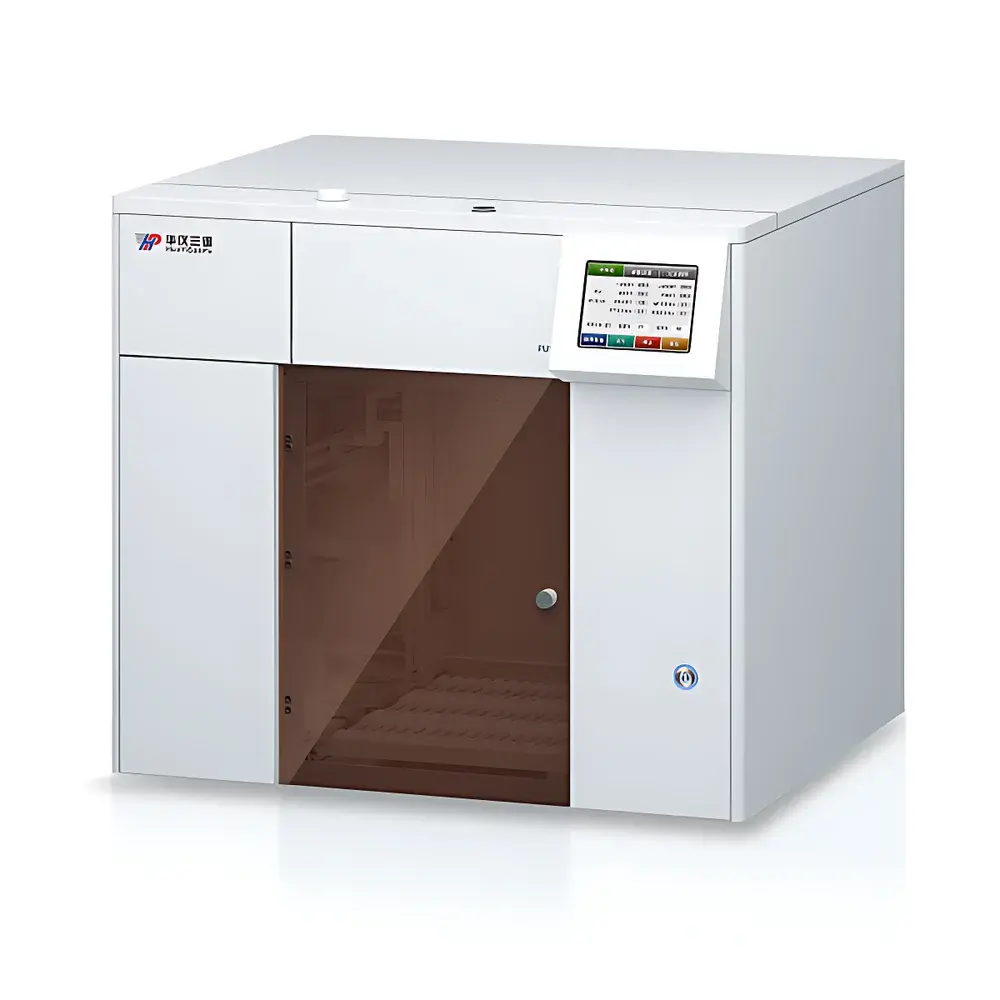
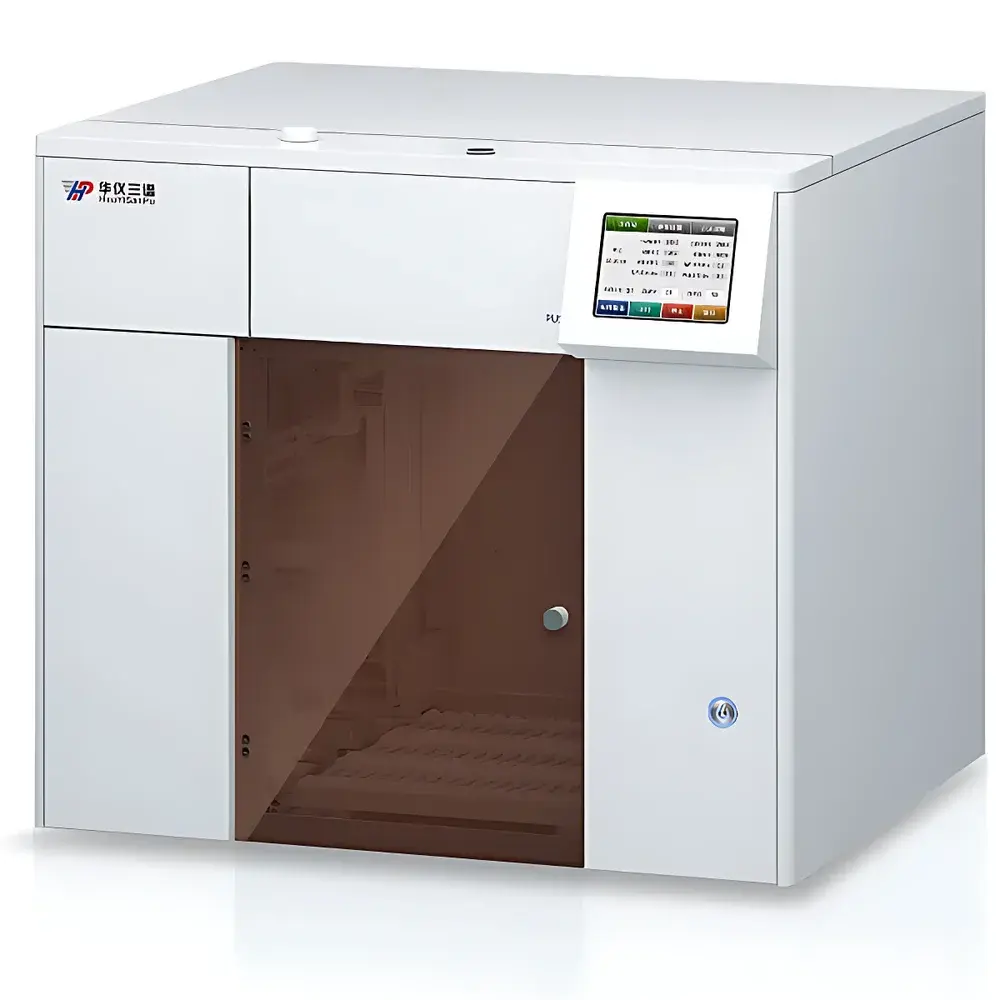
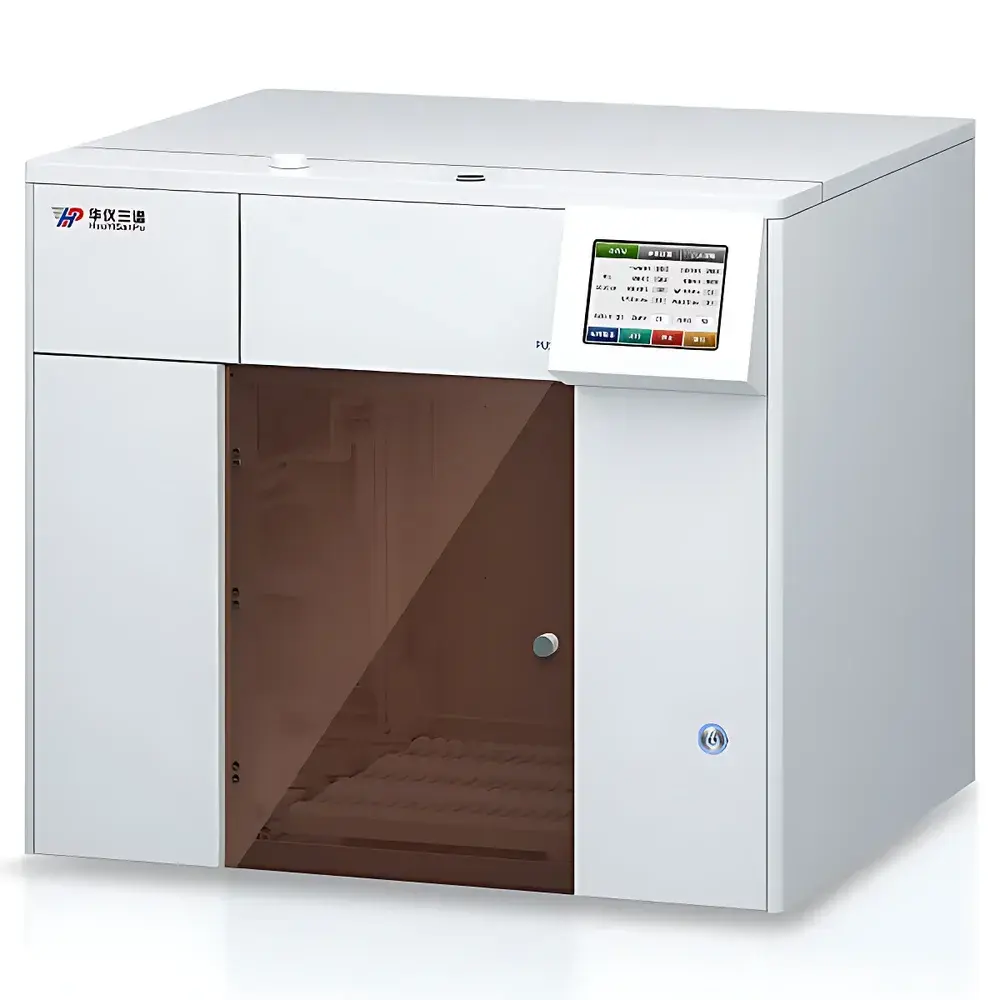
Huayisanpu ATDS-51 Automated Dual-Stage Thermal Desorber
| Brand | Huayisanpu |
|---|---|
| Origin | Beijing, China |
| Model | ATDS-51 |
| Instrument Type | Dual-stage thermal desorber |
| Automation Level | Fully automated |
| Primary Desorption Temperature Range | 50–380 °C |
| Secondary Desorption Temperature Range | 150–380 °C |
| Valve & Transfer Line Temperature Range | Ambient to 260 °C |
| Cold Trap Temperature Range | Ambient to −40 °C |
| Temperature Control Accuracy | < ±0.1 °C |
| Peak Width (FWHM) | < 3 s |
| Desorption Efficiency | >98% (toluene, 0.1 µL, 10:1 split ratio) |
| Sample Capacity | 51 positions |
| Compliance | Designed for ASTM D6196, ISO 16017-1, USP <621>, and EPA TO-17 workflows |
Overview
The Huayisanpu ATDS-51 is a fully automated dual-stage thermal desorption system engineered for high-fidelity sample introduction into gas chromatography (GC) and gas chromatography–mass spectrometry (GC–MS) platforms. It operates on the principle of controlled thermal volatilization: adsorbed analytes—typically collected on sorbent tubes during active or passive air sampling—are sequentially heated in two thermally isolated zones to ensure quantitative transfer while minimizing breakthrough, carryover, and peak broadening. The first stage desorbs target compounds from the sorbent bed into a cryogenically focused cold trap; the second stage rapidly heats the trap to inject a narrow, solvent-free analyte band into the GC column. This two-step process delivers superior sensitivity, reproducibility, and chromatographic resolution compared to single-stage desorption—particularly for volatile organic compounds (VOCs), semi-volatile organic compounds (SVOCs), and trace-level environmental contaminants.
Key Features
- Fully automated 51-position sample carousel with programmable sequence control and unattended operation overnight
- Dual-zone independent temperature regulation: primary desorption (50–380 °C), secondary desorption (150–380 °C), valve and transfer line (ambient–260 °C), and cryogenic cold trap (ambient to −40 °C)
- High-precision temperature control (< ±0.1 °C) across all thermal zones, ensuring method robustness and inter-laboratory comparability
- Optimized thermal geometry and inert flow path (electropolished stainless steel) minimize surface adsorption and catalytic degradation
- Integrated pressure-controlled carrier gas management with real-time flow monitoring and automatic leak detection
- Modular electrical and pneumatic interface design compatible with major GC and GC–MS systems—including Agilent, Thermo Fisher, Shimadzu, PerkinElmer, and domestic OEM platforms—supporting both analog and digital communication protocols (RS-232, Ethernet optional)
- Patented cold trap focusing technology achieves 98% desorption efficiency for benchmark analytes such as toluene under standardized EPA TO-17 conditions (0.1 µL, 10:1 split)
Sample Compatibility & Compliance
The ATDS-51 accommodates standard 6 mm OD × 89 mm length sorbent tubes (e.g., Tenax TA, Carbopack B/C, Carboxen 1000) and supports both direct tube insertion and autosampler-compatible tube racks. It meets critical regulatory requirements for environmental, occupational health, and product safety testing—including ASTM D6196 (VOCs in indoor air), ISO 16017-1 (indoor/outdoor air analysis), EPA Method TO-17 (ambient air VOCs), and USP (residual solvents in pharmaceuticals). Its hardware architecture and operational logic are designed to support GLP-compliant data integrity: all temperature setpoints, run logs, and system status events are timestamped and stored locally with audit-trail capability. While not pre-certified for FDA 21 CFR Part 11, the system’s firmware architecture permits integration with validated LIMS or CDS platforms that implement electronic signature and access control policies.
Software & Data Management
The ATDS-51 is operated via a dedicated Windows-based control application featuring intuitive method editor, real-time thermal profile visualization, and event-driven scheduling. All instrument parameters—including desorption ramps, hold times, trap cooling/heating rates, and split ratios—are fully programmable and exportable as XML templates for cross-platform method transfer. Raw log files record every thermal event, pressure reading, and valve actuation with millisecond resolution. Data export formats include CSV and ASCII for seamless ingestion into Chromatography Data Systems (CDS) such as OpenLab CDS, Chromeleon, or MassHunter. Firmware updates are delivered via secure USB or network push, with version rollback capability and checksum validation.
Applications
The ATDS-51 serves as a core front-end solution for laboratories performing routine and research-grade analysis across multiple regulated domains: ambient and workplace air monitoring (EPA, OSHA, NIOSH); indoor air quality assessment (TVOC, formaldehyde, benzene series); forensic toxicology (arson accelerants, illicit drug volatiles); food and beverage packaging migration studies (residual solvents, flavor compounds); cosmetics stability testing (alcohol-based carriers, preservative volatiles); and agricultural pesticide residue screening in soil headspace. Its 51-sample capacity and dual-stage performance make it especially suitable for high-throughput environmental labs conducting batched TO-17 compliance testing or academic research groups validating novel sorbent materials.
FAQ
Is the ATDS-51 compatible with my existing GC–MS system?
Yes—the ATDS-51 provides configurable analog voltage outputs, TTL trigger signals, and RS-232 serial interface for synchronization with all major GC and GC–MS manufacturers. Custom cable kits and protocol documentation are supplied.
Does the system support cold trap cryofocusing with liquid nitrogen or mechanical cooling?
The ATDS-51 uses a closed-cycle Peltier-based cooling system capable of reaching −40 °C without consumables; no liquid nitrogen or external chillers are required.
Can I validate methods per ISO/IEC 17025 using this instrument?
Yes—temperature uniformity mapping reports, calibration certificates for thermocouples and pressure transducers, and IQ/OQ documentation templates are available upon request to support laboratory accreditation.
What maintenance intervals are recommended for long-term reliability?
Valve actuators and sorbent tube o-rings should be inspected every 500 runs; cold trap frits and transfer lines cleaned quarterly; full thermal calibration performed annually or after any hardware service event.
Related Products




