
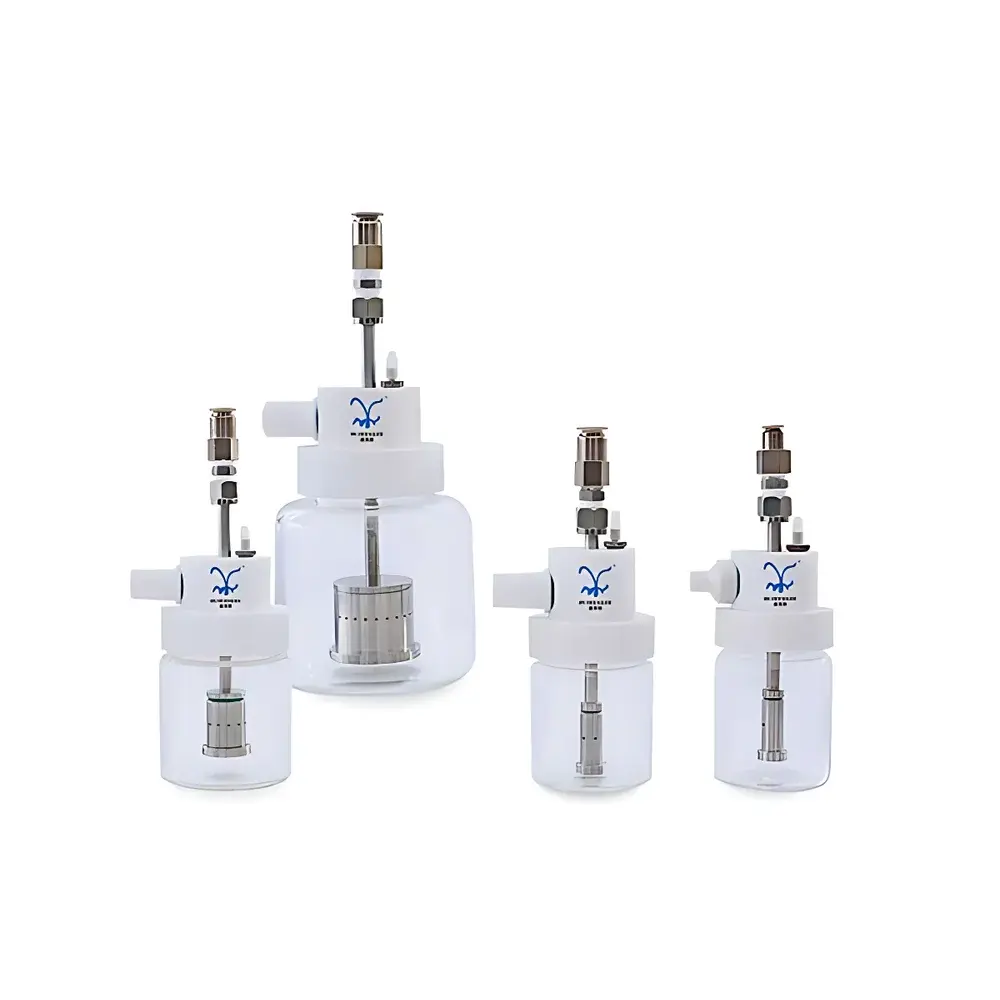
Huironhe HRH-WAG Liquid Aerosol Generator
| Brand | Huironhe |
|---|---|
| Model | HRH-WAG |
| Origin | Beijing, China |
| Construction Materials | 316L stainless steel, PTFE, borosilicate glass |
| Aerosol Output Interface | 16 mm × 20 mm |
| Compressed Air Inlet | PU tubing, OD 6.5 mm × 10 mm |
| Liquid Feed Interface | Silicone tubing, ID 2 mm × OD 4 mm |
| Mass Median Aerodynamic Diameter (MMAD) | 1–3 µm |
| Geometric Standard Deviation (GSD) | 1.5–3 |
| Compliance | OECD TG 403, 412, 413, 436 |
Overview
The Huironhe HRH-WAG Liquid Aerosol Generator is an engineered aerosol generation system designed for controlled, heat-free nebulization of liquid formulations into respirable aerosols. It operates on the principle of pneumatic atomization—utilizing clean, oil-free compressed air to shear liquid samples into fine droplets without thermal degradation or phase change. This mechanism ensures preservation of thermolabile compounds, viable microorganisms, and sensitive biologics during aerosol generation. The device produces a stable, reproducible aerosol cloud with a mass median aerodynamic diameter (MMAD) of 1–3 µm and geometric standard deviation (GSD) of 1.5–3—parameters aligned with human upper and lower respiratory tract deposition profiles. As such, it serves as a core tool in inhalation toxicology, pharmaceutical development, filtration testing, and biosafety research where physiologically relevant particle size distribution is critical.
Key Features
- Heat-free pneumatic atomization: Eliminates thermal stress on biological agents, proteins, vaccines, and volatile solvents—enabling high viability retention in microbial aerosols.
- Precision-engineered fluidic path: Constructed entirely from 316L medical-grade stainless steel, chemically inert polytetrafluoroethylene (PTFE), and borosilicate glass—ensuring compatibility with aggressive solvents, acids, bases, and sterilization protocols including autoclaving (121 °C, 20 min).
- Low sample volume operation: Capable of generating consistent aerosols from ≤1 mL of liquid—ideal for precious or low-yield formulations such as monoclonal antibodies, viral vectors, or primary cell suspensions.
- Adjustable output stability: Maintains constant aerosol concentration over extended durations (>60 min) under regulated pressure (typically 1.5–3.0 bar), supporting GLP-compliant exposure chamber studies.
- Modular interface design: Standardized 16 mm × 20 mm aerosol outlet enables direct coupling to whole-body or nose-only inhalation exposure systems, cascade impactors (e.g., Andersen, Next Generation Impactor), or filter sampling trains.
Sample Compatibility & Compliance
The HRH-WAG accommodates a broad range of liquid matrices—including aqueous solutions, lipid emulsions, ethanol-based formulations, glycerol/water mixtures, and stabilized colloidal suspensions containing submicron particles. Its non-clogging nozzle geometry and inert wetted surfaces prevent adsorption or denaturation of macromolecules and reduce biofilm formation during repeated use. The generator conforms to internationally recognized regulatory frameworks for inhalation testing: OECD Test Guidelines 403 (acute inhalation toxicity), 412 (28-day subacute), 413 (90-day subchronic), and 436 (acute toxicity up-down procedure). These standards mandate MMAD within 1–3 µm and GSD ≤3.2 for rodent and non-rodent models—specifications fully met by this system. It is routinely deployed in laboratories conducting FDA-preclinical submissions, ISO 10993-12 biocompatibility assessments, and EU REACH registration dossiers requiring inhalation hazard characterization.
Software & Data Management
While the HRH-WAG operates as a standalone hardware unit, its performance parameters are fully integrable into validated laboratory information management systems (LIMS) and electronic lab notebooks (ELN). When paired with optional digital pressure regulators and mass flow meters (e.g., Brooks Instrument SLA series), real-time monitoring of inlet pressure, flow rate, and aerosol output duration can be logged with timestamped audit trails compliant with 21 CFR Part 11 requirements. All operational logs—including batch records, calibration dates, cleaning verification entries, and maintenance history—are retained per GLP Annex III and ISO/IEC 17025 documentation standards. Traceability is ensured through unique device serialization and user-access-controlled logins.
Applications
- Inhalation toxicology: OECD-compliant acute, subacute, and subchronic exposure studies in rats, mice, and guinea pigs.
- Filtration efficiency testing: Challenge testing of N95 respirators, HEPA filters, and HVAC media using traceable polydisperse aerosols.
- Infectious disease modeling: Delivery of viable bacterial (e.g., Mycobacterium tuberculosis), viral (e.g., influenza A, SARS-CoV-2 pseudovirus), or fungal spores to establish pulmonary infection models.
- Inhaled therapeutics development: Aerosolization of dry powder inhaler (DPI) suspensions, liposomal drug carriers, and mRNA-LNPs for PK/PD evaluation.
- Environmental health science: Simulating occupational or ambient aerosol exposures (e.g., diesel particulate matter surrogates, nanomaterial dispersions) for oxidative stress and inflammation biomarker analysis.
FAQ
What types of liquids can be aerosolized with the HRH-WAG?
Water-based solutions, organic solvent mixtures (e.g., ethanol/water), oil-in-water emulsions, and stable colloidal suspensions—including those containing proteins, plasmids, or live microorganisms—are compatible. Viscosity should remain below 20 cP for optimal atomization.
Is the HRH-WAG suitable for Good Laboratory Practice (GLP) studies?
Yes. Its material construction, repeatable aerosol metrics, and compatibility with calibrated ancillary instrumentation support full GLP compliance when operated within documented SOPs and maintained per manufacturer-recommended schedules.
Can the generator be sterilized between uses?
All wetted components—including the nebulizer head, reservoir, and tubing interfaces—are autoclavable at 121 °C for 20 minutes. PTFE seals and borosilicate glass elements withstand repeated sterilization cycles without dimensional or chemical degradation.
Does the HRH-WAG require external power or only compressed air?
It is purely pneumatically driven and requires no electrical connection. Only clean, dry, oil-free compressed air (dew point ≤ −40 °C, particle filtration ≤0.01 µm) is needed for operation.
Related Products







