
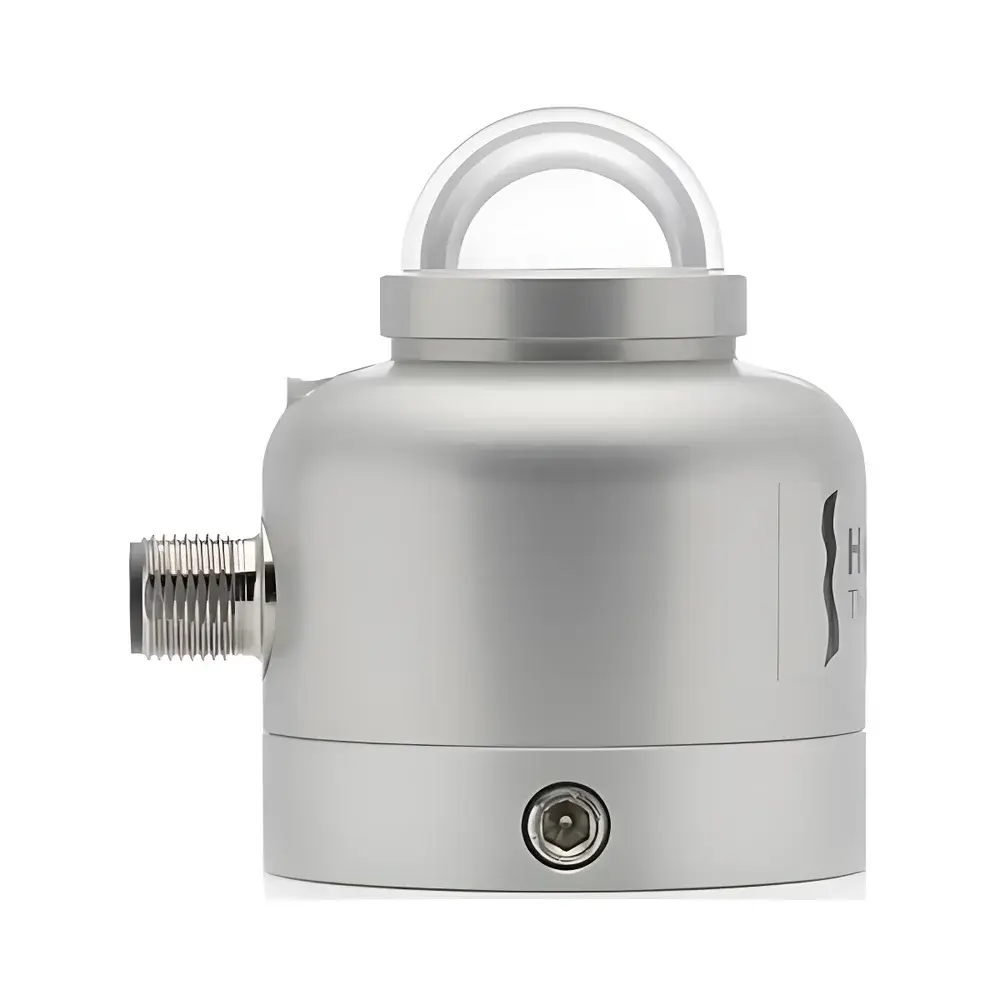
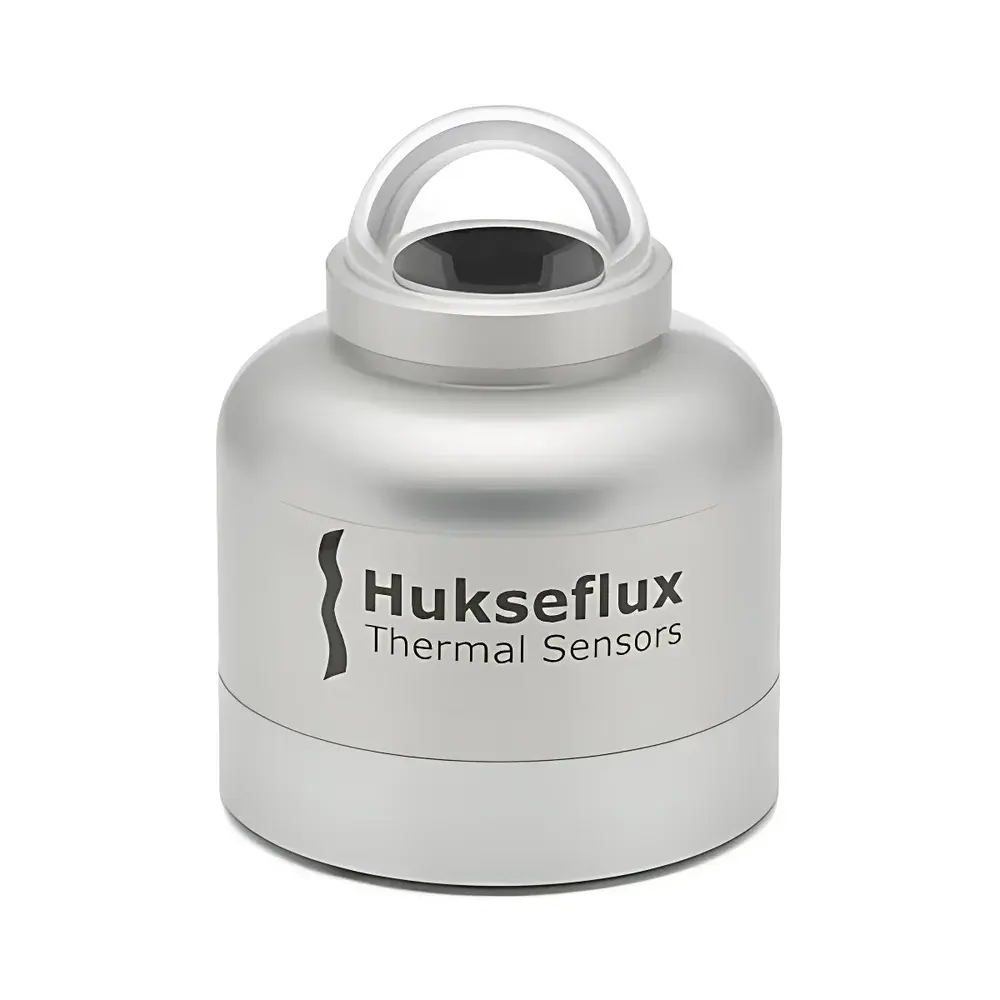
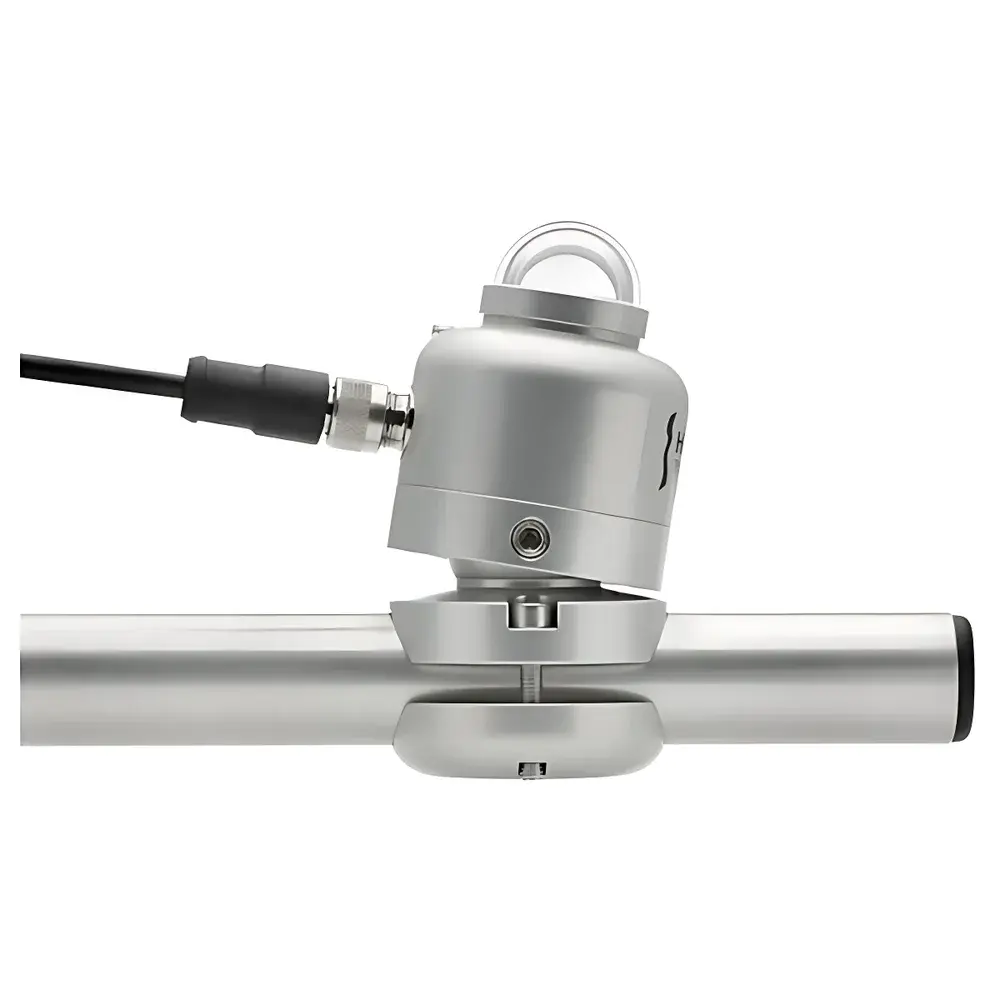
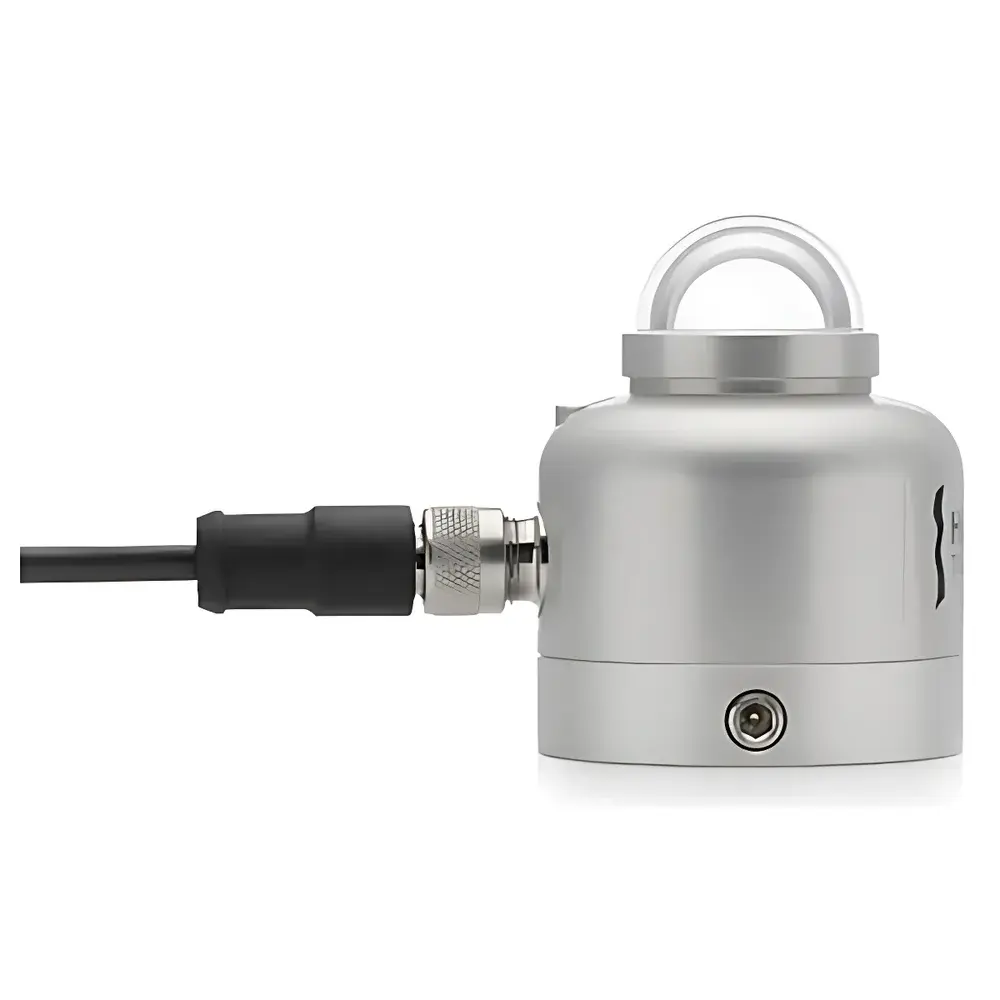
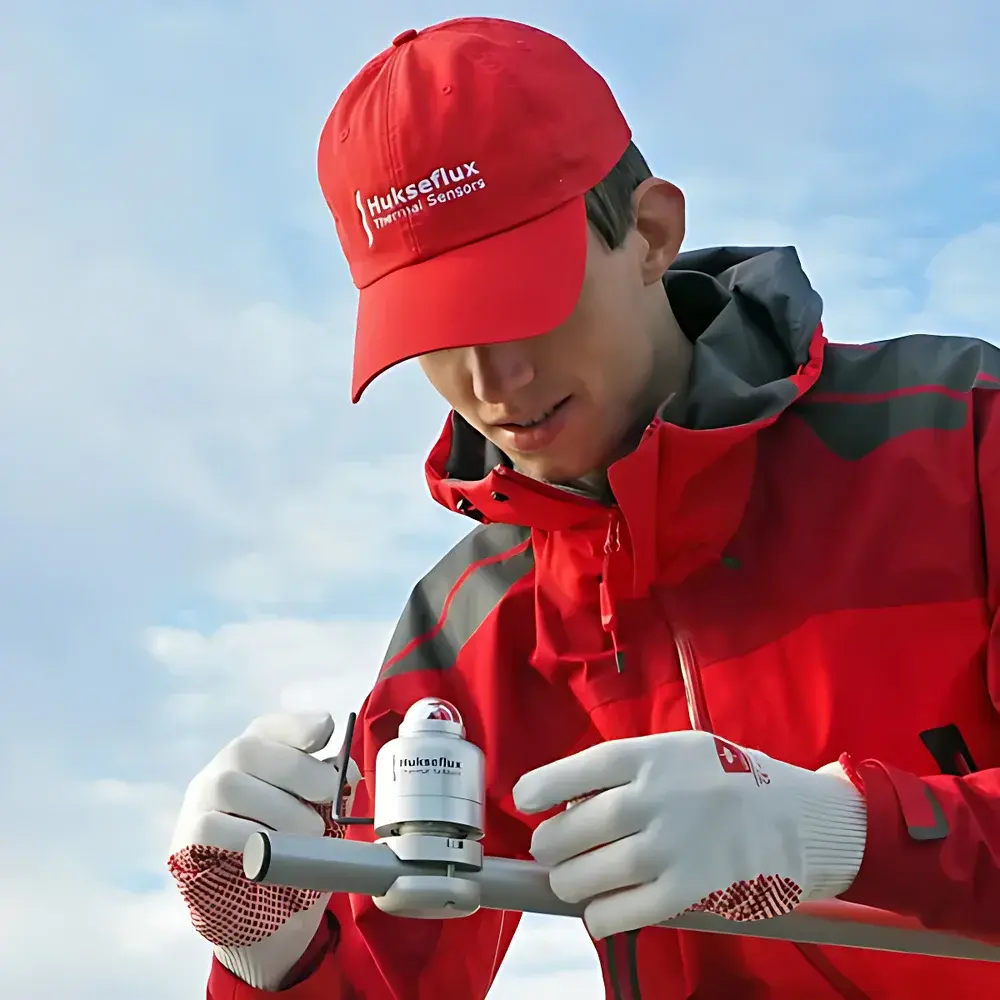
Hukseflux SR05-A1 Secondary Standard Pyranometer
| Brand | Hukseflux |
|---|---|
| Origin | Netherlands |
| Model | SR05-A1 |
| Output Type | Analog (mV) |
| ISO 9060 Classification | Secondary Standard |
| Calibration Uncertainty | < 1.8 % (k = 2) |
| Traceability | World Radiometric Reference (WRR) |
| Measurement Range | 0–2000 W/m² |
| Spectral Range | 285–3000 nm |
| Operating Temperature | −40 to +80 °C |
| Cable Length | 3 m (standard), optional 10 m or 20 m |
| Sensitivity | 10 µV/(W/m²) |
| Leveling | Integrated spherical level, optional ball-and-socket mount with/without tube clamp (for Ø25–40 mm) |
| Ingress Protection | IP67 |
| Weight | 0.5 kg |
| Power Supply | Passive (no external power required) |
Overview
The Hukseflux SR05-A1 is a secondary standard pyranometer engineered for reliable, cost-effective measurement of global solar irradiance on a horizontal plane. It operates on the thermopile principle: incident solar radiation is absorbed by a blackened thermopile sensor surface, generating a temperature gradient across thermocouple junctions, which produces a proportional millivolt output signal. This passive, self-powered design eliminates dependency on external power supplies and enhances long-term field stability. Fully compliant with ISO 9060:2018 classification requirements for secondary standard instruments, the SR05-A1 delivers high reproducibility and low thermal offset performance—critical for continuous monitoring in unattended environments. Its 180° field of view captures hemispherical (global) solar radiation—including direct beam and diffuse components—across the full terrestrial solar spectrum (285–3000 nm). The instrument is calibrated against the World Radiometric Reference (WRR) at PMOD/WRC, Davos, ensuring traceability to international radiometric standards.
Key Features
- ISO 9060:2018 secondary standard classification—validated for scientific-grade solar monitoring without premium cost
- Passive thermopile sensor with no external power requirement, minimizing system complexity and failure points
- Integrated spherical leveling bubble for rapid, repeatable horizontal alignment—reducing installation time and tilt-induced measurement error
- Robust stainless-steel housing and quartz dome with anti-reflective coating, optimized for minimal spectral distortion and long-term outdoor exposure
- IP67-rated enclosure ensures dust-tight and water-immersion resistance—suitable for permanent deployment in harsh climatic conditions (−40 °C to +80 °C)
- Low thermal offset ( 0.9999 over full range) support high-fidelity data logging
- Standard 3 m cable with shielded twisted-pair construction; optional lengths (10 m, 20 m) and dual-ended extension cables available for flexible site integration
Sample Compatibility & Compliance
The SR05-A1 is designed for fixed-mount, ground-based solar irradiance monitoring where compliance with international meteorological and energy-sector standards is essential. It meets the performance criteria defined in ISO 9060:2018 for secondary standard pyranometers and aligns with IEC 61724-1:2021 (Photovoltaic system performance—Monitoring guidelines) for PV plant yield assessment. While not intrinsically certified for GMP or FDA-regulated environments, its WRR-traceable calibration and documented uncertainty budget (< 1.8 %, k = 2) support use in GLP-compliant solar resource assessment and climate observation networks. Data generated by the SR05-A1 is routinely accepted by national meteorological services (e.g., KNMI, DWD), research consortia (e.g., BSRN), and grid operators for solar forecasting model validation.
Software & Data Management
As an analog-output device, the SR05-A1 interfaces directly with any data logger supporting millivolt input channels (e.g., Campbell Scientific CR1000X, Delta-T DL6, Onset HOBO RX3000). Its linear sensitivity of 10 µV/(W/m²) enables straightforward conversion to irradiance (W/m²) using manufacturer-provided calibration coefficients. When integrated into larger SCADA or IoT platforms, raw mV signals can be scaled and timestamped in accordance with IEC 61850-90-12 or IEEE 1379 protocols. For auditability, users are advised to record calibration certificate numbers, date of last verification, and environmental metadata (e.g., tilt angle, dome cleanliness status) alongside time-series irradiance data—practices consistent with ISO/IEC 17025 quality management systems.
Applications
- Baseline solar resource assessment for utility-scale photovoltaic (PV) plant siting and energy yield modeling
- Real-time irradiance monitoring in operational PV power plants per IEC 61724-1 Class A requirements
- Long-term climate observation within national agricultural meteorological networks (e.g., FAO Agrometeorology guidelines)
- Albedo and surface energy balance studies when deployed in paired upward/downward configurations
- Educational and training applications in atmospheric physics and renewable energy curricula
- OEM integration into compact weather stations and smart agrivoltaic monitoring units
FAQ
Does the SR05-A1 require power to operate?
No. It is a passive thermopile sensor and generates its own millivolt output proportional to incident irradiance.
What is the recommended recalibration interval?
Hukseflux recommends recalibration every two years for critical applications, or annually under high-dust, high-UV, or coastal salt-exposure conditions.
Can the SR05-A1 be used for diffuse radiation measurement?
Not directly. It measures global horizontal irradiance (GHI). To derive diffuse horizontal irradiance (DHI), it must be paired with a shading device (e.g., shadow band or sun tracker-mounted occulting disk) and appropriate correction algorithms.
Is dome cleaning required, and how often?
Yes. Accumulated dust, dew, or bird droppings affect spectral transmission. Cleaning frequency depends on local conditions but is typically recommended weekly in arid/dusty regions and monthly in temperate zones—using deionized water and lens-grade tissue.
How does the SR05-A1 compare to first-class or spectrally flat pyranometers?
It offers lower angular response uncertainty than first-class instruments but lacks the spectral flatness and ultra-low thermal offset of high-end primary-standard devices (e.g., Hukseflux CHP1). It is optimized for cost-sensitive, high-reliability deployments—not laboratory reference work.
Related Products







