
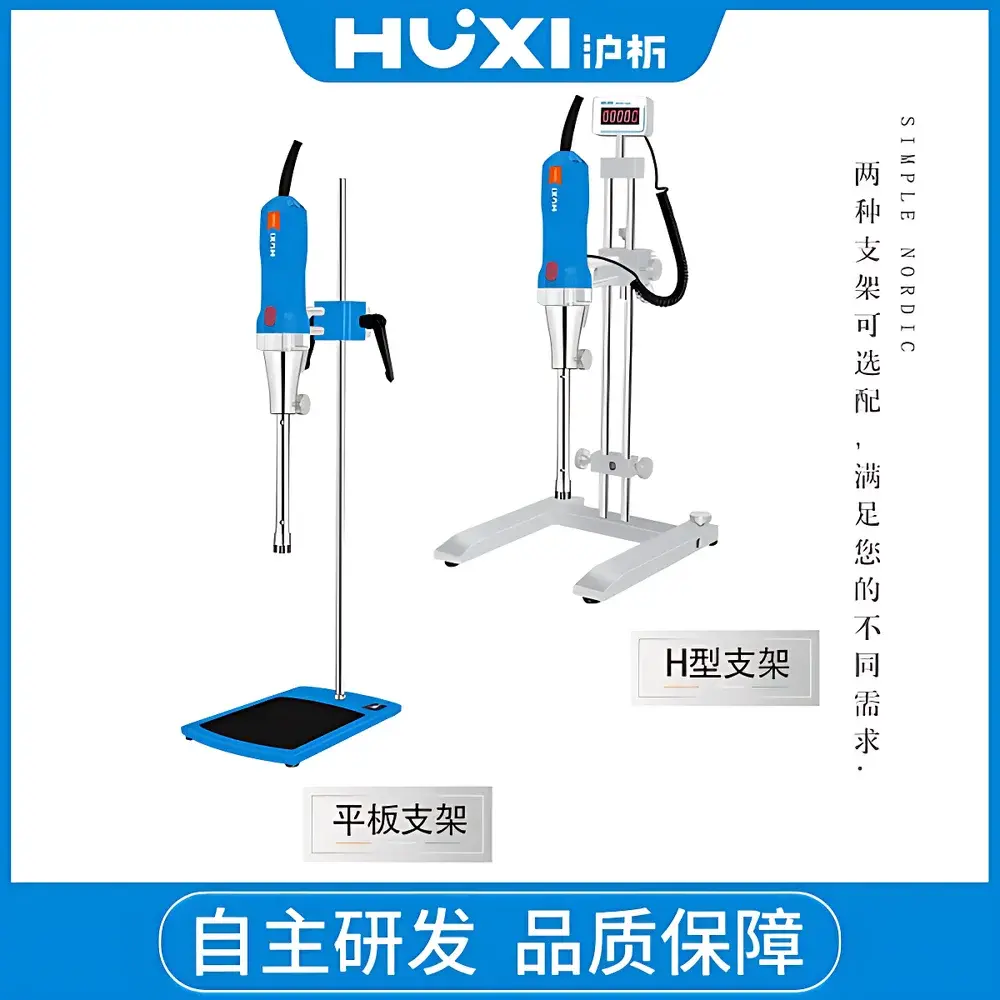
HUXI HR-500 High-Shear Homogenizer
| Brand | HUXI |
|---|---|
| Origin | Shanghai, China |
| Manufacturer | Yes |
| Country of Origin | China |
| Model | HR-500 |
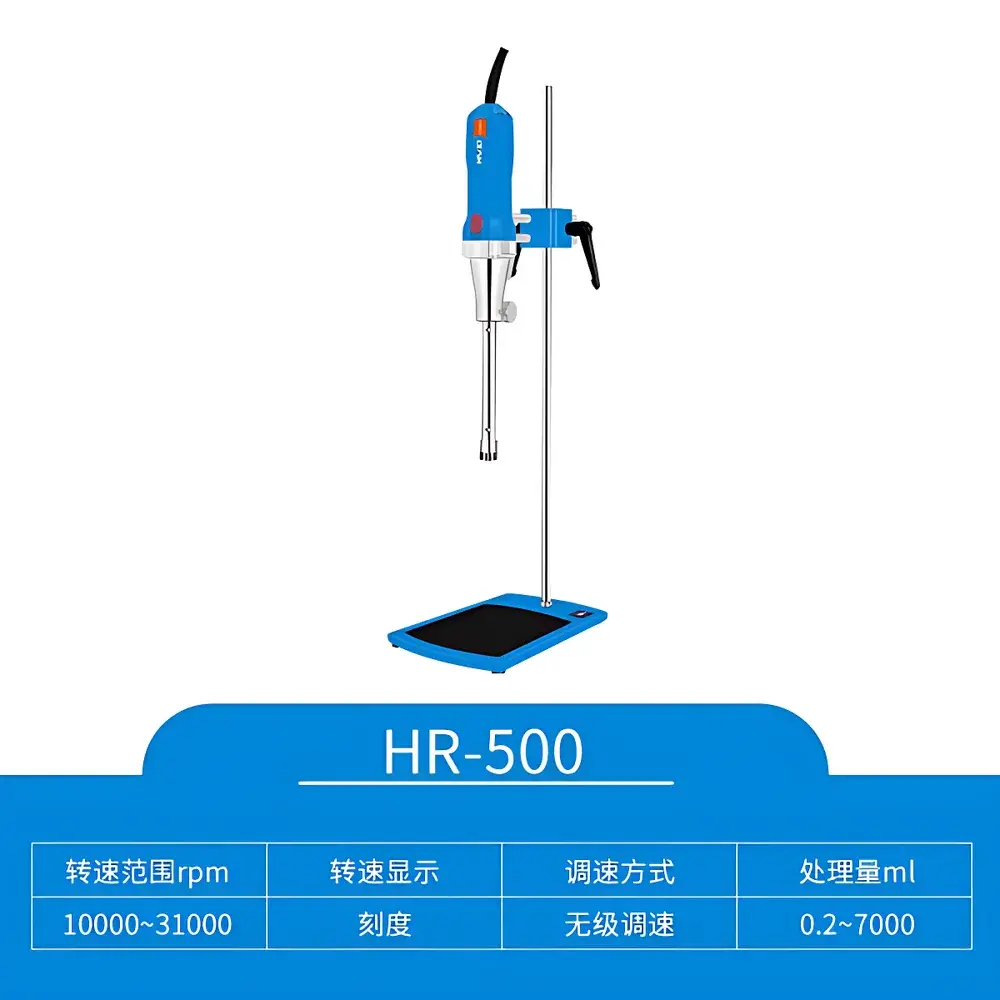
| Instrument Type | Probe-type Rotor-Stator Homogenizer |
| Dimensions (W×D×H) | 275 × φ65 mm |
| Processing Volume | 0.2–7000 mL (H₂O) |
| Speed Range | 10,000–31,000 rpm |
| Input Power | 500 W |
| Output Power | 320 W |
| Speed Display | Analog Scale |
| Speed Control | Continuously Variable (6-step preset range) |
| Wetted Materials | 316 Stainless Steel |
| Shaft Sleeve Material | PTFE |
| Max. Operating Temperature | ≤120 °C |
| Ambient Temperature Range | 5–40 °C |
| Relative Humidity Limit | ≤80 % RH |
| Process Mode | Batch |
| Net Weight (main unit, excl. probe) | 3 kg |
| Power Supply | 220 V, 50 Hz |
Overview
The HUXI HR-500 High-Shear Homogenizer is a precision-engineered rotor-stator laboratory homogenizer designed for reproducible, scalable batch processing of demanding dispersion, emulsification, and cell disruption applications. Operating on the principle of high-velocity fluid shear generated by the close-tolerance interaction between a rotating rotor and stationary stator within the probe tip, the HR-500 subjects samples to intense mechanical energy—inducing turbulent flow, cavitation, and hydrodynamic stress sufficient to break down aggregates, disperse nanoparticles, homogenize viscous suspensions, and form stable oil-in-water or water-in-oil emulsions. Its fixed-speed analog control architecture and robust mechanical design make it suitable for routine QC labs, formulation development, and preclinical sample preparation where deterministic process parameters—not algorithmic automation—are prioritized.
Key Features
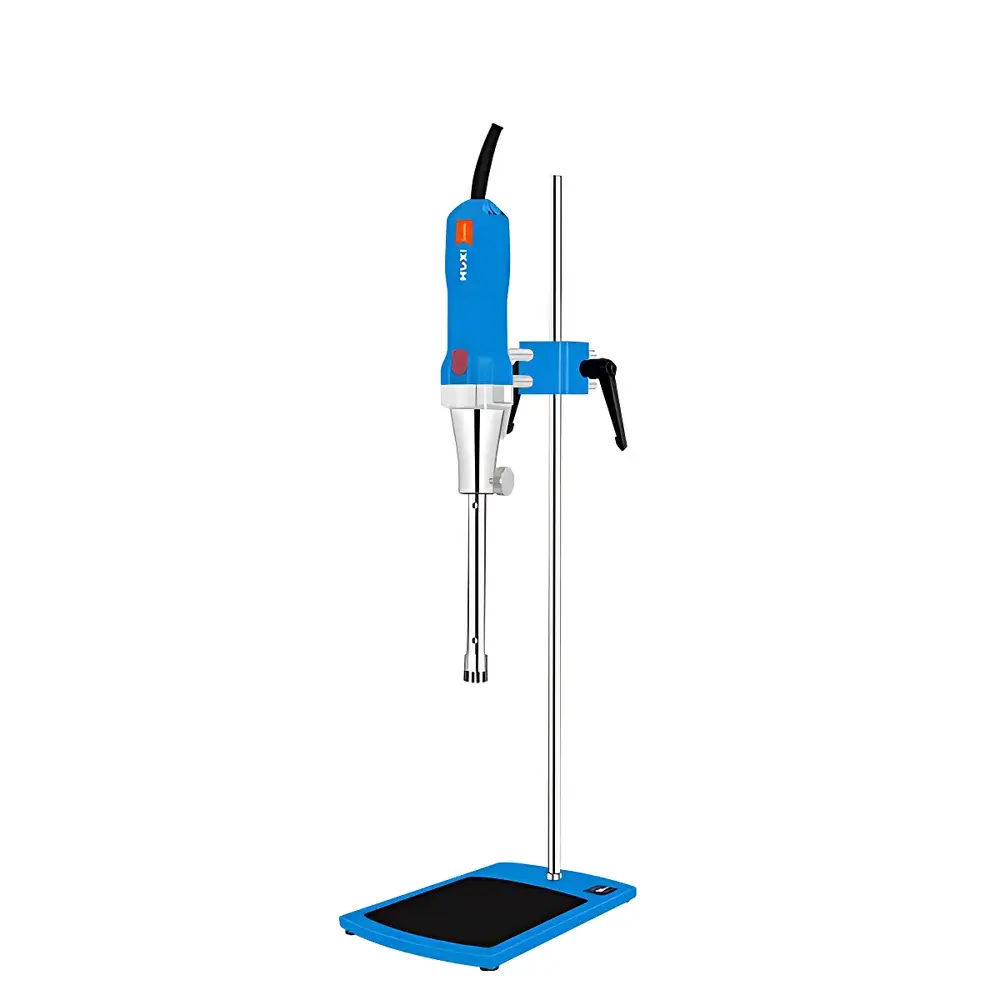
- High-efficiency rotor-stator probe assembly with dual-inlet (bidirectional suction) geometry and claw-type head configuration, enabling uniform radial flow distribution and enhanced shear zone penetration.
- 316 stainless steel wetted components ensure compatibility with acidic, alkaline, and organic solvent-based systems; PTFE shaft sleeve provides low-friction rotational stability and chemical resistance at elevated temperatures.
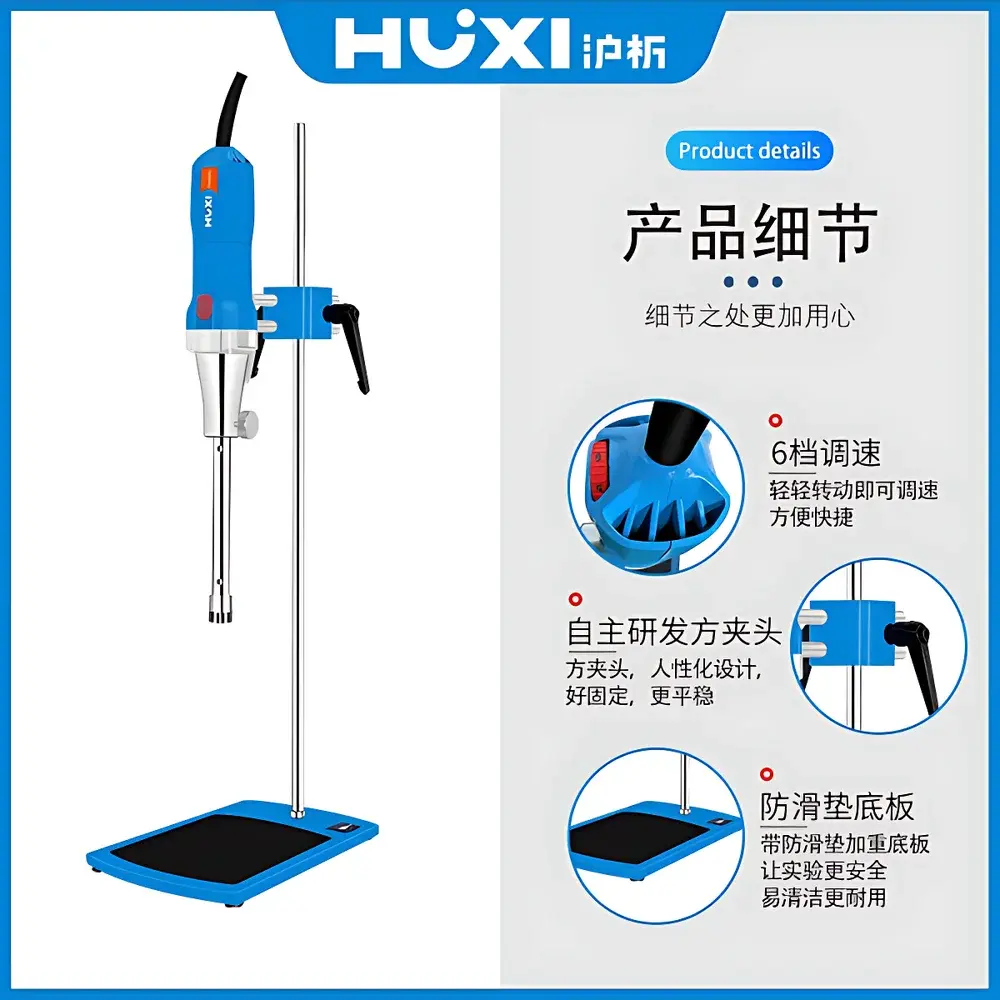
- Continuously variable speed control (10,000–31,000 rpm) via calibrated analog dial, offering six discrete operational setpoints for method transfer consistency across users and shifts.
- Modular probe mounting system with quick-release coupling and integrated height-adjustable support stand—featuring locking knob and coarse/fine elevation adjustment for precise immersion depth control in vessels ranging from microcentrifuge tubes to 5-L beakers.
- Thermally stable induction motor with imported core components delivers sustained torque output under load, minimal acoustic emission (<72 dB(A) at 1 m), and thermal protection for uninterrupted operation up to 30 minutes per cycle.
Sample Compatibility & Compliance
The HR-500 accommodates heterogeneous systems including solid-in-liquid suspensions (e.g., pigment dispersions, ceramic slurries), immiscible liquid phases (e.g., silicone emulsions, pesticide concentrates), and biological matrices (e.g., tissue homogenates, bacterial lysates). It supports standard laboratory glassware (cylindrical beakers, conical flasks, centrifuge tubes) and is compatible with jacketed vessels for temperature-controlled processing. While not certified to ISO/IEC 17025 or FDA 21 CFR Part 11 out-of-the-box, its mechanical repeatability, traceable speed calibration, and documented maintenance intervals enable integration into GLP-compliant workflows when paired with lab-specific SOPs and operator training records. All wetted materials conform to USP Class VI biocompatibility standards for non-implantable contact.
Software & Data Management
The HR-500 operates as a standalone instrument without embedded firmware or digital connectivity. Speed is monitored via analog scale dial with ±200 rpm visual resolution; no electronic logging, audit trail, or remote interface is provided. Users are expected to manually record operating parameters—including probe type, vessel geometry, fill volume, speed setting, and duration—in hard-copy or LIMS-integrated electronic notebooks. For regulatory environments requiring data integrity, external USB tachometers or video-based motion analysis may be deployed for independent speed verification and process documentation.
Applications
- Pharmaceutical: Preparation of nanoemulsions for oral delivery, homogenization of vaccine adjuvant suspensions, cell lysis for protein extraction (e.g., E. coli, yeast).
- Personal Care: Formulation of stable cosmetic emulsions (creams, lotions), dispersion of UV filters (e.g., TiO₂, ZnO nanoparticles), viscosity modification of surfactant systems.
- Agrochemical: Wettable powder reconstitution, suspension concentrate (SC) stabilization, encapsulation matrix homogenization.
- Materials Science: Exfoliation of 2D nanomaterials (graphene, MoS₂), carbon black dispersion in polymer precursors, conductive ink formulation.
- Food & Beverage R&D: Dairy alternative emulsion development (oat, almond), flavor oil dispersion, enzymatic reaction mixture homogenization prior to HPLC analysis.
FAQ
What probe sizes are available for the HR-500?
Over 20 interchangeable rotor-stator probes are offered—from 5 mm micro-probes for volumes as low as 0.2 mL to 25 mm industrial-grade heads rated for 7 L batches. All share standardized M14×1.5 threading and are mechanically compatible with the HR-500 drive unit.
Can the HR-500 be used for sterile processing?
Yes—probes and shafts are autoclavable at 121 °C for 20 minutes. PTFE sleeves must be removed prior to sterilization; replacement sleeves are supplied separately.
Is continuous operation supported?
The unit is rated for intermittent duty: maximum 30 minutes ON followed by 15 minutes OFF at full load. Extended use requires active cooling of the motor housing and periodic inspection of bearing preload.
How is speed accuracy verified?
Users should employ a calibrated handheld optical tachometer before each critical run. Factory calibration certificates list speed deviation limits of ±3% of setpoint across the full 10k–31k rpm range.
Does the HR-500 meet CE or UL safety standards?
The device complies with IEC 61010-1:2010 for electrical safety in laboratory equipment. CE marking applies to the EU market; UL listing is not held, but the design adheres to UL 61010-1 equivalent construction requirements.



