
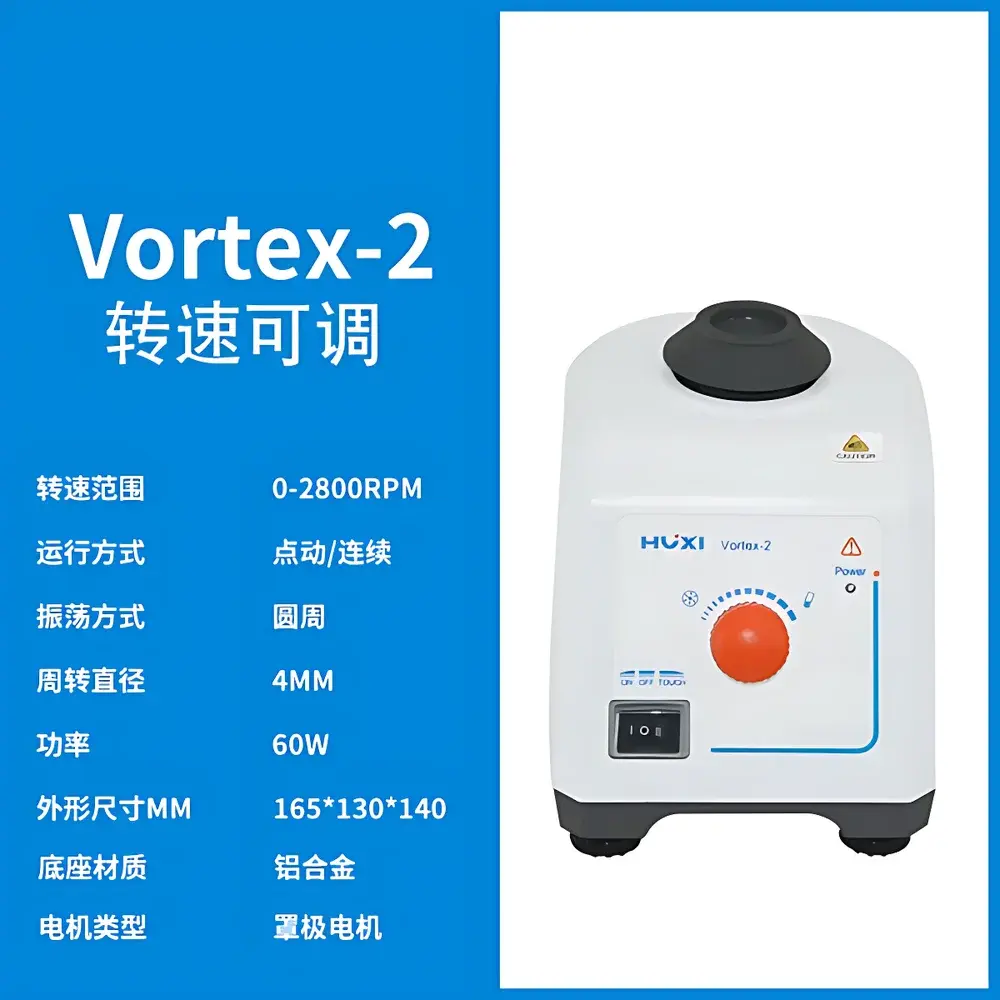
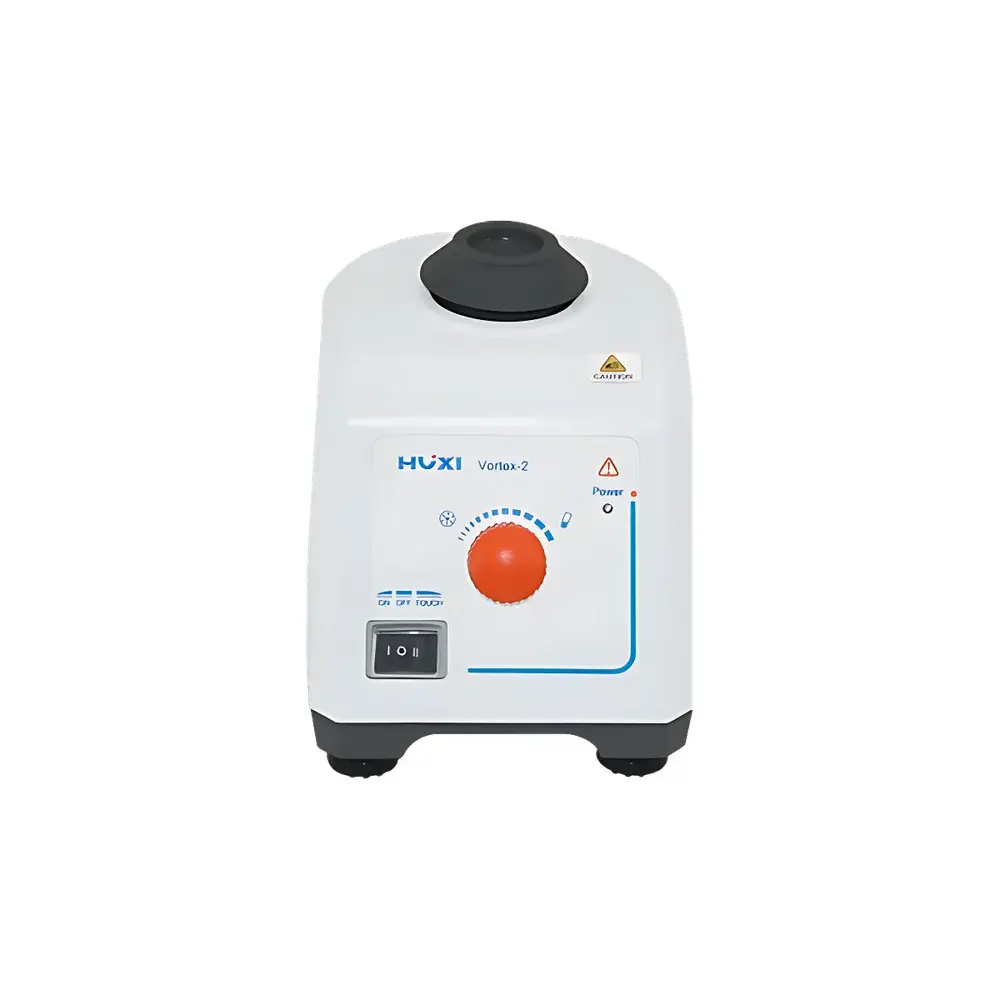
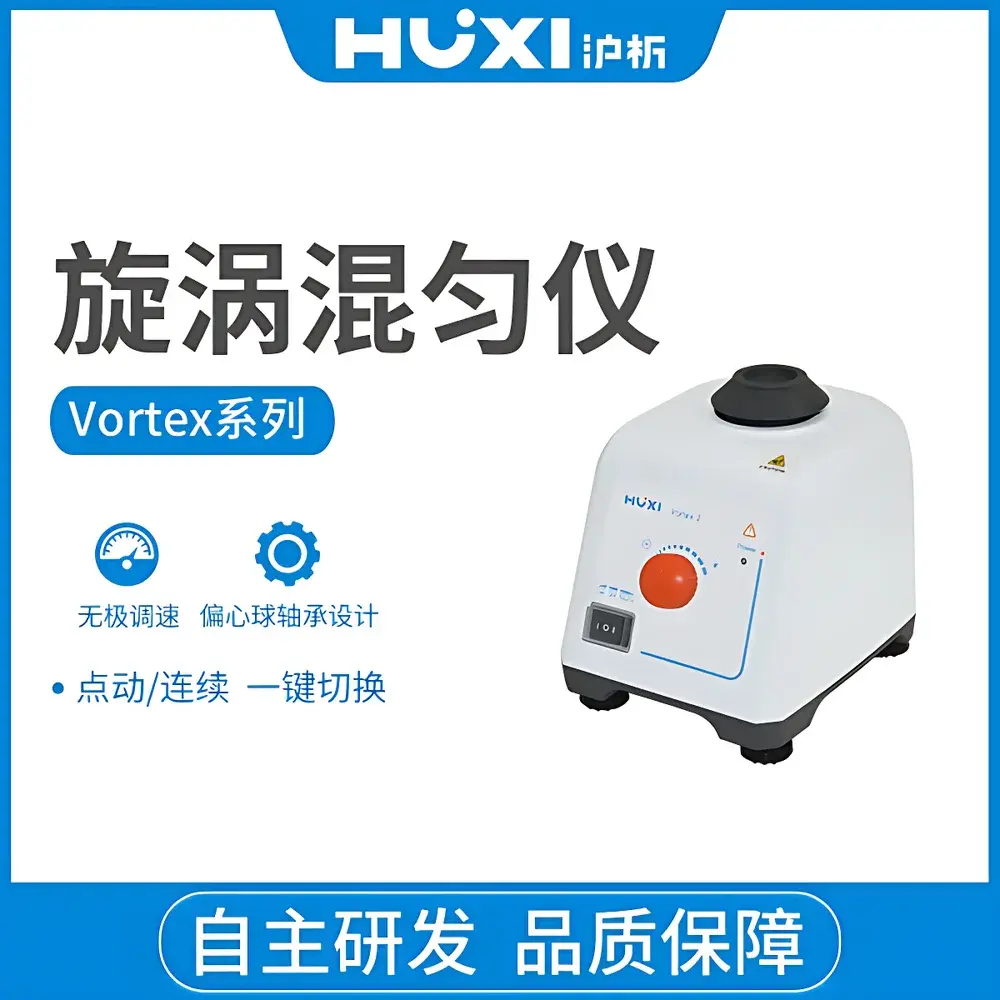
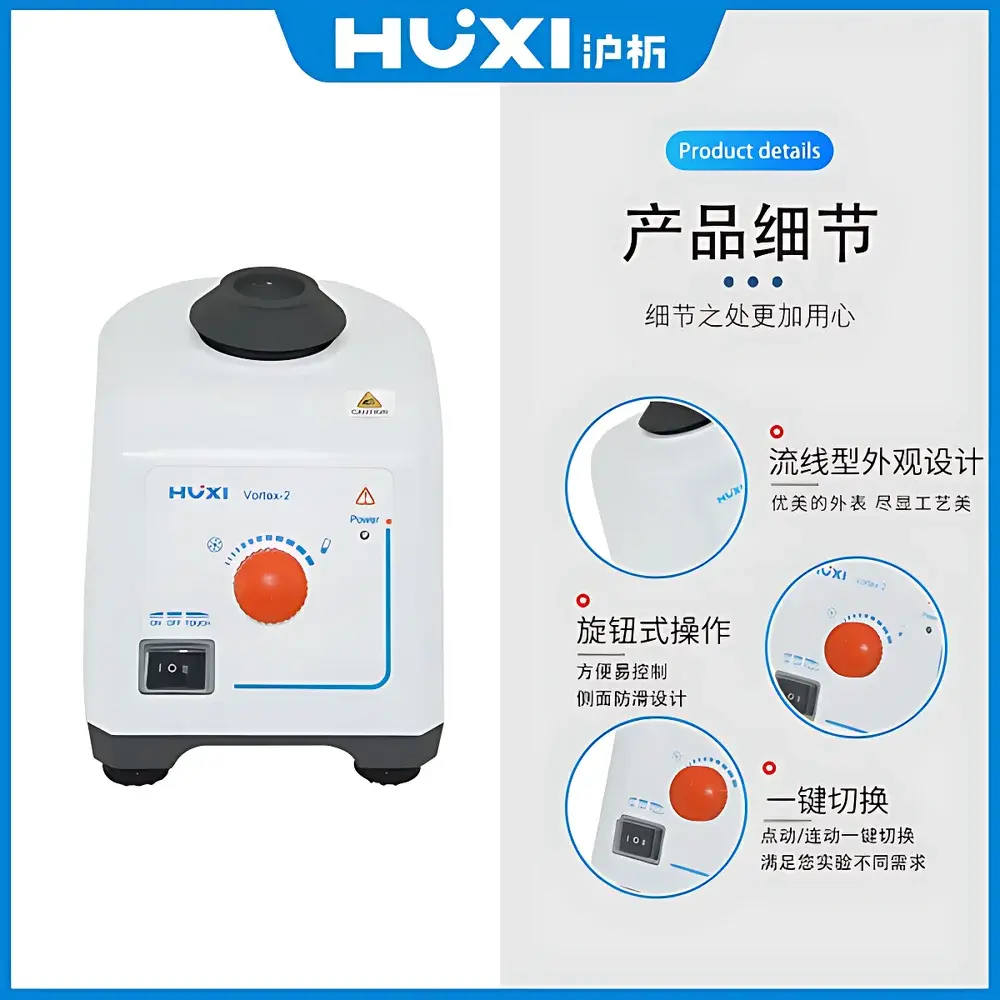
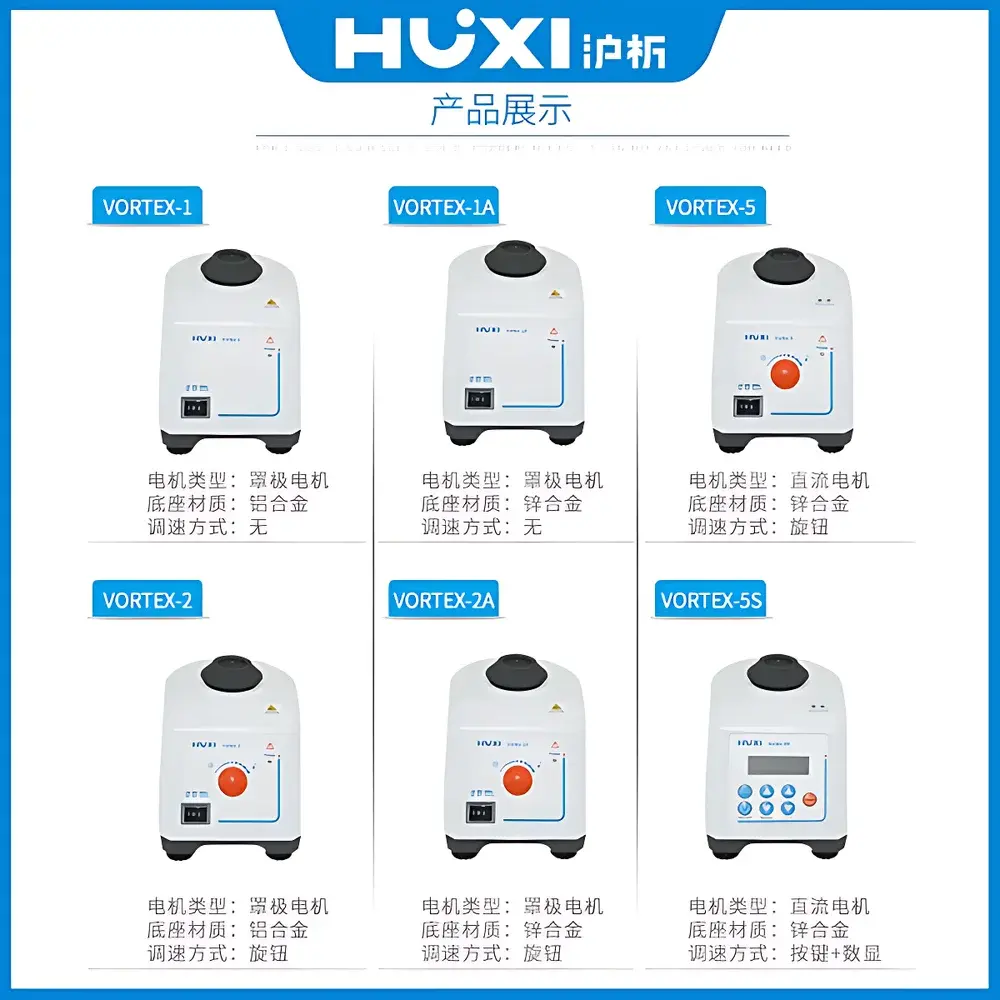
HUXI Vortex-2 Benchtop Vortex Mixer
| Brand | HUXI |
|---|---|
| Origin | Shanghai, China |
| Manufacturer | HUXI Scientific Instrument Co., Ltd. |
| Model | Vortex-2 |
| Rated Voltage | 100–120 V / 200–230 V (configurable) |
| Frequency | 50/60 Hz |
| Power Input | 60 W |
| Motor Output Power | 11 W |
| Speed Range | 0–2800 rpm |
| Speed Display | Analog dial scale |
| Orbit Diameter | 4 mm |
| Operating Mode | Touch (pulse) or continuous |
| Motion Type | Circular orbital shaking |
| Base Material | Reinforced engineering plastic (paint-free, acid/alkali resistant, impact resistant) |
| Platform Surface | TPU-coated corrosion- and wear-resistant surface |
| Footing | Silicone anti-slip pads |
| Dimensions (W×D×H) | 165 × 130 × 140 mm |
| Net Weight | 2.0 kg |
| Ambient Operating Temperature | 5–40 °C |
| Relative Humidity Limit | ≤80% RH |
| Ingress Protection Rating | IP21 |
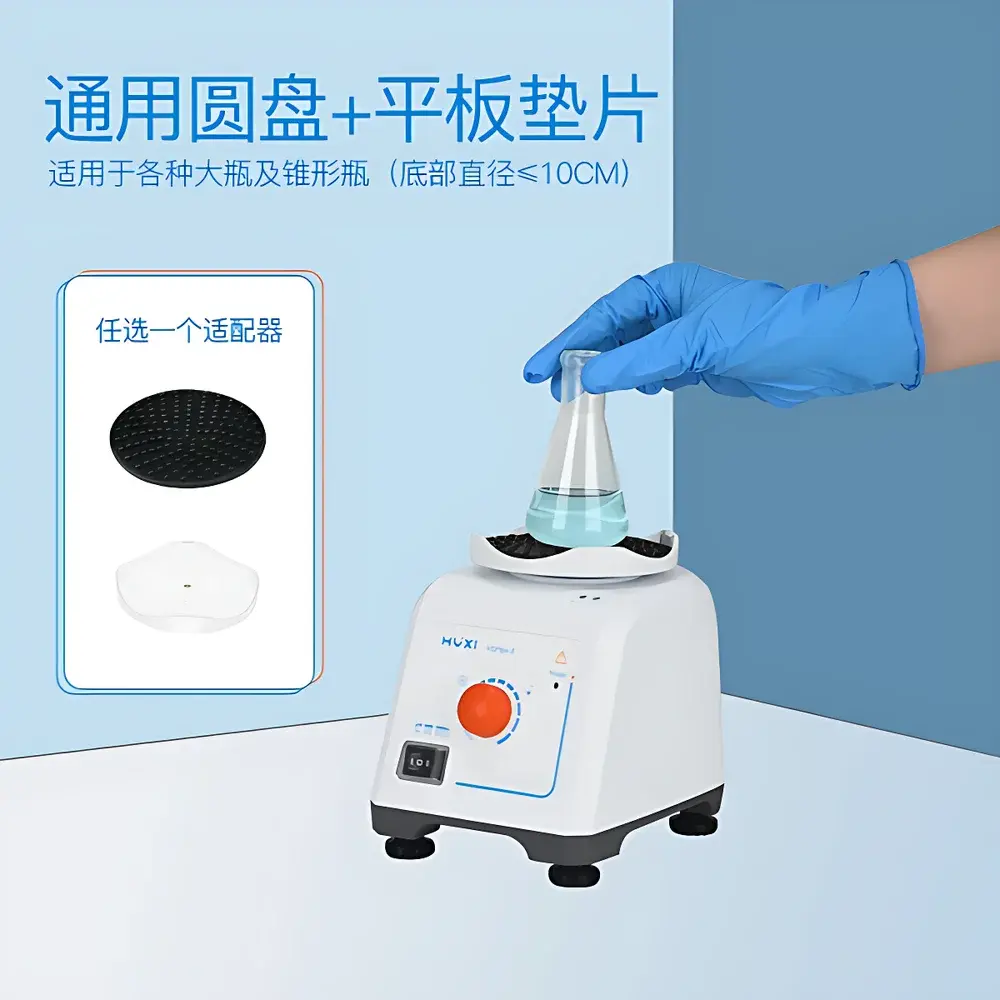
| Standard Accessories | Universal cup head (wear-resistant) |
Overview
The HUXI Vortex-2 is a compact, high-reliability benchtop vortex mixer engineered for consistent, repeatable sample homogenization in routine laboratory workflows. It operates on the principle of circular orbital motion—driven by a shaded-pole motor—to induce rapid, three-dimensional fluid agitation in tubes, vials, and microcentrifuge containers. Unlike linear shakers or magnetic stirrers, the Vortex-2 generates controlled centrifugal forces that promote efficient suspension of particulates, dissolution of powders, and emulsification of immiscible phases without requiring internal stirring elements. Its design prioritizes mechanical robustness and chemical compatibility, making it suitable for use in molecular biology, clinical diagnostics, pharmaceutical QC, and academic research laboratories where reproducibility, low maintenance, and compliance with general lab safety standards are essential.
Key Features
- Adjustable speed control from 0 to 2800 rpm via analog dial—enabling precise tuning for sensitive samples (e.g., enzyme assays) or aggressive mixing (e.g., cell lysis buffers).
- Eccentric ball-joint drive mechanism ensures stable, low-vibration operation across the full speed range and facilitates quick attachment/detachment of the universal cup head.
- Chemically inert platform surface fabricated from TPU (thermoplastic polyurethane), offering superior resistance to organic solvents, acids, bases, and repeated mechanical abrasion—eliminating the degradation issues associated with traditional sponge or rubber pads.
- Paint-free housing constructed from reinforced engineering thermoplastics, providing structural integrity, impact resistance, and long-term stability under frequent handling and decontamination protocols.
- Silicone non-slip feet minimize lateral displacement during high-speed pulsing or continuous operation, ensuring positional stability on stainless steel, laminate, or epoxy resin work surfaces.
- Dual-mode operation: momentary “touch” activation for brief mixing pulses (ideal for checking suspension uniformity) and continuous mode for extended homogenization cycles.
- IP21-rated enclosure provides basic protection against vertically falling solid objects and limited ingress of moisture—supporting safe use in standard ISO Class 7/8 clean benches and general-purpose labs.
Sample Compatibility & Compliance
The Vortex-2 accommodates standard laboratory vessels including 0.2–50 mL conical tubes, Eppendorf-style microtubes, PCR strips, glass vials, and small beakers up to 100 mL volume. Its 4 mm orbit diameter delivers sufficient shear energy for resuspension of lyophilized reagents, dispersion of nanoparticles, and homogenization of viscous biological matrices (e.g., whole blood, tissue homogenates). While not certified for GLP/GMP environments as a standalone instrument, its construction materials meet ISO 10993-5 biocompatibility screening criteria for short-term contact, and its electrical design complies with IEC 61010-1:2010 for laboratory equipment safety. The absence of painted surfaces eliminates VOC outgassing risks, supporting compatibility with trace-level analytical workflows.
Software & Data Management
The Vortex-2 is a manually operated, analog-control instrument with no embedded firmware, digital interface, or data logging capability. This architecture ensures operational simplicity, electromagnetic immunity, and zero risk of software obsolescence or cybersecurity exposure. All settings—including speed selection and operating mode—are directly observable and adjustable without menu navigation. For laboratories implementing electronic lab notebooks (ELN) or LIMS integration, manual parameter recording (e.g., rpm, duration, vessel type) is supported via standardized SOP documentation templates aligned with ISO/IEC 17025 requirements for equipment usage traceability.
Applications
- Routine resuspension of pelleted cells, bacterial cultures, and immunoprecipitated complexes.
- Pre-analytical preparation of clinical specimens (e.g., serum separation, anticoagulated blood mixing prior to hematology analysis).
- Homogenization of extraction buffers with solid-phase adsorbents (e.g., silica membranes, magnetic beads) in nucleic acid purification workflows.
- Accelerated dissolution testing of excipients and active pharmaceutical ingredients (APIs) per USP <701> guidelines.
- Uniform dispersion of nanomaterials in aqueous or organic carrier fluids for TEM/SEM sample preparation.
- Quality control mixing of calibration standards and reference materials in environmental and food testing labs.
FAQ
Is the Vortex-2 compatible with international power standards?
Yes—the unit supports dual-voltage configuration (100–120 V / 200–230 V) and both 50 Hz and 60 Hz input frequencies. Voltage selection must be performed at time of order; field conversion is not supported.
Can the Vortex-2 be used inside a cold room or incubator?
Operation is specified for ambient temperatures between 5 °C and 40 °C. Prolonged use below 10 °C may affect silicone pad elasticity and motor efficiency; condensation ingress is not protected against.
Does the device include speed calibration documentation?
No factory calibration certificate is supplied. Users may verify rotational speed using an external optical tachometer traceable to NIST or equivalent national metrology institute standards.
What maintenance is required?
No scheduled maintenance is needed. Wipe exterior surfaces with 70% ethanol or isopropanol after each use. Avoid submerging or exposing the base to liquid immersion.
Is the universal cup head autoclavable?
The standard cup head is not autoclavable. It is rated for repeated cleaning with mild detergents and alcohol-based disinfectants. Replacement heads are available as consumables.
Related Products



