
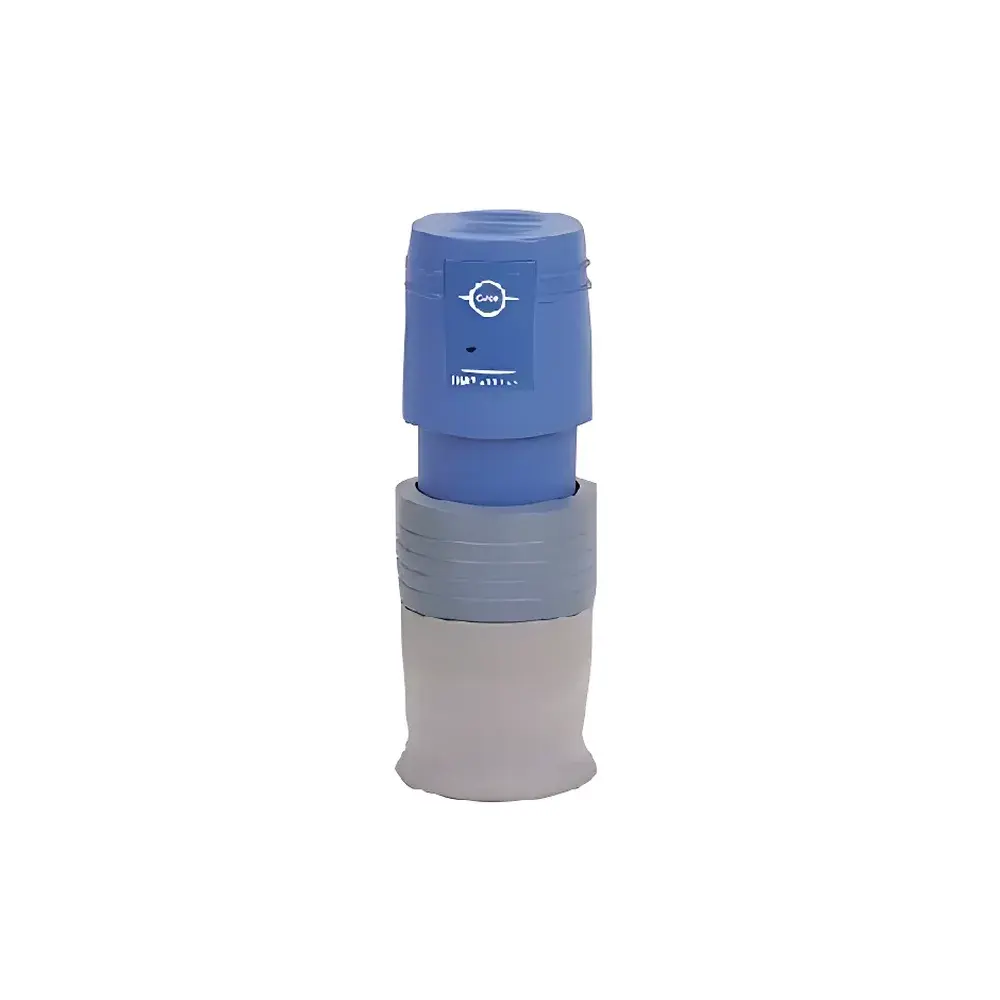
IKA A11 Basic Analytical Grinder
| Brand | IKA |
|---|---|
| Origin | Germany |
| Model | A11 |
| Motor Input Power | 160 W |
| Motor Output Power | 100 W |
| Max. Speed | 28,000 rpm |
| Max. Tip Speed | 53 m/s |
| Max. Sample Volume | 80 mL |
| Max. Feed Hardness | 6 Mohs |
| Max. Feed Size | 10 mm |
| Grinding Principle | Impact & Shear |
| Processing Mode | Batch |
| Grinding Head Material | Stainless Steel 1.4034 |
| Grinding Chamber Material | Stainless Steel 1.4571 + PTFE (glass-fiber reinforced) |
| Cooling Options | Dry Ice or Liquid Nitrogen |
| Dimensions (W × H × D) | 85 × 240 × 85 mm |
| Weight | 1.5 kg |
| Ambient Operating Temperature | 5–40 °C |
| Relative Humidity Limit | ≤80% |
| IP Rating | IP43 |
| Voltage | 220–240 V / 100–115 V |
| Frequency | 50/60 Hz |
| Duty Cycle | 1 min ON / 10 min OFF |
Overview
The IKA A11 Basic Analytical Grinder is a compact, high-speed laboratory grinder engineered for reproducible sample homogenization and particle size reduction in analytical preparation workflows. Designed according to the principles of mechanical impact and shear comminution, it delivers consistent results for routine quality control, pharmaceutical raw material testing, food safety analysis, and environmental sample processing. Its dual-mode operation—impact grinding via a fixed stainless-steel rotor and optional shear grinding with an interchangeable knife assembly—enables method flexibility across diverse sample matrices, from brittle minerals and dried plant tissues to fibrous or viscoelastic materials when pre-conditioned with cryogenic agents.
Key Features
- High-speed rotor system operating up to 28,000 rpm, generating tip speeds of 53 m/s for efficient mechanical disintegration
- Dual-grinding capability: integrated impact head (stainless steel 1.4034) for hard, brittle, or low-elasticity samples; optional shear knife set (A11.3) for fibrous, hydrated, or adhesive substances
- Cryogenic compatibility: grinding chamber supports direct application of dry ice or liquid nitrogen for thermolabile or tough-to-grind samples—critical for preserving enzyme activity, preventing polymer degradation, or embrittling elastomers
- Chemically resistant grinding chamber constructed from electropolished stainless steel 1.4571 and PTFE-reinforced composite (A11.5, 80 mL), certified for use under GLP-compliant sample handling protocols
- Compact footprint (85 × 240 × 85 mm) and lightweight design (1.5 kg) suitable for benchtop integration in regulated QC labs, university teaching laboratories, and field-deployable analytical units
- Thermal management via passive cooling only; no built-in water jacket—consistent with ISO 20785-1 requirements for non-pressurized, low-risk mechanical comminution devices
- Duty cycle optimized at 1 minute active grinding followed by 10 minutes thermal recovery, ensuring motor longevity and dimensional stability of precision-ground components
Sample Compatibility & Compliance
The A11 accommodates feed materials up to 10 mm in nominal particle size and hardness ≤6 Mohs—covering ceramics, coal, limestone, freeze-dried biological tissues, and pharmaceutical excipients. Its PTFE-lined chamber (A11.5) resists corrosion from acidic or halogenated solvents, while the stainless-steel construction complies with FDA 21 CFR Part 11 expectations for equipment used in GMP environments where audit trails are maintained manually. The device meets DIN EN 60529 (IP43) for protection against solid ingress and water splashing—suitable for controlled laboratory spaces but not wet-process or cleanroom ISO Class 5+ environments. It is CE-marked per Machinery Directive 2006/42/EC and RoHS-compliant.
Software & Data Management
The A11 Basic operates as a stand-alone electromechanical instrument without digital interface or embedded software. All operational parameters—including speed, runtime, and cooling protocol—are manually selected and recorded externally. This analog architecture aligns with laboratories maintaining legacy validation frameworks or requiring deterministic, non-programmable operation for regulatory traceability. Users integrate the A11 into broader LIMS or ELN systems via manual entry of batch IDs, grinding conditions, and post-processing sieve analysis data—fully compatible with ASTM E11-22 (standard specification for wire cloth and sieves) and ISO 13320:2020 (laser diffraction particle size analysis) workflows.
Applications
- Preparation of homogeneous sub-samples for XRF, ICP-OES, and elemental analysis of geological or metallurgical specimens
- Routine particle size reduction prior to dissolution testing (USP <711>) in pharmaceutical development labs
- Homogenization of herbal powders and botanical extracts for HPLC fingerprinting and marker compound quantification
- Cryogenic milling of rubber, polymers, and adhesives for FTIR spectral library generation
- Standardized comminution of food composites (e.g., spices, grains, dairy powders) for microbiological plating and mycotoxin extraction
- Supporting ISO 17025-accredited testing methods where equipment qualification includes documented mechanical performance verification at defined load points
FAQ
Is the A11 compliant with Good Manufacturing Practice (GMP) requirements?
Yes—when operated within its specified duty cycle and with documented cleaning and calibration procedures, the A11 satisfies equipment qualification criteria for Category B (supporting) instruments under EU Annex 15 and WHO TRS 986.
Can the A11 be validated for use in regulated pharmaceutical testing?
It is routinely included in IQ/OQ protocols for analytical sample preparation; full PQ requires user-defined acceptance criteria aligned with pharmacopoeial grinding uniformity tests (e.g., USP <1174>).
What is the expected service life of the impact grinding head under routine use?
With proper maintenance and adherence to the 1:10 duty cycle, the stainless-steel rotor (1.4034) maintains dimensional integrity for ≥5,000 grinding cycles when processing materials ≤6 Mohs hardness.
Does IKA provide a certificate of conformance with each unit?
Yes—each A11 ships with a manufacturer’s CoC referencing DIN EN ISO 9001:2015, confirming conformity to declared technical specifications and manufacturing controls.
Is liquid nitrogen handling supported by safety interlocks or pressure relief features?
No—the A11 relies on operator training and external cryogenic safety protocols; users must comply with OSHA 1910.101 and CGA P-1 guidelines for LN₂ use in enclosed lab spaces.



