
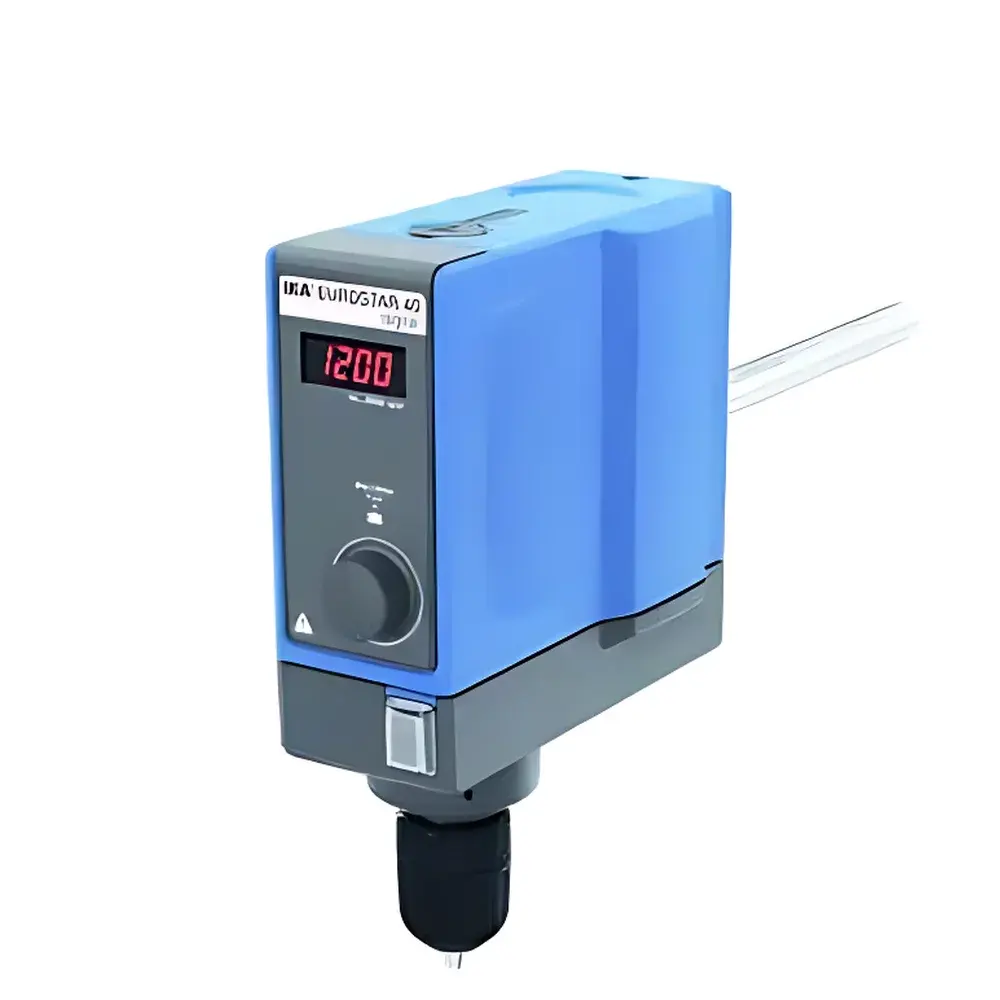
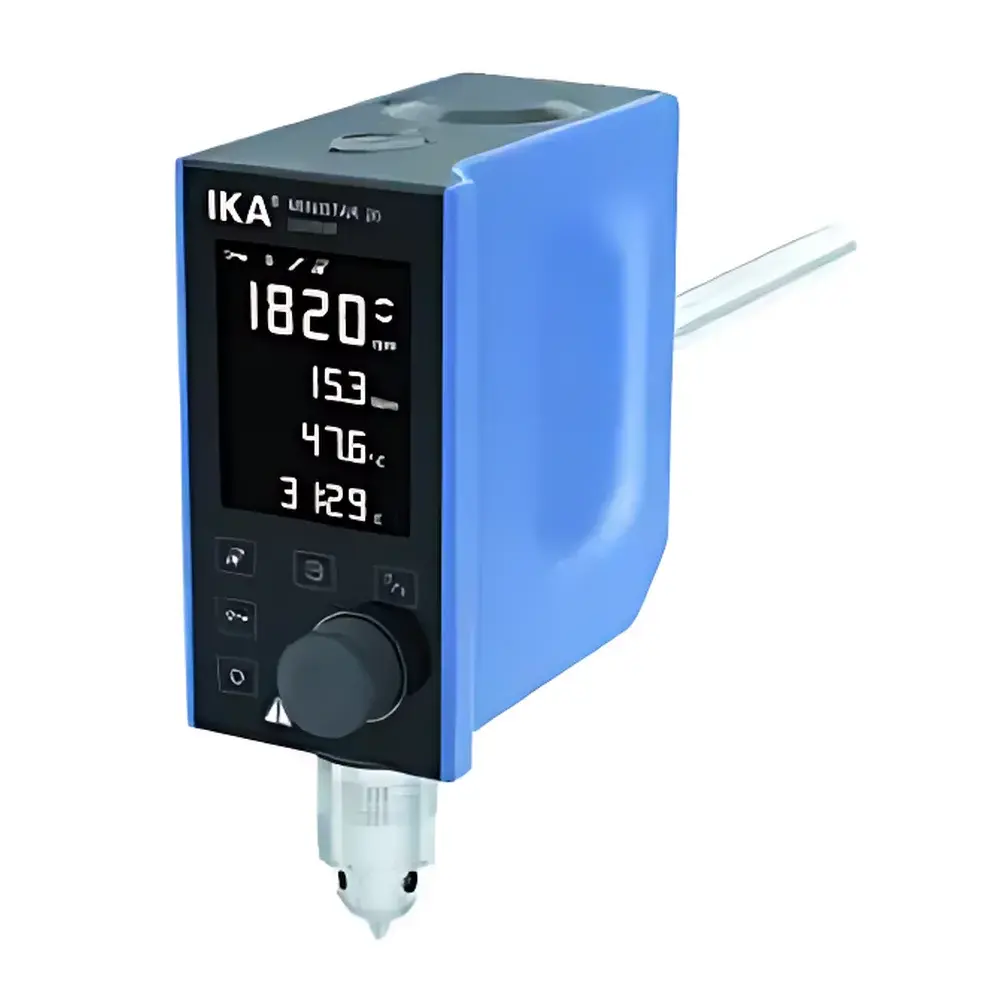
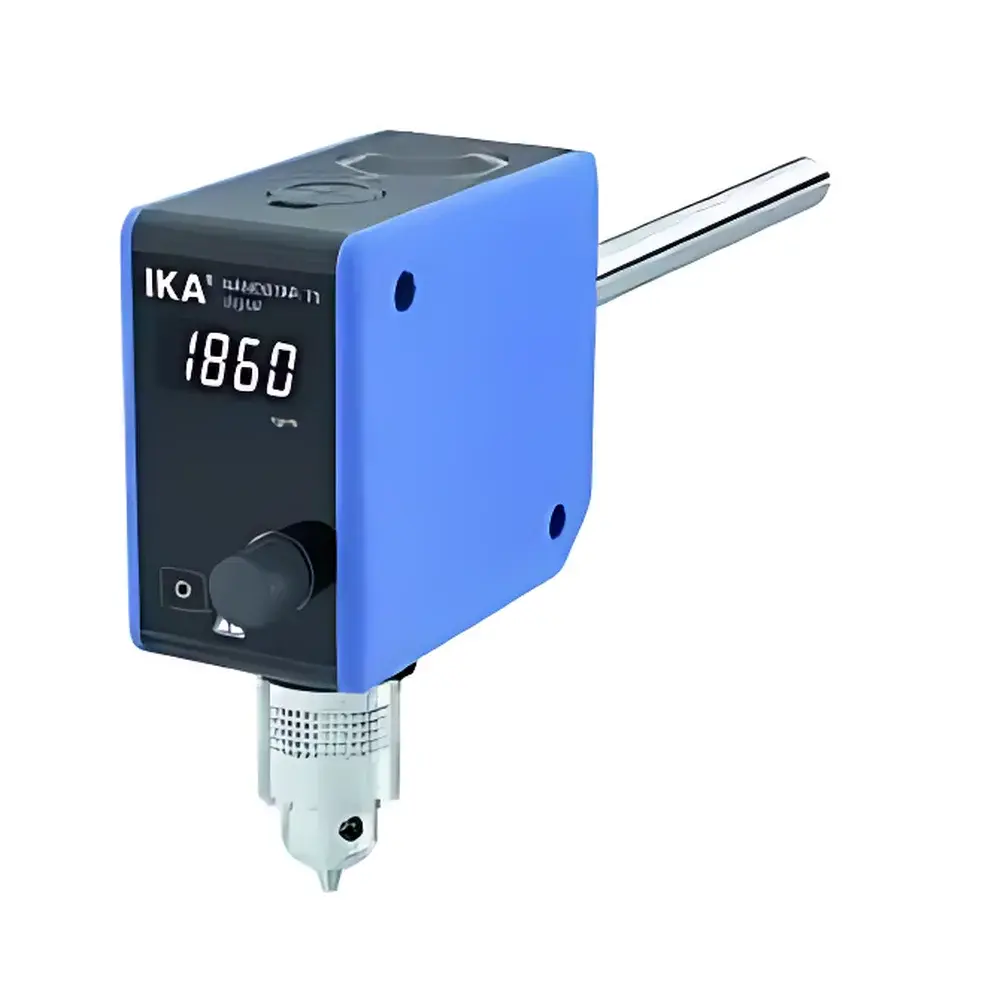
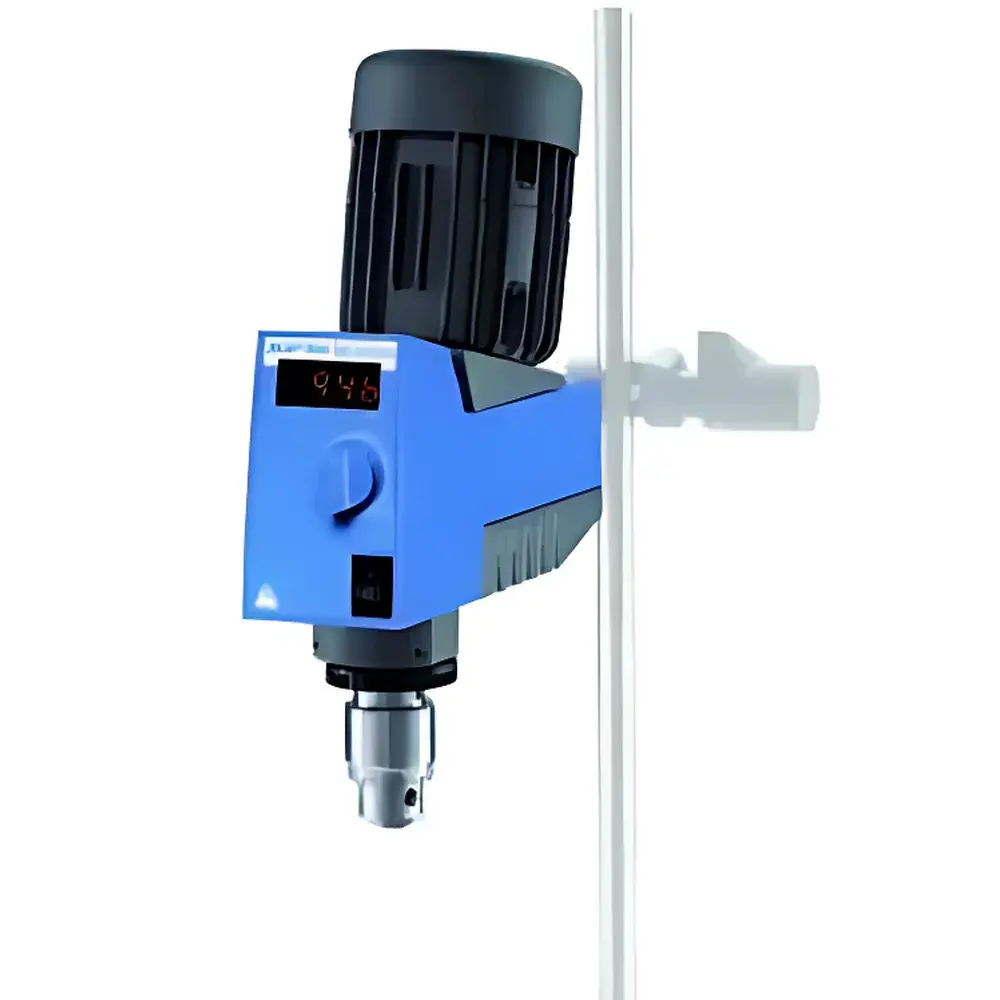
IKA MINISTARS / EUROSTARS / RW Series Overhead Stirrers
| Brand | IKA |
|---|---|
| Origin | Germany |
| Model | MINISTARS / EUROSTARS / RW |
| Maximum Mixing Volume | 200 L |
| Temperature Control Range | −10 to 350 °C |
| Drive Type | Electric |
| Stirrer Shaft Diameter | 4–13 mm |
| Max Speed | up to 2000 rpm |
| Compliance | CE, RoHS, ISO 9001-certified manufacturing |
Overview
The IKA MINISTARS, EUROSTARS, and RW series overhead stirrers are precision-engineered laboratory instruments designed for reliable, scalable mixing across a broad range of viscosities, volumes, and process conditions. These motor-driven overhead stirrers operate on the principle of torque transmission via a vertically mounted drive shaft, enabling controlled rotational agitation of liquids and suspensions in open or sealed vessels. Unlike magnetic stirrers, overhead models deliver high-torque output at low speeds—critical for handling viscous media (e.g., polymer melts, pastes, or cell culture broths) and large-volume batches up to 200 L. Their robust mechanical architecture supports continuous operation under demanding thermal environments, with integrated temperature compatibility spanning −10 °C to +350 °C when paired with compatible jacketed reactors or heating/cooling circulators. Designed and manufactured in Staufen, Germany, each unit adheres to stringent quality control protocols aligned with ISO 9001 standards and carries CE marking for conformity with EU health, safety, and environmental protection requirements.
Key Features
- High-torque DC or brushless AC motors delivering consistent performance from 0.1 rpm (with optional encoder feedback) up to 2000 rpm, depending on model and load configuration
- Intelligent speed control with digital display, real-time RPM monitoring, and programmable ramp profiles for reproducible process initiation and termination
- Modular design supporting interchangeable gearheads, digital controllers (e.g., IKA RV 10 control unit), and RS232/USB interfaces for external automation integration
- Ergonomic height-adjustable support column with fine-thread vertical positioning and quick-lock clamping mechanism for precise shaft alignment
- Overload protection, thermal shutdown, and stall detection to prevent motor damage during high-viscosity or solid-laden mixing
- IP20-rated housing suitable for standard laboratory environments; optional explosion-proof variants available for ATEX Zone 2 compliance
Sample Compatibility & Compliance
IKA overhead stirrers accommodate diverse sample types—including aqueous solutions, organic solvents, non-Newtonian fluids, slurries, and heat-sensitive biologics—through extensive compatibility with standardized stirring elements. The system supports over 36 interchangeable impeller geometries (e.g., propeller, turbine, anchor, paddle, helical, and Möbius types), each specified by shaft length (134–819 mm), shaft diameter (4–13 mm), impeller diameter (12–700 mm), and maximum rated speed. All stainless-steel and PTFE-coated components meet USP Class VI and FDA-compliant material specifications. For regulated environments, optional audit-trail-capable firmware (IKA Labworld Software v3.x) supports 21 CFR Part 11 compliance when deployed with electronic signatures and user-access controls. Units conform to ISO 8573-1 (compressed air purity) for applications requiring inert gas sparging, and comply with GLP/GMP documentation standards when used in pharmaceutical development or QC workflows.
Software & Data Management
When connected to IKA Labworld Software or third-party SCADA platforms via USB or RS232, the stirrers enable full remote operation, parameter logging, and time-stamped data export in CSV or Excel format. The software supports multi-step protocols, including synchronized temperature ramping (when interfaced with IKA RH basic or CRT 5 control units), torque profiling, and event-triggered alerts (e.g., speed deviation >±2% tolerance). All data entries include operator ID, timestamp, instrument serial number, and version-controlled firmware metadata—ensuring traceability required for ISO/IEC 17025-accredited testing laboratories. Raw torque and RPM datasets are exportable for post-hoc rheological analysis using MATLAB, Python (Pandas), or industry-standard statistical packages.
Applications
- Chemical synthesis: Homogenization of heterogeneous catalytic reactions, emulsion polymerization, and solvent-based crystallization
- Pharmaceutical R&D: Dissolution testing per USP , suspension stabilization, and API particle size control during wet milling
- Materials science: Dispersion of nanomaterials (CNTs, graphene oxide) in polymer matrices and ceramic slurry deagglomeration
- Food & beverage: Viscosity management in sauces, dairy blends, and fermentation broth mixing under sterile conditions
- Academic research: Teaching fluid dynamics principles, Reynolds number correlation studies, and scale-up modeling from benchtop to pilot plant
FAQ
What impeller types are supported, and how do I select the right one for my application?
IKA offers propeller, turbine, anchor, paddle, helical, Möbius, and disperser impellers—each optimized for specific flow regimes (axial, radial, or mixed) and viscosity ranges. Selection depends on vessel geometry, Reynolds number, and desired shear rate; application engineering support is available upon request.
Can these stirrers be integrated into automated reactor systems?
Yes—via analog 0–10 V or 4–20 mA inputs, digital I/O triggers, or Modbus RTU communication. Full integration with ChemSpeed, EasyMax, or Reactor-Ready systems is documented in IKA’s Application Notes Library.
Is calibration required, and does IKA provide certified calibration services?
While speed calibration is factory-performed and traceable to PTB (Physikalisch-Technische Bundesanstalt), NIST-traceable recalibration services—including torque verification—are offered through authorized service centers globally.
What safety certifications apply to operation in hazardous areas?
Standard units carry CE and RoHS certification. For flammable solvent handling, ATEX-certified versions (II 2G Ex db IIB T4 Gb) and IECEx equivalents are available under model suffix “-EX” upon special order.
How is maintenance performed, and what is the expected service life under continuous use?
With scheduled lubrication of gearheads every 12 months and annual inspection of carbon brushes (in DC-motor models), service intervals exceed 20,000 operating hours. Brushless AC motor variants (EUROSTARS advanced) eliminate brush replacement entirely, extending MTBF beyond 50,000 hours.



