
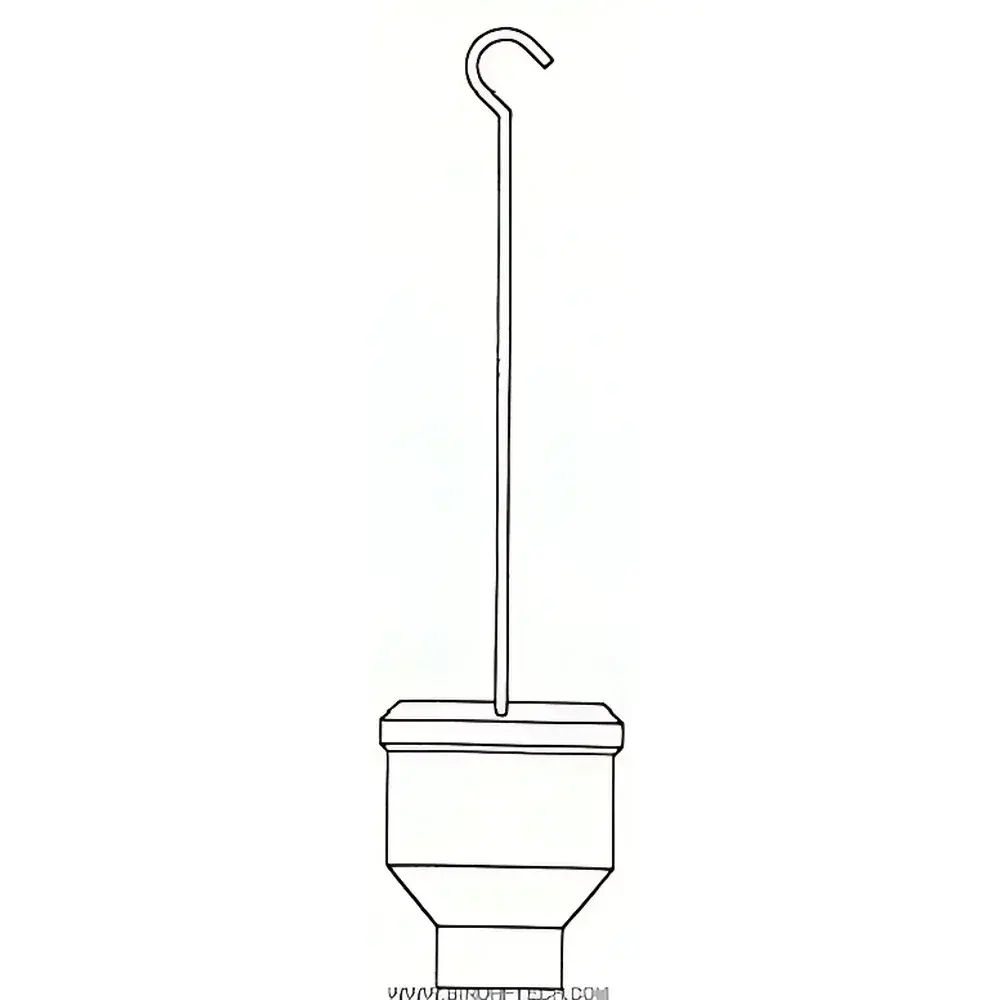
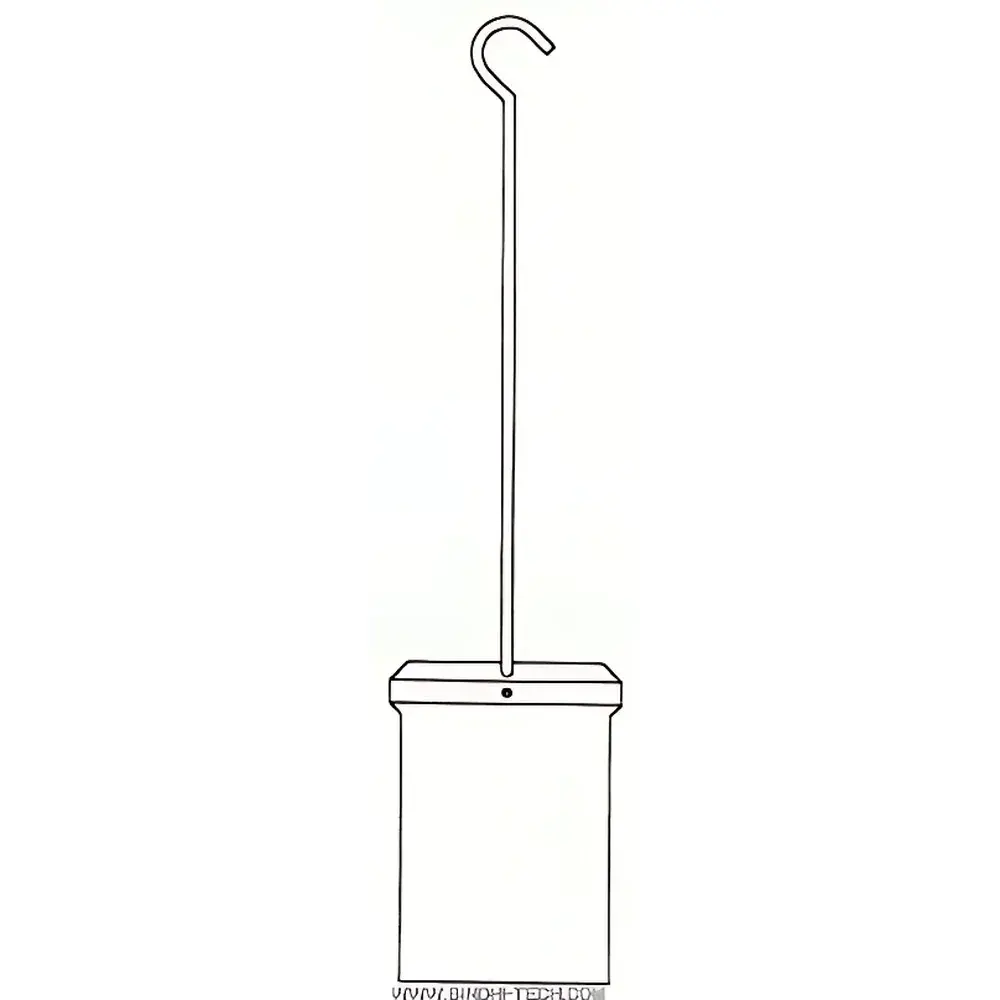
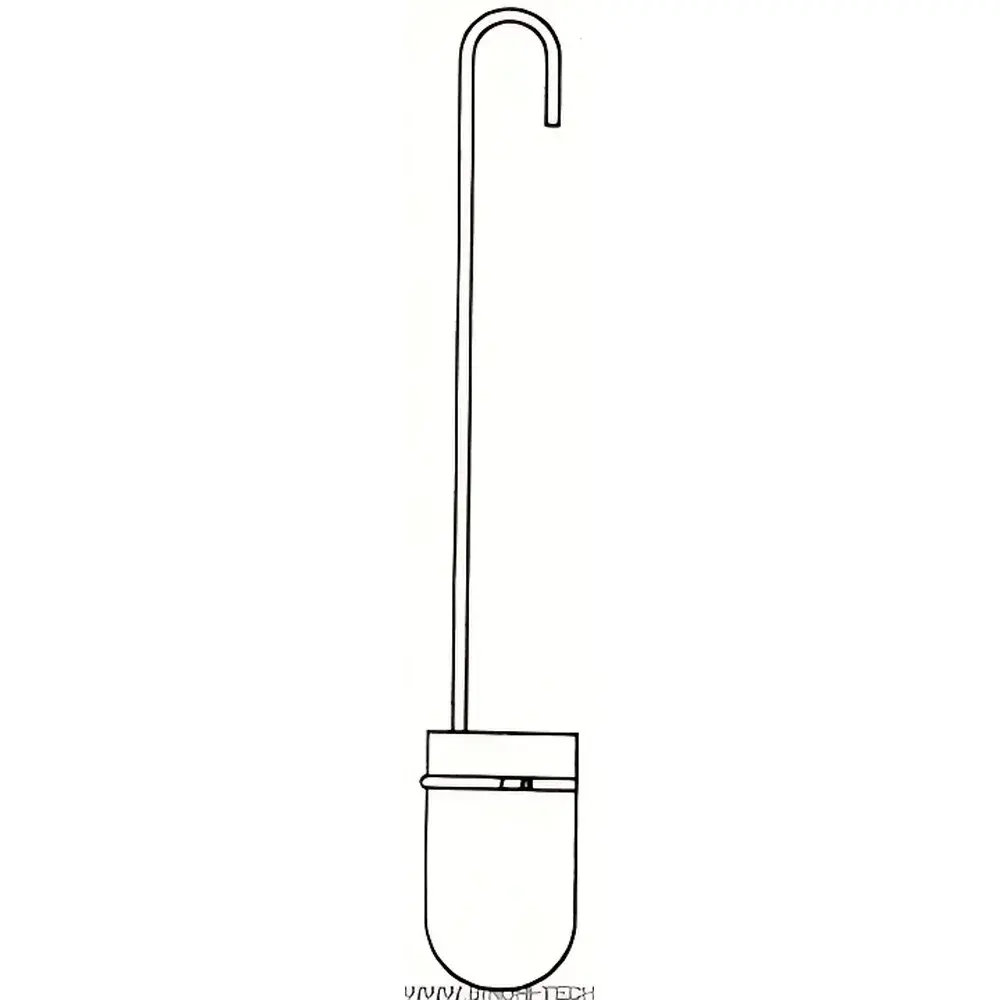
ILISIN #321/322/343 Immersion Viscometer Cups (DIN 53211, ISO 2431 & ASTM D4212 Compliant)
| Origin | Germany |
|---|---|
| Manufacturer Type | Authorized Distributor |
| Origin Category | Imported |
| Model | #321 / #322 / #343 |
| Pricing | Available Upon Request |
| Standards | DIN 53211 (Type #321), EN ISO 2431 (Type #322), ASTM D4212 (Type #343) |
| Orifice Diameters | 2–8 mm (Type #321) |
| Viscosity Range | 5–5000 mm²/s (kinematic viscosity) |
| Flow Time Range | 20–200 s |
| Materials | Anodized Aluminum (Type #321 & #343), Alumina Ceramic (Type #322) |
| Capacity | 100 mL nominal |
Overview
The ILISIN #321/322/343 Immersion Viscometer Cups are precision-engineered gravity-driven efflux viscometers designed for rapid, field-deployable kinematic viscosity assessment of Newtonian and near-Newtonian liquids. Based on the fundamental principle of efflux time measurement—where a fixed volume (100 mL) of sample drains under gravity through a calibrated orifice—the instrument delivers repeatable, standardized viscosity estimates in seconds. Unlike rotational or capillary viscometers requiring temperature-controlled baths or complex calibration, these immersion cups operate at ambient conditions and require no external power, making them ideal for production line QC, R&D screening, and on-site process monitoring in paint, coatings, inks, lubricants, food processing, and leather finishing applications.
Key Features
- Three standardized cup families: #321 (DIN 53211 compliant), #322 (EN ISO 2431 compliant), and #343 (ASTM D4212 Zahn cup series), each with traceable orifice geometry and certified dimensional tolerances.
- Orifice diameters range from 2 mm to 8 mm (#321), 2–6 mm (#322), and Zahn numbers 1–5 (#343), enabling coverage of kinematic viscosity from 5 mm²/s to 5000 mm²/s.
- Material selection optimized for durability and chemical resistance: anodized aluminum for general-purpose use (#321 & #343); high-purity alumina ceramic for aggressive solvents and extended service life (#322).
- Integrated ergonomic handle (Part No. 0030.01.31) supports vertical alignment during immersion and withdrawal—critical for minimizing parallax error and ensuring reproducible flow initiation.
- No calibration fluids or electronic components required; validation is performed via certified reference oils per ISO 4268 and ASTM D1200 procedures.
- Designed for compliance with GLP documentation workflows: each cup carries engraved part number, orifice size, and standard designation for audit-ready traceability.
Sample Compatibility & Compliance
These viscometers are validated for use with low-to-medium-viscosity Newtonian liquids including solvent-based paints, UV-curable inks, printing varnishes, edible oils, synthetic lubricants, and aqueous polymer dispersions. Non-Newtonian or highly thixotropic samples require caution and comparative correlation with rotational rheometry. All models conform to internationally recognized test standards: DIN 53211 (Germany), EN ISO 2431 (Europe), and ASTM D4212 (USA). Each cup undergoes dimensional inspection per ISO 2768-mK and is supplied with a certificate of conformity indicating nominal orifice diameter, tolerance class, and applicable standard. For regulated environments (e.g., ISO 9001-certified labs or FDA-regulated coating manufacturing), cups support documented calibration intervals and can be integrated into instrument qualification protocols (IQ/OQ) as Class II metrological tools.
Software & Data Management
While inherently analog, the ILISIN immersion cups integrate seamlessly into digital QA workflows. When paired with a validated stopwatch meeting ISO/IEC 17025 timing accuracy requirements (±0.1 s), efflux data may be logged directly into LIMS or ELN platforms via structured templates. Optional Excel-based conversion calculators (provided upon request) apply standard empirical equations—such as the ASTM D1200 Zahn correction factor or ISO 2431 kinematic viscosity lookup tables—to translate efflux time into mm²/s values. Full audit trails—including operator ID, ambient temperature/humidity, lot number, and cup serial—are recommended for GMP-aligned reporting and 21 CFR Part 11–compatible electronic records.
Applications
- Batch release testing of architectural and industrial coatings prior to canning or application.
- In-process viscosity checks during ink formulation and gravure printing press setup.
- Raw material acceptance testing for resins, thinners, and plasticizers in compliance with supplier specifications.
- Quality surveillance of edible oils and syrups in food manufacturing facilities operating under HACCP or BRCGS frameworks.
- Rapid troubleshooting of viscosity drift during solvent evaporation or temperature fluctuations in storage tanks.
- Educational laboratories demonstrating fundamental rheological concepts without requiring advanced instrumentation.
FAQ
What is the difference between kinematic viscosity (mm²/s) and dynamic viscosity (mPa·s)?
Kinematic viscosity is the ratio of dynamic viscosity to density and is measured directly by efflux cups; dynamic viscosity requires additional density measurement and unit conversion (ν = η/ρ). These cups report kinematic viscosity unless paired with a densitometer.
Can I use the same cup across multiple standards (e.g., DIN and ISO)?
No—each cup family has distinct orifice geometry, cup depth, and efflux time ranges defined by its respective standard. Interchanging cups invalidates compliance and introduces systematic bias.
How often should I recalibrate or verify my immersion cup?
Verification against certified reference oils is recommended before each shift in production environments and at least daily in regulated labs. Physical damage, orifice wear, or surface contamination necessitates immediate replacement.
Is temperature control required during testing?
Yes. Per all referenced standards, tests must be conducted at 23 ± 0.5 °C (DIN/ISO) or 25 ± 0.2 °C (ASTM). Ambient temperature deviations >±1 °C significantly affect efflux time and require correction using published temperature-viscosity coefficients.
Do these cups meet FDA or pharmaceutical regulatory requirements?
While not intended for final product release in sterile pharmaceutical manufacturing, they are routinely used in excipient and coating suspension QC per USP guidance for non-sterile dosage forms when included in validated SOPs and supported by full traceability documentation.
Related Products



