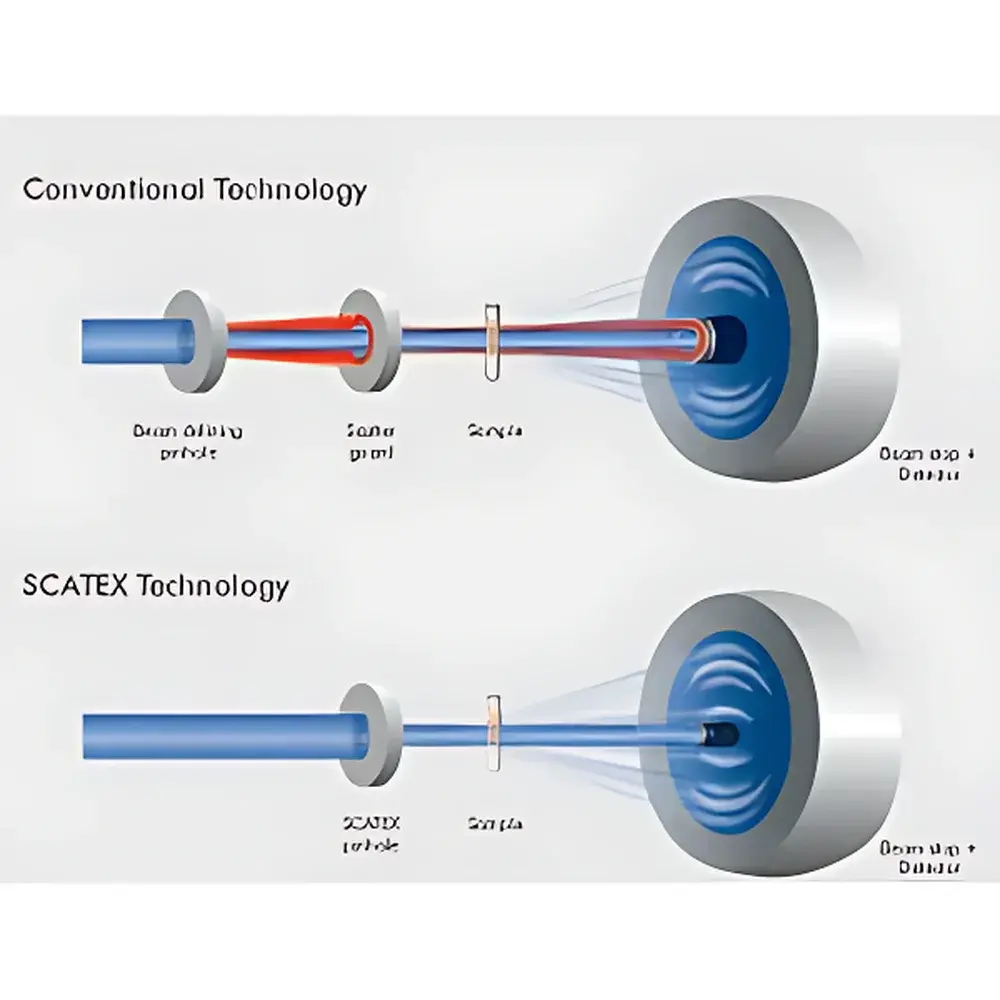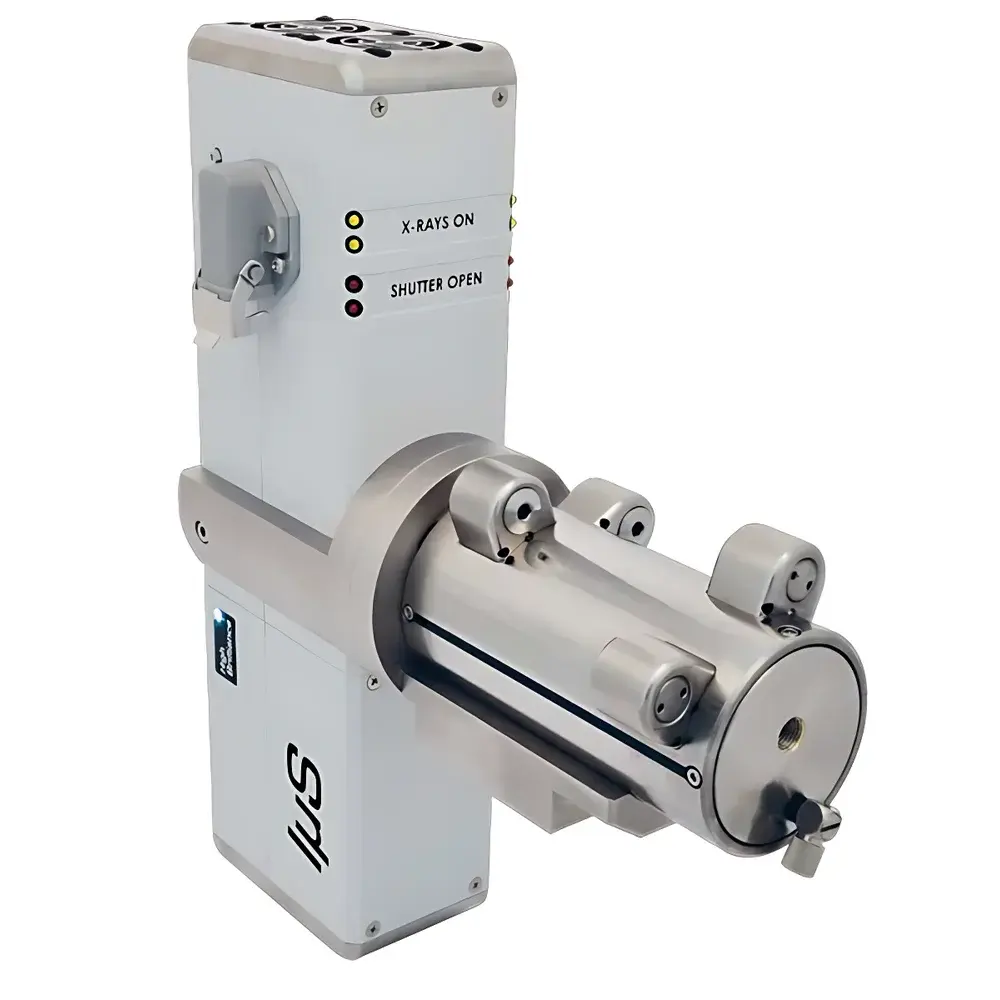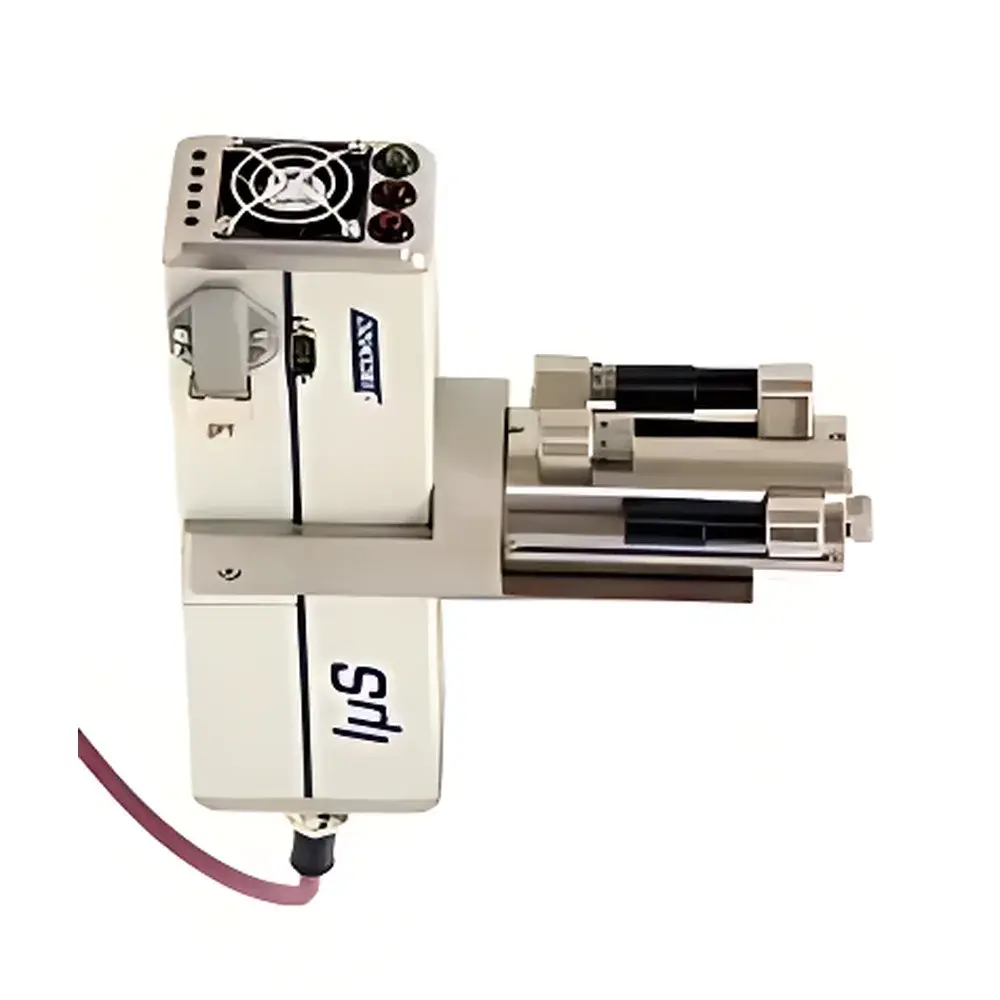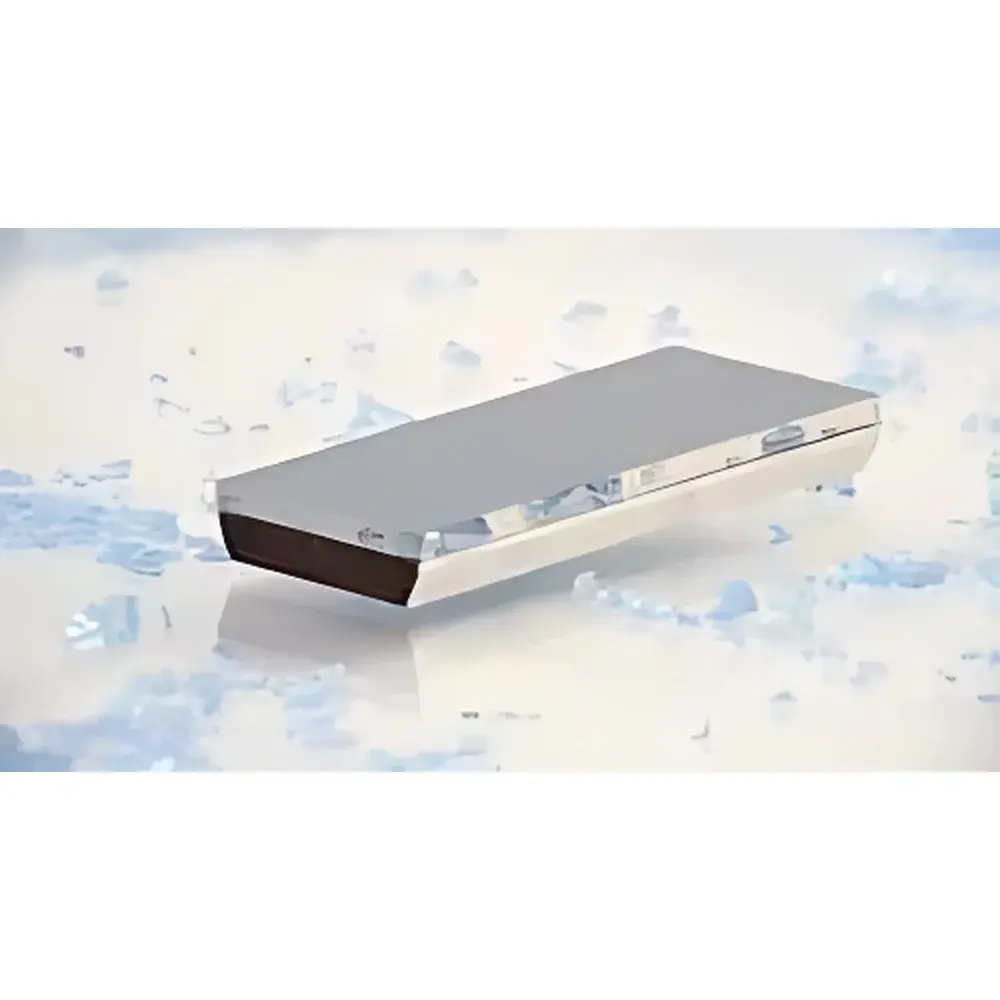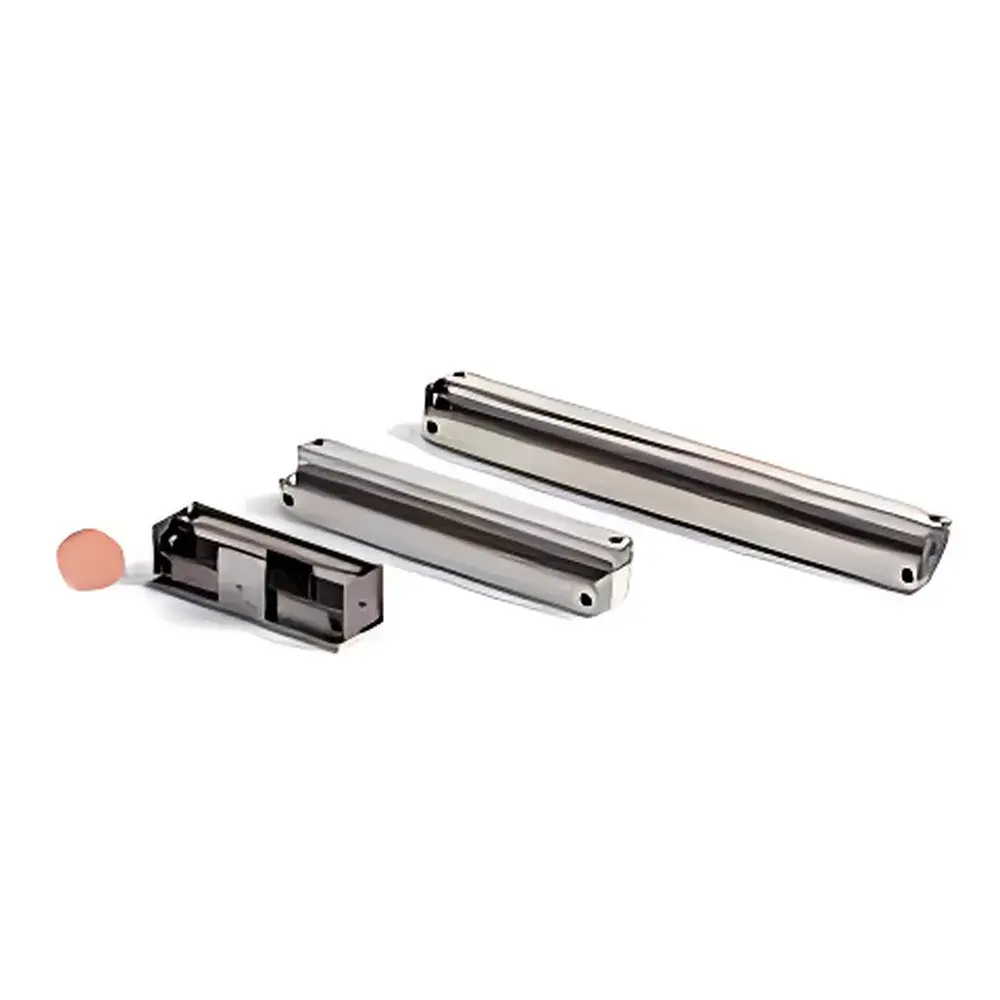
Incoatec Montel Optics X-ray Focusing Mirrors

| Brand | Incoatec |
|---|---|
| Origin | Germany |
| Model | Incoatec Montel Optics |
| Application | 2D X-ray beam conditioning (focusing, collimation, monochromatization) for laboratory and synchrotron sources |
| Compatible radiation lines | Cu Kα (8.04 keV), Mo Kα (17.48 keV), Co Kα (6.93 keV), Cr Kα (5.41 keV), Fe Kα (6.40 keV), Ag Kα (22.16 keV) |
| Optical architecture | Dual-perpendicular grazing-incidence multilayer mirrors (Montel geometry) |
| Mirror coating | Laterally graded multilayer (e.g., Ni/C, W/Si, Pt/C) |
| Beam symmetry | Isotropic in horizontal and vertical planes |
| Typical focal spot size (FWHM) | ≤0.3 mm (Montel-200, Cu Kα) |
| Reflectivity enhancement | Up to ~2× vs. single-bounce Kirkpatrick-Baez or toroidal mirrors (dual-reflection spectral purification) |
| Mounting | Pre-aligned, rigid kinematic housing for rapid integration |
Ask about pricing, availability and specifications.
Overview
Incoatec Montel Optics X-ray Focusing Mirrors represent a mature, high-precision implementation of the Montel optical geometry—a two-mirror, orthogonal grazing-incidence system originally conceived by Marc Montel in the 1950s to overcome the asymmetric magnification inherent in sequential Kirkpatrick-Baez (KB) configurations. Unlike KB optics—where independent horizontal and vertical focusing elements introduce differential demagnification and alignment complexity—the Montel design employs two identical, laterally graded multilayer-coated mirrors mounted perpendicularly at their edges. This arrangement ensures identical optical path lengths, equal demagnification ratios, and fully symmetric beam shaping in both orthogonal directions. The result is a spatially and angularly isotropic focal profile with minimal astigmatism, critical for quantitative diffraction, scattering, and microfocus applications requiring reproducible beam geometry and spectral purity.
Key Features
- Dual-reflection monochromatization: Each photon undergoes two successive reflections—one on each mirror—enhancing intrinsic wavelength selectivity and suppressing higher-order harmonics (e.g., Cu Kβ) without external monochromators.
- Pre-aligned, modular integration: Mirrors are factory-aligned and housed in rigid, kinematically mounted stainless-steel carriers, enabling sub-arcsecond reproducibility and plug-and-play installation on standard goniometer stages or source-coupling flanges.
- Material- and source-optimized variants: Includes Montel-200 (standard focusing), Montel-p (collimation), Helios (rotating anode–optimized, Cu/Mo), Quazar (IμS microfocus source–matched, tailored divergence), and MX (micro-crystal–grade, highest flux density, enhanced Ni/C reflectivity).
- Symmetric beam quality: Identical mirror geometry and coating profiles ensure matched horizontal/vertical focal size, divergence, and wavefront error—eliminating the need for iterative cross-plane tuning typical of KB systems.
- Laterally graded multilayer coatings: Engineered for specific anode materials (Cu, Mo, Co, Cr, Fe, Ag), with depth-graded d-spacing enabling broad-band reflectivity across Kα lines while maintaining <0.1% bandwidth.
Sample Compatibility & Compliance
Incoatec Montel Optics are compatible with sealed-tube and rotating-anode X-ray sources (e.g., Bruker AXS D8 series), as well as microfocus sources including Incoatec’s IμS platform. The optics support routine operation under high-vacuum (≤10⁻⁵ mbar) and UHV (≤10⁻⁸ mbar) conditions, meeting ISO 14644-1 Class 5 cleanroom handling requirements during installation. All mechanical interfaces conform to ISO 10137 and DIN 25412 standards for vacuum flange compatibility (CF, KF, ISO-K). While not medical devices, Montel systems are routinely deployed in GLP-compliant laboratories performing ASTM E975 (XRD phase analysis), ISO 21391-1 (SAXS nanoparticle sizing), and ICH Q5E (structural comparability of biologics), where beam stability and spectral fidelity directly impact data traceability.
Software & Data Management
Montel optics operate as passive beam-conditioning components and require no embedded firmware or real-time control software. However, alignment verification and performance validation are supported via Incoatec’s OptiScan toolkit—a MATLAB-based utility for analyzing knife-edge scans, beam profile imaging (using scintillator + sCMOS cameras), and divergence mapping. Full metrology reports—including measured focal spot FWHM, RMS wavefront error, and integrated reflectivity curves—are generated in HDF5 format and comply with FAIR data principles (Findable, Accessible, Interoperable, Reusable). For regulated environments, audit trails for alignment logs and calibration certificates can be exported in PDF/A-2b format, supporting 21 CFR Part 11–aligned electronic record retention when paired with validated LIMS platforms.
Applications
- Single-crystal X-ray diffraction (SC-XRD): Enables high-resolution structure solution from sub-millimeter crystals using low-divergence, symmetrically focused beams—reducing mosaicity-induced peak broadening.
- Small-angle X-ray scattering (SAXS): Delivers uniform, low-background illumination for absolute intensity calibration and Guinier analysis; Quazar variants provide tunable divergence to match q-range requirements.
- Time-resolved diffraction: MX-grade optics sustain >10⁹ photons/s/mm² flux density at focal spots <100 µm, facilitating millisecond-scale pump-probe experiments on synchrotron beamlines or lab-based laser-excited systems.
- Powder XRD with Rietveld refinement: Montel-200 and Helios configurations yield narrow, Gaussian-shaped peaks with improved signal-to-noise ratio—critical for quantifying low-abundance phases (<0.5 wt%) per ISO 17873.
- X-ray topography and microbeam imaging: Sub-0.3 mm focal spots enable spatially resolved strain mapping and defect analysis in semiconductor wafers and epitaxial thin films.
FAQ
What distinguishes Montel optics from Kirkpatrick-Baez (KB) mirrors?
Montel optics use two identical mirrors mounted orthogonally at their edges, ensuring matched demagnification and symmetric beam profiles. KB systems use two independent mirrors with different curvatures and alignments, leading to asymmetric focal shapes and complex co-alignment procedures.
Can Montel optics be used with synchrotron beamlines?
Yes—particularly the MX and Quazar variants—when installed downstream of bending magnet or insertion device ports. Their robust thermal stability and UHV compatibility make them suitable for high-heat-load environments when coupled with water-cooled mounts.
How is spectral purity achieved without a crystal monochromator?
Through dual-grazing-incidence reflection: each mirror layer stack is laterally graded to reflect only the target Kα line within a narrow ΔE/E bandwidth (~0.1–0.3%), while higher-energy harmonics are suppressed by destructive interference across the multilayer stack.
Is recalibration required after reinstallation?
No—pre-aligned kinematic mounts maintain alignment repeatability to ±2 arcseconds. A single centering scan using a pinhole and CCD detector is sufficient for operational verification per ISO 18565.
Do Montel optics support energy-dispersive detection?
They are optimized for angle-dispersive configurations (e.g., θ–2θ scans). When used with energy-resolving detectors (e.g., silicon drift detectors), beam divergence must be validated against detector solid angle to avoid spectral pile-up artifacts.