
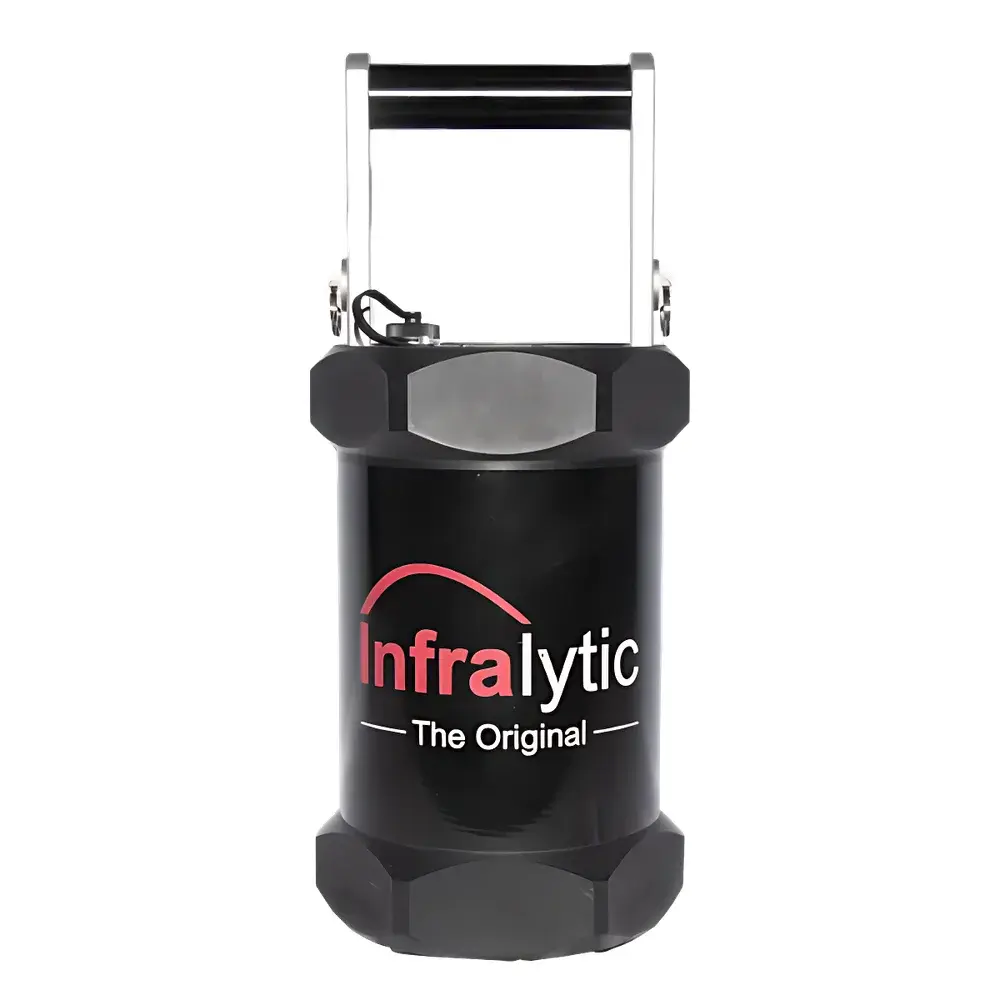
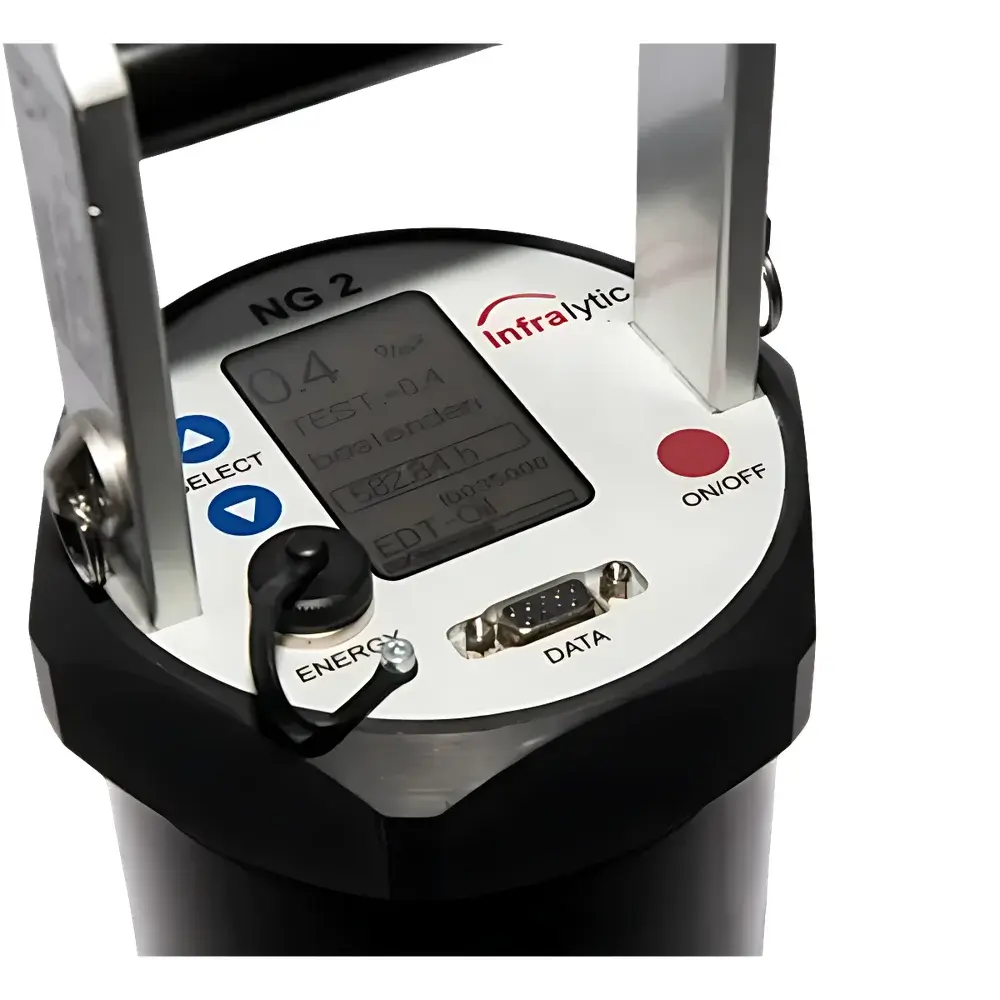
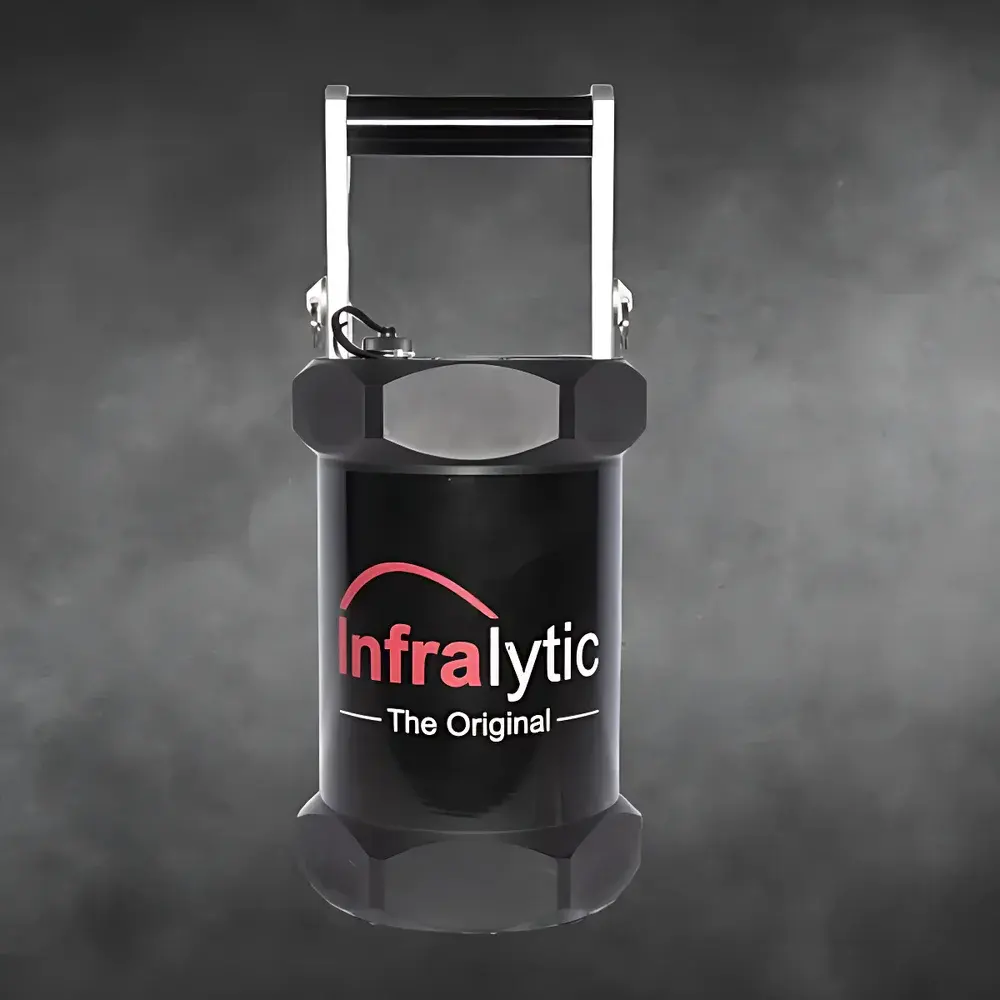
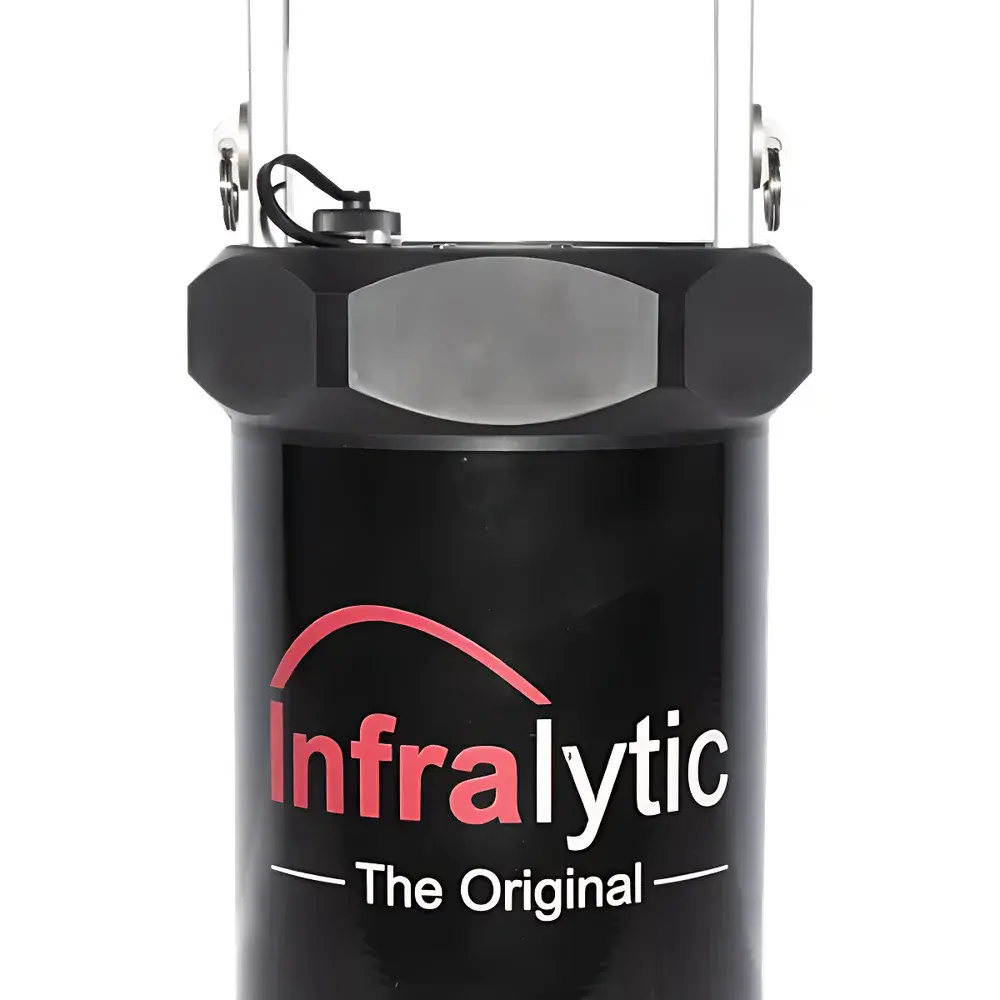
Infralytic NG2 Oil Film Thickness Gauge for Oriented Electrical Steel
| Brand | Infralytic |
|---|---|
| Origin | Germany |
| Model | NG2 |
| Measurement Principle | Near-Infrared (NIR) Absorption Spectroscopy |
| Range | 0.05–6 g/m² |
| Accuracy | ±0.015 g/m² (0.02–0.3 g/m²), ±0.2 g/m² (0.3–2 g/m²), ±10% of reading (>2 g/m²) |
| Repeatability | <0.0010 g/m² |
| Resolution | 0.001 g/m² |
| Measurement Distance | 8 mm (+5/−2 mm) |
| IP Rating | IP65 |
| Operating Temperature | 0–45 °C |
| Power Supply | Internal rechargeable battery (≥12 h runtime) |
| Substrate Compatibility | Cold-rolled steel, hot-dip galvanized (HDG), electrogalvanized (EG), phosphated EG, annealed galvannealed (GA), aluminized (Al, Al-Zn, ZnMg), bare and pre-treated surfaces |
| Lubricant Compatibility | Mineral oils, thixotropic mineral oils, waxes, hot-melt adhesives, and other organic lubricants (with custom calibration) |
Overview
The Infralytic NG2 Oil Film Thickness Gauge is a precision-engineered, non-contact infrared spectrometer designed specifically for quantitative measurement of ultra-thin organic lubricant layers on oriented electrical steel (OES) and other coated metallic substrates used in transformer core manufacturing. Unlike conventional beta-backscatter or X-ray fluorescence methods, the NG2 employs proprietary near-infrared (NIR) absorption spectroscopy—calibrated to the characteristic C–H bond vibrational overtones in hydrocarbon-based lubricants—to deliver trace-level mass thickness quantification in g/m² without physical contact, sample damage, or radioactive sources. Its optical architecture is optimized for high signal-to-noise ratio under industrial lighting conditions and engineered for stable performance across temperature gradients typical of cold-rolling, annealing, and slitting line environments. The device operates independently of substrate conductivity or magnetic permeability—critical for accurate readings on grain-oriented silicon steel with complex domain structures and surface passivation layers.
Key Features
- Non-destructive, real-time NIR-based measurement with no surface contact or mechanical wear
- Automatic substrate recognition via integrated spectral fingerprinting—distinguishes cold-rolled, hot-dip galvanized, electrogalvanized, phosphated, galvannealed, and aluminized surfaces in situ
- Onboard self-validation protocol with reference spectrum monitoring before and after each measurement sequence to ensure metrological traceability
- Roll direction detection algorithm enabling consistent orientation-aware sampling aligned with grain anisotropy in oriented electrical steel
- Smartphone-integrated documentation: geotagged image capture, timestamped measurement metadata, and export-ready CSV reports via Bluetooth LE
- IP65-rated enclosure with thermal-stabilized optics for operation in humid, dusty, or temperature-variable production halls (0–45 °C)
- Rechargeable lithium-ion battery supporting ≥12 hours of continuous field use—no external power required during inline QA checks
Sample Compatibility & Compliance
The NG2 is validated for use on industry-standard electrical steel grades—including fully processed (FP) and semi-processed (SP) grain-oriented silicon steels—as well as common metallic substrates encountered in coil coating and stamping facilities. It meets ISO/IEC 17025-relevant requirements for measurement uncertainty management and supports GLP-compliant documentation workflows. Calibration standards are traceable to NIST SRM-certified oil-coated reference foils. The instrument complies with IEC 61000-6-2 (immunity) and IEC 61000-6-4 (emissions), and its firmware architecture enables audit-ready data logging per FDA 21 CFR Part 11 when paired with validated enterprise software. No regulatory approval is required for NIR operation under EU Directive 2013/35/EU (EMF) or German BGV B11.
Software & Data Management
The NG2 interfaces with Infralytic’s NG Suite v4.x—a Windows-based desktop application supporting calibration file management, multi-substrate method libraries, statistical process control (SPC) charting (X̄/R, Cpk), and automated report generation compliant with ISO 9001:2015 clause 8.2.4. All raw spectra, environmental logs (temperature, humidity), operator ID, and GPS coordinates (when enabled) are embedded in encrypted .ngd binary files. Export formats include CSV (for Minitab, JMP), PDF (with digital signature), and XML (for MES integration via OPC UA). Audit trails record every calibration change, user login, and firmware update with SHA-256 hashing and immutable timestamps—fully satisfying internal quality audits and third-party certification bodies.
Applications
- Final QC verification of lubricant mass thickness on finished OES coils prior to shipment—ensuring compliance with IEC 60404-8-3 and ASTM A876 specifications
- In-process monitoring at tension leveller, skin-pass mill, or slitting line stations to detect lubricant depletion or transfer anomalies
- Correlation studies between oil film thickness and iron loss (P1.5/50) and magnetostriction behavior in core lamination stacks
- Validation of lubricant formulation changes—e.g., switching from mineral oil to biodegradable ester-based coatings
- Root cause analysis of insulating coating defects arising from insufficient or uneven lubrication during cold rolling
- Supporting PPAP submissions for Tier-1 automotive and energy infrastructure suppliers requiring documented coating uniformity evidence
FAQ
Does the NG2 require periodic recalibration against physical standards?
Yes—Infralytic recommends quarterly verification using certified reference foils (NG-REF-01 to NG-REF-06) and full recalibration every 12 months by an accredited service center.
Can the NG2 distinguish between different lubricant chemistries on the same substrate?
It identifies broad classes (e.g., paraffinic vs. naphthenic mineral oils, wax vs. polymer-based films) via spectral deconvolution, but precise chemical identification requires FTIR lab analysis.
Is the measurement affected by surface roughness or oxide layer thickness on oriented steel?
No—the NIR penetration depth (~1–2 µm) is shallow relative to typical oxide scales (<50 nm) and surface roughness (Ra < 0.8 µm); empirical compensation is embedded in substrate-specific calibration models.
How is measurement distance controlled during handheld operation?
The NG2 uses an integrated ultrasonic proximity sensor with visual LED feedback (green = optimal 8 mm ±1 mm; amber = warning zone; red = out-of-range) to maintain consistent standoff distance.
Does the NG2 support integration into existing factory SCADA systems?
Yes—via Modbus TCP or OPC UA server mode (optional license), enabling real-time oil thickness values and alarm states to be fed directly into Siemens Desigo, Rockwell FactoryTalk, or Schneider EcoStruxure platforms.



