
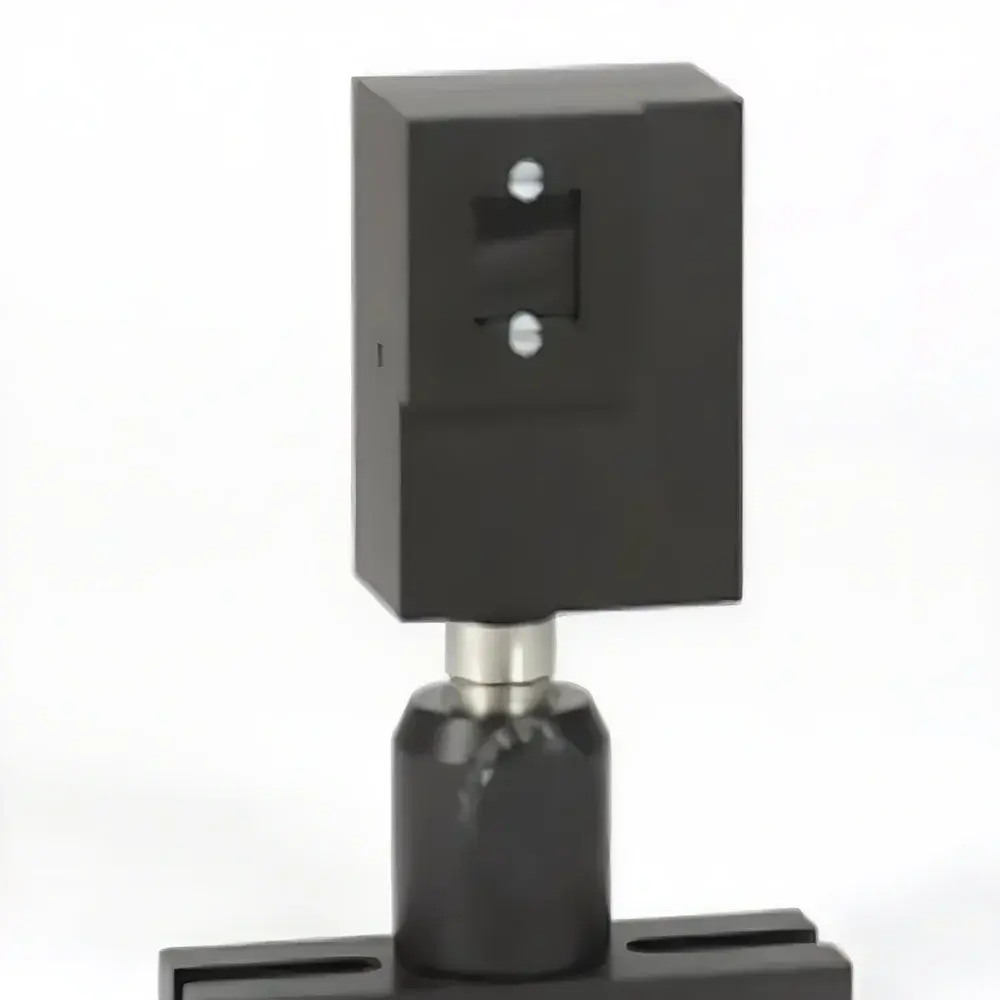
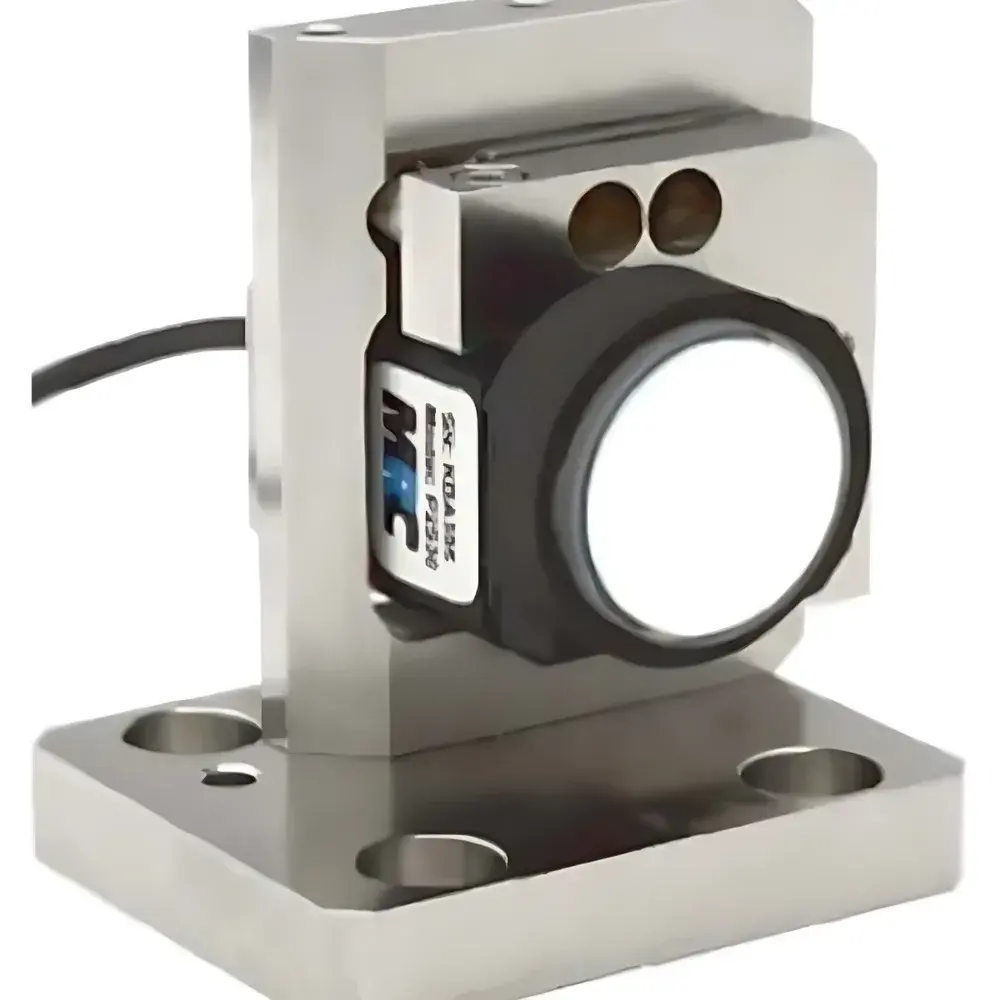
MRC Systems GmbH MRC Beam Pointing Stabilization System
| Brand | MRC |
|---|---|
| Origin | Germany |
| Manufacturer Type | Authorized Distributor |
| Origin Category | Imported |
| Model | MRC Systems GmbH |
| Price Range | USD 13,500 – 27,000 |
Overview
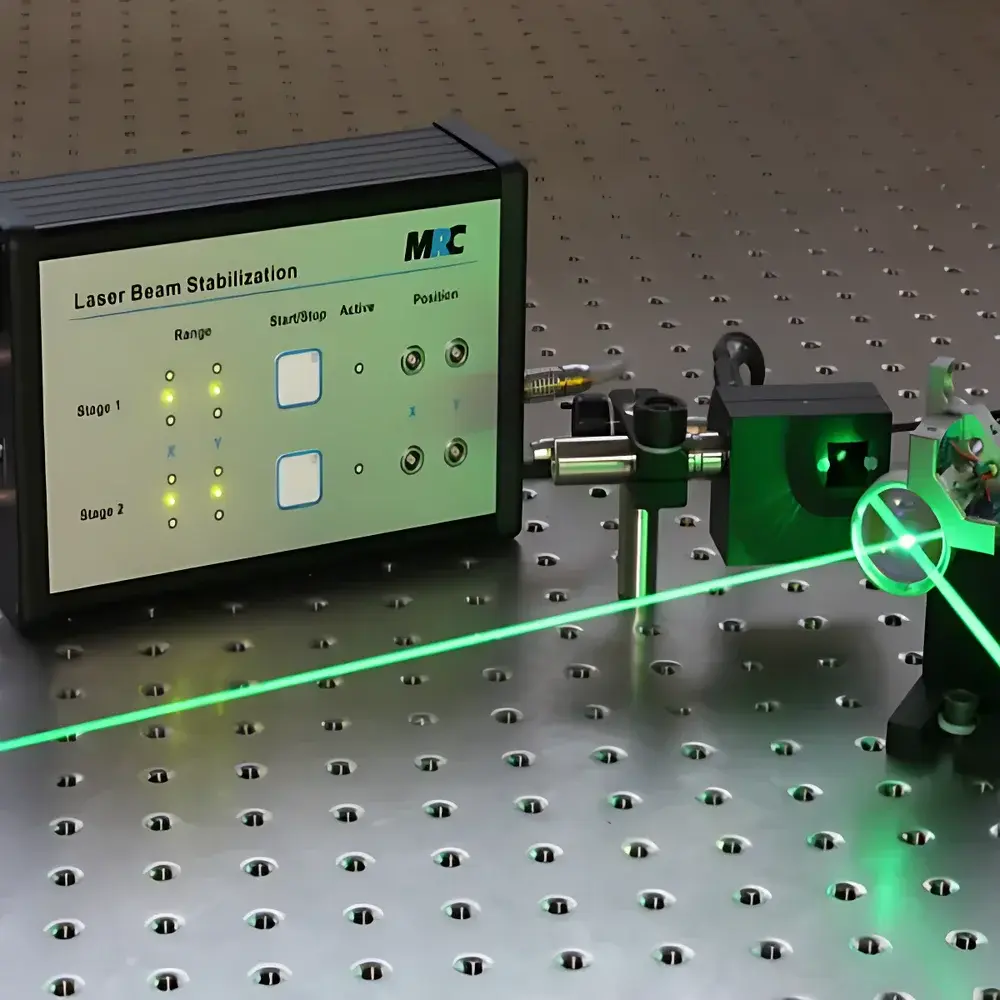
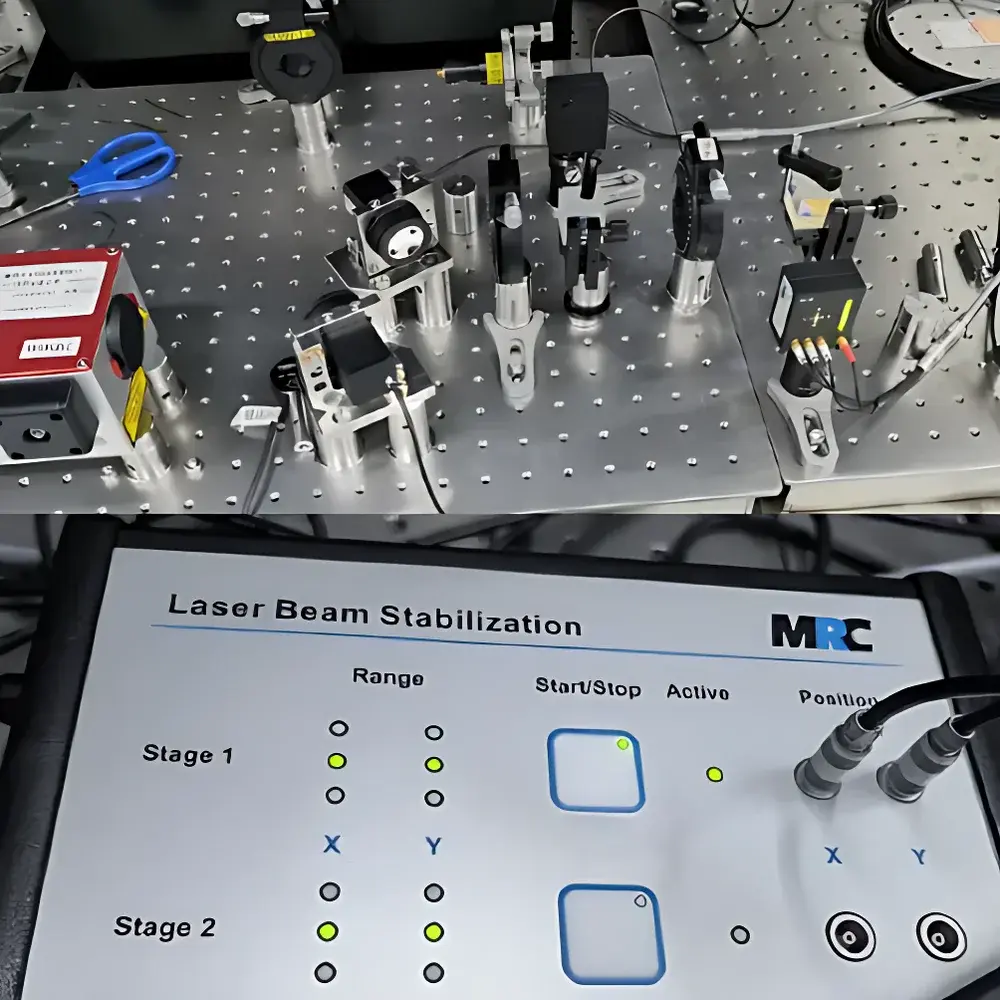
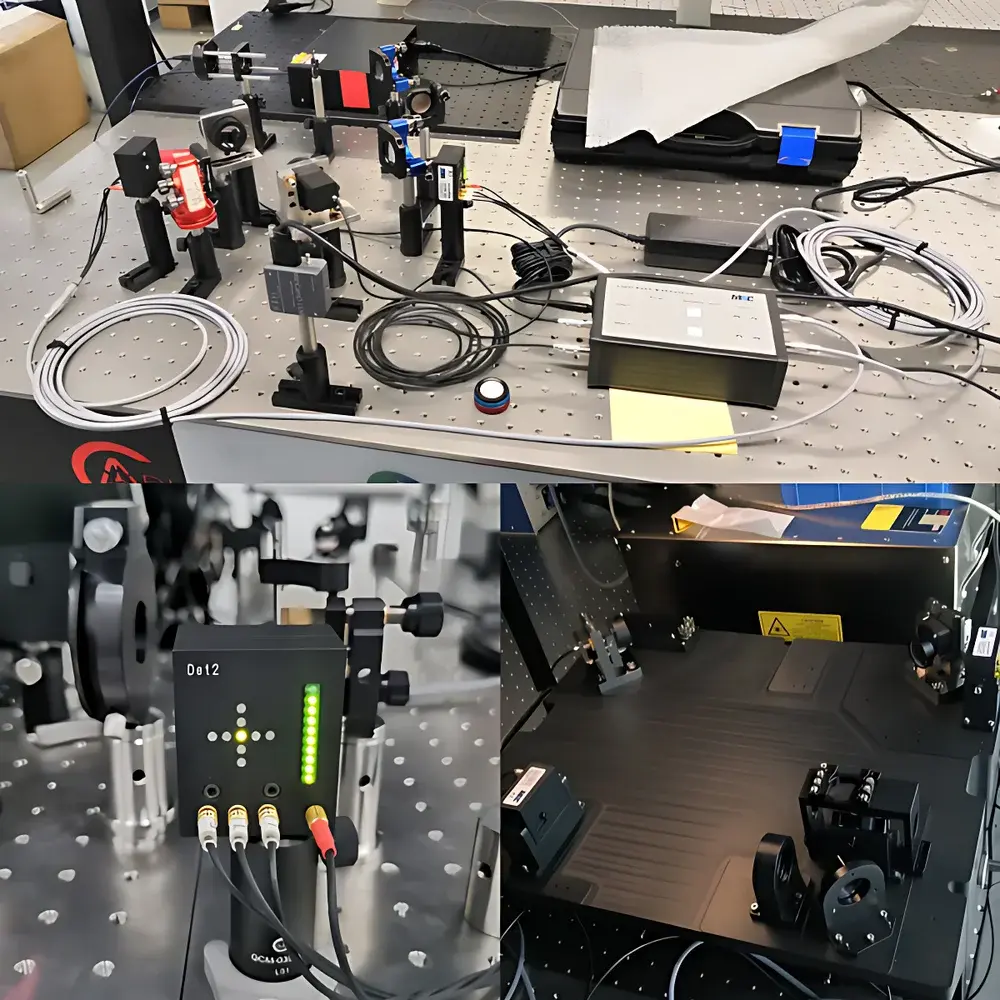
The MRC Beam Pointing Stabilization System is a high-precision, analog-closed-loop optical stabilization platform engineered for maintaining sub-microradian beam angular stability and sub-micrometer positional accuracy over extended operational periods. Developed by MRC Systems GmbH—a spin-off of Heidelberg University and the German Cancer Research Center (DKFZ)—this system implements real-time, continuous feedback control based on quadrant photodetector (QD) sensing and piezoelectric mirror actuation. Unlike digital sampling-based stabilizers, its fully analog architecture eliminates quantization delay, enabling bandwidth-limited response without phase lag or discretization artifacts. The system operates on the principle of differential position sensing: a small fraction of the incident beam—either transmitted through a reflective substrate or extracted via a beamsplitter—is directed onto a QD detector; deviation from the reference centroid triggers proportional voltage signals that drive piezo-actuated mirror mounts to correct beam pointing in two orthogonal axes (X/Y tilt and translation). In dual-stage configurations, it achieves full 4D stabilization (2D position + 2D angle), decoupling coarse alignment stability from fine-pointing fidelity at the application plane.
Key Features
- Analog closed-loop control architecture with zero sampling latency and no digital conversion steps—ensuring highest temporal fidelity and minimal phase delay
- Plug-and-play operation: single-button activation with no software dependency or parameter configuration required
- Self-contained detection: leverages intrinsic mirror substrate transmission for sensing—eliminates need for dedicated beamsplitters or auxiliary optics
- Pure piezoelectric actuation: no stepper motor step artifacts, no hysteresis-induced drift, and superior long-term thermal-mechanical stability
- Compact footprint: integrated controller unit occupies minimal optical table space; no 19-inch rack mounting required
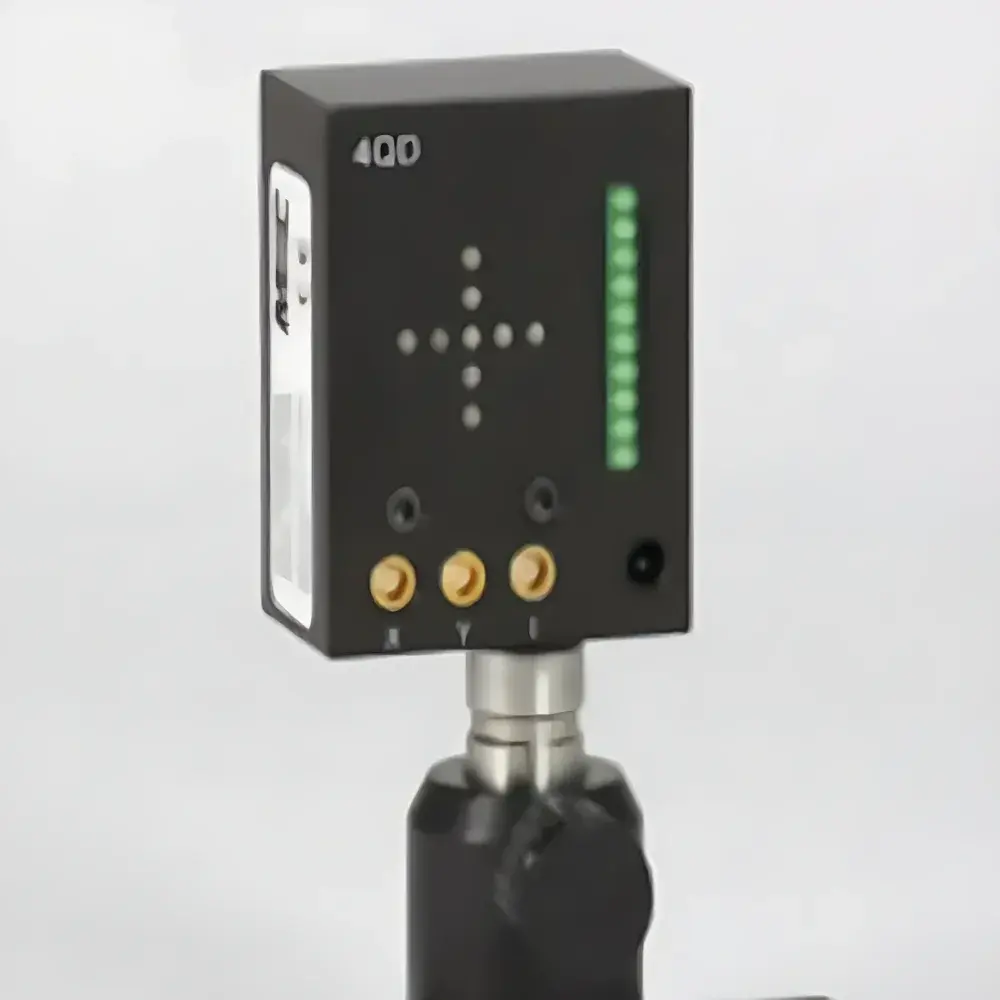
- Real-time visual feedback: integrated LED indicators and rear-panel analog displays show instantaneous beam power and centroid coordinates directly on each detector housing
- Adjustable gain and manual coarse alignment stage optional for initial setup flexibility
Sample Compatibility & Compliance
The system supports universal laser compatibility across wavelength (190 nm – 3000 µm), pulse regime (single-shot to CW), and temporal profile (attosecond to nanosecond pulses). Detector variants include Si-based QDs (320–1100 nm), UV-enhanced QDs (190–1000 nm), NIR InGaAs/Ge QDs (900–2000 nm; 0.1–3000 µm), and pyroelectric wideband detectors. All detectors meet ISO 13485:2016 requirements for medical device manufacturing environments and are compatible with GLP-compliant optical laboratories. Vacuum-compatible versions (down to 10−11 mbar) and RS-232-triggered sampling-hold modules are available for ultrafast or low-repetition-rate applications. Mechanical components—including mirror mounts and detector housings—are designed for thermal drift minimization and mechanical resonance suppression, ensuring performance stability under ambient lab fluctuations.
Software & Data Management
While fully functional without a computer, the optional USB-connected GUI provides advanced diagnostics and archival capabilities. The interface features a scalable window layout with three core regions: menu bar (system configuration), control panel (gain, offset, trigger mode), and real-time display area (centroid trajectory, RMS variance overlay, and statistical summary). In pointing stabilization mode, the software computes and overlays the root-mean-square (RMS) deviation of sampled points relative to their centroid, with numeric readouts of X/Y center coordinates, total sample count, and variance (µm or µrad). Data export follows standard oscilloscope conventions: time-stamped CSV files support post-acquisition analysis in MATLAB, Python, or LabVIEW. Audit trails—including timestamped parameter changes and system status logs—are retained per FDA 21 CFR Part 11 guidelines when enabled. No proprietary file formats or locked firmware updates are employed.
Applications
- Ultrafast laser delivery systems requiring shot-to-shot pointing reproducibility (e.g., pump-probe spectroscopy, attosecond science)
- Interferometric metrology setups where beam walk-off degrades fringe contrast and measurement resolution
- Free-space quantum communication links demanding long-duration angular stability under thermal or vibrational perturbation
- Medical laser platforms (e.g., ophthalmic ablation, dermatology) compliant with IEC 60601-2-22 and ISO 13485 quality management standards
- Industrial laser processing lines where beam misalignment causes inconsistent material interaction or process yield loss
- Space-qualifiable ground test benches requiring vacuum-compatible, radiation-tolerant stabilization hardware
FAQ
Does the system require a computer to operate?
No. The base configuration is fully autonomous and activated via front-panel toggle switch.
Can it stabilize both CW and pulsed lasers?
Yes—supports all repetition rates from single-shot to continuous wave, including femtosecond and picosecond sources.
What is the smallest detectable displacement or angular change?
Positional resolution is <0.1 µm; angular resolution is <0.1 µrad—verified using calibrated shear plate interferometry and autocollimator traceable to NIST standards.
Is vacuum integration possible?
Yes. Vacuum-rated detector housings and piezo mirror mounts are available for operation down to 10−11 mbar.
How is compliance with regulatory frameworks ensured?
ISO 13485 certification applies to design, manufacturing, and documentation processes; optional audit-ready software logging meets FDA 21 CFR Part 11 and EU Annex 11 requirements.






