
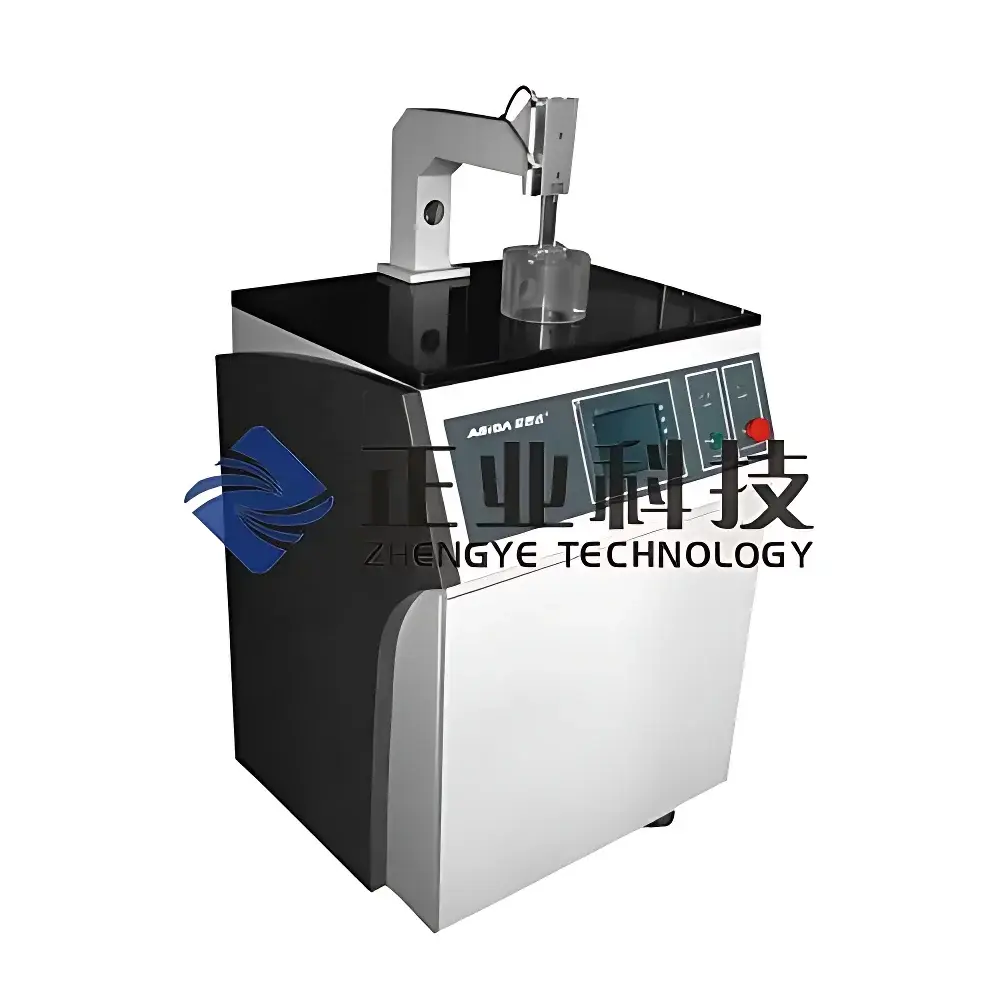
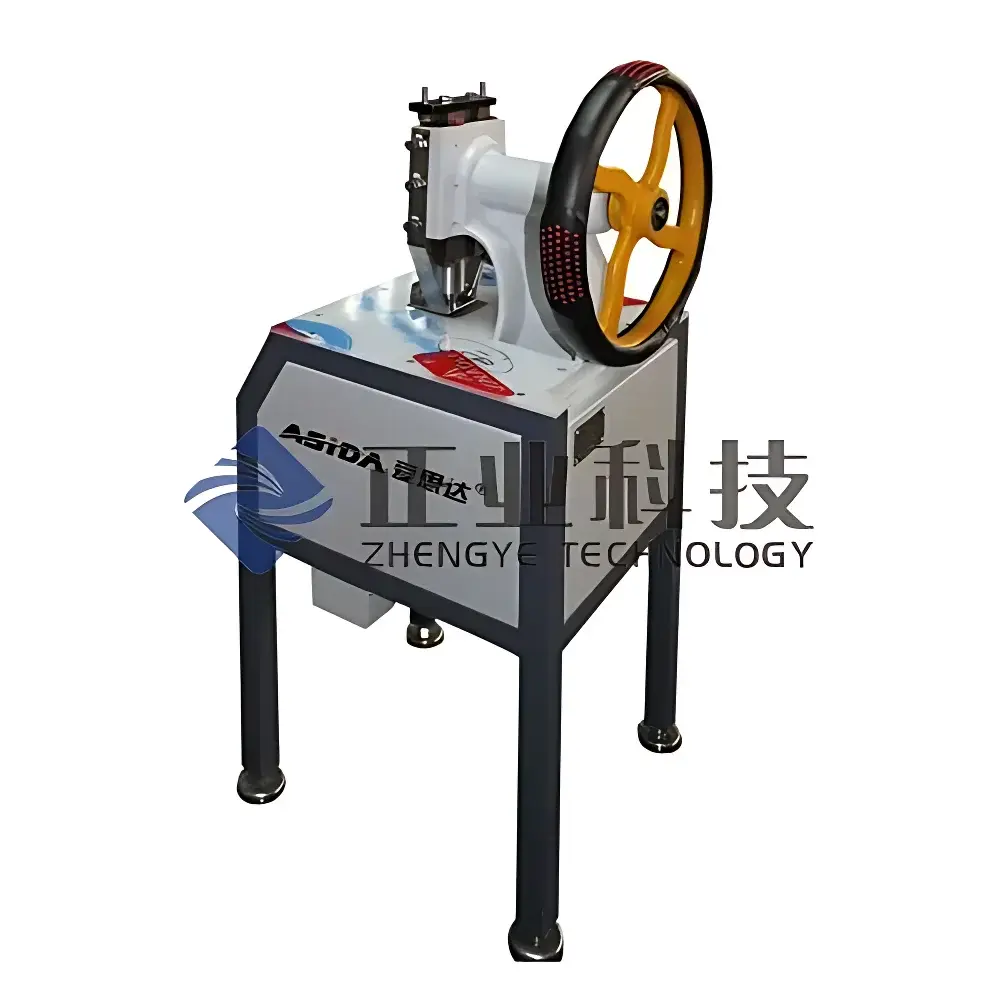
Isida QY22 Automated PCB Microsection Sampling System
| Brand | Isida |
|---|---|
| Origin | Guangdong, China |
| Manufacturer Type | Authorized Distributor |
| Country of Origin | China |
| Model | QY22 |
| Pricing | Available Upon Request |
| Sample Dimension Range | 5×5×0.5 to 50×50×8 mm |
| Max. Panel Width | 508 mm |
| Min. Panel Size | 120×100 mm |
| Throat Depth | 280 mm |
| Milling Bit Diameters | Φ2.0 mm, Φ2.4 mm |
| Rated Power / Voltage / Frequency | 1500 W / 220 V AC / 50 Hz |
| Current Rating | 10 A |
| Overall Dimensions (L×W×H) | 740×625×1381 mm |
| Pneumatic Supply Pressure | 0.6–0.8 MPa |
| Net Weight | 190 kg |
| Compliance | IPC-TM-650 2.1.1D, GB/T 4677–2002 Clause 8.3.2.3 |
Overview
The Isida QY22 Automated PCB Microsection Sampling System is an industrial-grade precision machining platform engineered for the reproducible, contamination-free preparation of metallurgical cross-sections from rigid printed circuit boards (PCBs), copper-clad laminates (CCL), and multilayer substrate assemblies. It operates on a controlled pneumatic-driven X-Y translation stage coupled with a high-rigidity vertical milling head, enabling deterministic material removal under fully programmable motion logic. Unlike manual sectioning methods prone to operator-induced tilt, delamination, or thermal damage, the QY22 executes orthogonal micro-machining using carbide-tipped end mills—ensuring planar integrity, edge orthogonality (< ±0.3°), and minimal subsurface deformation in the resulting specimen. Its design prioritizes metrological traceability and process repeatability across high-volume production environments where failure analysis, process validation, and incoming quality assurance demand statistically robust sampling protocols aligned with IPC and national standards.
Key Features
- Pneumatically actuated X-Y precision positioning stage with sub-10 µm bidirectional repeatability and integrated linear encoders for closed-loop motion verification
- Optically accessible cutting chamber with transparent polycarbonate shielding—enabling real-time visual monitoring without compromising operator safety or particulate containment
- Programmable sample coordinate mapping via onboard HMI; supports batch-defined multi-location sampling routines with automatic tool indexing and depth control
- Dual-standard compliance architecture: validated against IPC-TM-650 2.1.1D (Microsection Preparation) and GB/T 4677–2002 Section 8.3.2.3 (Delamination & Microstructural Analysis)
- Integrated dust extraction interface (Φ50 mm port) compatible with central vacuum systems to maintain ISO Class 8 cleanroom-compatible particulate levels during operation
- Structural frame constructed from stress-relieved cast aluminum alloy with vibration-damping elastomeric mounts, minimizing resonant coupling during high-speed milling
Sample Compatibility & Compliance
The QY22 accommodates standard industry panel formats up to 508 mm wide and accepts minimum substrate dimensions of 120 × 100 mm—covering FR-4, polyimide, ceramic-filled, and metal-core PCBs. Its throat depth of 280 mm enables access to inner-layer features on thick multilayer stacks. All cut specimens meet dimensional tolerances required for subsequent mounting, grinding, polishing, and SEM/EDS examination per ASTM E3-22 and ISO 14577. The system’s operational envelope has been verified for conformance to IPC-A-600G Annex B (Acceptability of Printed Boards) and IPC-6012E Section 3.7.2 (Cross-Sectional Evaluation). Documentation packages include factory calibration records, mechanical certification reports, and a full compliance matrix referencing applicable clauses of IPC, GB/T, and IEC 61188-5-1.
Software & Data Management
The embedded control firmware supports G-code-based trajectory definition and stores up to 99 user-defined sampling programs with timestamped execution logs. Each program retains tool offset compensation values, feed rate profiles, and Z-axis depth sequencing parameters. Audit trails are retained for ≥18 months and exportable in CSV format for integration into LIMS or MES platforms. While the system does not require external PC connectivity for basic operation, optional Ethernet-enabled remote diagnostics allow for firmware updates, log retrieval, and predictive maintenance alerts—fully compliant with FDA 21 CFR Part 11 requirements when deployed in regulated manufacturing settings under documented SOPs.
Applications
- Failure analysis laboratories performing root-cause investigation of solder joint fractures, via cracking, or interfacial delamination
- PCB fabrication facilities conducting in-process verification of plating thickness uniformity, drill smear removal efficacy, and resin recession depth
- Raw material suppliers validating copper foil adhesion strength and dielectric layer homogeneity in CCL qualification testing
- Contract manufacturers executing first-article inspection (FAI) per AS9102 and PPAP Level 3 submission requirements
- Academic research groups studying thermal-mechanical reliability of advanced packaging substrates under JEDEC JESD22-A104 cycling conditions
FAQ
What standards does the QY22 explicitly support for microsection preparation?
IPC-TM-650 2.1.1D and GB/T 4677–2002 Clause 8.3.2.3 are natively supported through pre-validated motion profiles and dimensional constraints.
Can the system accommodate non-rectangular or irregularly shaped PCB panels?
Yes—user-defined coordinate sets can be imported via USB or manually entered to target arbitrary locations within the 508 mm × 280 mm working envelope.
Is tool wear compensation automated or manual?
Tool diameter wear offsets must be manually entered following periodic micrometer verification; no in-situ tool measurement sensor is integrated.
Does the QY22 meet CE or UL safety certification requirements?
It complies with IEC 60204-1 (Electrical Equipment of Machines) and ISO 13857 (Safety of Machinery – Safety Distances) but is supplied without CE marking for export outside China unless requested with third-party notified body assessment.
What maintenance intervals are recommended for pneumatic and mechanical subsystems?
Daily air filter drainage, biweekly lubrication of guide rails, and quarterly recalibration of Z-axis zero point using certified gauge blocks are specified in the Maintenance Manual (Rev. 3.1).




