
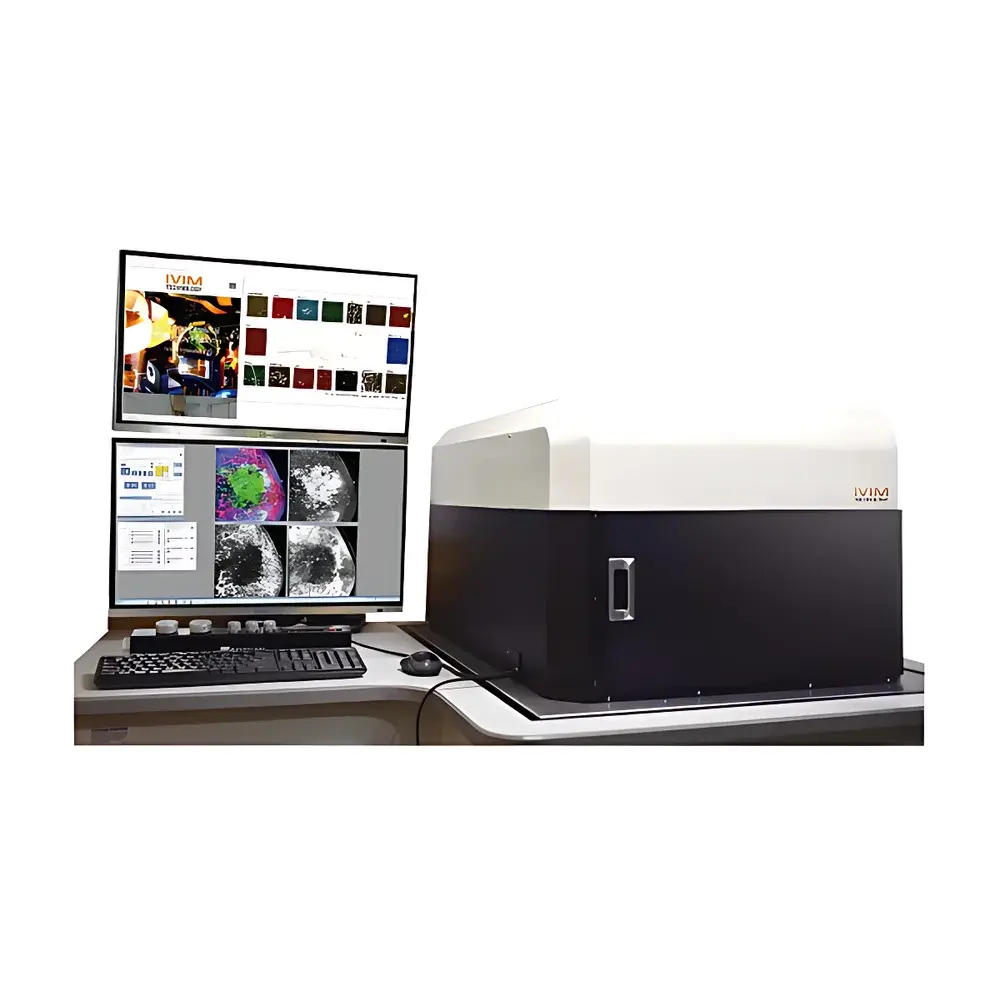
IVM-CM Small Animal In Vivo Two-Photon Microscopy System
| Origin | South Korea |
|---|---|
| Manufacturer Type | Authorized Distributor |
| Origin Category | Imported |
| Model | IVM-CM |
| Price Range | USD 420,000 – 700,000 |
| Instrument Type | Optical Imaging System |
| Energy Resolution | 0.2 keV |
| Scanning Resolution | 512 × 512 pixels |
| Frame Rate | 100 fps |
| Field of View (FOV) | 100 × 100 µm² to 10 × 10 mm² |
| Sample Capacity | 1 animal per session |
Overview
The IVM-CM Small Animal In Vivo Two-Photon Microscopy System is an advanced optical imaging platform engineered for high-resolution, deep-tissue, longitudinal intravital observation in awake or lightly sedated rodents. Based on the physical principle of simultaneous two-photon excitation—where two near-infrared photons are absorbed in coincidence to induce fluorophore emission—the system achieves superior optical sectioning, reduced phototoxicity, and enhanced penetration depth up to 1,000 µm in scattering biological tissues. Integrated with a Coherent Chameleon Ultra II femtosecond laser (tunable 690–1050 nm), the IVM-CM delivers precise spectral control for optimal excitation of genetically encoded indicators (e.g., GCaMP, tdTomato) and exogenous dyes (e.g., FITC, TRITC, Cy5). Its dual-modality architecture combines two-photon microscopy with optional confocal imaging via a configurable 4-channel detection module (selectable from 16 available laser lines: 405–785 nm), enabling multimodal functional and structural interrogation across diverse physiological contexts.
Key Features
- IVIM High-Speed Resonant Scanning: Proprietary rotating polygon mirror scanner enables uniform illumination and acquisition at 100 fps over full 512 × 512 pixel FOVs—without central signal attenuation or peripheral photobleaching.
- Full-FOV Signal Uniformity: Engineered optical path ensures consistent excitation intensity and photon collection efficiency across the entire imaging field, delivering spatially invariant SNR and quantitative reliability.
- Real-Time Motion Artifact Compensation: GPU-accelerated parallel computation performs sub-frame motion correction during acquisition, supporting stable imaging of both slow-moving abdominal organs (liver, kidney, spleen) and rapidly contracting thoracic tissues (heart, lung).
- Flexible FOV Scaling: Motorized zoom optics support seamless transition from cellular-resolution imaging (100 × 100 µm²) to organ-level survey (10 × 10 mm²), maintaining diffraction-limited performance throughout.
- Dual-Modality Detection Architecture: Simultaneous or sequential two-photon and confocal modes; four independently configurable PMT channels with spectral unmixing capability for multiplexed fluorescence quantification.
Sample Compatibility & Compliance
The IVM-CM is optimized for longitudinal intravital imaging in murine models—including C57BL/6, BALB/c, NSG, and transgenic strains—under restrained, head-fixed, or treadmill-based awake paradigms. It supports chronic cranial window, spinal cord window, dorsal skinfold chamber, and abdominal imaging chambers compatible with ISO 7 cleanroom-grade mounting interfaces. All hardware and software components comply with IEC 61000-6-3 (EMC) and IEC 60601-1 (medical electrical equipment safety) standards. The system meets GLP-relevant documentation requirements for preclinical imaging studies and supports audit-ready metadata logging aligned with FDA 21 CFR Part 11 principles (electronic signatures, change control, and data integrity tracking).
Software & Data Management
Acquisition and analysis are managed through IVMSuite v4.x—a modular, scriptable platform built on Python 3.9 and Qt6. Core modules include real-time motion correction (IVIM-Motion), volumetric Z-stack reconstruction, time-lapse registration (IVIM-Trajectory), and cell-tracking algorithms compliant with MIAP (Minimum Information About a Microscopy Image) guidelines. Raw data are stored in standardized HDF5 format with embedded TIFF-compatible metadata tags (OME-XML schema). Export options include NIfTI, MATLAB .mat, and Bio-Formats-compatible files for integration with Imaris, Fiji/ImageJ, and MATLAB-based computational pipelines. Audit trails record operator ID, timestamp, acquisition parameters, and processing history for regulatory submissions.
Applications
The IVM-CM supports quantitative intravital imaging across multiple biological scales: from single-cell dynamics (migration, phagocytosis, calcium transients, mitochondrial trafficking) to tissue-level functional mapping (neurovascular coupling, lymphocyte homing, tumor angiogenesis, immune cell infiltration). Validated applications include orthotopic and subcutaneous cancer models (glioblastoma, melanoma, pancreatic ductal adenocarcinoma), inflammatory disease models (LPS-induced sepsis, DSS-induced colitis, ischemia-reperfusion injury), and regenerative medicine workflows (hematopoietic stem cell engraftment, CAR-T trafficking, mesenchymal stromal cell homing). Its compatibility with optogenetic actuators (ChR2, iC++), biosensors (cAMP, ATP, pH), and multiplexed labeling strategies enables hypothesis-driven mechanistic studies under physiologically relevant conditions.
FAQ
What laser sources are integrated into the IVM-CM system?
The system is equipped with a Coherent Chameleon Ultra II tunable femtosecond laser (690–1050 nm) and supports optional diode-pumped solid-state lasers for confocal excitation (405–785 nm).
Can the IVM-CM perform imaging in awake, unrestrained animals?
Yes—it is compatible with treadmill-based locomotion setups and custom-designed restraint systems enabling chronic imaging without anesthesia-induced physiological artifacts.
Is the system validated for compliance with FDA or EMA regulatory guidelines?
While not a medical device, the IVM-CM meets technical and documentation standards required for GLP-compliant preclinical imaging studies, including electronic audit trails and data integrity safeguards per 21 CFR Part 11.
How is photobleaching minimized during long-term time-lapse experiments?
Through IVIM’s uniform illumination design, adaptive laser power modulation, and motion-compensated frame averaging—reducing effective photon dose while preserving SNR.
Does the software support batch processing of large-scale intravital datasets?
Yes—IVMSuite includes CLI-mode scripting and job-queue management for automated processing of multi-terabyte time-series stacks across HPC or local cluster environments.





