
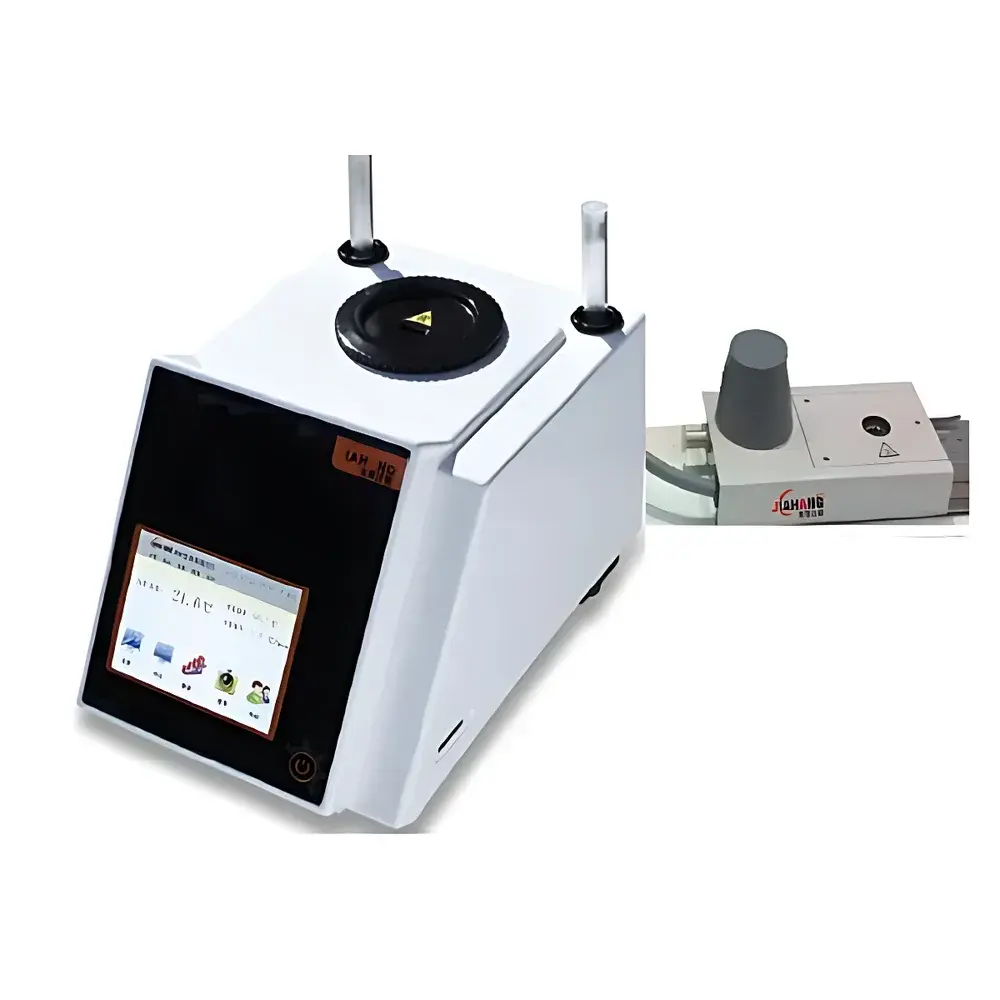
J370 Microscopic Hot Stage
| Origin | Shanghai |
|---|---|
| Manufacturer Type | Distributor |
| Origin Category | Domestic (China) |
| Model | J370 |
| Price Range | USD 1,400–2,800 |
| Temperature Range | Ambient to 350 °C |
| Heating Rate | 0.1–20 °C/min |
| Temperature Repeatability | Not specified |
| Temperature Accuracy | ±0.3 °C |
| Temperature Resolution | 0.1 °C |
| Slide Dimensions | 76 × 19 × 1 mm / 15 × 15 × 0.5 mm |
| Field of View | 2 mm |
| Working Distance (Objective) | ≥7 mm |
| X–Y Translation Range | ≤13 mm |
| Dimensions (L×W×H) | 185 × 85 × 28 mm |
| Weight | 1 kg |
| User Profiles | 15 |
| Method Segments | 99 per method |
| Stored Methods | 20 |
| Data Storage Capacity | 400 test records |
| Interface Ports | USB, RS232, SD card slot, Ethernet |
| Display | TFT high-definition color LCD |
Overview
The J370 Microscopic Hot Stage is a precision temperature-controlled stage engineered for in-situ thermal observation under optical microscopy. It operates on the principle of resistive heating with closed-loop PID temperature regulation, enabling real-time visualization of phase transitions—including melting, crystallization, polymorphic conversion, liquid crystal behavior, and thermal degradation—directly on standard microscope stages. Designed for integration with upright or inverted biological, metallurgical, or polarized light microscopes, the J370 supports both transmitted and reflected light configurations. Its compact form factor (185 × 85 × 28 mm) and lightweight construction (1 kg) ensure compatibility with most commercial microscope models without mechanical interference. The system maintains thermal stability within ±0.3 °C across its full operating range (ambient to 350 °C), with programmable heating rates adjustable from 0.1 to 20 °C/min—critical for kinetic studies requiring controlled thermal ramping.
Key Features
- High-resolution temperature control: 0.1 °C resolution with ±0.3 °C absolute accuracy over ambient to 350 °C
- Programmable multi-segment thermal profiles: Up to 99 segments per method, supporting complex heating/cooling/hold sequences
- Dual-interface display and control: Integrated TFT high-definition color LCD with intuitive menu navigation; external control via USB, RS232, SD card, or Ethernet
- Optimized optical compatibility: 2 mm field of view, ≥7 mm working distance, and standardized slide dimensions (76 × 19 × 1 mm and 15 × 15 × 0.5 mm) for seamless alignment with 10×–40× objectives
- Robust mechanical design: Precision-machined aluminum housing with thermally isolated stage surface; X–Y manual translation up to 13 mm for precise sample positioning
- Data integrity architecture: Local storage of 400 test results with timestamp, temperature log, and method ID; supports GLP-compliant record retention when paired with validated software
Sample Compatibility & Compliance
The J370 accommodates diverse solid and semi-solid samples—including pharmaceutical powders, polymer thin films, mineral crystals, biological tissue sections, forensic trace evidence, and synthetic fibers—mounted on standard glass slides or specialized quartz substrates. Its open-stage geometry allows direct access for probe insertion (e.g., micro-FTIR or Raman fiber optics) and compatibility with optional accessories such as polarizing filters and strain-free objectives. The instrument meets general safety requirements per IEC 61010-1 for laboratory electrical equipment. While not certified to ISO 11357 (Plastics — Differential Scanning Calorimetry) or USP (Melting Points) as a standalone unit, it functions as a compliant thermal platform when integrated into validated workflows adhering to ASTM E324, ISO 11357-3, and pharmacopeial monographs requiring microscopic melt point determination.
Software & Data Management
The J370 supports host PC communication via USB or RS232 for remote parameter setting, real-time temperature logging, and synchronized image capture when used with third-party microscope cameras (e.g., CMOS/CCD units). Data export is available in CSV format for post-processing in MATLAB, Origin, or Excel. The embedded firmware includes user authentication (15 configurable profiles), audit-trail-ready method versioning, and password-protected method editing—features aligned with FDA 21 CFR Part 11 requirements when deployed in regulated environments with appropriate validation documentation. SD card backup ensures data redundancy independent of PC connectivity.
Applications
- Pharmaceutical development: Polymorph screening, hydrate/solvate stability assessment, and eutectic point mapping of active pharmaceutical ingredients (APIs)
- Materials science: Thermal-induced phase separation in block copolymers, mesophase characterization in liquid crystals, and sintering onset analysis of ceramic precursors
- Life sciences: Thermotropic behavior of lipid bilayers, protein denaturation kinetics in histological sections, and thermal tolerance thresholds in plant epidermal tissues
- Forensic analysis: Melting profile differentiation of synthetic drugs, polymer fiber identification, and wax/resin classification in trace evidence
- Geosciences: In-situ observation of mineral dehydration reactions and solid-state transformations under geologically relevant thermal gradients
FAQ
Can the J370 be used with inverted microscopes?
Yes—the stage’s low profile (28 mm height) and unobstructed bottom surface allow mounting on inverted microscope nosepiece adapters or custom brackets.
Is calibration traceable to NIST standards?
The unit ships with a factory calibration certificate; users may perform in-house verification using certified reference materials (e.g., pure indium, tin, or bismuth) per ASTM E537 or ISO 11357-1.
Does it support cooling below ambient temperature?
No—the J370 is a heating-only stage; cryogenic operation requires an external Peltier or liquid nitrogen cooling module.
What microscope objectives are recommended?
Long-working-distance (LWD) objectives rated for ≥7 mm clearance and corrected for cover-glass thickness (0.17 mm) yield optimal focus stability during thermal cycling.
How is thermal uniformity verified across the stage surface?
Uniformity is characterized at multiple points (center, quadrants) using calibrated micro-thermocouples; typical deviation is ≤±0.5 °C at 200 °C under static conditions.



