
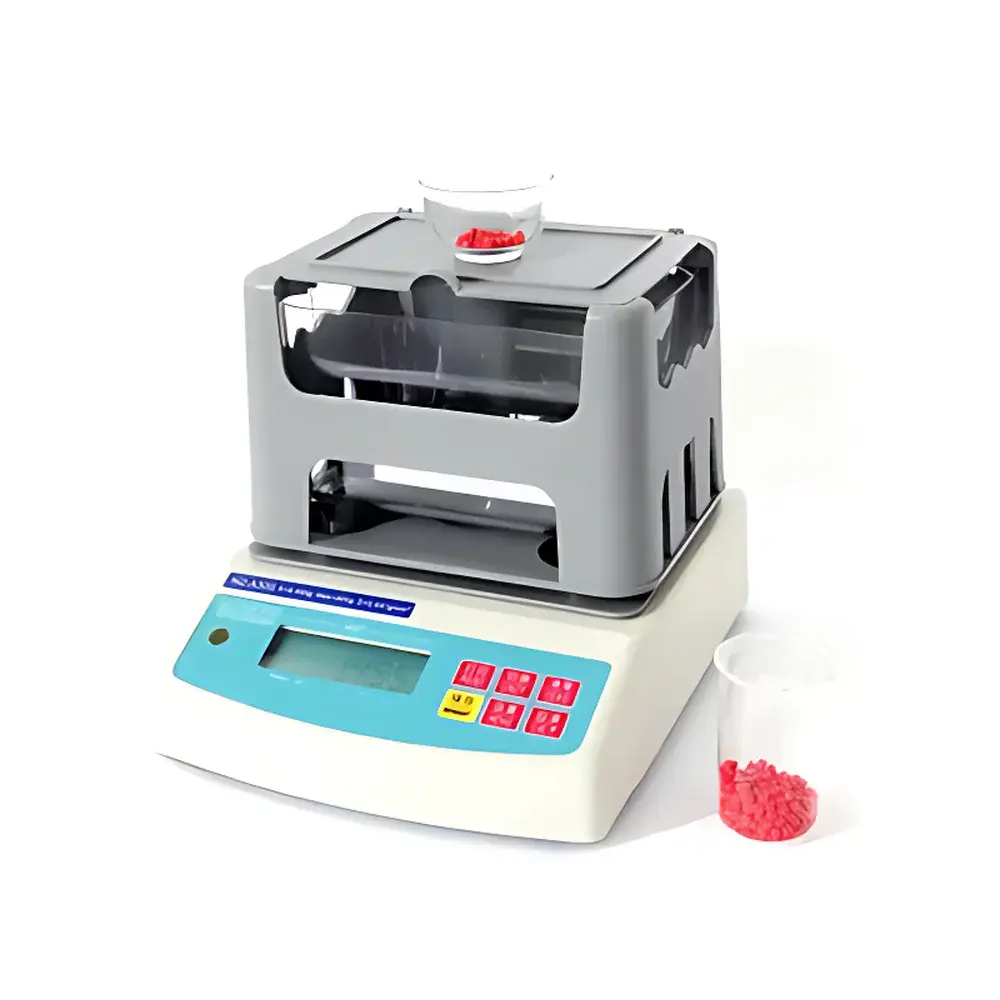
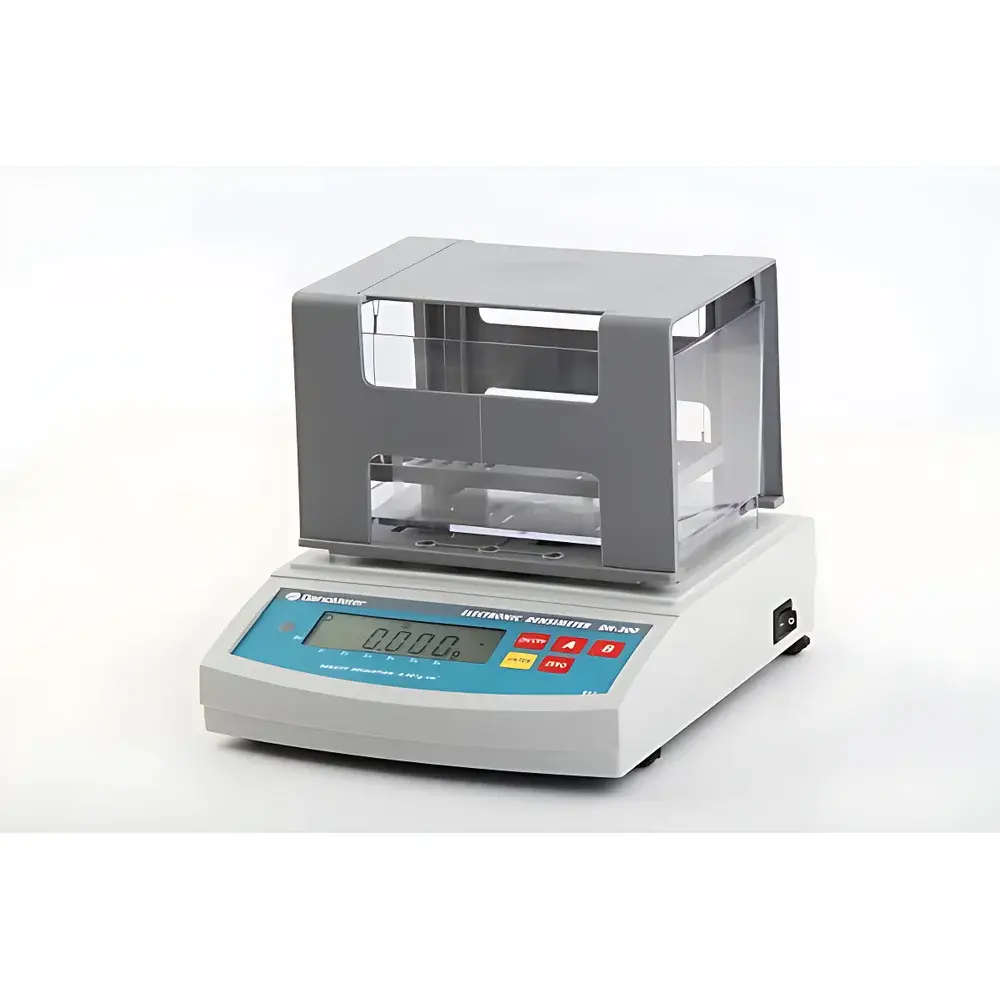
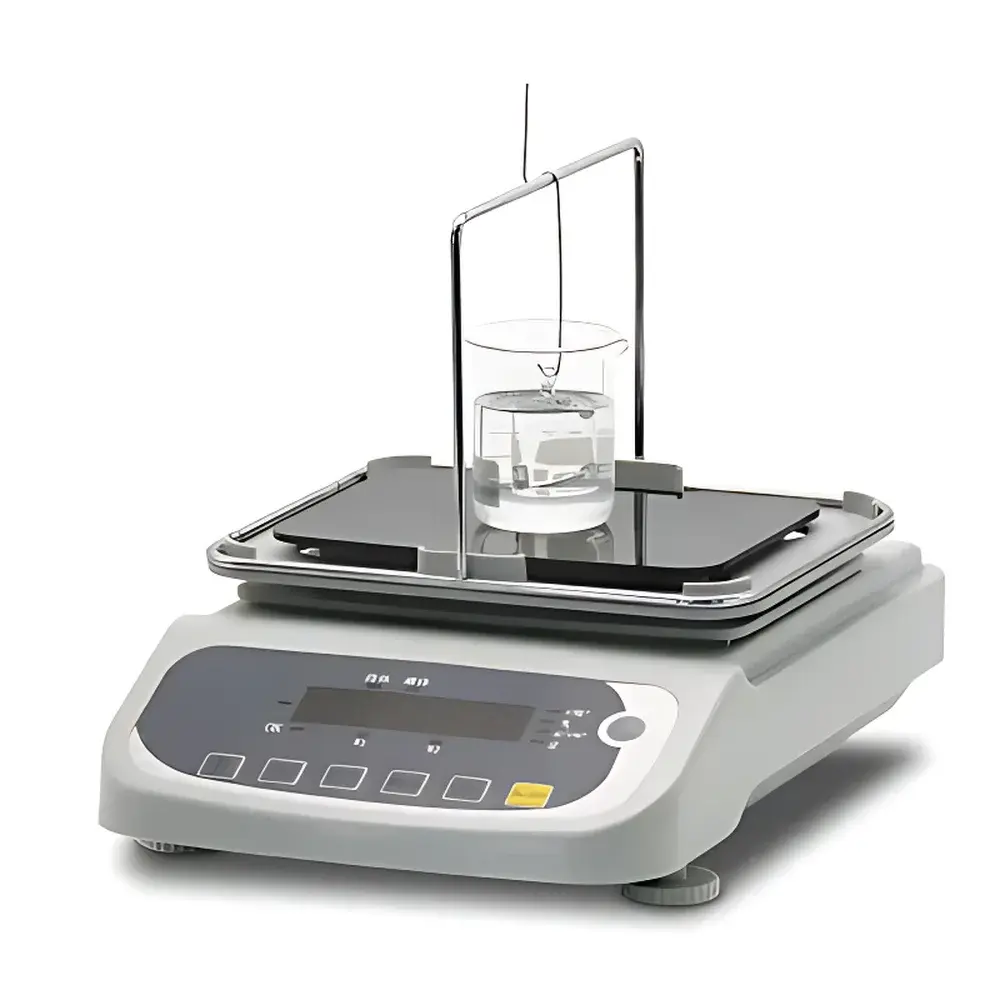
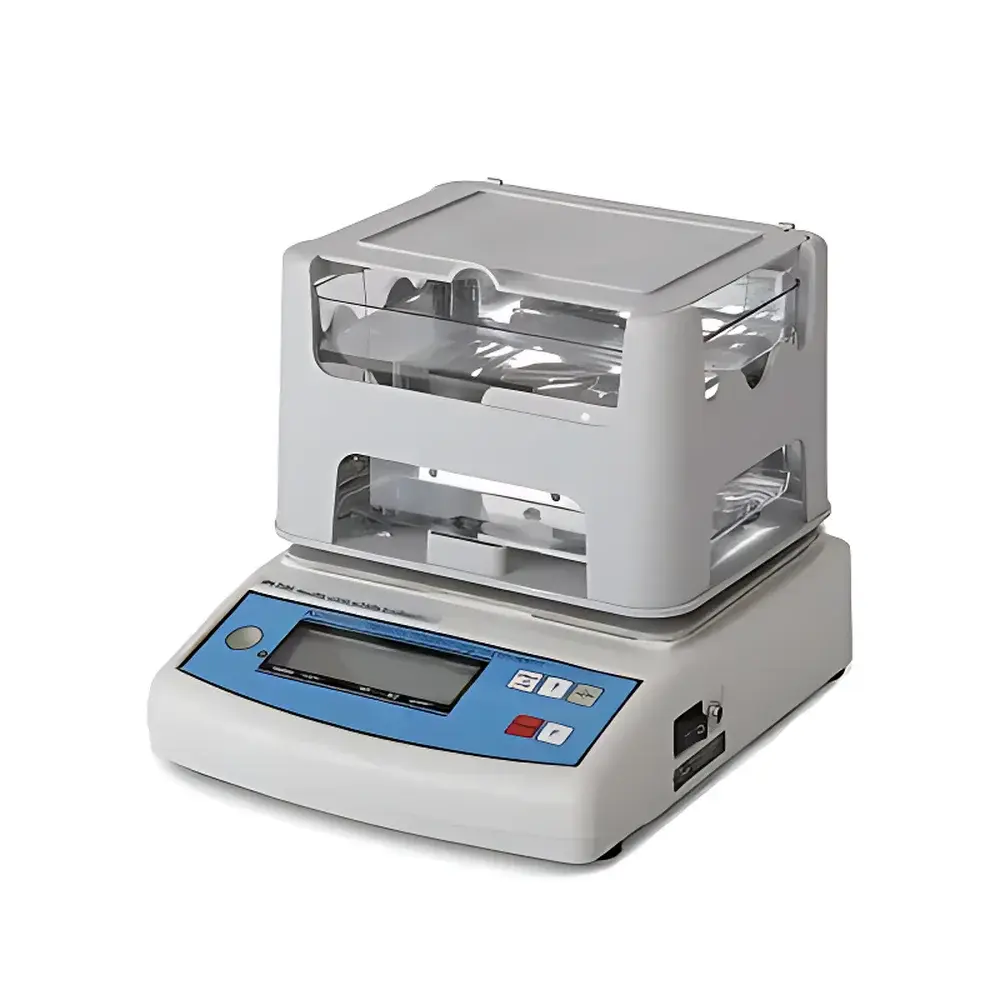
JB-300A JByq Precision Solid-Liquid Dual-Mode Digital Density Analyzer
| Brand | JByq |
|---|---|
| Origin | Shanghai, China |
| Model | JB-300A |
| Instrument Type | Benchtop True Density Analyzer |
| Application Scope | Universal for Solids & Liquids |
| Density Range | 0.0001–99.9999 g/cm³ |
| Density Resolution | 0.0001 g/cm³ |
| Weighing Capacity | 0.001–200 g |
| Measurement Time | ~5 s |
| Water Tank Dimensions (Std) | 169 mm × 98 mm × 83 mm |
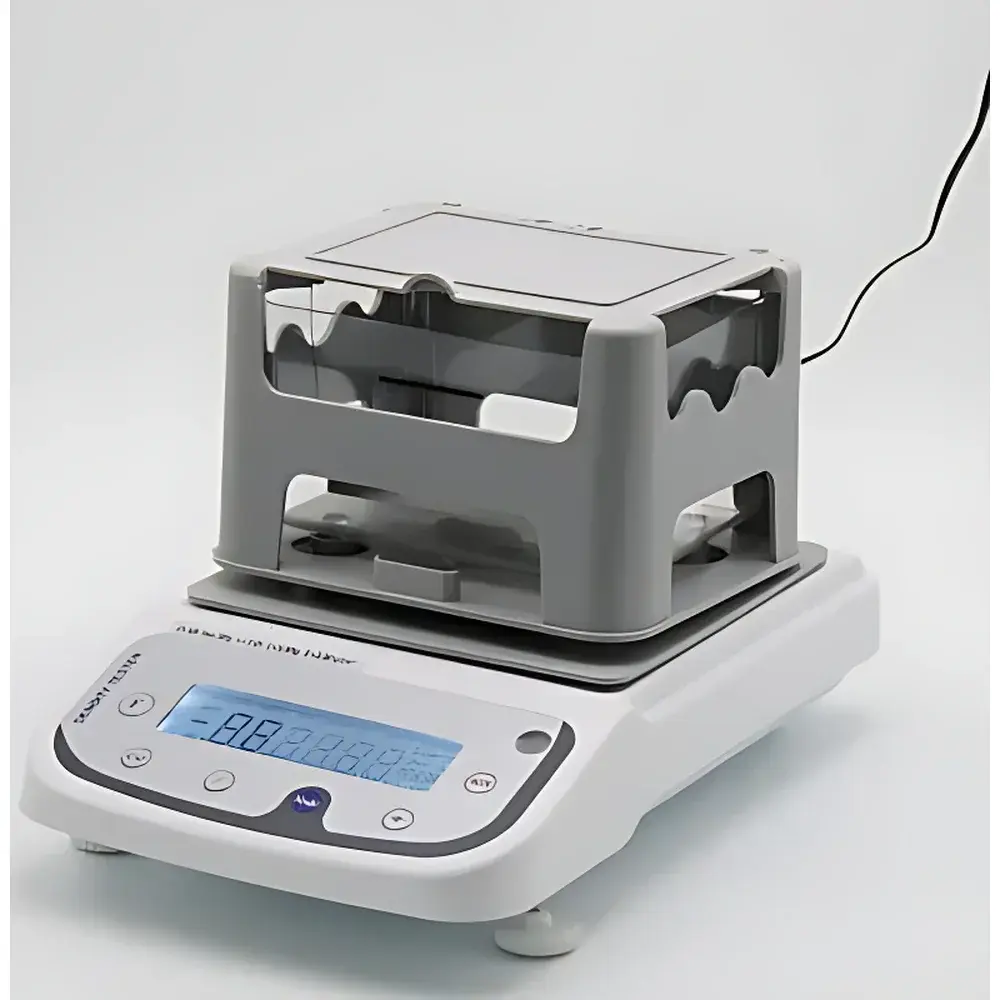
| Temperature Compensation | Real-time water temperature input |
| Interface | RS-232C |
| Compliance | ASTM D792, ASTM D297, ISO 1183, ISO 2781, GB/T 1033, GB/T 2951, JIS K6268, DIN 53516 |
Overview
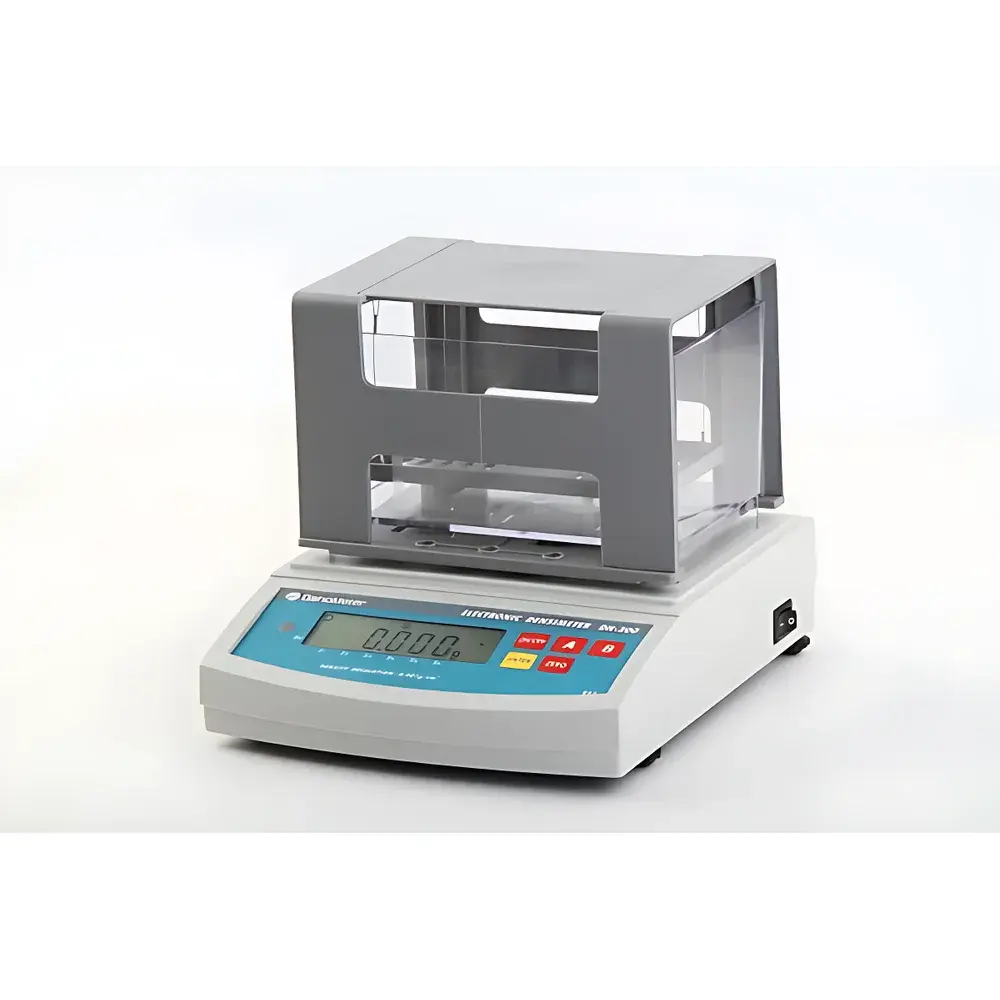
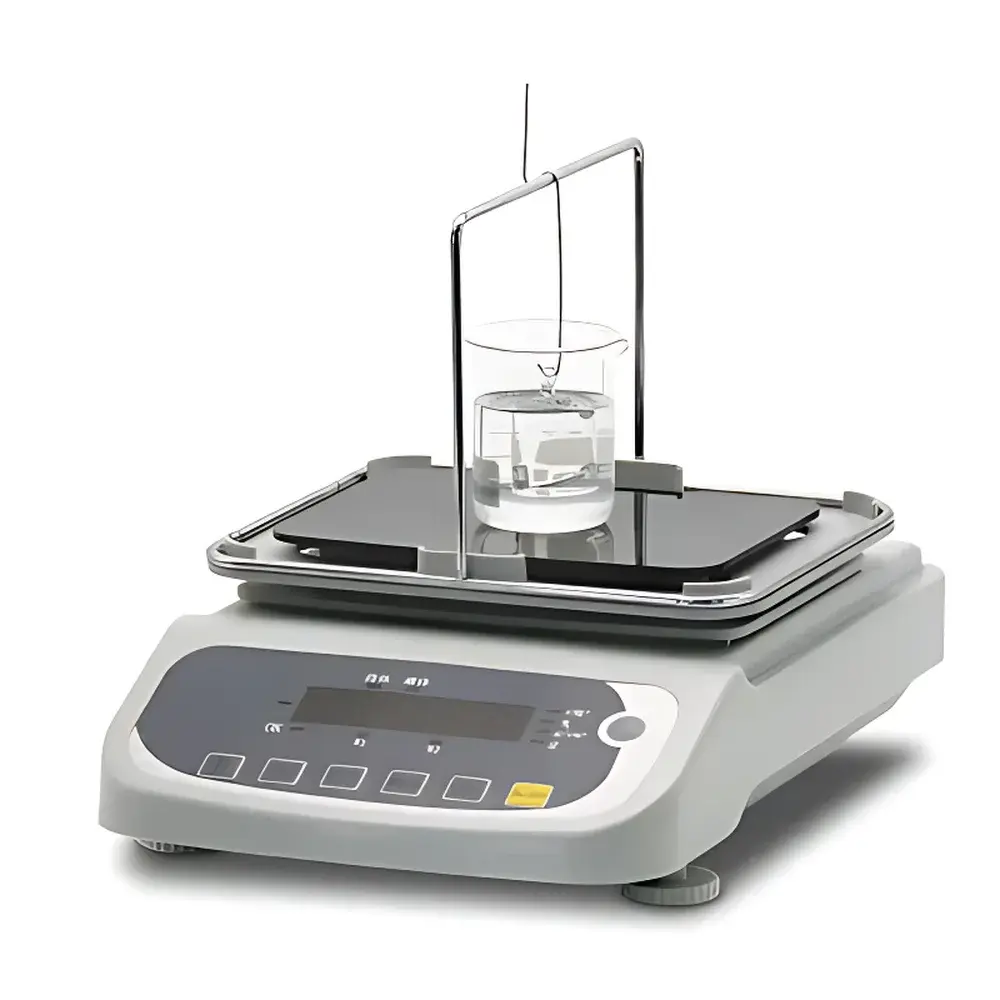
The JB-300A JByq Precision Solid-Liquid Dual-Mode Digital Density Analyzer is an ASTM- and ISO-compliant benchtop instrument engineered for high-reproducibility density determination of both solid and liquid samples using the hydrostatic weighing principle (Archimedean displacement method). Unlike traditional hydrometers or pycnometers, the JB-300A integrates a high-resolution analytical balance (0.001 g readability) with a precision-machined, corrosion-resistant measurement assembly—including a one-piece transparent PC water tank and stainless-steel suspension wire—to eliminate mechanical drift, thermal hysteresis, and operator-induced error. The system calculates true density (g/cm³) by measuring sample weight in air and submerged weight in a calibrated reference fluid (e.g., distilled water or ethanol), applying real-time temperature compensation based on user-input water temperature or optional integrated sensor input. Designed for routine QC/QA labs and R&D environments, it delivers traceable, GLP-aligned results without requiring vacuum degassing or solvent drying—making it suitable for porous elastomers, composite laminates, granular powders, and low-viscosity liquids.
Key Features
- 0.0001 g/cm³ density resolution with ±0.0002 g/cm³ repeatability across full range (0.0001–99.9999 g/cm³)
- Benchtop architecture with rigid aluminum alloy frame and anti-vibration base for stable operation in shared lab or production-floor settings
- One-piece molded polycarbonate water tank (standard: 169 × 98 × 83 mm), chemically inert to water, ethanol, isopropanol, and mild aqueous solutions
- Stainless-steel suspension wire and precision-machined aluminum weighing rack ensure orthogonal alignment and zero lateral contact with tank walls
- Real-time water temperature compensation algorithm compliant with ASTM D792 Annex A1 and ISO 1183-1:2019 Clause 7.3
- Multi-step memory function: stores air weight, immersed weight, medium density, and temperature—enabling rapid sequential measurements without reconfiguration
- RS-232C serial interface supporting ASCII protocol for bidirectional communication with LIMS, ELN, or custom data acquisition software
- Dual-mode operation: automatic switching between solid-density mode (displacement-based) and liquid-density mode (immersion sinker method per ISO 3507)
- Integrated draft shield mount and optional heavy-duty acrylic anti-static cover for ISO Class 5–7 environments
Sample Compatibility & Compliance
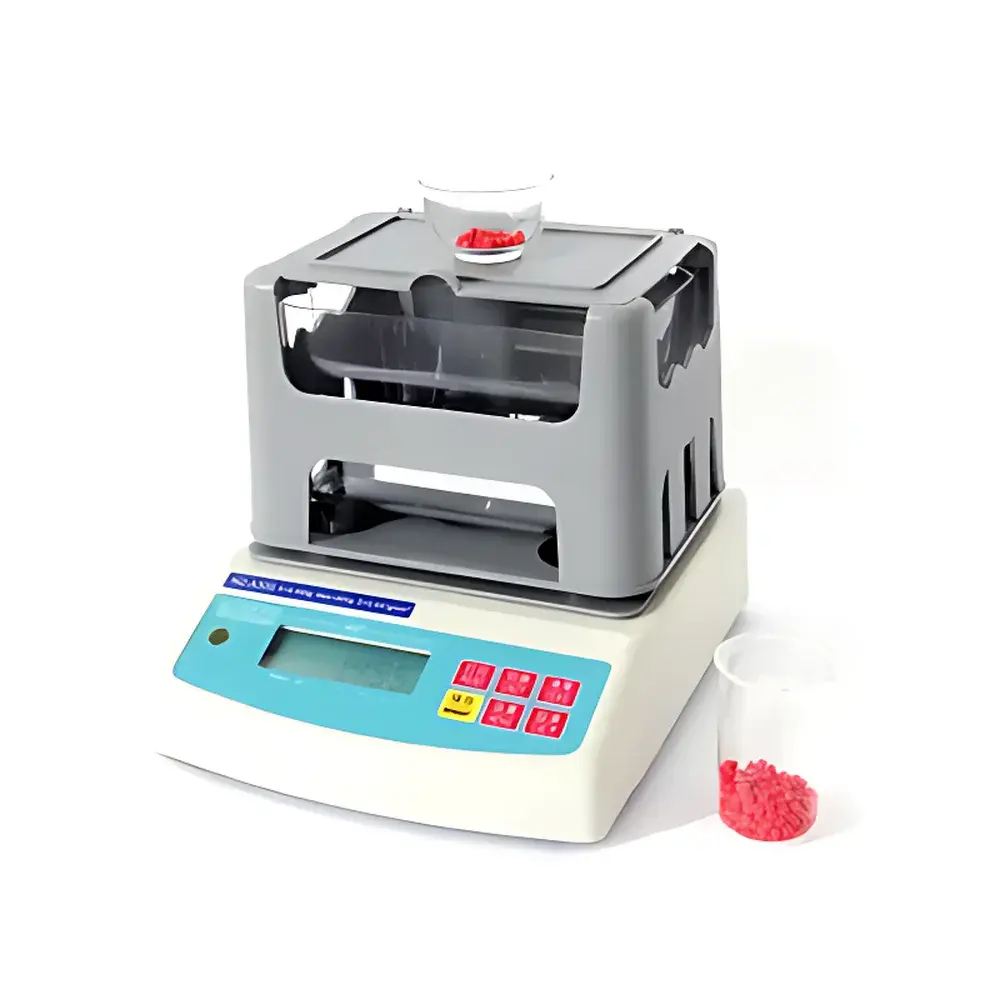
The JB-300A accommodates heterogeneous geometries—from irregularly shaped rubber O-rings and extruded polymer profiles to free-flowing metal powders and buoyant foams—via configurable accessories including sinker baskets, floating-sample cradles, and granular sample holders. Its modular tank design supports custom dimensions (upon request) for oversized or high-aspect-ratio specimens. All measurement protocols align with internationally recognized standards: ASTM D792 (plastics), ASTM D297 (rubber), ISO 1183-1 (thermoplastics), ISO 2781 (elastomers), GB/T 1033.1 (Chinese national standard for plastics), and JIS K6268 (Japanese industrial standard for rubber testing). The instrument’s calibration traceability path follows ISO/IEC 17025 requirements when used with NIST-traceable weights and certified reference fluids. It meets basic environmental robustness criteria per IEC 61000-4-2 (ESD immunity) and operates within ambient conditions of 15–30°C and 30–80% RH non-condensing.
Software & Data Management
While the JB-300A operates autonomously via front-panel keypad and LCD display, its RS-232C port enables seamless integration into regulated workflows. Raw output includes timestamped density (g/cm³), volume (cm³), mass (g), medium density (g/cm³), water temperature (°C), and calculation status flag. When connected to validated PC software (e.g., LabSolutions™ or custom Python-based DAQ tools), data can be automatically logged with audit trail metadata—supporting 21 CFR Part 11 compliance when paired with electronic signature modules and role-based access control. Optional printer drivers support direct thermal or dot-matrix output of measurement reports containing operator ID, sample ID, calibration date, and environmental parameters—essential for GMP/GLP documentation in pharmaceutical excipient or medical device material qualification.
Applications
This analyzer serves as a primary density verification tool across multiple regulated and industrial domains: QC screening of injection-molded polyolefin parts per ASTM D792; bulk density validation of sintered tungsten carbide compacts per ISO 3369; void content analysis in carbon-fiber prepregs via comparative density shift; specific gravity assessment of vulcanized rubber compounds prior to tire tread extrusion; formulation consistency checks for silicone elastomer batches; and incoming inspection of recycled PET flakes where density segregation indicates polymer contamination. In academic research, it supports porosity quantification in aerogels (using ethanol displacement), density gradient profiling in layered composites, and phase-density mapping in polymer blends—without requiring destructive sectioning or mercury intrusion.
FAQ
What standards does the JB-300A comply with for solid density measurement?
ASTM D792, ASTM D297, ISO 1183-1, ISO 2781, GB/T 1033.1, JIS K6268, and DIN 53516.
Can the instrument measure powders or porous materials?
Yes—using the optional powder basket accessory and surface-tension-reducing media (e.g., ethanol or surfactant-doped water) to ensure full particle wetting and void elimination.
Is temperature compensation mandatory, or can it be disabled?
Temperature compensation is enabled by default and required for ASTM/ISO conformance; however, users may input a fixed reference temperature (e.g., 23.0°C) if external bath control is applied.
Does the JB-300A support GLP/GMP data integrity requirements?
When interfaced with compliant third-party software and configured with user authentication, audit logging, and electronic signatures, it fulfills core ALCOA+ principles for raw data integrity.
What is the minimum sample mass for reliable measurement?
For optimal signal-to-noise ratio at 0.0001 g/cm³ resolution, samples should exceed 1 g; however, accurate results are achievable down to 0.01 g with proper fixture selection and environmental stabilization.



