
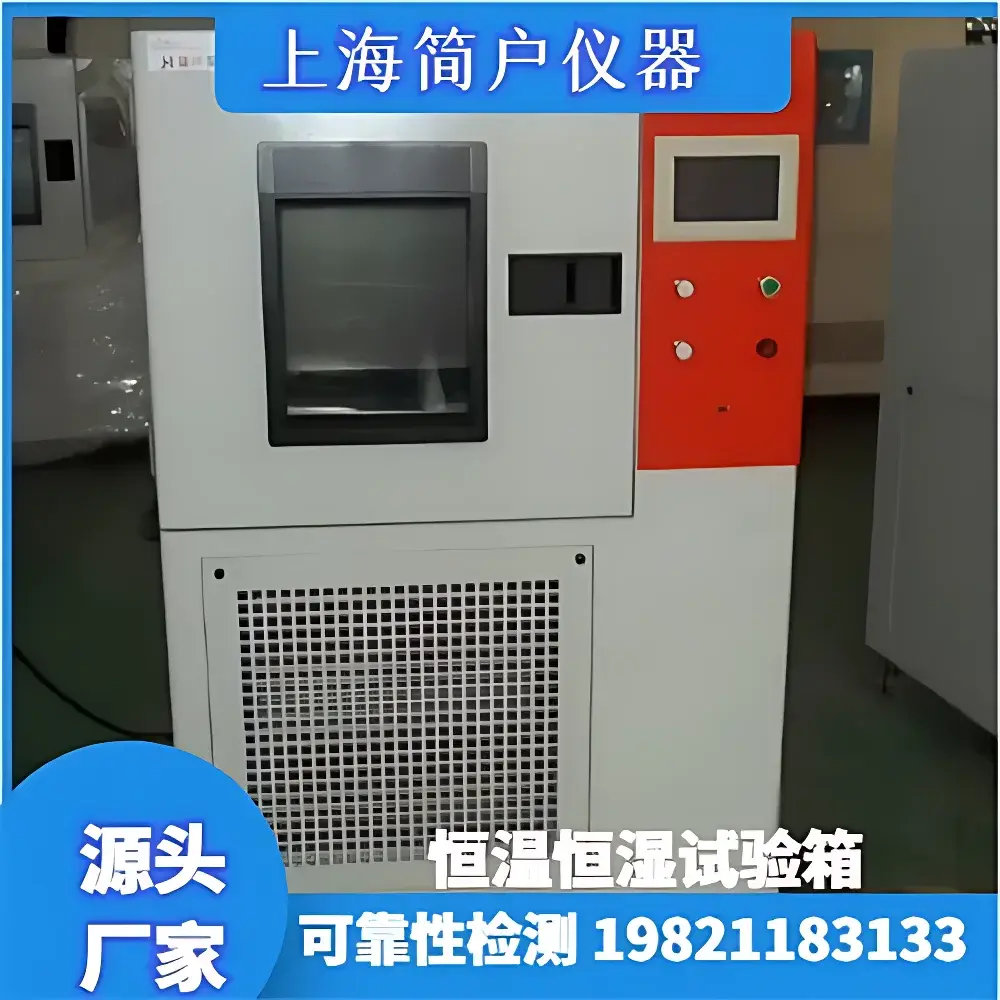
JianHu JH-Multi-Zone Thermal Shock Test Chamber
| Brand | JianHu |
|---|---|
| Origin | Shanghai, China |
| Manufacturer Type | Authorized Distributor |
| Product Category | Domestic |
| Model | JH-Multi-Zone Thermal Shock Test Chamber |
| Quotation | Available Upon Request |
| High-Temperature Range | 80 °C to 120 °C |
| Low-Temperature Range | –60 °C to 200 °C (Ultra-Wide Range) |
| Thermal Shock Temperature Range | –55 °C to 125 °C |
| Temperature Stability | ±0.5 °C |
| Temperature Uniformity | ±0.5 °C |
| Heating Rate | Rapid |
| Cooling Rate | Rapid |
Overview
The JianHu JH-Multi-Zone Thermal Shock Test Chamber is an engineered environmental test system designed for high-fidelity, concurrent thermal stress evaluation across multiple independent temperature zones. Unlike conventional single-chamber thermal shock systems—where all samples undergo identical thermal profiles—the JH-Multi-Zone platform implements physically isolated, independently controlled thermal compartments. Each zone operates with dedicated heating/cooling circuits, PID-controlled air circulation, and real-time thermocouple feedback, enabling simultaneous application of distinct thermal shock protocols (e.g., different ramp rates, dwell times, and endpoint temperatures) within a single test cycle. This architecture is grounded in forced-air convection thermal transfer principles, calibrated per IEC 60068-2-14 (Environmental testing — Part 2-14: Tests — Test N: Change of temperature) and aligned with ASTM D5229/D5229M for composite material thermal cycling validation. The chamber supports both two-step (high–low) and three-step (high–ambient–low) shock configurations, with programmable transition times between zones to emulate real-world thermal transients encountered in aerospace avionics, automotive power electronics, and advanced packaging substrates.
Key Features
- Multi-zone thermal isolation: Up to four independently sealed and insulated test compartments, each with dedicated refrigeration/heating modules and airflow management
- Ultra-wide operational range: Low-temperature capability down to –60 °C (using cascade refrigeration) and high-temperature up to 200 °C (via high-stability resistive heating), enabling extended qualification beyond standard JEDEC JESD22-A104E requirements
- Precision thermal control: ±0.5 °C temperature stability and uniformity across each zone, verified via NIST-traceable Class A PT100 sensors and 0.1 °C resolution digital controllers
- Rapid thermal transition: Typical heating rates ≥15 °C/min and cooling rates ≥10 °C/min from ambient to target extremes, configurable per zone without cross-compartment interference
- Modular configuration: Zones can be operated individually or in synchronized/asynchronous mode; optional integration with external LN₂ or CO₂ auxiliary cooling for sub–70 °C low-temp extension
- Robust chamber construction: Stainless steel interior (304 SS), double-wall insulation with vacuum-sealed polyurethane foam, and reinforced door gaskets meeting IP54 ingress protection
Sample Compatibility & Compliance
The JH-Multi-Zone chamber accommodates heterogeneous sample sets—including PCB assemblies, MEMS sensors, battery cells, polymer composites, and medical device housings—without thermal crosstalk. Sample trays are designed for standardized DIN 40050-9 and MIL-STD-810H mounting interfaces. The system complies with ISO/IEC 17025 calibration traceability requirements and supports audit-ready documentation for GLP and GMP environments. It meets the thermal profile repeatability criteria specified in USP for pharmaceutical packaging validation and aligns with the thermal cycling provisions of AEC-Q200 for passive electronic components. Optional data logging modules provide timestamped, tamper-evident records compliant with FDA 21 CFR Part 11 for electronic signatures and audit trails.
Software & Data Management
Control is executed via JianHu’s proprietary WinTest Pro v4.2 software, running on embedded industrial PC with Windows IoT Enterprise OS. The interface supports multi-user role-based access (administrator, operator, reviewer), full script-based test sequencing (including conditional branching and inter-zone triggers), and real-time overlay visualization of up to 32 thermocouple channels. All test data—including setpoints, actual temperatures, alarm logs, and chamber status—are exported in CSV, XML, and PDF formats compatible with LIMS integration. Automated report generation includes statistical summaries (mean, std dev, min/max per zone), pass/fail flagging against user-defined limits, and compliance annotations referencing IEC, ASTM, and MIL standards. Firmware updates are delivered via secure HTTPS with SHA-256 signature verification.
Applications
- Electronics reliability: Concurrent qualification of ASICs, power modules, and RF front-end components under divergent thermal shock profiles to accelerate failure mode analysis (e.g., solder joint fatigue vs. die attach delamination)
- Automotive ECU validation: Simultaneous testing of engine control units (–40 °C to 125 °C), infotainment displays (0 °C to 85 °C), and ADAS radar housings (–40 °C to 105 °C) within one test run
- Advanced materials R&D: Comparative evaluation of thermal expansion mismatch, interfacial adhesion, and microcrack propagation in CMCs, metal-matrix composites, and bioresorbable polymers
- Aerospace component screening: Multi-stage shock testing of turbine blade coatings, satellite thermal blankets, and optical bench mounts per ECSS-E-ST-10-03C
- Medical device sterilization cycle simulation: Validation of polymer housing integrity under repeated autoclave-equivalent thermal excursions (121 °C → 25 °C → –40 °C)
FAQ
What is the maximum number of independent temperature zones supported?
The standard configuration supports four thermally isolated zones; custom configurations with six zones are available upon engineering review.
Can individual zones operate at different thermal shock frequencies simultaneously?
Yes—each zone executes its own programmable cycle count, dwell duration, and transition timing, with no synchronization requirement between zones.
Is the system validated for use in regulated pharmaceutical or medical device testing?
Yes—optional IQ/OQ documentation packages, 21 CFR Part 11-compliant software, and calibration certificates traceable to NIST or UKAS are available.
What refrigeration technology is used for the low-temperature zone?
Cascade vapor-compression refrigeration with environmentally compliant R-404A/R-23 mixed-refrigerant stages, achieving stable operation at –60 °C without liquid nitrogen dependency.
How is temperature uniformity verified across each zone?
Per IEC 60068-3-5, 9-point sensor mapping (center + 8 corners) is performed during factory acceptance testing, with uniformity confirmed at ±0.5 °C at all designated load points.



