
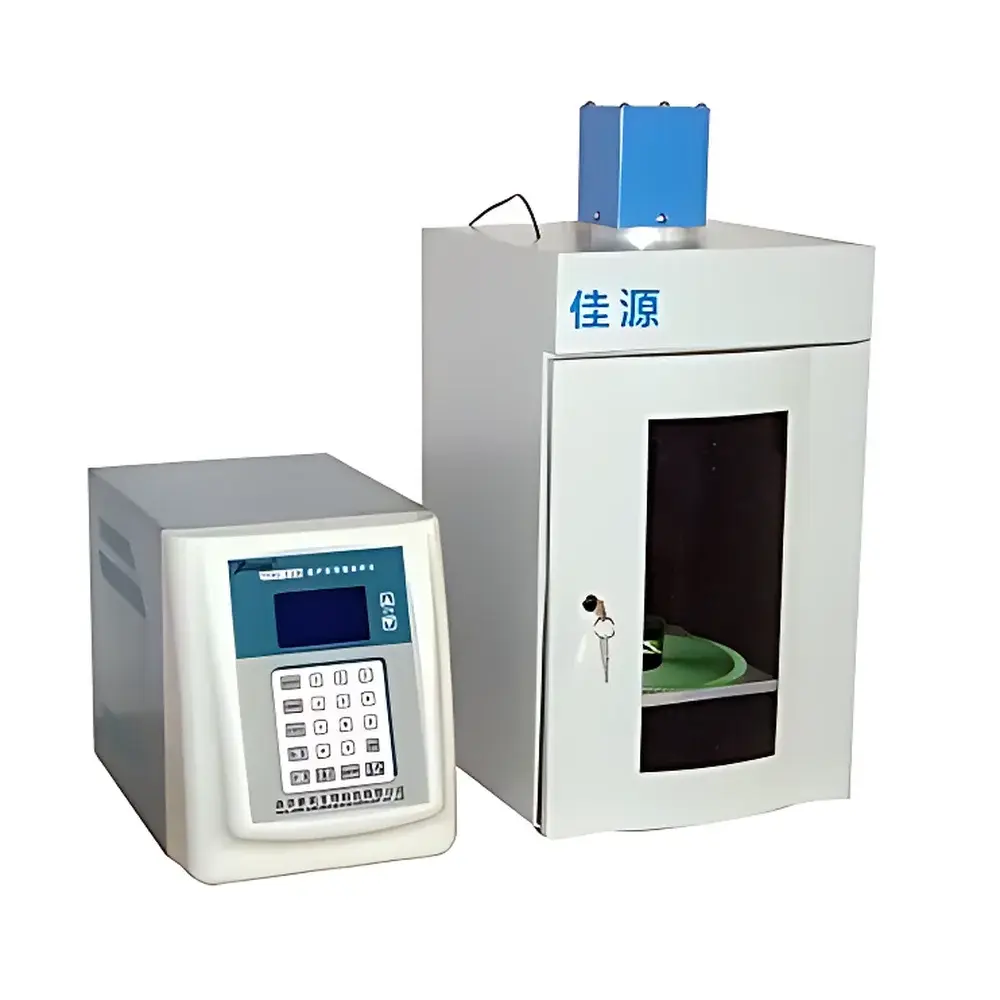
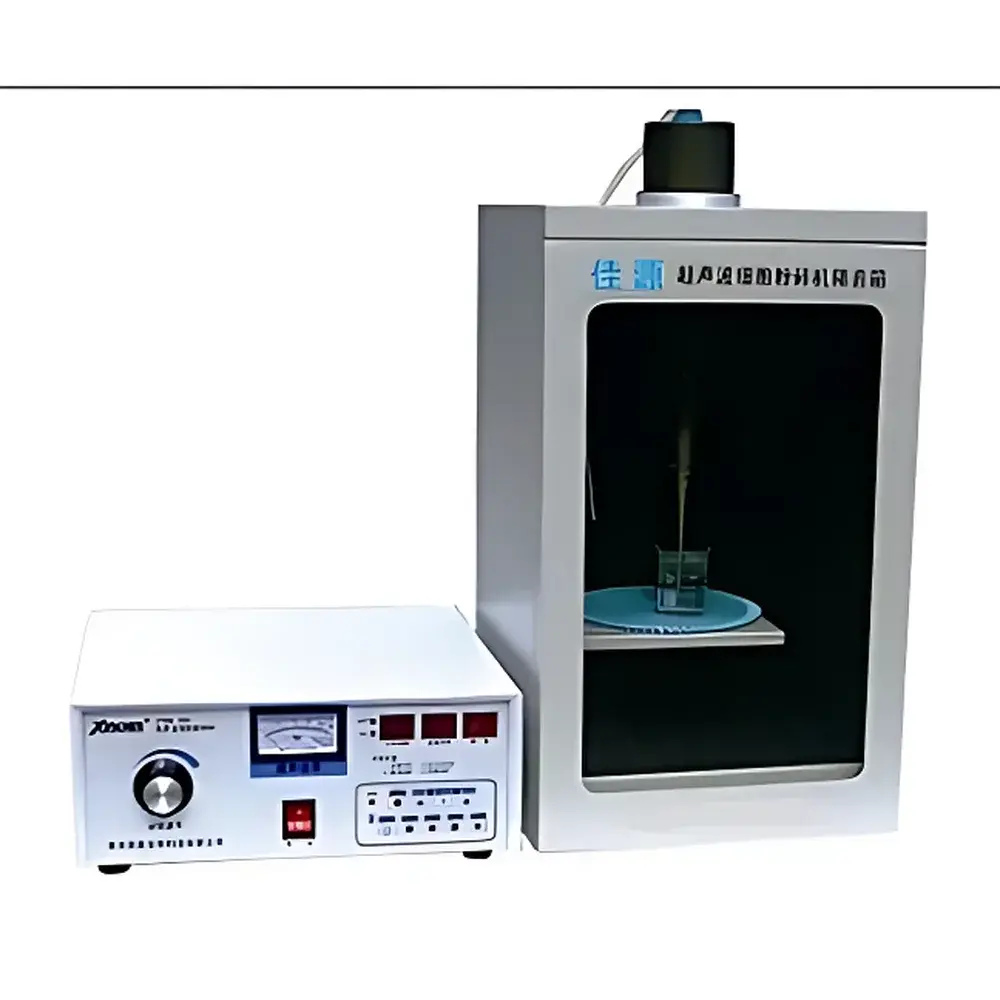
Jiayuan JY92-IIDN Ultrasonic Cell Disruptor
| Brand | Jiayuan |
|---|---|
| Origin | Beijing, China |
| Model | JY92-IIDN |
| Ultrasonic Frequency | 20–25 kHz (auto-frequency tracking) |
| Output Power | 900 W (touch-key continuous adjustment) |
| Pulse Mode | On-time 0.1–99.9 s / Off-time 0.1–99.9 s / Total Duration 0.1–99 min |
| Duty Cycle | 0.1–99.9% |
| Temperature Monitoring Range | 0–100 °C |
| Standard Probe Diameter | Φ6 mm |
| Optional Probes | Φ2, Φ3, Φ8, Φ10, Φ15 mm |
| Sample Volume Capacity | 0.2–600 mL |
| Input Voltage | 220/110 V, 50/60 Hz |
Overview
The Jiayuan JY92-IIDN Ultrasonic Cell Disruptor is a high-performance benchtop sonicator engineered for precise, reproducible cell lysis and sample homogenization in life science laboratories. It operates on the principle of high-intensity ultrasonic cavitation—where rapid pressure fluctuations in a liquid medium generate transient microbubbles that collapse violently, producing localized shear forces, shockwaves, and microstreaming. This physical mechanism enables efficient disruption of cellular membranes, organelles, and extracellular matrices without chemical or thermal denaturation—preserving native biomolecular integrity for downstream applications including protein extraction, nucleic acid isolation, subcellular fractionation, and nanoparticle dispersion.
Key Features
- Intelligent Frequency Tracking: Real-time auto-adjustment within the 20–25 kHz range ensures optimal energy coupling and stable acoustic output across varying sample viscosities and temperatures.
- Programmable Pulse Control: Independent regulation of sonication duration (0.1–99.9 s), rest interval (0.1–99.9 s), and total treatment time (0.1–99 min) minimizes thermal accumulation and prevents macromolecular degradation.
- Digital Duty Cycle Management: Adjustable duty ratio (0.1–99.9%) allows fine-tuned control over energy delivery—critical for heat-sensitive samples such as recombinant proteins or primary neuronal cultures.
- Integrated Temperature Monitoring: Built-in sensor continuously measures bath or sample temperature (0–100 °C), enabling user-defined thermal thresholds and automatic shutdown to safeguard sample integrity.
- Modular Probe System: Standard Φ6 mm titanium alloy probe provides broad compatibility with small-volume samples (0.2–600 mL); optional probes (Φ2–Φ15 mm) support specialized workflows—from microscale single-cell lysates to larger-volume bacterial cultures.
- Robust Electrical Architecture: Dual-voltage compatibility (110/220 V, 50/60 Hz) and EMI-filtered power supply ensure stable operation in diverse laboratory environments, including GLP-compliant facilities and multi-instrument shared core labs.
Sample Compatibility & Compliance
The JY92-IIDN is validated for use with mammalian cells (HEK293, CHO, Jurkat), bacterial cultures (E. coli, B. subtilis), yeast (S. cerevisiae), plant tissues, viral particles, and soft animal tissues. Its mechanical lysis method avoids enzymatic or detergent-based artifacts—making it suitable for proteomic profiling, chromatin immunoprecipitation (ChIP), and RNA-seq library preparation where endogenous nuclease or protease activity must be minimized. The instrument conforms to IEC 61000-6-3 (EMC emission standards) and IEC 61000-6-2 (immunity requirements). While not certified under FDA 21 CFR Part 11, its digital parameter logging supports audit-ready documentation when integrated into lab information management systems (LIMS) compliant with ISO/IEC 17025 and GLP guidelines.
Software & Data Management
The JY92-IIDN features a membrane-touch interface with non-volatile memory for storing up to 10 user-defined protocols—including power level, pulse parameters, duty cycle, and temperature setpoints. All settings are timestamped and retained after power cycling. Though no proprietary PC software is bundled, the device supports manual log export via USB-stick (optional accessory) for traceability in regulated environments. Parameter changes are recorded in real time with millisecond resolution, facilitating root-cause analysis during process validation or troubleshooting. For laboratories implementing electronic lab notebooks (ELNs), the unit’s deterministic operational behavior enables consistent metadata tagging (e.g., probe ID, batch number, operator initials) per run.
Applications
- Preparation of soluble protein extracts from inclusion bodies and membrane fractions
- Shearing of genomic DNA for ChIP-seq and ATAC-seq library construction
- Disruption of Gram-negative and Gram-positive bacteria for plasmid purification
- Homogenization of plant leaf tissue for metabolite profiling
- Nanoparticle synthesis and stabilization via ultrasonic-assisted reduction
- Emulsification of lipid-based drug delivery systems (e.g., liposomes, nanoemulsions)
- Cleaning and decontamination of microfluidic channels and labware surfaces
FAQ
What is the maximum recommended sample volume for the standard Φ6 mm probe?
The Φ6 mm probe is optimized for volumes between 0.2 mL and 100 mL. For consistent cavitation efficiency above 100 mL, use optional larger-diameter probes (e.g., Φ10 or Φ15 mm) and ensure adequate immersion depth (≥10 mm below liquid surface).
Does the JY92-IIDN support external temperature control integration (e.g., recirculating chiller)?
Yes—the unit includes a 3.5 mm auxiliary port compatible with standard PT100 sensors; users may connect third-party chillers or cryo-circulators via relay-controlled dry-contact outputs (available upon request).
How often should the titanium probe tip be inspected for erosion?
Visual inspection is recommended after every 50 hours of cumulative operation. Pitting or diameter reduction >5% at the active tip warrants replacement to maintain acoustic coupling efficiency and prevent cross-contamination.
Is calibration traceable to national standards?
While factory calibration is performed using NIST-traceable power meters and hydrophone-based acoustic intensity verification, formal calibration certificates require third-party service providers accredited to ISO/IEC 17025.





