
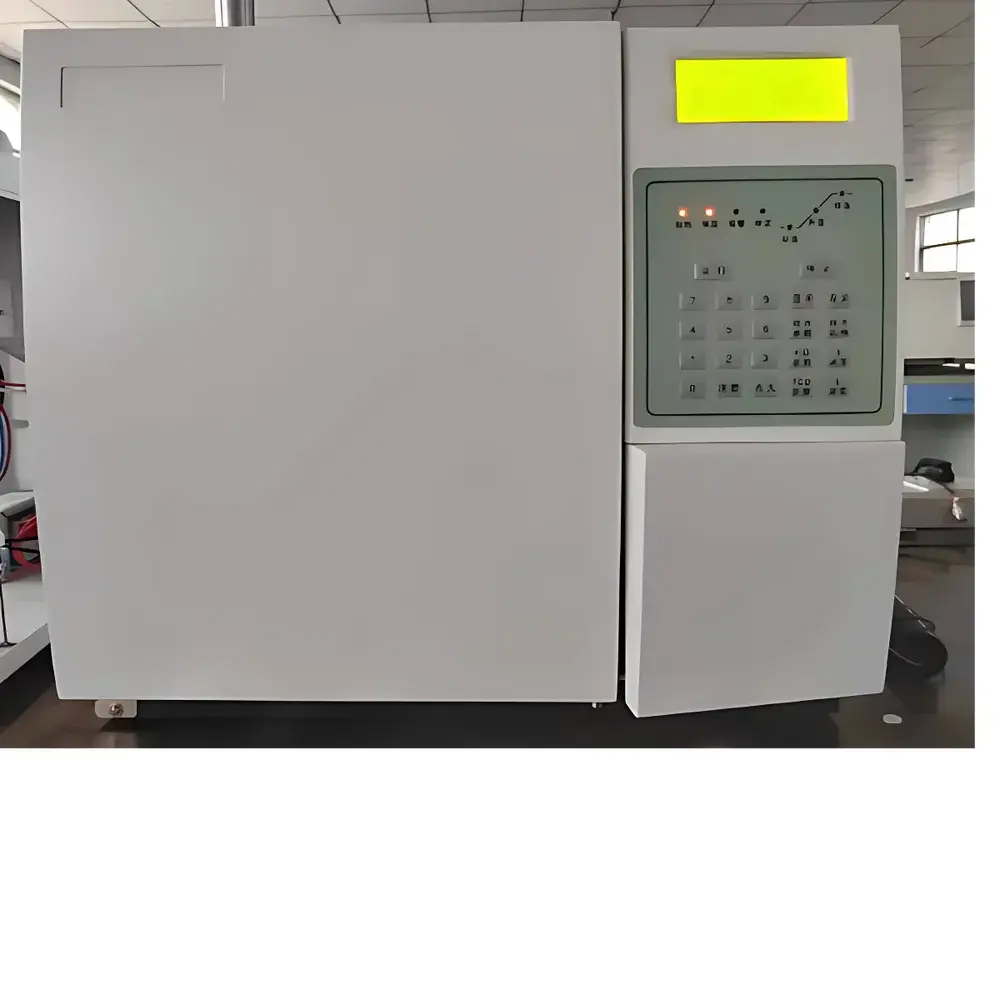
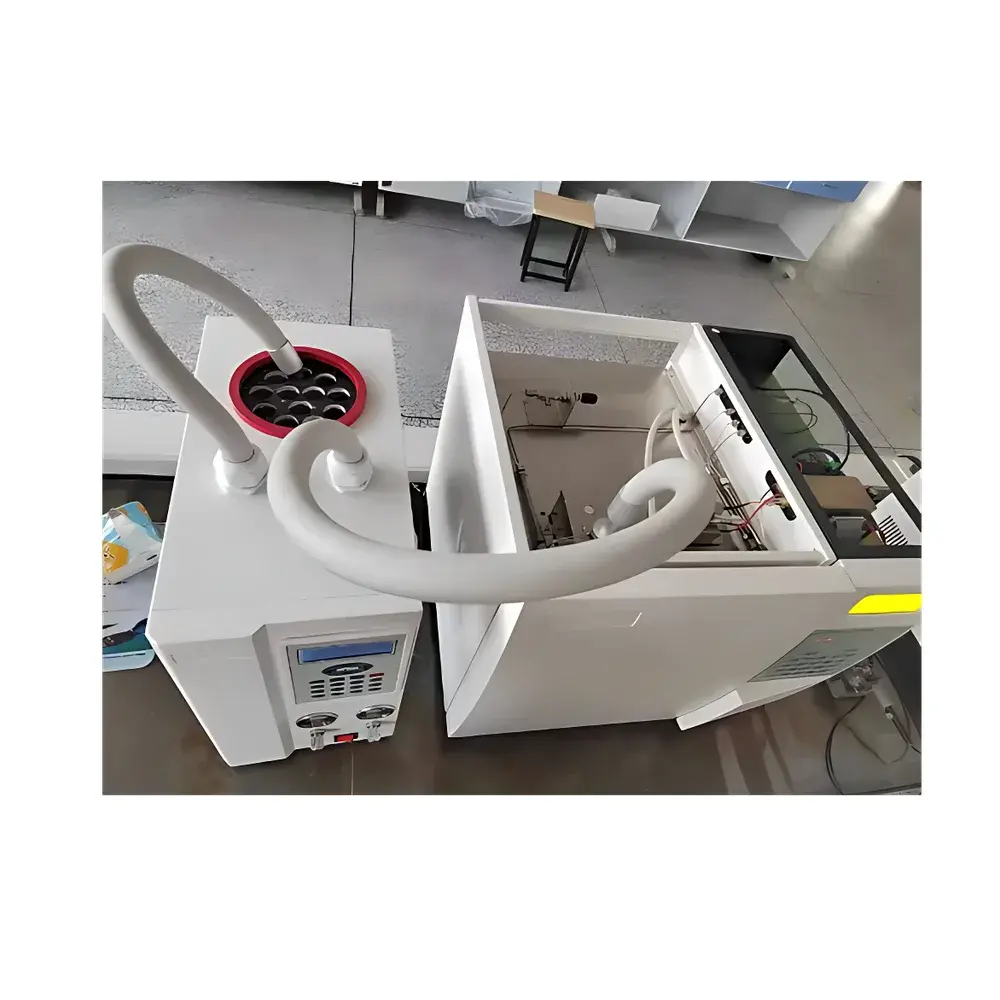
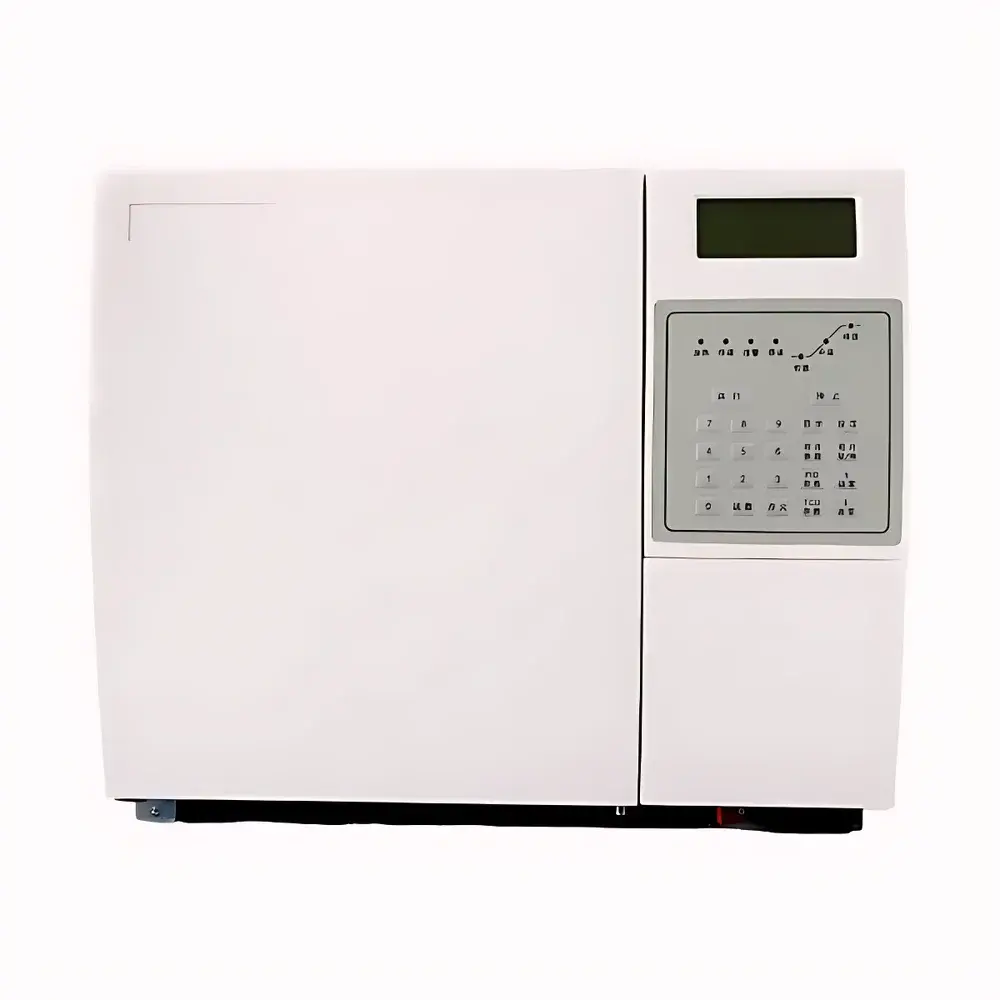
Jinpu GC-2011 Advanced Laboratory Gas Chromatograph
| Brand | Jinpu |
|---|---|
| Origin | Shandong, China |
| Model | GC-2011 (Latest Revision) |
| Instrument Type | Benchtop Laboratory Gas Chromatograph |
| Application Scope | General-Purpose Chemical Analysis |
| Oven Temperature Range | 8–420 °C |
| Oven Ramp Rate | 0.1–30 °C/min (0.1 °C/min increments) |
| Temperature Stability | ±0.1 °C within 200 °C |
| Carrier Gas Flow Control | Electronic Pressure Control (EPC)-compatible design |
| Carrier Gas Pressure Control | Supports precision pressure regulation |
| Cooling Rate | Rapid cool-down to near-ambient (≤200 °C) via intelligent variable-frequency rear door system |
| Column Compatibility | Packed columns and capillary columns (split/splitless injection) |
| Standard Detectors | FID and/or TCD |
| Dimensions | 540 × 455 × 465 mm |
| Weight | 50 kg |
| Power Supply | AC 220 V ±10%, 50 Hz, 2 kW |
Overview
The Jinpu GC-2011 is a robust, microprocessor-controlled laboratory gas chromatograph engineered for routine and method-developed separations in quality control, environmental monitoring, petrochemical analysis, and academic research laboratories. It operates on the fundamental principle of gas–solid or gas–liquid partition chromatography: volatile and semi-volatile analytes are vaporized, carried through a thermally stabilized column by an inert carrier gas (e.g., He, H₂, or N₂), and separated based on differential partitioning between the mobile phase and stationary phase. Retention time reproducibility, peak resolution, and quantitative accuracy are ensured by precise thermal management—including five-stage linear programmed temperature ramping—and digitally stabilized detector baselines. Designed for compliance with foundational analytical workflows, the GC-2011 supports both packed and fused-silica capillary columns and accommodates standard detection modalities required for ISO 17025-accredited testing environments.
Key Features
- Five-stage linear programmable temperature ramping with adjustable ramp rates from 0.1 to 30 °C/min (0.1 °C/min resolution), enabling precise elution window control for complex mixtures.
- Intelligent variable-frequency rear-door cooling system achieves rapid oven cooldown to near-ambient temperatures—critical for high-throughput labs aiming to minimize cycle time without compromising column integrity.
- Dual independent gas pathways support simultaneous operation of FID and TCD detectors or flexible configuration for method transfer between packed and capillary columns.
- Integrated split/splitless capillary inlet with dedicated vaporization chamber and tail-purge gas control, optimized for small-bore (0.1–0.53 mm ID) and wide-bore capillary columns as well as traditional packed columns.
- Digital zero-baseline compensation eliminates mechanical potentiometer drift—ensuring long-term signal stability and reducing recalibration frequency in GLP-compliant workflows.
- Comprehensive hardware-level safety protocols include overtemperature cutoff (per zone), carrier gas failure detection with automatic shutdown, TCD filament protection logic, and power surge immunity with real-time voltage monitoring.
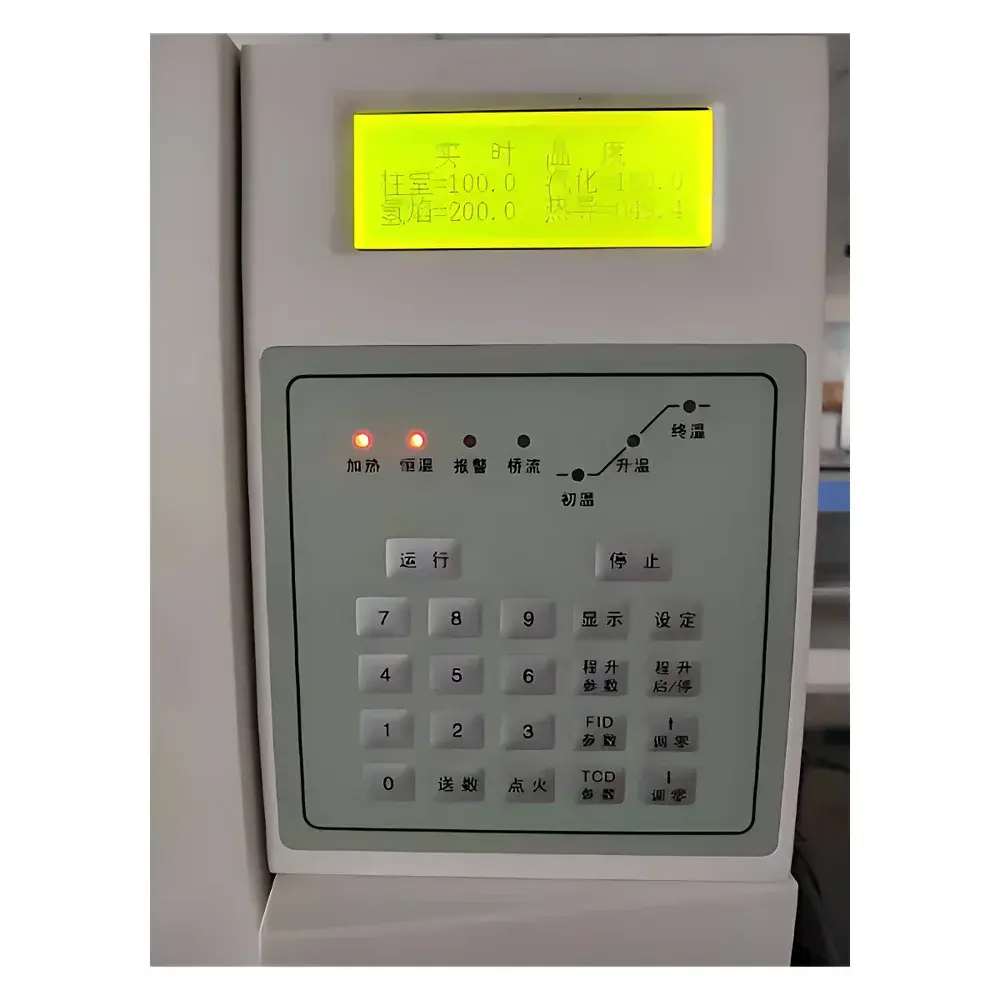
- Large backlit LCD interface with Chinese-language menu navigation simplifies parameter entry, method storage, and real-time status visualization—including fault diagnostics with plain-text error codes.
Sample Compatibility & Compliance
The GC-2011 is validated for use with volatile organic compounds (VOCs), residual solvents, hydrocarbon fractions, pesticides, flavor/aroma volatiles, and light-to-mid-weight petrochemicals. Its column oven accommodates standard 0.5–3.2 mm ID packed columns and 10–60 m fused-silica capillaries (including polydimethylsiloxane, cyanopropylphenyl, and polar stationary phases). The instrument meets essential functional requirements referenced in ASTM D3606 (benzene/toluene in gasoline), USP (residual solvents), and ISO 10301 (hydrocarbon analysis). While not pre-certified for 21 CFR Part 11, its firmware supports audit-trail-ready operation when integrated with compliant LIMS or chromatography data systems (CDS) that provide electronic signature, user access control, and immutable raw data archiving.
Software & Data Management
The GC-2011 operates standalone via its embedded controller but is fully compatible with third-party chromatography data systems (CDS) supporting RS-232 or USB virtual COM port communication. Raw signal output (FID/TCD analog voltage) and status registers—including oven temperature, detector voltage, valve timing, and alarm flags—are accessible in real time. Method files, sequence tables, and calibration curves may be stored internally (non-volatile memory with power-loss recovery) or exported via USB flash drive. Firmware supports timestamped event logging for maintenance tracking and includes built-in diagnostic self-tests for heater circuits, sensor feedback loops, and detector baseline validation—facilitating IQ/OQ documentation under GMP or ISO/IEC 17025 frameworks.
Applications
- Quality assurance of pharmaceutical excipients and active ingredients per ICH Q2(R2) guidelines.
- Environmental analysis of soil/water extracts for BTEX, PAHs, and chlorinated solvents (EPA Methods 8021B, 8260D).
- Fuel composition profiling—including olefin/aromatic content in gasoline per ASTM D1319 and D5599.
- Food and fragrance analysis: quantification of ethanol, esters, aldehydes, and terpenes in beverages and essential oils.
- Polymer additive screening: detection of plasticizers (e.g., phthalates), antioxidants, and stabilizers in extractables studies.
- Academic teaching labs: ideal platform for introducing chromatographic theory, retention modeling, and detector response fundamentals.
FAQ
What column types are supported by the GC-2011?
The instrument accepts both packed columns (2–4 mm ID, up to 4 m length) and fused-silica capillary columns (0.1–0.53 mm ID, up to 60 m), with dedicated vaporization chambers and pressure/flow optimization for each mode.
Does the GC-2011 support compliance with FDA 21 CFR Part 11?
The base instrument does not include electronic signature, role-based access, or audit trail generation; however, it outputs timestamped, unalterable raw data streams compatible with validated third-party CDS platforms meeting Part 11 requirements.
What is the minimum detectable concentration for benzene using the FID?
Under standard operating conditions (1 μL injection, 30 m × 0.32 mm DB-5 column, H₂ carrier), the FID achieves a practical limit of quantitation (LOQ) of ≤10 ng on-column for benzene, consistent with its specified sensitivity of ≤1 × 10⁻¹¹ g/s.
Can the GC-2011 operate unattended overnight?
Yes—the system supports full sequence execution with automated start/stop, power-failure recovery, and thermal safety interlocks, making it suitable for extended batch runs in regulated QC environments.
Is remote monitoring or network connectivity available?
Native Ethernet or Wi-Fi is not integrated; however, RS-232/USB interfaces enable connection to local PCs running CDS software, and optional serial-to-Ethernet converters allow integration into lab-wide instrument networks.
Related Products





