
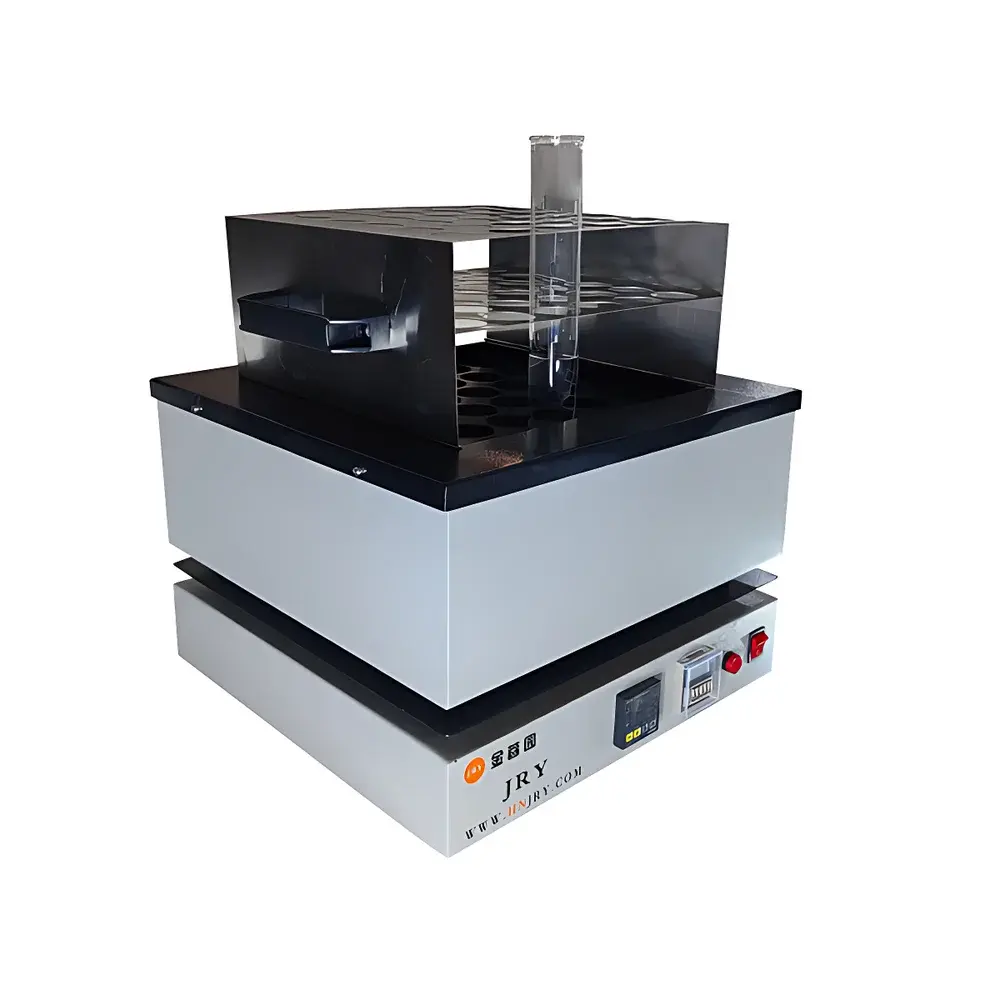
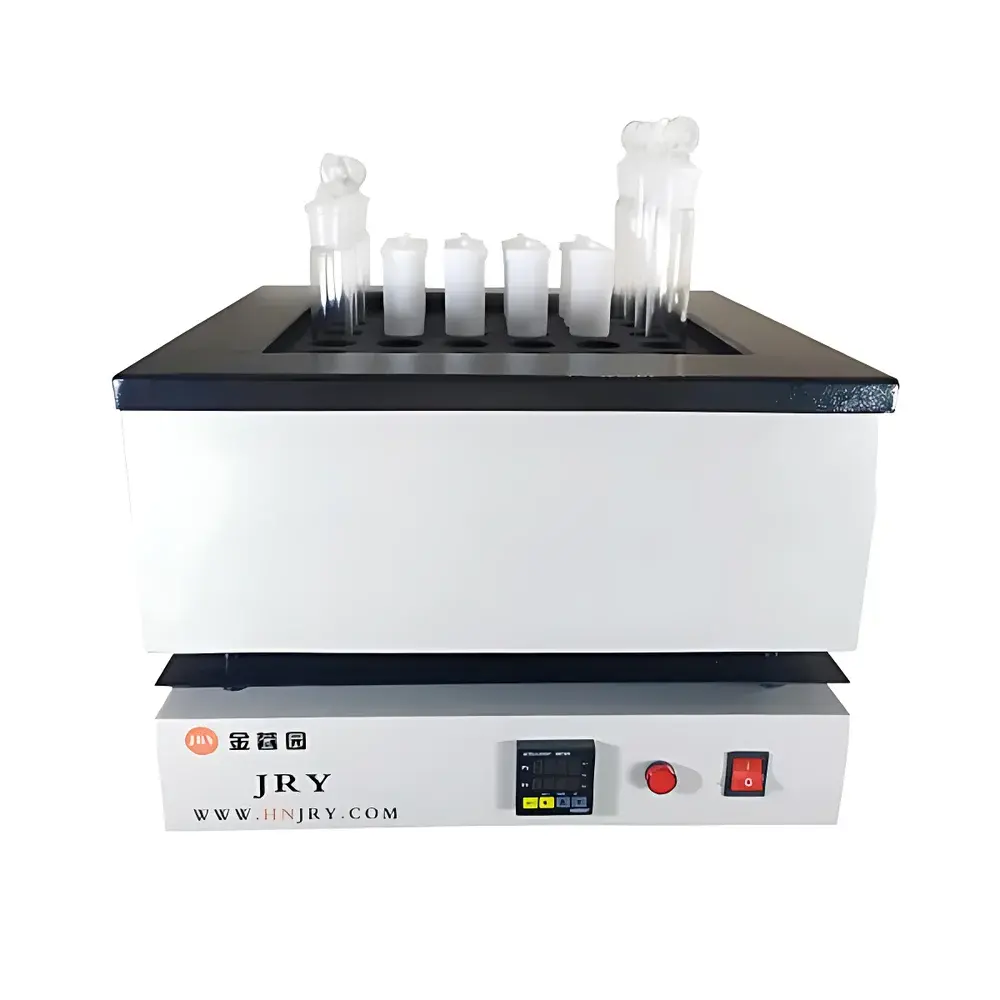
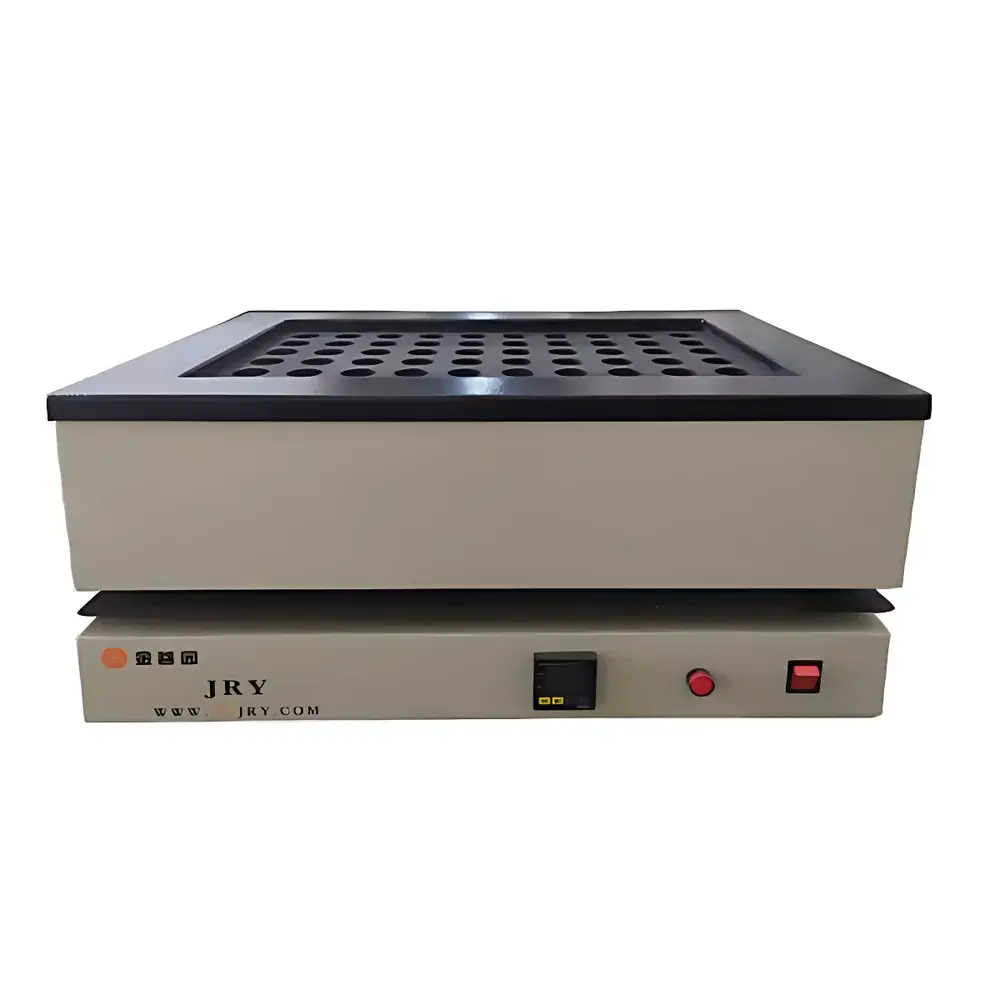
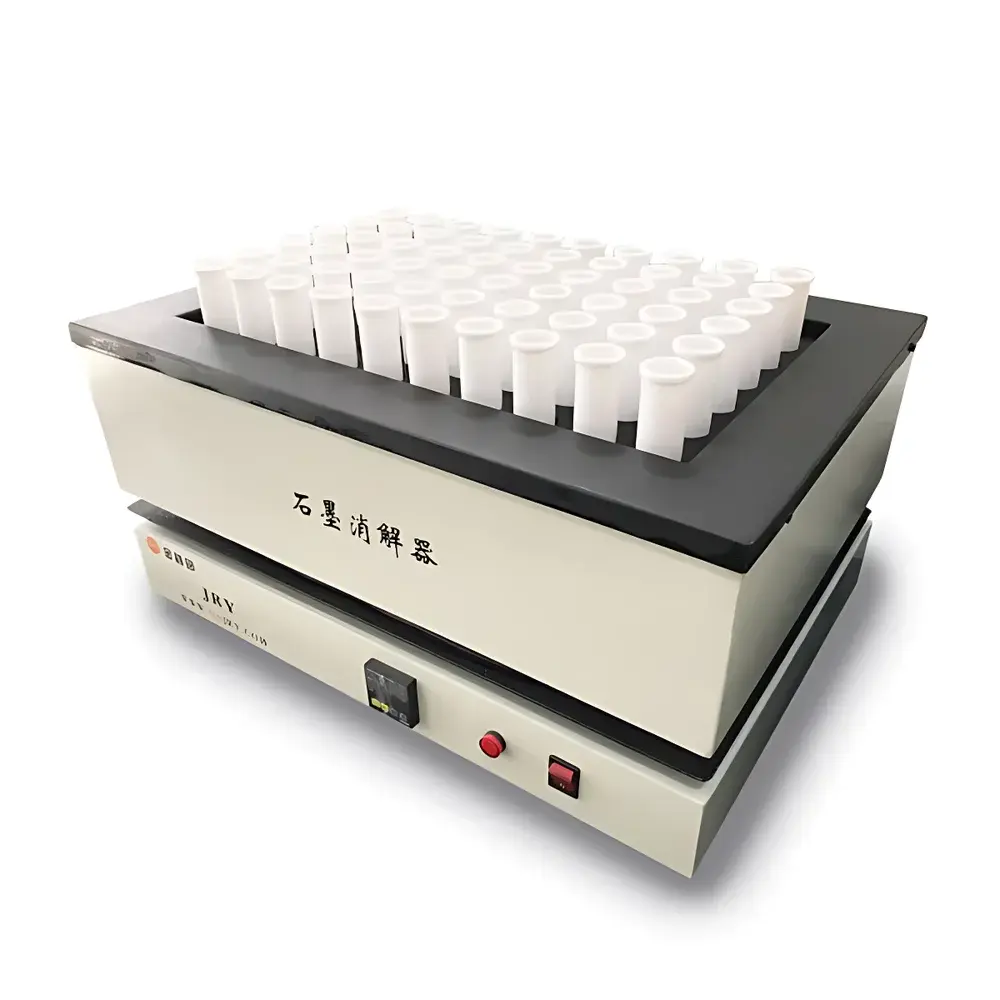
JRY JRY-X350 Series Graphite Block Digestion System
| Brand | JRY |
|---|---|
| Origin | Hunan, China |
| Manufacturer Type | Direct Manufacturer |
| Instrument Type | Graphite Block Digestion System |
| Automation Level | Semi-Automatic |
| Digestion Positions | 24 / 36 / 60 |
| Temperature Range | Ambient to 350 °C |
| Temperature Control Accuracy | ±0.1 °C |
| Heating Principle | Aluminum-Encased Graphite Block with Uniform Resistive Heating |
| Reagent Addition Channels | 20 / 24 / 36 / 60 |
| Power Consumption | 2200–4000 W (model-dependent) |
| Weight | 22–30 kg |
| Panel Dimensions | 400×400 mm to 585×425 mm |
| Sample Vessel Compatibility | φ32 mm × H50–60 mm (60-position), φ58 mm × H36 mm (24-position) |
Overview
The JRY JRY-X350 Series Graphite Block Digestion System is an engineered solution for open-vessel, electrically heated sample digestion in analytical laboratories. It operates on the principle of conductive and radiative heat transfer via a high-density, chemically inert graphite block—thermally coupled to precision-wound resistance heating elements embedded within an aluminum housing. This architecture ensures exceptional thermal uniformity across all digestion positions, minimizing inter-vial temperature gradients (<±0.5 °C at 200 °C) critical for reproducible acid decomposition of organic matrices. Designed for compatibility with aggressive reagents—including concentrated H2SO4, HNO3, HCl, and H2O2—the system supports standardized digestion protocols aligned with EPA Method 3050B, ISO 11466, and GB/T 17141–1997 for soil, sediment, biological tissue, food, and environmental samples. Its semi-automated architecture integrates programmable ramp-hold temperature profiles and optional time-based reagent addition sequencing—making it especially suitable as a post-microwave digestion “acid removal” (i.e., “acid evaporation” or “赶酸”) station where controlled, low-turbulence concentration of digests is required prior to ICP-MS, AAS, or ICP-OES analysis.
Key Features
- High-stability graphite block with aluminum thermal encapsulation—resistant to thermal shock, corrosion from hot mineral acids, and long-term degradation under cyclic heating (up to 350 °C)
- Precision digital PID temperature control with ±0.1 °C accuracy and real-time monitoring via dual-sensor feedback (block surface + ambient reference)
- Modular platform supporting three standard configurations: 24-, 36-, and 60-position digestion blocks—each optimized for vial geometry (φ32 mm or φ58 mm) and sample volume requirements
- Semi-automated reagent delivery interface with up to 60 independently addressable channels—enabling staggered or parallel acid addition per zone, compatible with external peristaltic pumps
- Programmable heating profiles: up to 10-step ramp-and-hold sequences with user-defined rate limits (0.1–20 °C/min) and dwell times (1–999 min)
- Integrated safety logic: overtemperature cutoff (360 °C hardware limit), ground-fault circuit interruption (GFCI), and vapor containment skirt design for fume hood integration
- Front-panel LED display with tactile keypad; RS-485/Modbus RTU interface available for Lab Information Management System (LIMS) integration
Sample Compatibility & Compliance
The JRY-X350 accommodates standard digestion tubes (e.g., borosilicate glass, PTFE-lined quartz, or acid-washed polypropylene) with outer diameters of 32 mm or 58 mm, supporting volumes from 5 mL to 50 mL. It is validated for use with EPA-recommended aqua regia, nitric-perchloric mixtures (under strict supervision), and sulfuric-hydrogen peroxide systems—particularly for total metal recovery in soils (Cd, Pb, As, Cr), plant tissues, dairy products, and wastewater sludge. The system meets CE marking requirements for electrical safety (EN 61010-1) and electromagnetic compatibility (EN 61326-1). While not intrinsically certified for Class I Div 1 hazardous locations, it is routinely deployed in GLP-compliant environmental testing labs following internal SOPs aligned with ISO/IEC 17025:2017 clause 5.4.2 (equipment verification) and USP (heating apparatus qualification).
Software & Data Management
The JRY-X350 operates via embedded firmware with local parameter storage (100+ method templates). Optional PC-based software (JRY-DigestControl v3.2, Windows 10/11 compatible) provides full audit trail functionality—including user login timestamps, parameter change logs, temperature/time profile export (CSV), and electronic signature support compliant with FDA 21 CFR Part 11 Annex 11 principles. All data files are SHA-256 hashed and timestamped; raw sensor logs retain millisecond-resolution thermal history for retrospective validation. Data export supports direct import into common QA/QC platforms such as Empower, LabWare LIMS, or custom Python/Pandas workflows.
Applications
- Preparation of certified reference materials (CRMs) for trace metal certification (e.g., NIST SRM 2709a, GBW07401)
- Soil and sediment digestion per ISO 11466 for geochemical mapping and regulatory compliance reporting
- Protein matrix digestion (e.g., meat, milk, soy) prior to total arsenic speciation by HPLC-ICP-MS
- Acid evaporation (“赶酸”) of microwave-digested samples to sub-1 mL final volume without analyte loss or cross-contamination
- Method development for novel digestion schemes involving mixed-acid systems or catalytic oxidants (e.g., AgNO3/HNO3)
- QC batch processing in contract testing laboratories handling >200 samples/week across food safety and environmental monitoring programs
FAQ
What is the maximum recommended operating temperature for long-term graphite block integrity?
The graphite block is rated for continuous operation up to 350 °C. Sustained use above 360 °C may accelerate oxidation and reduce service life.
Can the JRY-X350 be used with hydrofluoric acid (HF)?
No. HF attacks both graphite and aluminum components. Use only HF-compatible systems (e.g., PTFE-coated ceramic or quartz digestion vessels in dedicated HF-safe hoods).
Is calibration traceable to national standards?
Yes. Each unit ships with a factory calibration certificate referencing NIM (National Institute of Metrology, China) traceable Pt100 sensors; on-site verification kits (NIST-traceable dry-block calibrators) are available upon request.
How is temperature uniformity verified across the block?
Uniformity is confirmed during production using 9-point thermocouple mapping per ASTM E220–21 Annex A1, with deviation ≤±0.8 °C at 250 °C.
Does the system support remote monitoring via Ethernet or Wi-Fi?
Standard configuration includes RS-485 Modbus RTU. Ethernet/Wi-Fi gateway modules (JRY-ETH-GW1) are optional accessories enabling SNMP and HTTP API access for centralized lab infrastructure monitoring.



