
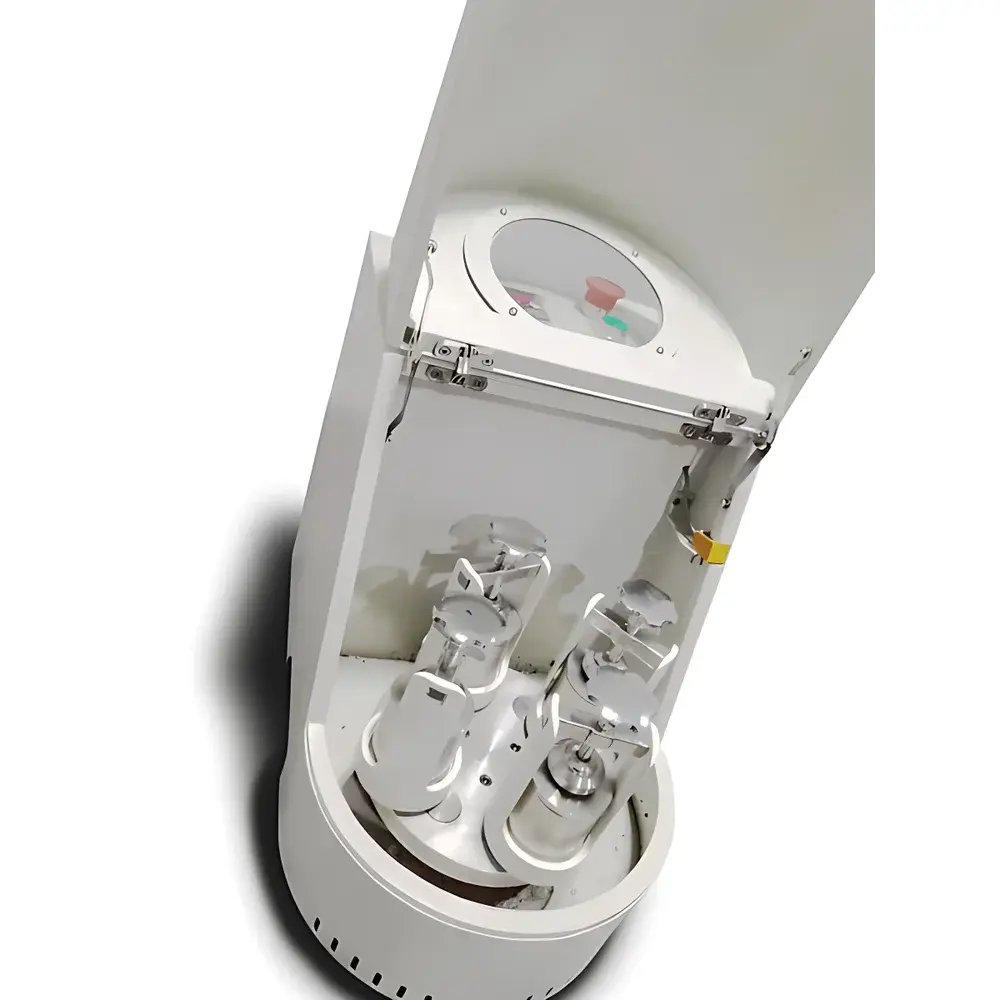
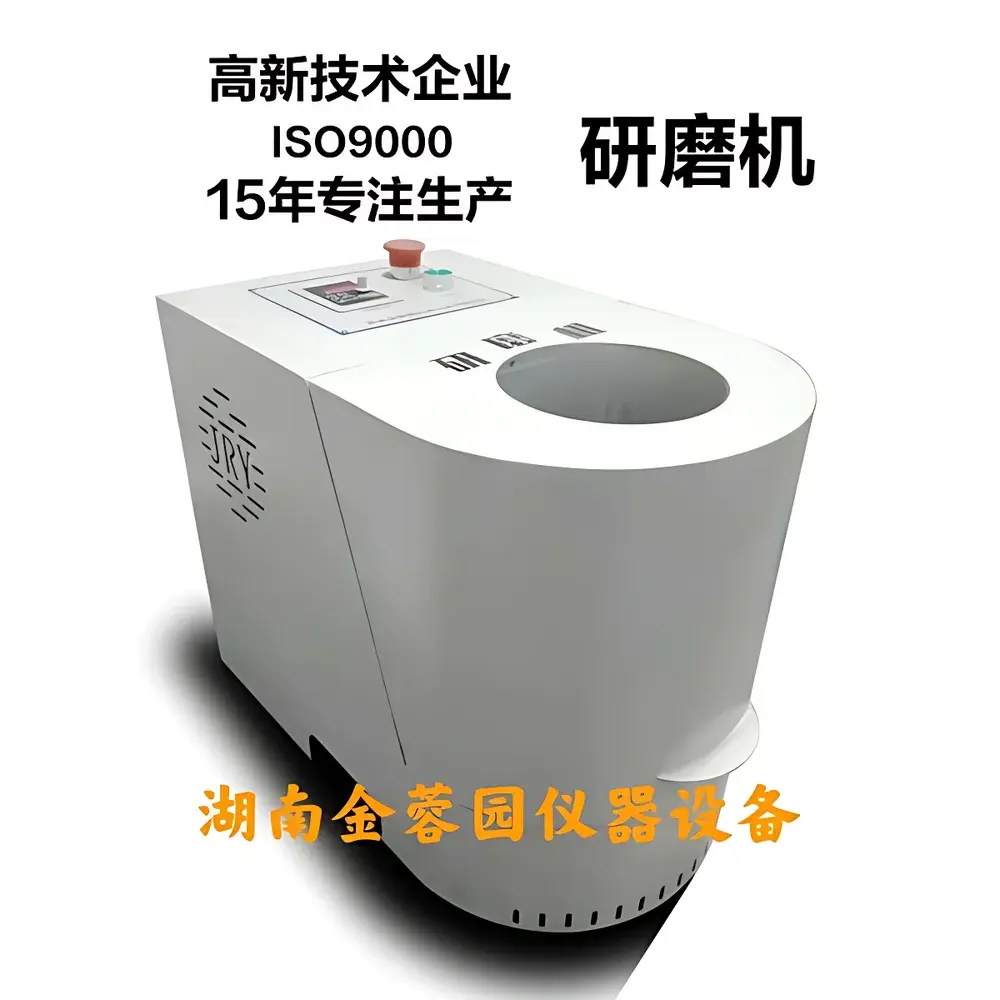
JRY-YM Planetary Ball Mill
| Brand | JRY |
|---|---|
| Origin | Hunan, China |
| Manufacturer Type | Direct Manufacturer |
| Product Category | Domestic |
| Model | JRY-YM |
| Instrument Type | Planetary Ball Mill |
| Sample Applicability | Hard and Brittle Materials |
| Feed Size | < 10 mm |
| Final Particle Size | < 0.1 µm |
| Batch Grinding Capacity | 200 mL per jar |
| Maximum Total Capacity | 4 × 500 mL |
| Grinding Methods | Dry & Wet |
| Inert Atmosphere Operation | Yes |
| Power Supply | 240 V, 250 W |
| Net Weight | 42 kg |
| Jar Volumes Available | 100 mL, 250 mL, 500 mL |
| Grinding Media Diameters | 3, 5, 10, 15, 20, 30, 40 mm |
| Jar Materials | Stainless Steel, Tungsten Carbide, Zirconia, Agate, Sintered Alumina |
Overview
The JRY-YM Planetary Ball Mill is a high-energy laboratory grinding system engineered for precision particle size reduction of hard, brittle, and heterogeneous materials. Operating on the principle of planetary motion—where grinding jars rotate around a central axis while simultaneously rotating on their own axes—the instrument generates intense centrifugal and Coriolis forces. This dual-axis motion accelerates grinding balls to high velocities, enabling efficient size reduction through repeated impact, shear, and friction mechanisms. Designed for reproducible sub-micron comminution, the JRY-YM achieves final particle sizes below 0.1 µm under optimized conditions, making it suitable for advanced material synthesis, pharmaceutical formulation development, catalyst preparation, and geochemical sample homogenization. Its robust mechanical architecture ensures stable long-term operation in regulated laboratory environments.
Key Features
- High-energy planetary motion with independently adjustable speed control for precise kinetic energy modulation.
- Four-jar configuration supporting simultaneous processing of up to four different samples or replicates—enhancing throughput and statistical reliability.
- Modular jar system compatible with multiple volumetric options (100 mL, 250 mL, 500 mL) and chemically inert materials including stainless steel, tungsten carbide, zirconia, agate, and sintered alumina—ensuring compatibility with reactive, abrasive, or contamination-sensitive samples.
- Wide selection of grinding media diameters (3–40 mm) to tailor impact energy and surface area contact for specific material hardness and desired fineness.
- Dual-mode operation: dry grinding for thermal- or moisture-sensitive compounds; wet grinding with solvents or dispersants to suppress agglomeration and improve dispersion stability.
- Sealed jar design enabling operation under inert gas (e.g., N₂ or Ar) atmosphere—critical for air-sensitive nanomaterials, pyrophoric compounds, or oxidation-prone alloys.
- Integrated safety interlocks, overload protection, and vibration-damping base to ensure operator safety and equipment longevity.
Sample Compatibility & Compliance
The JRY-YM accommodates a broad range of inorganic and organic solids—including metals, ceramics, minerals, polymers, and pharmaceutical actives—with feed sizes up to 10 mm. Its versatility supports compliance with common analytical pre-treatment protocols referenced in ASTM E11, ISO 13320 (laser diffraction), and USP (particle size distribution). For regulated laboratories, the instrument’s repeatable performance, documented operational parameters (speed, time, media load), and traceable batch processing align with GLP and GMP documentation requirements. While not inherently 21 CFR Part 11-compliant (as it lacks embedded electronic records), its process parameters can be manually logged or integrated into validated LIMS workflows.
Software & Data Management
The JRY-YM operates via an intuitive front-panel digital interface with programmable time and speed settings (0–600 rpm typical range, depending on jar size and load). Though it does not include proprietary software or network connectivity, all operational parameters—including run duration, rotational speed, pause intervals, and direction reversal—are fully configurable and reproducible. Users may document runs using external lab notebooks or integrate timing data into electronic lab notebooks (ELNs) compliant with ALCOA+ principles. Optional external timers or PLC-based controllers can be deployed for automated sequence execution in multi-step milling protocols.
Applications
- Preparation of ultrafine powders for XRD, SEM-EDS, and BET surface area analysis.
- Mechanochemical synthesis of metal-organic frameworks (MOFs), solid-state battery cathodes, and doped semiconductor nanoparticles.
- Homogenization of geological core samples prior to ICP-MS or XRF analysis.
- Particle size reduction of APIs and excipients during early-phase formulation screening.
- Amorphization of crystalline drugs to enhance dissolution kinetics and bioavailability.
- Recycling and reprocessing of spent catalysts and electronic waste materials.
FAQ
What is the maximum recommended continuous operating time per cycle?
For optimal thermal management and media longevity, continuous operation is typically limited to 60–120 minutes per cycle, followed by a cooling interval. Extended milling requires intermittent pauses or active jar cooling.
Can the JRY-YM be used for cryogenic grinding?
Yes—when paired with liquid nitrogen-cooled jars or pre-chilled media, the system supports cryomilling of thermolabile or ductile materials such as polymers and soft metals.
Is calibration required before use?
No routine calibration is mandated; however, users should verify rotational speed accuracy periodically using a handheld tachometer, especially after extended service intervals.
How is cross-contamination prevented between batches?
Cross-contamination is mitigated through rigorous jar and media cleaning protocols (e.g., ultrasonic washing in acetone/ethanol), use of dedicated media sets per material class, and optional disposable liners for select jar types.
Does the instrument meet CE or UL safety standards?
The JRY-YM complies with general electrical safety principles per IEC 61010-1; however, formal CE marking or UL certification documentation must be verified directly with the manufacturer for region-specific regulatory deployment.



