
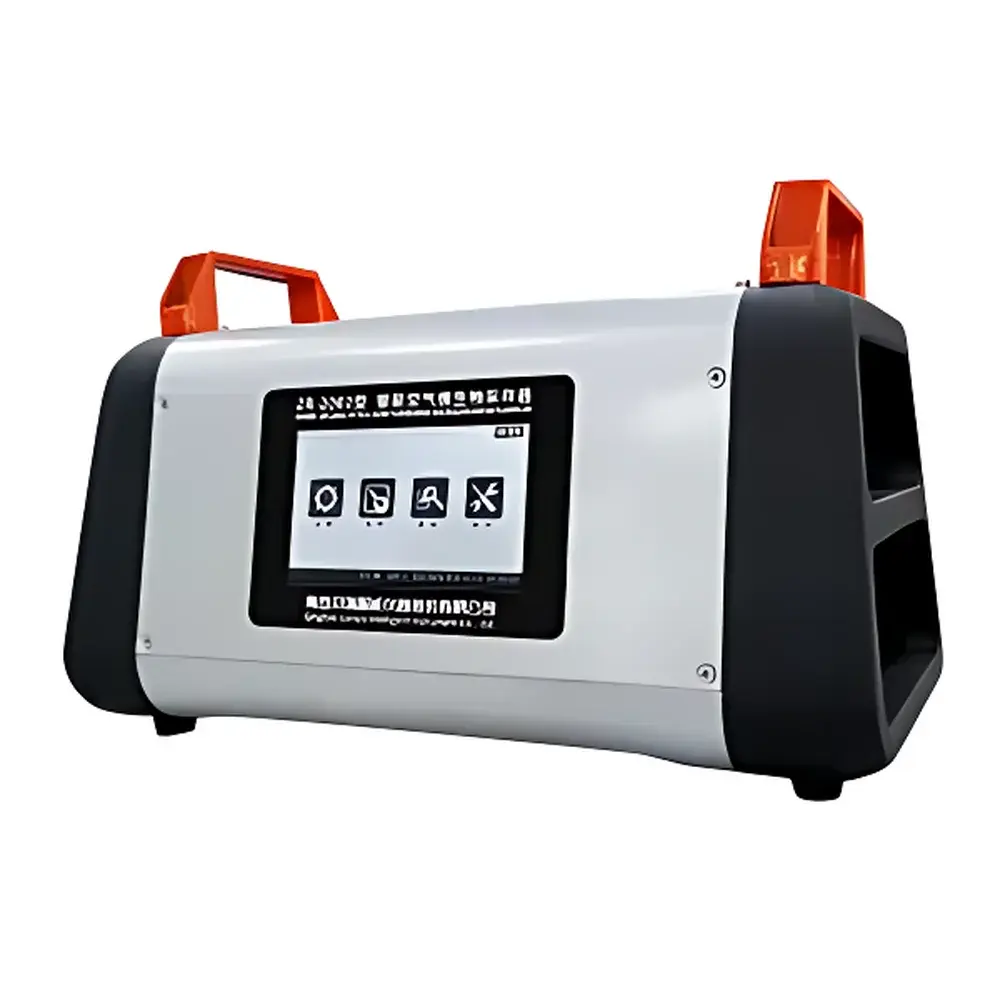
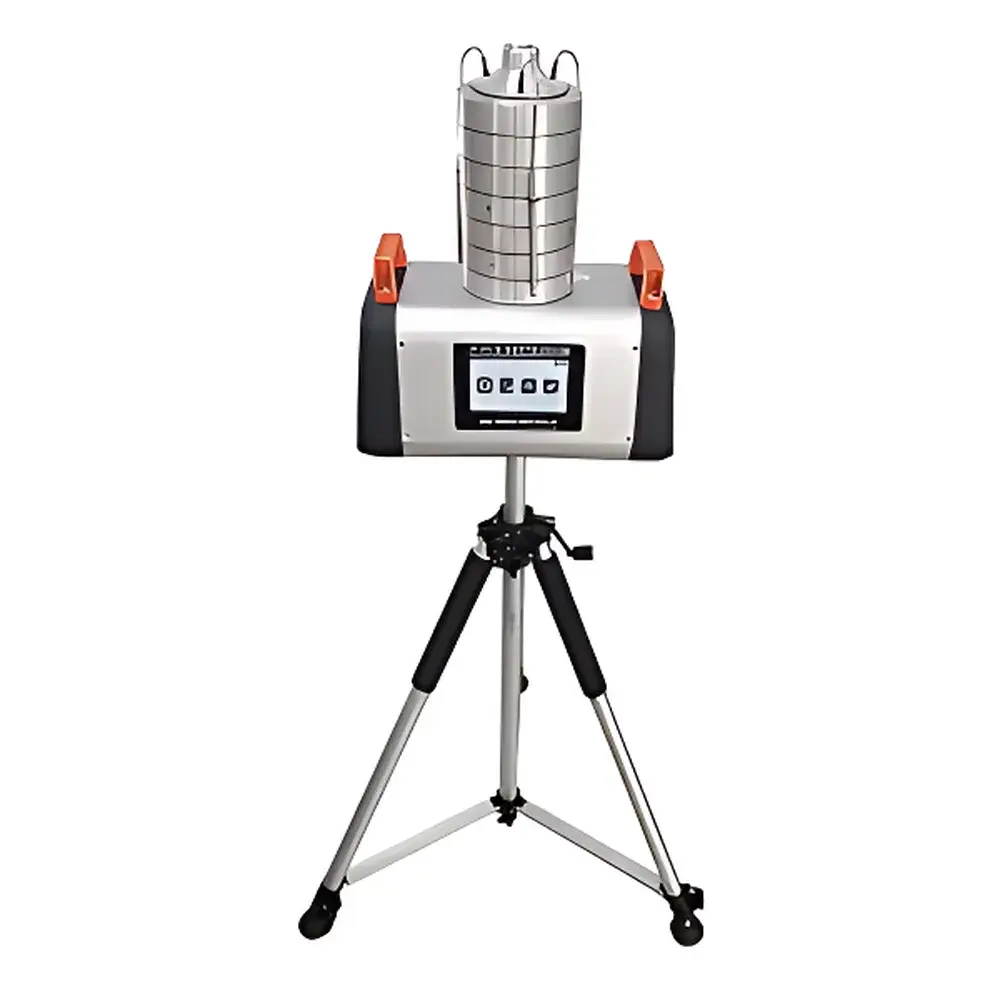
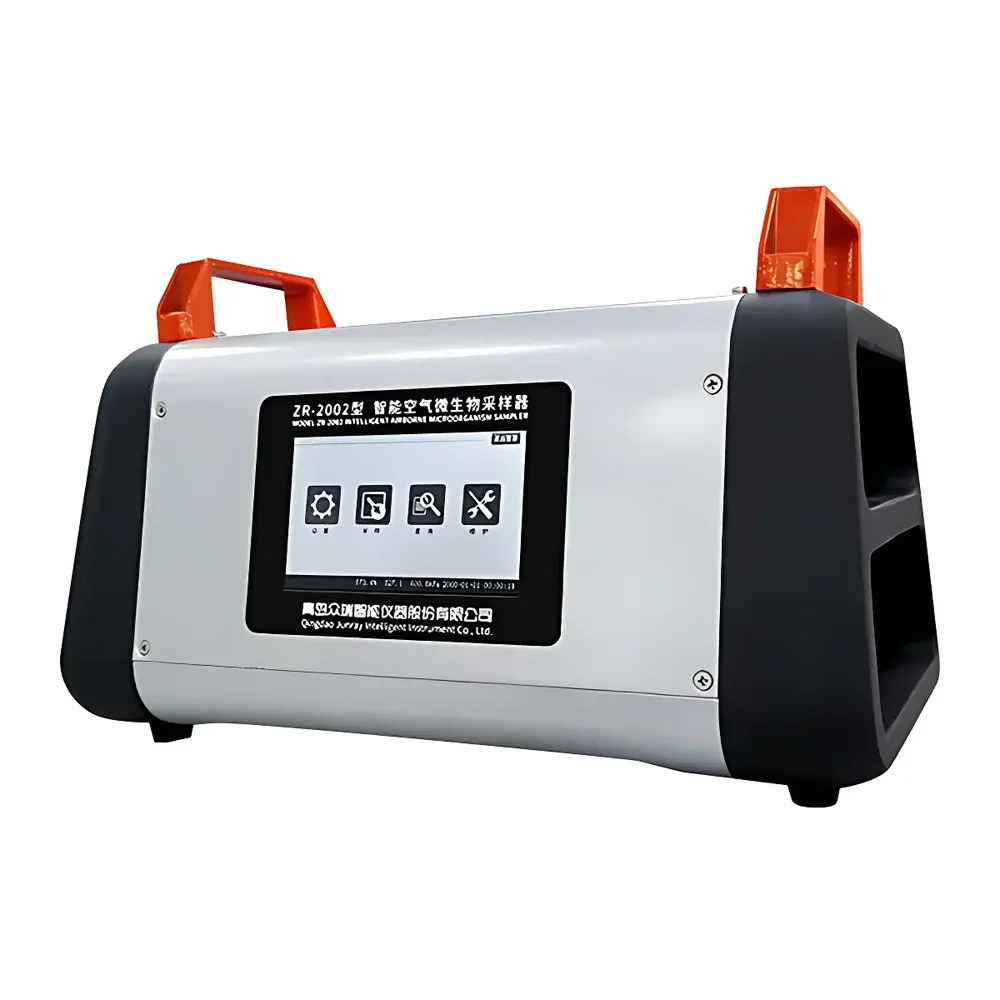
Junray ZR-2002 Intelligent Air Microbial Sampler
| Brand | Junray |
|---|---|
| Origin | Shandong, China |
| Manufacturer Type | Direct Manufacturer |
| Country of Origin | China |
| Model | ZR-2002 |
| Sampling Principle | Impaction-Based Active Separation |
| Flow Range | 0–50 L/min |
| Flow Measurement Accuracy | ±2.5% FS |
| Sampling Duration | >2 h |
| Operating Temperature | −20 to 50 °C |
| Operating Relative Humidity | 0–95% RH |
| Display | 4.3″ Color TFT Touchscreen |
| Data Storage | Internal Flash + USB Export |
| Connectivity | Bluetooth (optional printer), Wireless Handheld Controller (optional) |
| Compliance | GB/T 39990–2021, GB/T 38517–2020, GB/T 18204.3–2013, GB/T 18204.5–2013, GB/T 18883–2002, JJF 1826–2020, Disinfection Technical Guidelines (2002) |
Overview
The Junray ZR-2002 Intelligent Air Microbial Sampler is a programmable, multi-modal bioaerosol sampling platform engineered for precision collection and quantitative assessment of airborne microorganisms—including bacteria, fungi, viruses, and spores—in both indoor and outdoor environments. It operates on the principle of inertial impaction, leveraging calibrated high-flow air movement to deposit viable and non-viable particles onto solid or liquid collection media with defined aerodynamic cut-points. Unlike passive settling plates, the ZR-2002 actively draws air through interchangeable sampling heads—Andersen 2-stage, 6-stage, or 8-stage impactors, impingers (e.g., AGI-30 or SKC BioSampler-compatible), and membrane filtration cassettes—enabling size-resolved microbial analysis per ISO 14698-1 and USP guidance. Its integrated environmental sensors (temperature, relative humidity, barometric pressure) automatically timestamp and contextualize each sample, supporting traceable, GLP-compliant data generation in regulated settings.
Key Features
- 4.3-inch high-resolution color TFT touchscreen with intuitive icon-driven interface, supporting multilingual menu navigation (English default)
- Precise active flow control via built-in thermal mass flow sensor; real-time feedback and automatic PID compensation ensure ±2.5% full-scale accuracy across 0–50 L/min range
- Programmable sampling logic: immediate start, time-based scheduling, volume-triggered termination, and multi-segment protocols with variable flow rates and durations
- Triple-tier user authentication (Operator / Supervisor / Administrator) with role-based access control and FDA 21 CFR Part 11–compliant audit trail (user ID, timestamp, parameter changes, start/stop events)
- Robust data integrity architecture: automatic power-fail recovery, non-volatile memory retention, and encrypted internal storage (>10,000 sample records)
- Environmental compensation: simultaneous logging of ambient temperature (−20 to 50 °C), RH (0–95% RH), and atmospheric pressure (60–110 kPa) for post-sampling correction per ISO 8573-1 and EN 13795
- Expandable hardware ecosystem: optional Bluetooth thermal printer, wireless handheld controller for synchronized multi-unit deployment, and modular head adapters for rapid field reconfiguration
Sample Compatibility & Compliance
The ZR-2002 supports three primary collection methodologies validated under international and national standards. Andersen-type impactors enable size-fractionated enumeration aligned with ISO 14644-1 cleanroom classifications and GB/T 39990–2021 requirements for biological aerosol samplers. Impinger configurations (e.g., all-glass impingers) facilitate liquid-phase recovery of fragile pathogens per ASTM D7212–18. Filter-based sampling accommodates mixed cellulose ester (MCE) or polycarbonate membranes for subsequent microscopy or PCR analysis. All operational modes comply with GB/T 18204.3–2013 (public health microbiology), GB/T 18204.5–2013 (HVAC system evaluation), and JJF 1826–2020 calibration procedures. Device firmware includes embedded standard operating procedures (SOPs) referencing WHO guidelines for hospital air quality and CDC/NIOSH bioaerosol monitoring frameworks.
Software & Data Management
Data acquisition and reporting are managed via embedded firmware with configurable export protocols. Sample metadata—including flow profile, environmental conditions, operator ID, and sampling geometry—is stored in CSV-compatible structured format. USB mass-storage mode enables direct drag-and-drop retrieval without proprietary software. Optional Bluetooth connectivity supports pairing with certified thermal printers for on-site hardcopy documentation compliant with ISO/IEC 17025 record-keeping. Audit logs are immutable and timestamped to millisecond resolution, satisfying GLP/GMP documentation requirements for pharmaceutical cleanrooms (ISO 14644-3), food processing facilities (FDA Food Safety Modernization Act), and clinical microbiology labs (CLIA). Firmware updates are delivered via signed binary packages with SHA-256 verification.
Applications
- Indoor air quality (IAQ) assessment in hospitals, laboratories, and pharmaceutical manufacturing suites per ISO 14644-2 and EU GMP Annex 1
- Occupational exposure monitoring in agricultural facilities, wastewater treatment plants, and composting operations
- Validation of HVAC filtration efficiency and disinfection efficacy in healthcare environments
- Environmental baseline studies for biodefense preparedness and pandemic surveillance programs
- Research-grade bioaerosol characterization in atmospheric science, virology, and mycology laboratories
- Compliance testing for food production facilities under HACCP and BRCGS standards
FAQ
What sampling methods does the ZR-2002 support?
It supports Andersen impactor (2-, 6-, or 8-stage), liquid impingement (AGI-30, SKC BioSampler), and membrane filtration—each selectable via hardware interface and validated per GB/T 39990–2021.
Is the device suitable for outdoor field use?
Yes. With IP54-rated enclosure, −20 to 50 °C operating range, and battery-operated configuration (optional external power bank), it meets IEC 60529 environmental robustness requirements for mobile environmental monitoring.
How is data integrity ensured during extended unattended operation?
The unit implements cyclic redundancy check (CRC) on all stored records, auto-saves upon power interruption, and maintains cryptographic audit logs meeting FDA 21 CFR Part 11 Subpart B §11.10(a) electronic record requirements.
Can the ZR-2002 be integrated into a centralized monitoring network?
While not Ethernet-enabled by default, its USB and Bluetooth interfaces support integration with third-party SCADA or LIMS platforms via middleware gateways compliant with IEEE 11073-20601 for medical device interoperability.
Does the instrument require annual recalibration?
Per JJF 1826–2020, flow sensor calibration is recommended annually using NIST-traceable dry calibrators; onboard self-diagnostic routines verify sensor linearity and zero drift prior to each sampling session.
Related Products







