
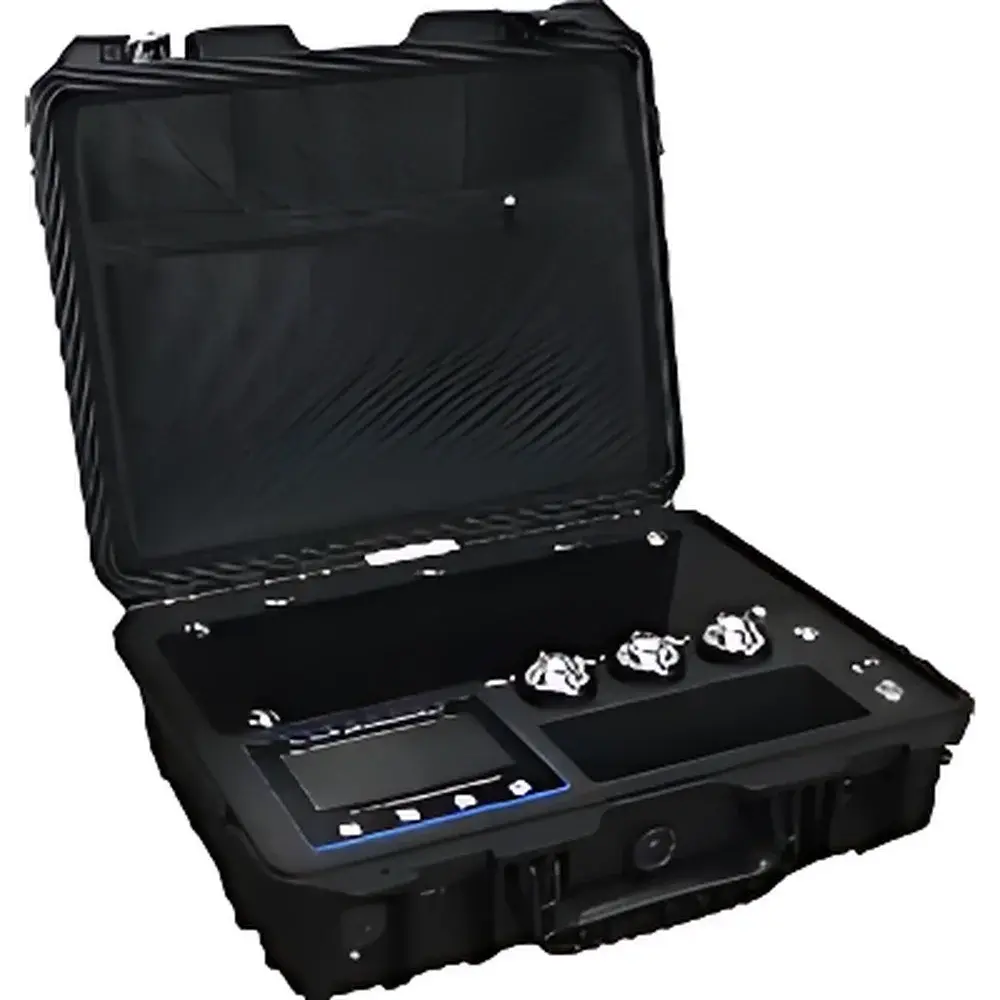
Junray ZR-3150 Portable Multi-Gas Detector
| Brand | Junray |
|---|---|
| Origin | Shandong, China |
| Manufacturer Type | Direct Manufacturer |
| Product Category | Domestic |
| Model | ZR-3150 |
| Instrument Type | Portable |
| Detection Principles | Electrochemical, Metal Oxide Semiconductor (MOS), Photoionization Detection (PID) |
| Compliance Standards | GB 12358–2006, HJ 872–2017 |
Overview
The Junray ZR-3150 Portable Multi-Gas Detector is an engineered field-deployable instrument designed for real-time, on-site quantification of multiple hazardous and odorous gases in ambient air. It operates on a multi-sensor architecture integrating electrochemical (EC), metal oxide semiconductor (MOS), and photoionization detection (PID) technologies—each selected and calibrated for specific target analytes including but not limited to chlorine (Cl₂), hydrogen sulfide (H₂S), ammonia (NH₃), volatile organic compounds (VOCs), carbon monoxide (CO), sulfur dioxide (SO₂), and ozone (O₃). Unlike single-sensor units, the ZR-3150 enables concurrent detection across orthogonal sensing modalities, thereby improving analytical confidence in complex matrices where cross-interference or unknown gas mixtures are present. Its design adheres to the fundamental requirements of emergency environmental monitoring: rapid deployment (<60 s startup), sub-minute response time (T₉₀ < 30 s for most EC sensors), and operational stability under variable temperature (−10 °C to +50 °C) and humidity (15–90% RH non-condensing) conditions.
Key Features
- Modular sensor bay supporting up to six interchangeable sensor cartridges—user-configurable per mission profile (e.g., industrial hygiene vs. odor source identification)
- Integrated GPS module with timestamped georeferenced logging for spatial mapping of gas plumes during mobile surveys
- Real-time data streaming via Bluetooth 5.0 and optional 4G LTE module, enabling remote telemetry to centralized environmental management platforms
- Ruggedized IP65-rated enclosure with ergonomic grip and high-visibility OLED display (128 × 64 pixels) operable in low-light and adverse weather
- Battery life exceeding 16 hours continuous operation using dual 3.7 V Li-ion packs (hot-swappable without system shutdown)
- On-device alarm hierarchy: visual (LED strobe), audible (≥85 dB at 30 cm), and haptic feedback—configurable by gas type, concentration threshold, and exposure duration
Sample Compatibility & Compliance
The ZR-3150 is validated for direct sampling of ambient air, stack effluents (diluted), and indoor workplace atmospheres. It complies with national Chinese standards governing portable gas detection instrumentation: GB 12358–2006 specifies performance criteria for alarm accuracy (±5% FS), zero drift (<2% FS/30 days), and repeatability (≤3% RSD); HJ 872–2017 defines method validation protocols for emergency chlorine and VOC monitoring using electrochemical and PID methods—including interference testing against common co-pollutants (e.g., NO₂, ethanol, acetone). While not certified to IEC 60079–0 (explosion-proof) or ATEX directives, its intrinsic safety design meets Class I, Division 2 requirements per NEC Article 500 when operated within specified environmental limits. All firmware and calibration records support audit-ready documentation for GLP-aligned field operations.
Software & Data Management
The device interfaces with Junray’s proprietary “EnviroLink” desktop and cloud platform (Windows/macOS/web-based), which provides full lifecycle data governance: sensor calibration history, bump-test logs, user-defined exposure action levels, and automated report generation compliant with ISO 17025 traceability requirements. Raw sensor outputs (mV, nA, or pA) are stored with metadata (GPS coordinates, barometric pressure, ambient temperature) at user-selectable intervals (1–60 s). Data export supports CSV, PDF, and XML formats; API integration enables ingestion into third-party GIS or incident command systems (e.g., ESRI ArcGIS Field Maps, Palantir Foundry). Audit trails record all configuration changes and calibration events with digital signatures, satisfying basic FDA 21 CFR Part 11 principles for electronic records in regulated environmental response scenarios.
Applications
- Emergency response to chemical spills, landfill gas leaks, or wastewater treatment plant upsets—supporting rapid hazard zone delineation
- Odor impact assessment around composting facilities, rendering plants, and anaerobic digesters per EN 13725-compliant sampling protocols
- Workplace exposure monitoring in confined spaces (tanks, trenches, silos) per OSHA PEL and ACGIH TLV guidelines
- Mobile ambient air quality screening during regulatory compliance inspections or community health investigations
- Research-grade longitudinal studies requiring portable, multi-analyte capability without laboratory infrastructure dependency
FAQ
What calibration gases are required for routine maintenance?
Calibration requires certified standard gases traceable to NIM (National Institute of Metrology, China) or NIST—typically 50% of full-scale for each target gas (e.g., 10 ppm Cl₂, 50 ppm H₂S). Zero air must meet ISO 8573–1 Class 1 purity specifications.
Can the ZR-3150 be used for continuous unattended monitoring?
It is not designed for fixed-station deployment; however, with external power and periodic manual intervention, it may operate up to 72 hours in logging mode—intended only for short-term campaign use, not permanent installation.
Does the instrument support custom sensor configurations beyond factory options?
Yes—Junray provides OEM sensor integration support under NDA, subject to mechanical, electrical, and firmware compatibility review; lead time typically 8–12 weeks.
How often must the PID lamp be replaced?
The 10.6 eV krypton lamp has a rated lifetime of ≥5,000 hours; output decay is monitored automatically and reported in the diagnostics menu.
Is firmware upgrade performed in-field or only at service centers?
Firmware updates are delivered via USB or OTA (over-the-air) through EnviroLink; no hardware return is required for version upgrades.
Related Products







