
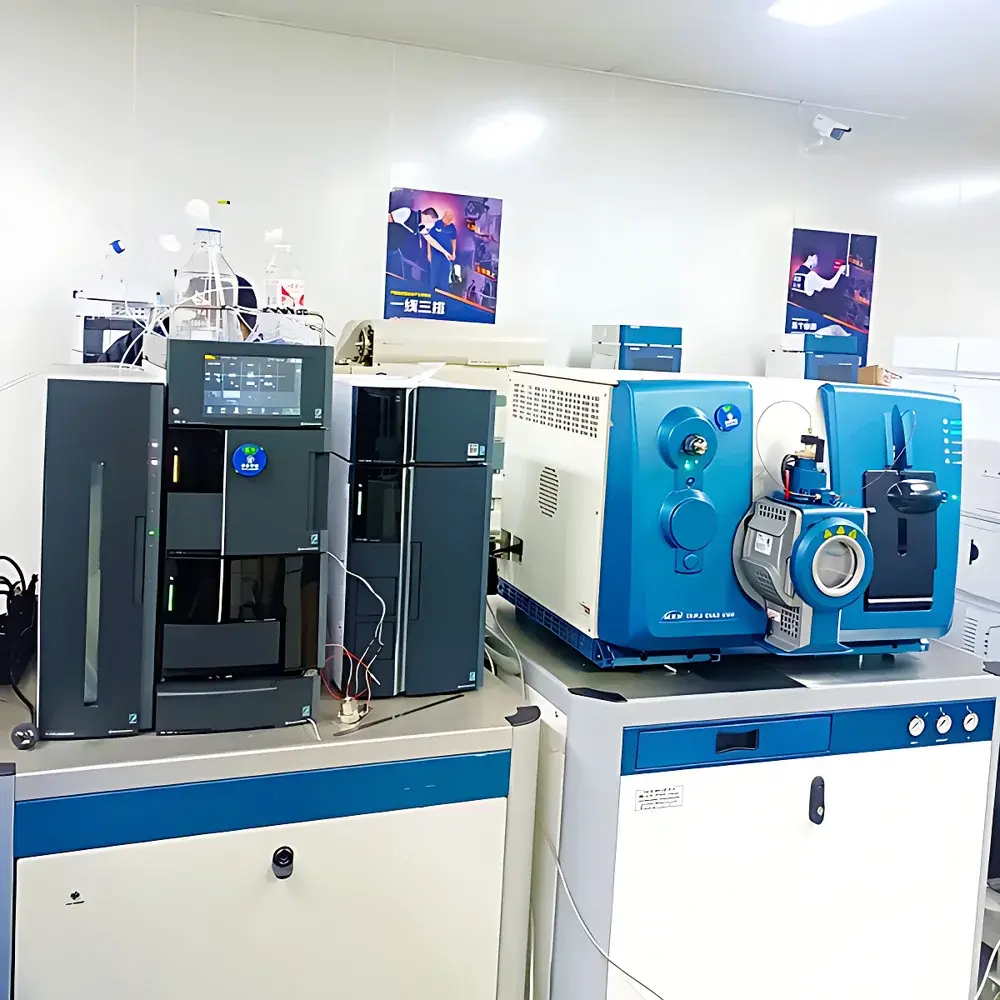
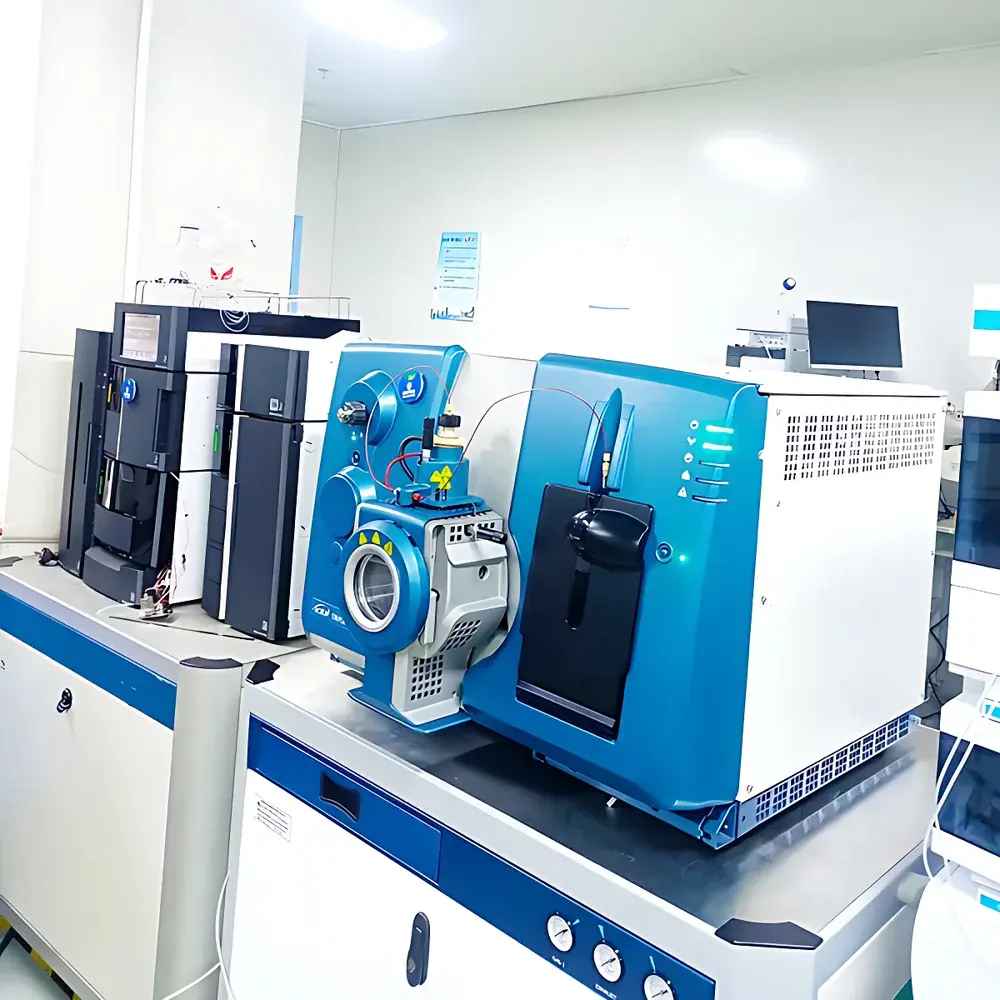
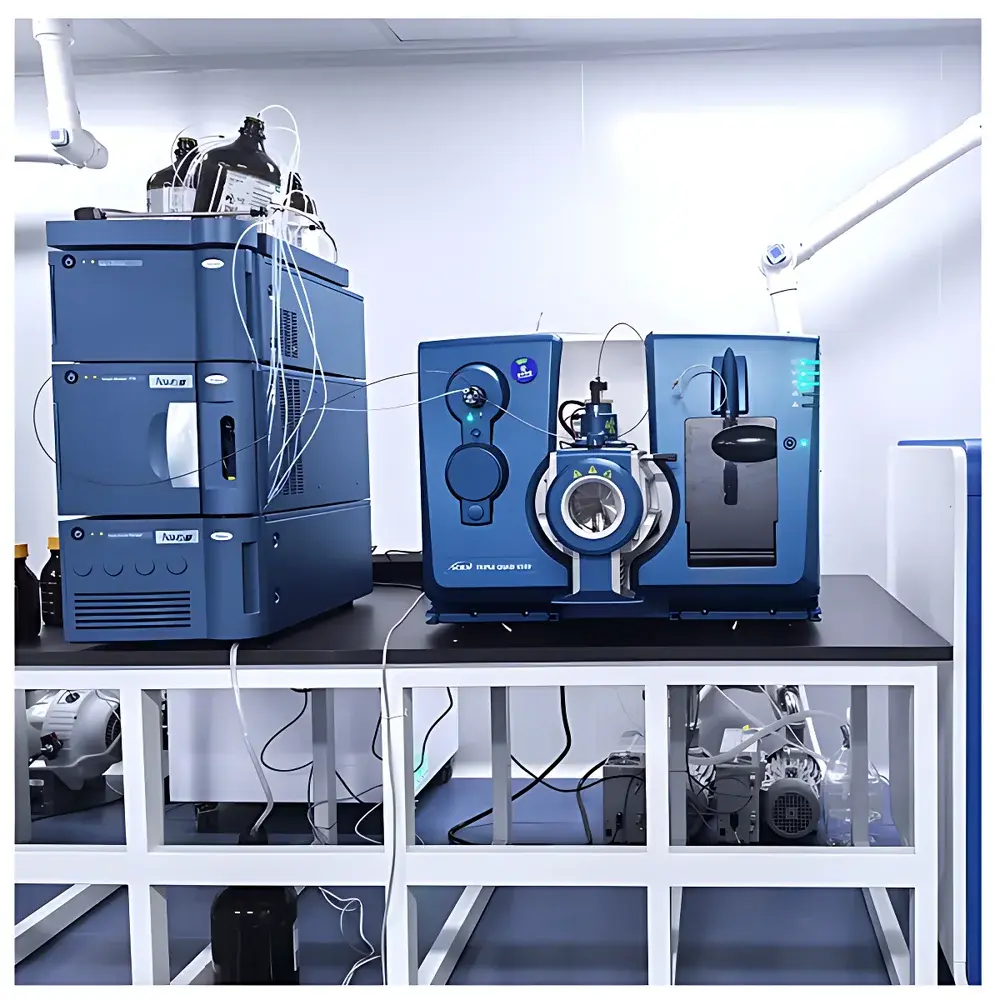
SCIEX QTRAP 6500+ Triple Quadrupole / Linear Ion Trap Hybrid Mass Spectrometer
| Brand | SCIEX |
|---|---|
| Origin | USA |
| Instrument Type | Triple Quadrupole with Linear Ion Trap (QTRAP®) |
| Model | 6500+ |
| Mass Range | 10–2000 m/z |
| Sensitivity | ≥100:1 S/N (for 1 pg µL⁻¹ reserpine, ESI positive mode, MRM) |
| Resolution | Full width at half maximum (FWHM) ≤0.5 Da (unit resolution) |
| Mass Accuracy | ≤0.1 Da (internal calibration) |
| Maximum Source Pressure | 12,000 Pa (≈90 Torr) |
| Scan Speed | ≥20,000 Da/sec (MRM transition speed) |
| Ionization Sources | Dual ESI/APCI, IonDrive™ Turbo V™ Source |
| Collision Cell | LINAC™-optimized RF-only collision cell |
| Detector | IonDrive™ High-Energy Detector+ |
| Software Platform | SCIEX OS v2.4 or later with Scheduled MRM™ Algorithm, MultiQuant™ MX for Quantitation, and MasterView™ for Data Review |
Overview
The SCIEX QTRAP 6500+ is a hybrid triple quadrupole / linear ion trap mass spectrometer engineered for high-sensitivity quantitative analysis and structural characterization in complex biological and chemical matrices. Built upon the proven QTRAP architecture, it integrates parallel reaction monitoring (PRM)-capable scanning modes with traditional triple quadrupole MRM quantification—enabling both targeted quantitation and untargeted identification within a single analytical run. Its core measurement principle relies on electrospray ionization (ESI) or atmospheric pressure chemical ionization (APCI), followed by mass-selective filtering in Q1, collision-induced dissociation (CID) in a pressurized LINAC™ collision cell, and dual-mode detection: either as a highly selective triple quadrupole (QqQ) for quantitative MRM or as a linear ion trap (LIT) for MSn fragmentation and information-dependent acquisition (IDA). This architecture delivers robust reproducibility across diverse sample types while maintaining compliance with regulatory data integrity standards including FDA 21 CFR Part 11 and GLP/GMP audit trail requirements.
Key Features
- IonDrive™ technology stack: Includes IonDrive™ QJet™ ion guide, IonDrive™ Turbo V™ source, and IonDrive™ High-Energy Detector+, collectively enhancing ion transmission efficiency by up to 3× versus prior-generation systems.
- LINAC™ collision cell design: Delivers uniform collision energy distribution across wide mass ranges, minimizing cross-talk and improving quantitative precision in multi-analyte MRM assays.
- Enhanced scan speed: Capable of >20,000 Da/sec MRM transition rate, supporting >1,000 transitions per LC run without sacrificing dwell time or sensitivity.
- Extended dynamic range: >5 orders of magnitude linearity (1–100,000 ng/mL typical), validated per ICH Q2(R2) guidelines for bioanalytical method validation.
- Dual acquisition modes: Seamless switching between high-duty-cycle MRM quantitation and sensitive MS3 structural elucidation—critical for metabolite ID, impurity profiling, and biotransformation studies.
- Integrated hardware-software co-design: Optimized firmware and SCIEX OS v2.4 enable automated calibration, real-time spectral quality assessment, and predictive maintenance alerts.
Sample Compatibility & Compliance
The QTRAP 6500+ accepts liquid samples introduced via UHPLC, nanoLC, or direct infusion. It supports aqueous-organic mobile phases, volatile buffers (e.g., ammonium formate/acetate), and non-volatile additives when used with appropriate source cleaning protocols. Regulatory compliance includes full support for 21 CFR Part 11 electronic signatures, audit trail logging, user role-based access control, and secure data archiving compliant with ISO/IEC 17025 and ASTM D7812-19 for forensic toxicology workflows. All system suitability tests, calibration verification, and performance qualification (PQ) procedures align with USP , EP 2.2.46, and CLIA-certified laboratory practices.
Software & Data Management
SCIEX OS serves as the unified control and processing environment, featuring embedded methods for automated peak integration (MultiQuant™ MX), scheduled MRM retention time alignment, and batch-level QC flagging. Raw data files (.wiff) are natively compatible with third-party platforms including Skyline, Compound Discoverer, and Simca-P+ for multivariate statistical modeling. The system supports metadata-rich project structures with embedded SOP references, instrument configuration snapshots, and electronic lab notebook (ELN) export via .pdf/.csv/.xlsx formats. Audit trails record all parameter changes, data reprocessing events, and user logins—retained for ≥36 months per internal SOPs.
Applications
- DMPK/ADME Studies: Quantitative analysis of low-abundance drug metabolites in plasma, bile, and tissue homogenates with sub-pg/mL LOQ in 96-well plate formats.
- Clinical Biomarker Discovery: Targeted quantitation of endogenous peptides and post-translational modifications in serum/plasma using immunoaffinity enrichment coupled to MRM3.
- Metabolomics: Global profiling of polar and semi-polar small molecules (<1,500 Da) with orthogonal confirmation via MS2/MS3 spectral libraries (HMDB, METLIN).
- Food Safety & Environmental Analysis: Multi-residue screening of pesticides, mycotoxins, and veterinary drugs in complex food matrices (e.g., milk, honey, cereals) per EU SANTE/11312/2021 criteria.
- Biopharmaceutical Characterization: Peptide mapping, deamidation/oxidation site localization, and glycoform profiling of monoclonal antibodies using electron-transfer/higher-energy collisional dissociation (EThcD) in LIT mode.
FAQ
What distinguishes QTRAP technology from conventional triple quadrupole instruments?
QTRAP systems replace the third quadrupole (Q3) with a linear ion trap, enabling true hybrid functionality: high-specificity MRM quantitation plus rapid MSn sequencing—all without hardware reconfiguration.
Is the QTRAP 6500+ compatible with existing SCIEX LC systems and software licenses?
Yes—backward compatibility is maintained with ExionLC™ AC, Shimadzu Nexera X2, and Waters Acquity UPLC systems; legacy methods migrate seamlessly into SCIEX OS v2.4 via automated conversion utilities.
How does the IonDrive™ source improve robustness in high-throughput labs?
Its thermally stabilized interface and adaptive gas flow control reduce signal drift during extended runs (>24 h), lowering recalibration frequency and increasing uptime in regulated environments.
Can the system perform simultaneous quantitative and qualitative analysis in a single injection?
Yes—Scheduled MRM™ with IDA triggers MS2 scans only on detected precursors above threshold intensity, conserving duty cycle while preserving quant accuracy.
What validation documentation is provided for GxP-compliant deployment?
Factory-installed IQ/OQ protocols, 21 CFR Part 11 readiness report, and pre-validated instrument qualification templates aligned with ASTM E2500-13 and EU Annex 11.




