
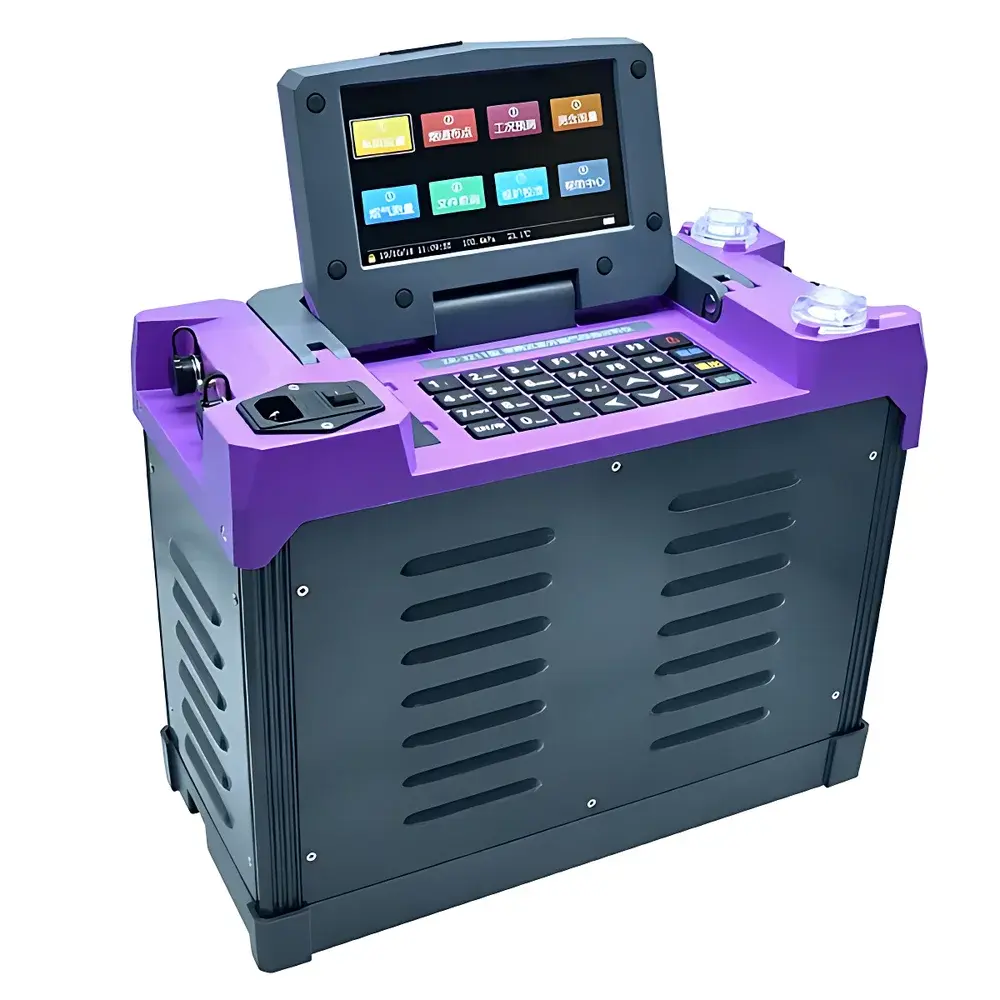
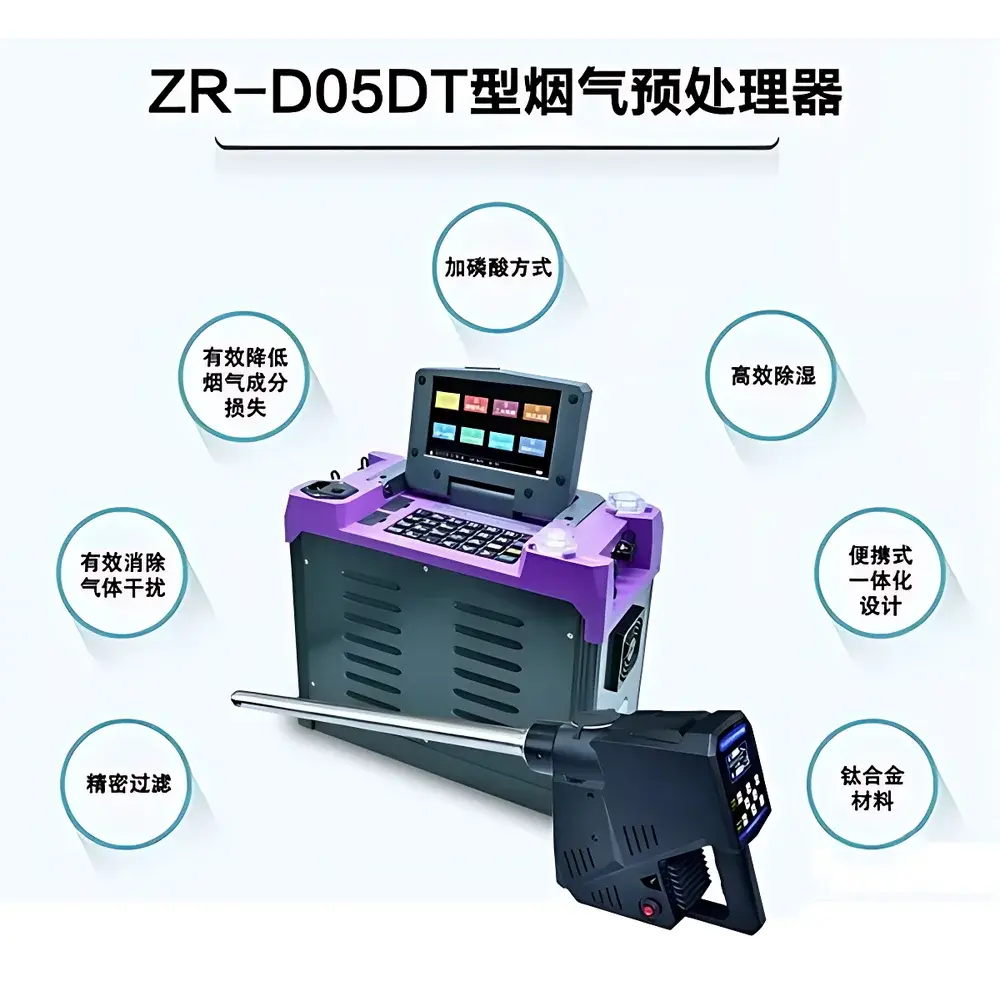
Junray ZR-3211C Portable UV Differential Optical Absorption Spectroscopy (DOAS) Flue Gas Analyzer
| Brand | Junray |
|---|---|
| Origin | Shandong, China |
| Manufacturer Type | Direct Manufacturer |
| Model | ZR-3211C |
| Instrument Type | Portable Flue Gas Analyzer |
| Measurement Principle | UV DOAS with Chemometric Algorithms |
| Measured Gases | SO₂, NO, NO₂ (as NOₓ), O₂, H₂S, CO, CO₂ |
| Accuracy | ±5% FS |
| Repeatability | ≤2.0% RSD |
| Response Time | ≤90 s (T₉₀) |
| Drift Stability | <5% FS over 1 hour |
| Sample Handling | Cold-Dry Extraction Method |
| Water Vapor Interference | Negligible (DOAS-based spectral discrimination) |
| Compliance | HJ 1131–2020, HJ 1132–2020, HJ 1045–2019, JF 1362–2012, JJG 968–2002, HJ/T 397–2007 |
Overview
The Junray ZR-3211C is a field-deployable, cold-dry UV differential optical absorption spectroscopy (DOAS) flue gas analyzer engineered for regulatory-grade measurement of gaseous pollutants in industrial stack emissions. Unlike traditional electrochemical or NDIR-based analyzers, the ZR-3211C employs high-resolution UV absorption spectroscopy across the 190–230 nm and 230–350 nm spectral ranges to quantitatively resolve SO₂, NO, NO₂ (reported as NOₓ), CO, CO₂, H₂S, and O₂ simultaneously — without cross-sensitivity to water vapor. This optical selectivity enables robust operation under high-humidity, low-concentration conditions typical of wet scrubber outlets, biomass boilers, and municipal waste incinerators. The instrument integrates a pulsed xenon light source (warm-up time 1×10⁹ pulses), thermally stabilized optical module, and dual-range detection architecture that auto-switches between high- and low-concentration channels for SO₂ and NOₓ to maintain sub-ppm resolution across 0–100 ppm and 0–1000 ppm ranges. All measurements conform to Chinese national standards for portable emission monitoring, including HJ 1131–2020 (SO₂), HJ 1132–2020 (NOₓ), and HJ 1045–2019 (system performance requirements).
Key Features
- UV DOAS core engine with real-time spectral acquisition and chemometric deconvolution — eliminating interference from H₂O vapor, particulates, and broad-band absorbers
- Cold-dry sampling train with integrated condensate trap, automatic drainage, and liquid-water protection — compliant with HJ/T 397–2007 stack sampling protocols
- Thermally regulated optical bench with active temperature compensation (±0.1°C stability) and mechanical damping — ensuring long-term baseline reproducibility
- Dual-range photodetector array optimized for SO₂ (280–310 nm) and NO/NO₂ (200–230 nm), enabling dynamic range extension without manual recalibration
- 7-inch wide-temperature TFT-LCD touchscreen with IP65-rated industrial keypad — operable from −20°C to +50°C, with graphical spectral display and live absorbance curve overlay
- Onboard parametric measurement: stack temperature (K-type thermocouple), differential/static pressure (±5 kPa), flow velocity (via integrated Pitot tube interface), dry-standard volumetric flow rate (Qsd)
- Internal rechargeable Li-ion battery (≥3 h continuous operation); optional extended-capacity pack available for multi-point survey campaigns
Sample Compatibility & Compliance
The ZR-3211C is validated for use in fixed-source emission testing per HJ/T 397–2007 and supports compliance verification against GB 13233–2011 (coal-fired power plant limits), DB37/T 2704–2015 (NOₓ), and DB37/T 2705–2015 (SO₂). Its cold-dry configuration meets the sample conditioning requirements specified in HJ 1045–2019 for UV-absorption-based systems, including dew point control (<4°C), residence time 99.9% (via 2.5 µm sintered metal filter). The analyzer is certified for field use in ambient temperatures from −10°C to +45°C and relative humidity up to 95% RH (non-condensing). It supports traceability through NIST-traceable calibration gas certificates (ISO 6141) and includes audit-ready calibration logs with operator ID, date/time stamp, and zero/span verification records.
Software & Data Management
Data acquisition and reporting are managed via embedded Linux-based firmware with dual-mode interface: touch-driven GUI and tactile keypad navigation. All spectral scans, minute-averaged concentrations, and parametric data (T, P, v, Qsd) are stored internally in CSV-compliant format with UTC timestamping. Export is supported via USB 2.0 to Excel (.xlsx) or text (.csv); optional 128 GB SSD enables >12 months of continuous 1-min logging. Software features include real-time spectral visualization, automatic interference correction flags, and built-in calculation modules for excess air ratio (λ), pollutant mass flow rate (g/h), and normalized concentration (e.g., 3% O₂ basis per GB 13233–2011). Audit trails comply with GLP principles: all parameter changes, calibration events, and data exports are logged with immutable timestamps and user authentication.
Applications
- Regulatory stack testing for thermal power plants, cement kilns, steel sintering belts, and chemical process heaters
- Performance evaluation and QA/QC of CEMS (Continuous Emission Monitoring Systems) per HJ 75–2017
- Commissioning and periodic verification of flue gas desulfurization (FGD) and selective catalytic reduction (SCR) systems
- Mobile source emission surveys, including marine auxiliary engines and stationary diesel generators
- Research-grade speciation studies requiring simultaneous multi-gas UV absorption profiles under variable moisture conditions
- Environmental inspection workflows requiring rapid turnaround — full setup, calibration, and first measurement achievable within 15 minutes
FAQ
Does the ZR-3211C require external drying or conditioning equipment?
No — the integrated cold-dry module includes thermoelectric cooling, condensate separation, and automatic drainage, satisfying HJ 1045–2019’s requirement for on-board moisture management.
Can it measure NO and NO₂ separately, or only as NOₓ?
It resolves NO and NO₂ independently using spectral fitting algorithms across their distinct absorption bands (NO: 226 nm; NO₂: 355 nm), allowing separate reporting per HJ 1132–2020.
Is the instrument suitable for ISO 17025-accredited laboratories?
Yes — its documented uncertainty budget, traceable calibration procedures, and electronic audit trail support ISO/IEC 17025:2017 clause 7.7 (measurement traceability) and 7.8 (reporting results).
What maintenance intervals are recommended for field operation?
Optical path cleaning every 200 hours; xenon lamp replacement after 1×10⁹ pulses (~2 years at 10 h/day); annual full system verification with certified span gases per JJG 968–2002.
Does it support remote data transmission or cloud integration?
Not natively — but raw CSV files are compatible with third-party LIMS and EPA-approved data aggregation platforms (e.g., EnviroData, Triad). Optional RS-485/Modbus RTU interface enables SCADA integration.
Related Products







