
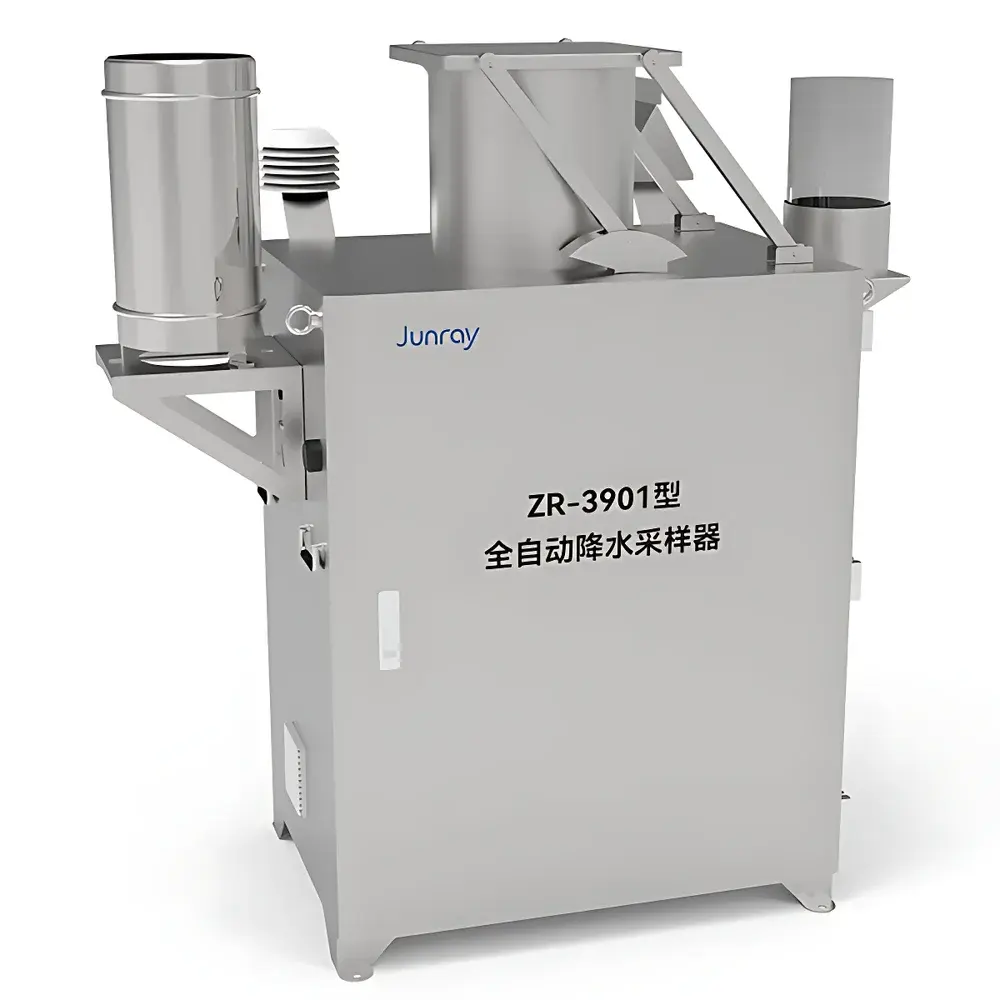
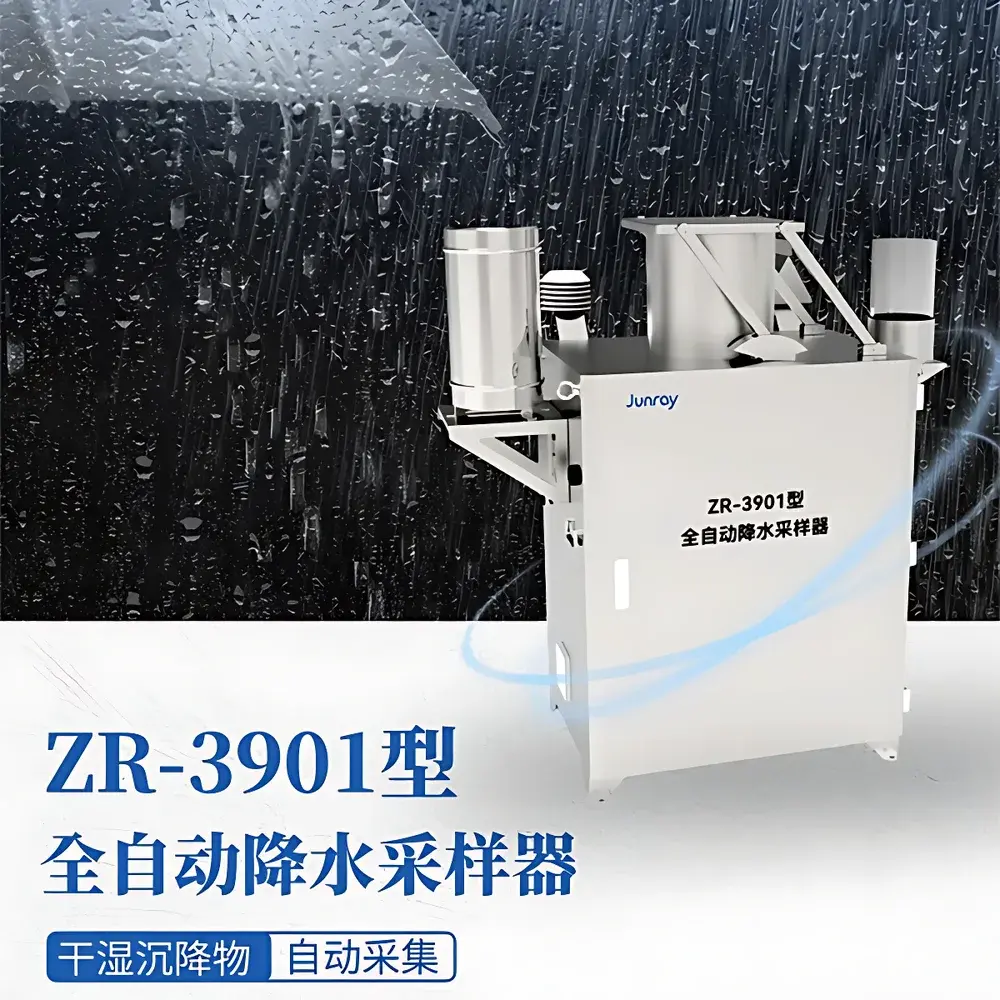
Junray ZR-3901 Fully Automatic Precipitation Sampler for Wet and Dry Deposition Monitoring
| Brand | Junray |
|---|---|
| Origin | Shandong, China |
| Manufacturer Type | Direct Manufacturer |
| Country of Origin | China |
| Model | ZR-3901 |
| Rain/Snow Detection Sensitivity | < 0.01 mm/h or single raindrop ≥ 0.5 mm diameter |
| Lid Opening Time | ≤ 40 s |
| Lid Closing Time | ≤ 5 min |
| Collection Funnel Diameter | 300 mm |
Overview
The Junray ZR-3901 Fully Automatic Precipitation Sampler is an engineered environmental monitoring instrument designed for unattended, time-resolved collection of both wet (rain, snow, fog drip) and dry deposition (aerosol-bound particulates, dust, soluble ions) from the atmosphere. It operates on a precipitation-triggered sampling principle: integrated optical and capacitive precipitation sensors detect the onset and cessation of atmospheric moisture events with high temporal resolution, initiating lid actuation to expose or seal the primary collection funnel. This ensures sample integrity by minimizing contamination from wind-blown debris, evaporation, or secondary aerosol resuspension during non-precipitation periods. The system is purpose-built for long-term deployment in ambient outdoor environments—requiring no manual intervention between events—and supports standardized atmospheric deposition research aligned with national and international protocols for acid rain, nutrient cycling, heavy metal flux, and persistent organic pollutant (POP) monitoring.
Key Features
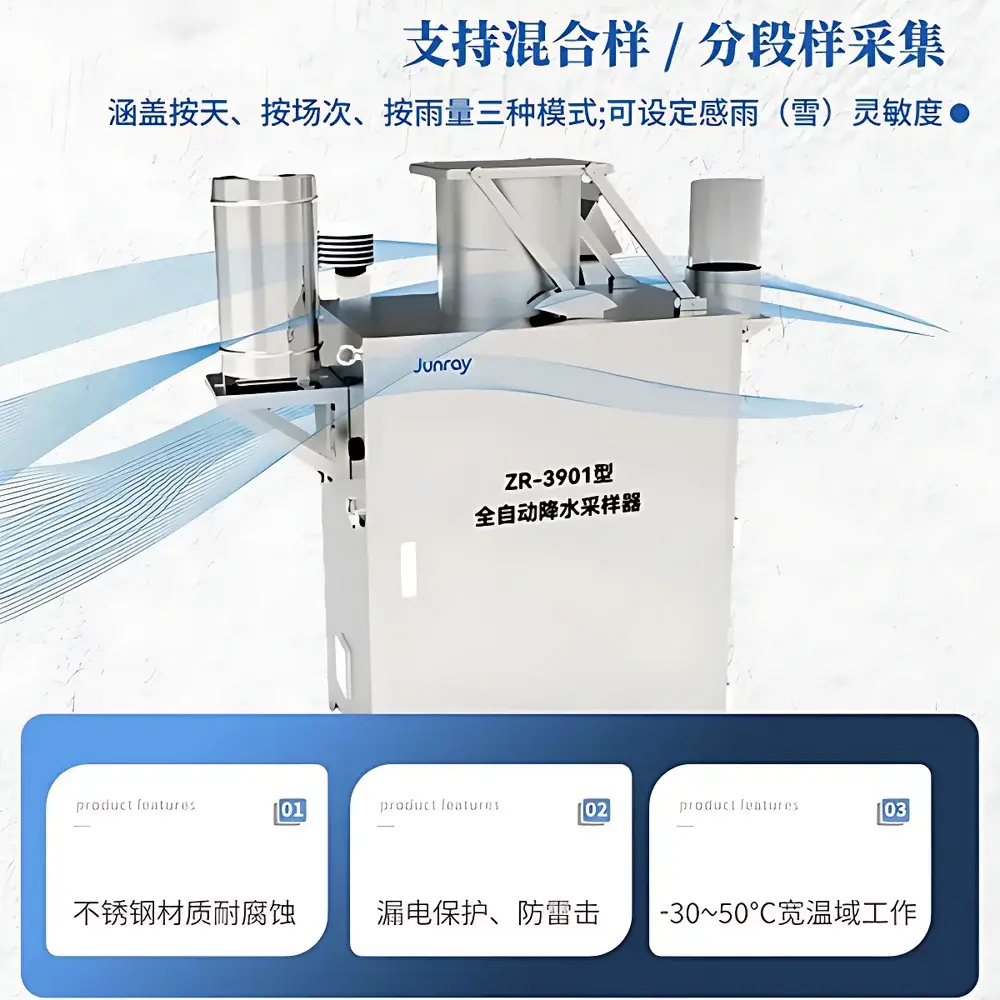
- Intelligent dual-mode precipitation detection: Combines optical scattering and capacitance-based sensing to reliably identify rainfall, snowfall, and mixed-phase events—even at low intensities (≤ 0.01 mm/h) or small hydrometeor size (≥ 0.5 mm diameter droplets).
- Rapid-response mechanical actuation: Motor-driven lid mechanism achieves full opening in ≤ 40 seconds after precipitation onset and complete sealing within ≤ 5 minutes after cessation—critical for preserving sample representativeness under variable meteorological conditions.
- Standardized 300 mm diameter stainless-steel collection funnel: Complies with ISO 9060:2018 and GB 13580 series dimensional specifications for atmospheric precipitation samplers; optimized for laminar flow capture and minimal splash loss.
- Weather-resistant enclosure (IP65-rated): Constructed with UV-stabilized polycarbonate housing and corrosion-resistant stainless-steel hardware, enabling continuous operation across temperature ranges from –20 °C to +50 °C and relative humidity up to 95% RH.
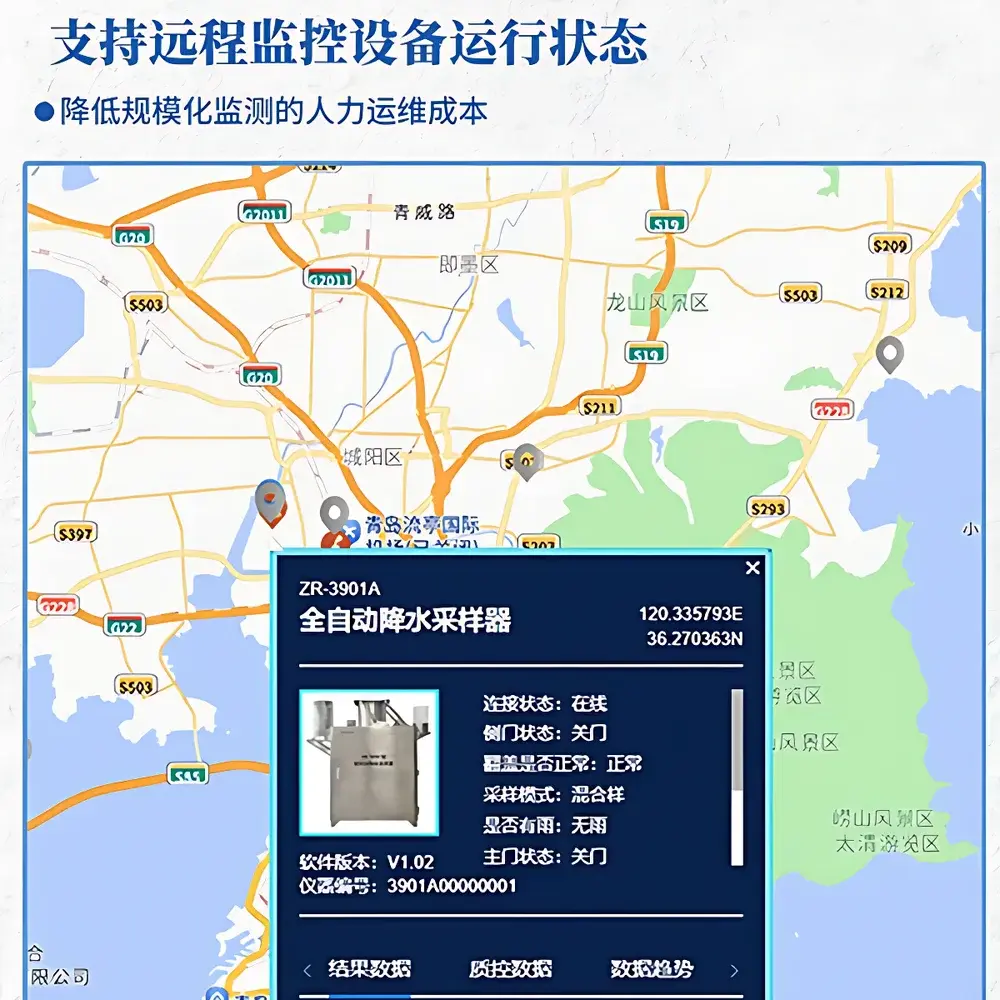
- Integrated data logging: Onboard non-volatile memory stores timestamped event logs—including start/end time, duration, accumulated volume estimate, and sensor status—with optional RS-485/Modbus RTU output for integration into SCADA or central environmental data acquisition systems.
Sample Compatibility & Compliance
The ZR-3901 is validated for simultaneous collection of liquid-phase (wet deposition) and particle-phase (dry deposition) constituents. Its open-funnel configuration enables passive gravimetric and chemical analysis of total suspended particulates (TSP), while the timed-closure logic prevents post-event contamination. The instrument conforms to Chinese national standards GB 13580.1–13580.13 (Methods for Sampling and Analysis of Atmospheric Precipitation) and HJ/T 174–2005 (Technical Requirements and Testing Methods for Automatic Rainwater Samplers). While not certified to ISO/IEC 17025, its mechanical and sensor performance parameters are traceable to NIM (National Institute of Metrology, China) reference methods. For GLP-compliant laboratories, raw event logs support audit-ready documentation when paired with external volumetric calibration and laboratory analytical workflows (e.g., IC for anions/cations, ICP-MS for metals, TOC for organic carbon).
Software & Data Management
The ZR-3901 operates autonomously without proprietary software dependency. All operational parameters—including sensor thresholds, delay timers, and data retention settings—are configurable via DIP switches or local serial interface (9600 baud, ASCII protocol). Event logs are exportable as CSV files using standard terminal emulation tools (e.g., PuTTY, Tera Term). For networked deployments, optional Modbus RTU integration allows real-time polling of lid status, sensor state, and internal clock synchronization—enabling alignment with co-located meteorological stations (e.g., tipping-bucket rain gauges, anemometers) in multi-parameter air quality observatories. No cloud platform or vendor-specific dashboard is required; data interoperability follows open industrial communication standards.
Applications
- Long-term regional acid deposition monitoring programs (SO₄²⁻, NO₃⁻, NH₄⁺ flux quantification)
- Atmospheric heavy metal budgeting (Pb, Cd, As, Hg) in industrial and agricultural catchments
- Validation of atmospheric chemistry transport models (e.g., CMAQ, WRF-Chem) through empirical wet/dry deposition rate comparison
- Urban air quality assessment—particularly for chloride deposition near coastal zones or de-icing salt usage areas
- Ecological research on nutrient input (e.g., N, P, K) to forest canopies and freshwater ecosystems
- Compliance monitoring under national emission control policies targeting transboundary pollution
FAQ
Does the ZR-3901 support heated collection for snowmelt sampling?
No—the base model does not include heating elements. Snow collection relies on ambient melting; users requiring active melt control must integrate external heated funnels or post-collection thermal conditioning per HJ/T 174–2005 Annex B.
Can the instrument distinguish between rain and snow automatically?
Yes—via combined optical scattering signature and temperature-compensated capacitance response, enabling reliable phase discrimination under mixed conditions.
Is the data logger compliant with FDA 21 CFR Part 11 or EU Annex 11?
No—it provides basic timestamped event logging without electronic signature, audit trail, or user access control; suitable for environmental surveillance but not regulated pharmaceutical or clinical trial applications.
What maintenance intervals are recommended for field deployment?
Bi-monthly visual inspection of funnel cleanliness and sensor window clarity; annual verification of lid actuation timing and sensor sensitivity using calibrated test droplets per HJ/T 174–2005 Section 6.3.
Does Junray provide calibration certificates traceable to national standards?
Yes—factory calibration reports (including sensor threshold verification and timing accuracy) are supplied with each unit, referenced to NIM-accredited procedures.







