
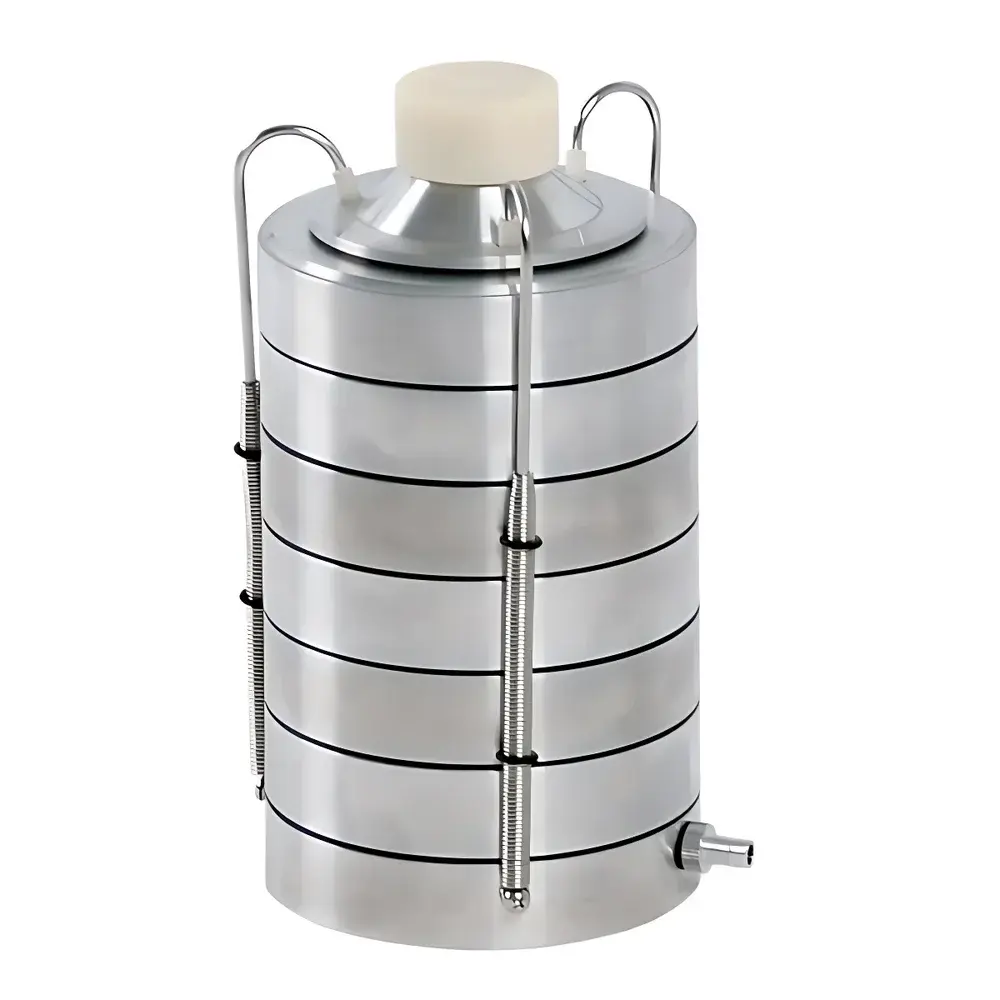
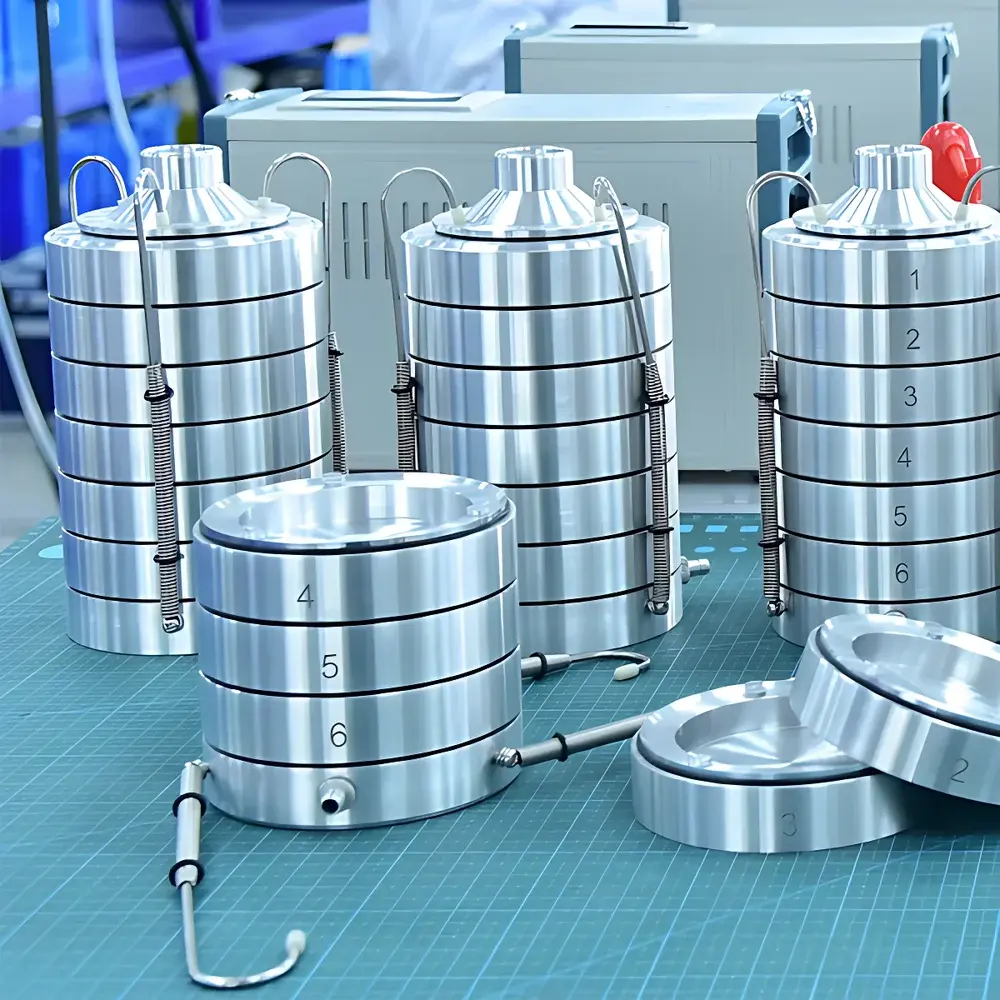
Junray ZR-A02 Six-Stage Andersen Air Microbial Sampler
| Brand | Junray |
|---|---|
| Model | ZR-A02 |
| Sampling Stages | 6-stage cascade impactor |
| Material | Corrosion-resistant aluminum alloy |
| Principle | Inertial impaction (Andersen-type) |
| Standard Compliance | ISO 14698-1, ISO 14698-2, USP <71>, EU GMP Annex 1 (airborne bioburden monitoring) |
| Sample Collection Medium | Standard Petri dishes with agar-based culture media |
| Flow Rate | Compatible with standard vacuum pumps (15–28.3 L/min typical for Andersen systems) |
| Cut-off Aerodynamic Diameters (Stage 1–6) | ~7.0, 4.7, 3.3, 2.1, 1.1, and 0.65 µm |
| Operating Temperature Range | 10–30 °C |
| Relative Humidity Limit | ≤80% RH (non-condensing) |
Overview
The Junray ZR-A02 Six-Stage Andersen Air Microbial Sampler is a precision-engineered inertial impactor designed for quantitative assessment of viable airborne microorganisms—including bacteria, yeasts, and molds—across six discrete aerodynamic particle size fractions. Based on the well-established Andersen cascade impactor principle, the device separates bioaerosols by inertia-driven impaction onto nutrient agar surfaces in sequentially staged Petri dishes. Each stage features precisely calibrated jet orifices that produce defined cut-off diameters (7.0, 4.7, 3.3, 2.1, 1.1, and 0.65 µm), enabling physiologically relevant deposition modeling aligned with human respiratory tract anatomy (nasopharyngeal, tracheobronchial, and alveolar regions). Unlike filtration or electrostatic methods, this impactor-based approach preserves microbial viability while providing size-resolved colony-forming unit (CFU) data essential for risk assessment in cleanrooms, pharmaceutical manufacturing facilities, hospitals, and environmental health laboratories.
Key Features
- True six-stage Andersen architecture with NIST-traceable nozzle geometry and validated cut-point performance per ISO 14698-2
- Corrosion-resistant anodized aluminum alloy construction ensures long-term dimensional stability and compatibility with alcohol-based disinfectants and routine decontamination protocols
- Modular, tool-free assembly/disassembly for rapid cleaning, sterilization (autoclavable up to 121 °C, 15 min), and stage-specific maintenance
- Integrated alignment pins and O-ring seals guarantee leak-tight interstage integrity at operational flow rates (15–28.3 L/min)
- Standard 90 mm Petri dish compatibility across all stages—no proprietary consumables required
- Calibration-ready design supporting periodic verification using polystyrene latex (PSL) microspheres per ISO 21501-4
Sample Compatibility & Compliance
The ZR-A02 is validated for sampling both culturable bacteria (e.g., Bacillus subtilis, Staphylococcus epidermidis) and filamentous fungi (e.g., Aspergillus niger, Penicillium chrysogenum) under controlled environmental conditions (10–30 °C, ≤80% RH non-condensing). Its performance meets the technical requirements of ISO 14698-1 (biocontamination control) and ISO 14698-2 (sampling methodology), as well as EU GMP Annex 1 (2022 revision) for viable particle monitoring in Grade A–D environments. When operated with validated vacuum sources and paired with incubation protocols compliant with USP and Ph. Eur. 2.6.12, it supports regulatory submissions requiring auditable bioburden data. The sampler does not require electrical power at the point of use and integrates seamlessly into existing environmental monitoring programs governed by FDA 21 CFR Part 11-compliant data management systems.
Software & Data Management
While the ZR-A02 is a hardware-only passive sampling device, its output is fully compatible with laboratory information management systems (LIMS) and electronic batch record (EBR) platforms. Colony counts from each stage are manually recorded or digitized via colony counters (e.g., ProtoCOL 3, iQ Count) and imported into validated spreadsheets or databases supporting audit trails, user access controls, and electronic signatures. Raw CFU/m³ calculations incorporate flow rate calibration certificates, sampling duration, and stage-specific collection efficiencies derived from published Andersen efficiency curves. For GxP environments, documentation packages include instrument qualification records (IQ/OQ), preventive maintenance logs, and annual requalification reports aligned with ISO/IEC 17025 requirements.
Applications
- Environmental monitoring in aseptic processing suites and isolator systems
- Validation of HVAC filtration efficiency and room air change effectiveness
- Assessment of personnel gowning procedures and operator technique-related bioburden dispersion
- Investigation of microbial contamination events and root cause analysis (RCA)
- Baseline bioburden characterization during facility commissioning and qualification (C&Q)
- Research on aerosolized pathogen transmission dynamics in healthcare and biosafety settings
FAQ
What vacuum pump specifications are required for optimal operation?
A stable, oil-free diaphragm pump capable of delivering 28.3 L/min at ≥25 kPa pressure drop is recommended; pump performance must be verified with a calibrated flowmeter prior to each sampling session.
Can the ZR-A02 be used for non-viable particle sampling?
No—it is specifically engineered for viable microorganism collection via impaction onto growth media; non-viable particulate measurement requires optical particle counters or gravimetric samplers.
Is sterilization validation data available for the aluminum body?
Yes—full autoclave cycle validation reports (including temperature mapping and biological indicator testing) are provided upon request for GMP-regulated users.
How frequently should nozzle orifices be inspected for wear or clogging?
Visual inspection and bore-scope verification are recommended after every 50 sampling hours or prior to critical campaigns; replacement nozzles are available as certified spare parts.
Does Junray provide method transfer support for compendial compliance?
Yes—application engineers offer protocol development assistance aligned with USP , Ph. Eur. 2.6.12, and ISO 14698 series standards, including uncertainty budgeting and recovery efficiency studies.







