
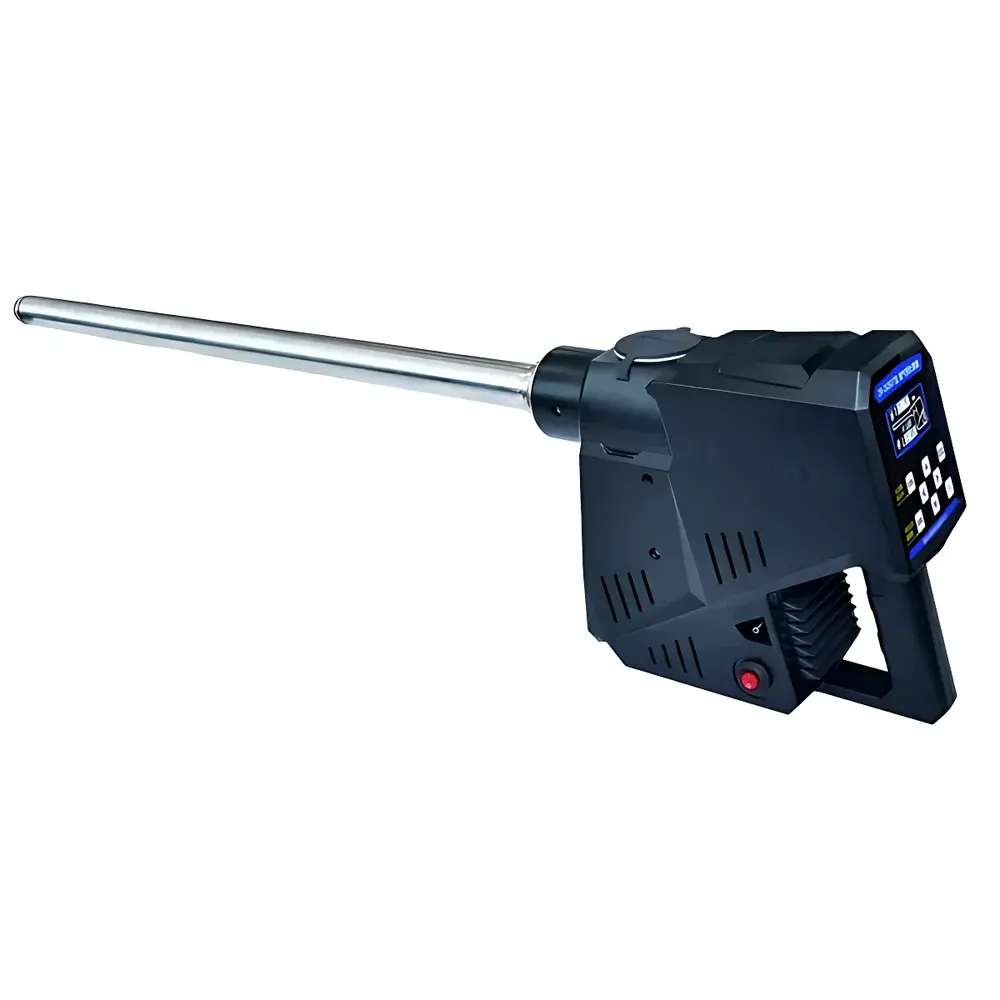
Junray ZR-D05DT Flue Gas Preconditioning Unit
| Brand | Junray |
|---|---|
| Origin | Shandong, China |
| Manufacturer Type | OEM Manufacturer |
| Country of Origin | China |
| Model | ZR-D05DT |
| Pricing | Upon Request |
Overview
The Junray ZR-D05DT Flue Gas Preconditioning Unit is a fully integrated, field-deployable gas conditioning system engineered for accurate and reliable sampling of hot, humid, and corrosive flue gases prior to analysis by downstream analyzers (e.g., electrochemical SO₂ sensors, UV-DOAS, or NDIR systems). It operates on a dual-stage thermal management principle: upstream active heating prevents condensation in the sampling line and filter stages, while downstream thermoelectric cooling combined with phosphoric acid scrubbing achieves precise dew point control and selective interference suppression. Designed specifically for compliance with Chinese environmental monitoring standards—including HJ 57–2017 (Determination of Sulfur Dioxide in Stationary Source Exhaust Gas by Fixed-Potential Electrolysis) and HJ/T 47–1999 (Technical Specifications for Flue Gas Samplers)—the ZR-D05DT ensures minimal analyte loss, high sample integrity, and long-term sensor stability under demanding industrial emission monitoring conditions.
Key Features
- Full-path heated transport: Integrated heater in the front-end filter housing maintains gas temperature between 60 °C and 160 °C (adjustable), eliminating water condensation before the cooling stage and minimizing adsorptive loss of soluble gases such as SO₂, NH₃, and HCl.
- Dual-stage thermoelectric dehumidification: High-capacity Peltier modules deliver consistent cooling performance across ambient temperatures from –20 °C to +50 °C, achieving stable output dew points ≤5 °C—even for inlet gas humidity up to 30 vol.%.
- Phosphoric acid-based chemical conditioning: Compliant with HJ 57–2017 methodology, the condensate trap incorporates controlled phosphoric acid addition to suppress interference from ammonia (NH₃) and hydrogen sulfide (H₂S), improving SO₂ measurement specificity.
- Corrosion-resistant dual filtration: Titanium alloy primary filter (≥0.5 µm retention) and hydrophobic PTFE secondary filter (≤0.2 µm) jointly remove particulates, aerosols, SO₃ mist, and condensed water—preventing sensor fouling and drift.
- Modular, field-serviceable architecture: Tool-free disassembly enables rapid cleaning of filters, condensate traps, and cooling surfaces; all wetted components are chemically inert and compatible with acidic flue gas matrices.
- Integrated sampling & preconditioning design: Co-located probe and preprocessor eliminate transfer lines, reducing residence time, memory effects, and cross-contamination risk—ideal for stack testing and mobile emissions audits.
Sample Compatibility & Compliance
The ZR-D05DT is validated for use with flue gases containing SO₂ (0.1–5000 mg/m³), NOₓ, CO, O₂, and trace HCl/HF under typical coal-, oil-, and biomass-fired combustion conditions. Its conditioning strategy aligns with internationally recognized principles for acidic gas preservation: elevated transport temperature minimizes wall adsorption, while phosphoric acid treatment conforms to standardized interference mitigation protocols referenced in ISO 12039 and ASTM D6784. The unit supports GLP-compliant operation when paired with analyzers featuring audit-trail-enabled data logging (e.g., FDA 21 CFR Part 11–compliant systems). All materials contacting sample gas meet USP Class VI and DIN 53479 corrosion resistance requirements.
Software & Data Management
While the ZR-D05DT operates as a standalone hardware conditioner without embedded firmware or digital interface, it is fully compatible with third-party data acquisition systems via analog 4–20 mA or RS-232/RS-485 outputs (optional module). Temperature setpoints, cooling status, and condensate level alerts can be monitored externally using standard SCADA or LabVIEW-based platforms. For regulatory reporting, its operational parameters (heater temp, dew point, flow rate) are traceable through connected analyzers that maintain full audit trails per ISO/IEC 17025 and CNAS-CL01 requirements.
Applications
- Continuous Emission Monitoring Systems (CEMS) for SO₂, NOₓ, and CO in thermal power plants, waste incinerators, and cement kilns
- Periodic stack testing per HJ/T 397 and EPA Method 5/6/7E protocols
- Mobile source emissions verification (e.g., marine engine exhaust, industrial boiler tune-ups)
- Research-grade flue gas characterization in combustion laboratories requiring low-loss sample handling
- Calibration gas delivery conditioning for dynamic dilution systems
FAQ
Does the ZR-D05DT require external power for heating and cooling?
Yes—it operates on 220 V AC ±10%, 50/60 Hz, with peak power consumption of ≤800 W during simultaneous heating and maximum cooling load.
Can it be used with non-SO₂ analyzers such as FTIR or GC-MS?
Yes, provided the downstream analyzer accepts conditioned gas at ≤5 °C dew point and ≤100 kPa absolute pressure; compatibility must be verified for reactive species (e.g., Cl₂, NH₃) due to acid scrubbing.
Is the phosphoric acid reservoir user-refillable?
Yes—the acid chamber is accessible via quick-release cap and designed for field replenishment using reagent-grade 85% H₃PO₄; typical service interval is 15–30 days depending on moisture load.
What maintenance intervals are recommended for filters and cooling modules?
Titanium filter: clean every 40 hours of operation; PTFE filter: replace every 200 hours or after visible clogging; Peltier surfaces: inspect and wipe weekly for frost/dust accumulation.
Does Junray provide calibration certificates or factory test reports?
Yes—each unit ships with a Factory Performance Test Report including heater temperature uniformity (±2 °C), dew point stability (±0.5 °C over 1 hr), and acid dosing accuracy (±5% volumetric error).







