
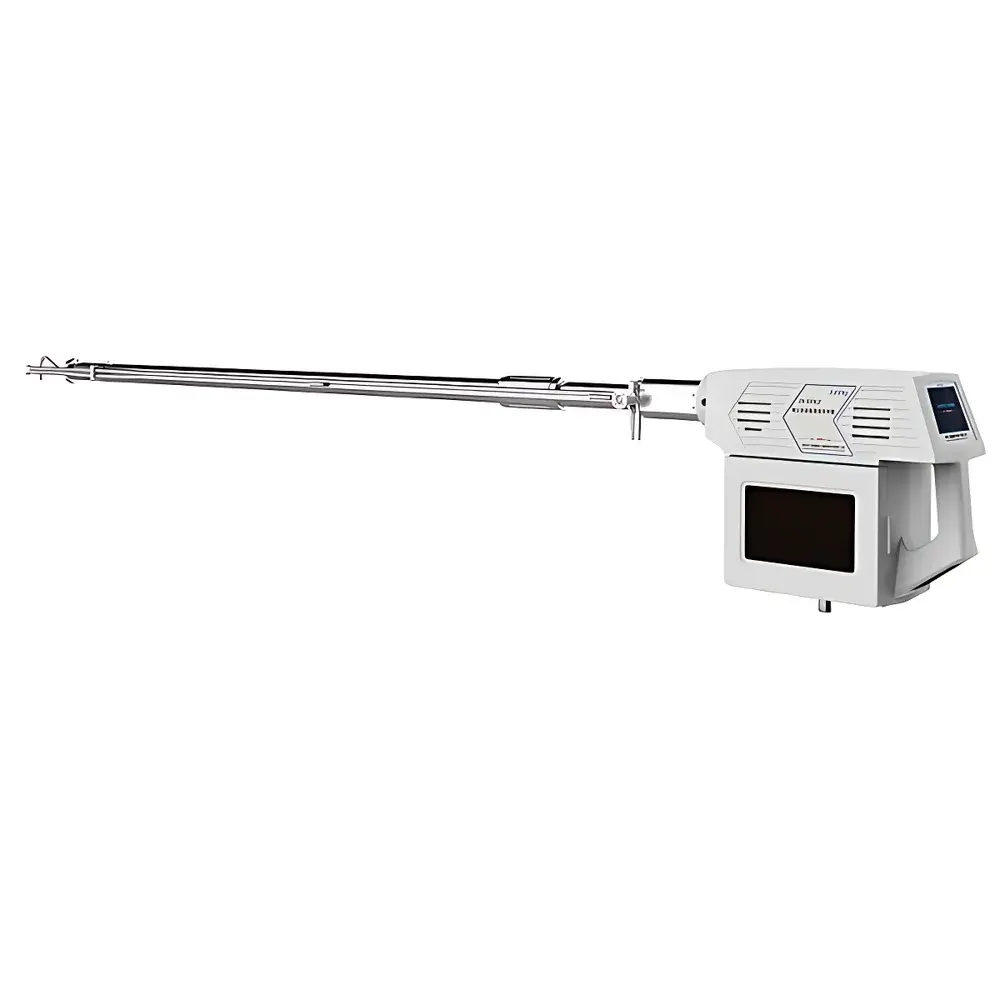
Junray ZR-D09QT Beta-Ray Absorption Based Direct-Reading Multi-Parameter Flue Gas Particulate Sampling Probe
| Brand | Junray |
|---|---|
| Origin | Shandong, China |
| Manufacturer Type | Original Equipment Manufacturer (OEM) |
| Country of Origin | China |
| Model | D09QT |
| Pricing | Available Upon Request |
Overview
The Junray ZR-D09QT is a field-deployable, multi-parameter flue gas particulate sampling probe engineered for regulatory-compliant, real-time measurement of suspended particulate matter (PM) in fixed-stack emissions. It operates on the beta-ray absorption gravimetric principle—where a calibrated beta radiation source (e.g., 14C or 85Kr) irradiates a continuously advanced filter tape, and attenuation of beta particles is quantitatively correlated to mass loading per unit area. This method eliminates post-sampling laboratory gravimetry, enabling immediate on-site concentration reporting (µg/m³ at standard conditions). Integrated with a compatible flue gas analyzer host (e.g., Junray ZR-3260 series), the probe simultaneously acquires dynamic pressure, static pressure, stack gas temperature, volumetric flow velocity, and standardized volumetric flow rate (Nm³/min) via built-in Pitot tube, thermocouple, and differential pressure transducers. Its compact, modular design meets stringent portability requirements for stack access in constrained industrial environments—including boiler rooms, kiln stacks, and ductwork with limited manhole clearance.
Key Features
- Beta-ray absorption measurement core with continuous filter tape advancement—enabling both instantaneous concentration readout and short-term unattended monitoring (e.g., 1–24 h campaigns)
- Integrated moisture content sensor for real-time flue gas humidity compensation—critical for accurate dry-basis PM concentration calculation per ISO 12141 and EPA Method 5I
- Dual-path sampling architecture: dedicated particulate channel + parallel conditioned gas path—supports co-sampling with electrochemical O2 sensors or UV-based SO2/NOx modules under cold-dry extraction conditions
- Triaxial inclinometer with digital tilt angle display (±0.1° resolution) and configurable alarm thresholds—ensures proper probe alignment per GB/T 16157-1996 stack sampling geometry requirements
- 7-inch capacitive touchscreen HMI with intuitive icon-driven interface—displays live parameters (PM concentration, temperature, velocity, differential pressure), system status, and diagnostic codes
- Double-roller precision tape drive mechanism with tension feedback control—minimizes tape slippage and ensures repeatable deposition area registration (CV < 1.2% over 100 cycles)
- Internally passivated stainless-steel probe body (electropolished 316L) and PTFE-coated internal surfaces—reduces particle adhesion and minimizes wall loss artifacts for sub-10 µm aerosols
- Quick-release Pitot tube assembly with NIST-traceable calibration certificate—facilitates field verification and replacement without disassembling the main probe housing
- Optional Bluetooth 5.0 module (Bluetooth SIG qualified)—enables wireless parameter synchronization and remote configuration with host analyzers or tablet-based field data loggers
- Comprehensive self-diagnostic suite with audible/visual fault alerts—including tape end detection, motor stall, radiation source decay warning, and pressure sensor drift compensation flags
Sample Compatibility & Compliance
The ZR-D09QT is validated for use with flue gases containing particulate matter up to 200 mg/m³ (dry, 6% O2, 101.3 kPa, 0°C), across temperatures from 0°C to 200°C (extended range option: –10°C to 260°C). It complies with national and international reference methods including GB/T 16157–1996 (equivalent to ISO 9096), HJ/T 48–1999, DB37/T 3785–2019 (low-concentration PM β-ray method), JJG 680–2007 (particulate sampler verification), and JJG 518–1998 (Pitot tube calibration). All pressure and temperature transducers are certified to IP65 ingress protection; the beta source housing meets Class II radioactive device shielding requirements per CNIC regulations. Data integrity conforms to GLP-aligned audit trail protocols, with timestamped event logging and tamper-evident storage.
Software & Data Management
Field data is stored locally in non-volatile memory (≥10,000 sample records) with UTC-synchronized timestamps. Export formats include CSV and XML compliant with China’s Environmental Monitoring Data Platform (EMDP) schema. Optional PC software (Junray DataLink v3.2) supports spectral review of beta attenuation curves, automatic correction for tape background drift, and generation of QA/QC reports aligned with HJ 168–2020 technical specifications. Firmware updates are delivered via microSD card or Bluetooth—retaining full backward compatibility with legacy host systems.
Applications
The probe serves as a primary compliance tool for CEMS (Continuous Emission Monitoring Systems) performance audits, reference method validation, and enforcement inspections across thermal power plants, iron & steel sintering lines, cement clinker kilns, pulp & paper recovery boilers, non-ferrous metal smelters (Al, Mg, Zn, Ti, Si), pharmaceutical fluidized beds, chemical cracking furnaces, rubber vulcanization exhausts, and ceramic tunnel kilns. It is also deployed in occupational hygiene surveys (NIOSH Method 0600), ambient air receptor modeling studies, and academic research on aerosol formation mechanisms in high-temperature combustion processes.
FAQ
What regulatory standards does the ZR-D09QT satisfy for low-concentration particulate measurement?
It fully implements DB37/T 3785–2019 and is verified per JJG 680–2007 for accuracy, linearity, and repeatability in the 0.5–50 mg/m³ range.
Can the probe operate independently without a host analyzer?
No—it requires synchronization with a Junray-compatible flue gas analyzer (e.g., ZR-3260) for power, data aggregation, and environmental parameter integration.
Is the beta radiation source replaceable in the field?
The sealed 14C source is factory-installed and certified for 5-year operational life; replacement must be performed by an authorized radiation safety officer under provincial nuclear regulatory oversight.
How is moisture interference corrected during PM measurement?
An integrated chilled-mirror hygrometer measures flue gas dew point in real time; algorithms apply EN 13284-1-compliant water vapor density corrections to raw beta attenuation values.
Does the probe support remote firmware updates?
Yes—via Bluetooth-connected mobile app or microSD card, with cryptographic signature verification to ensure firmware authenticity and traceability.
Related Products







