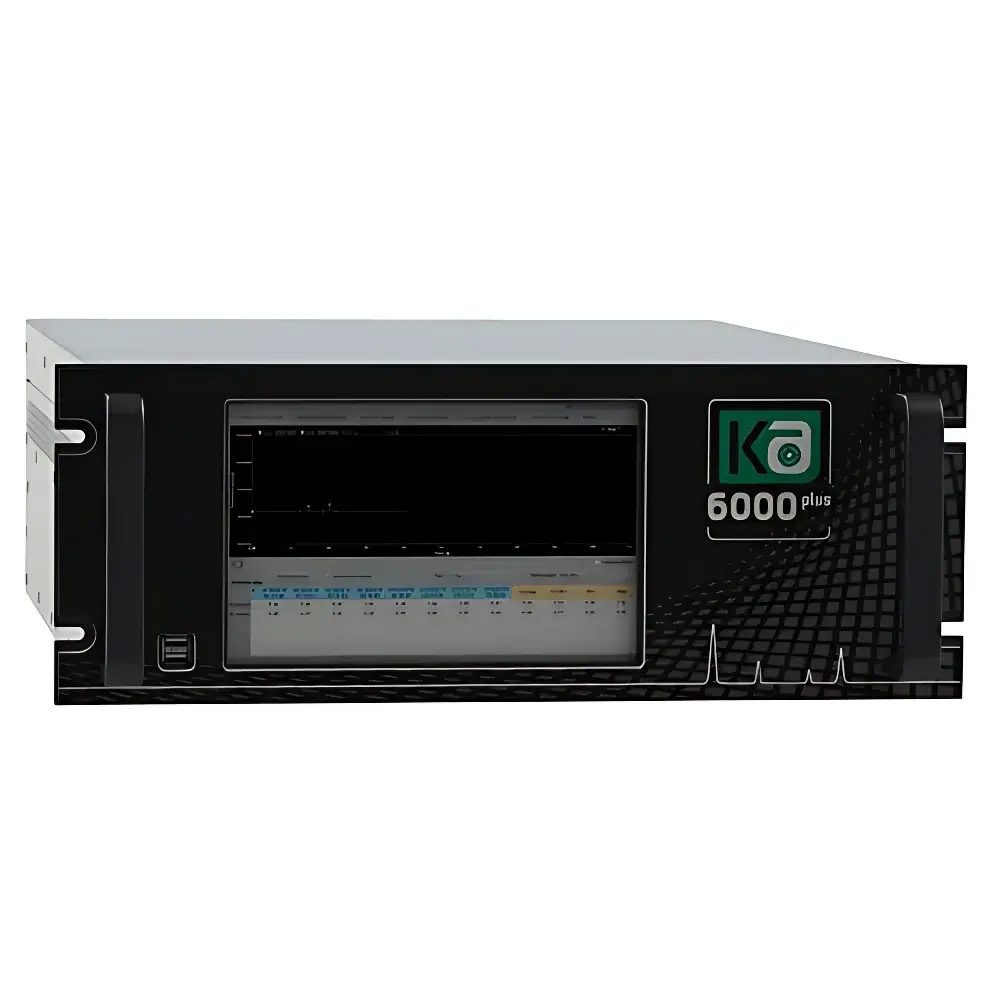
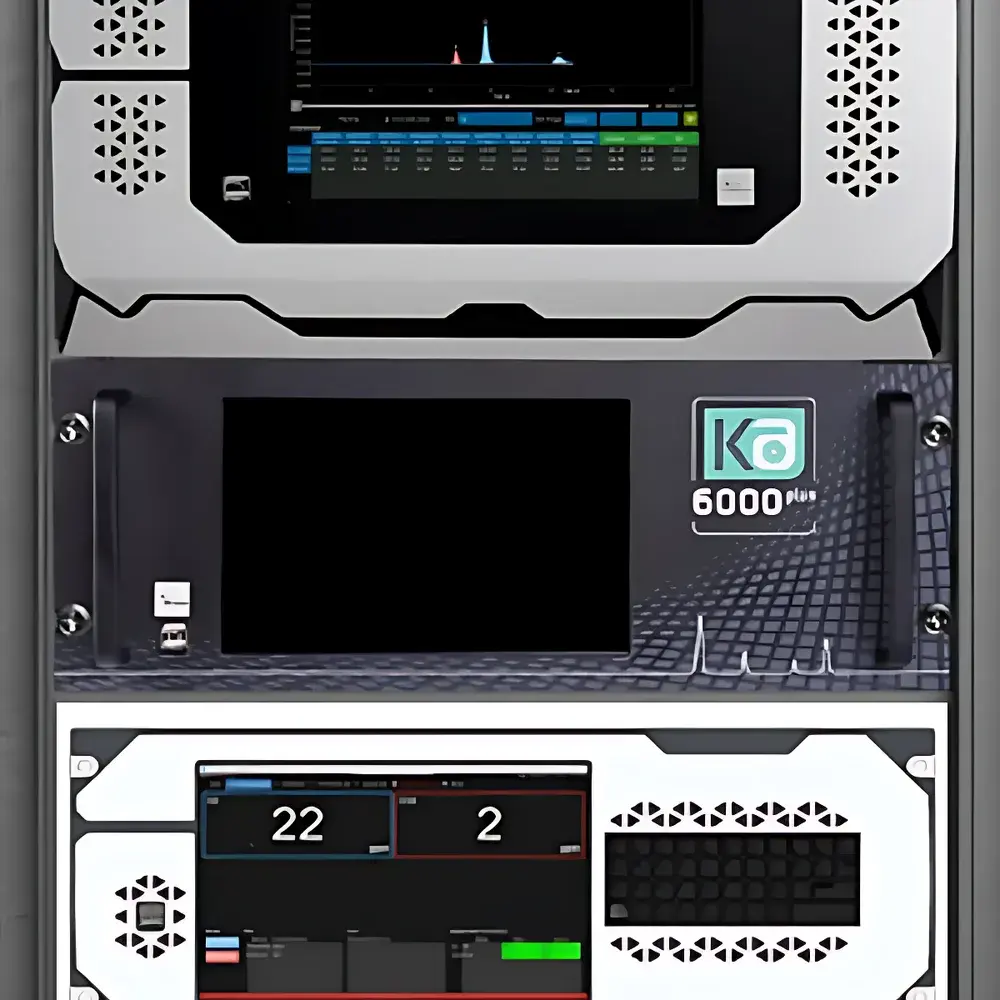
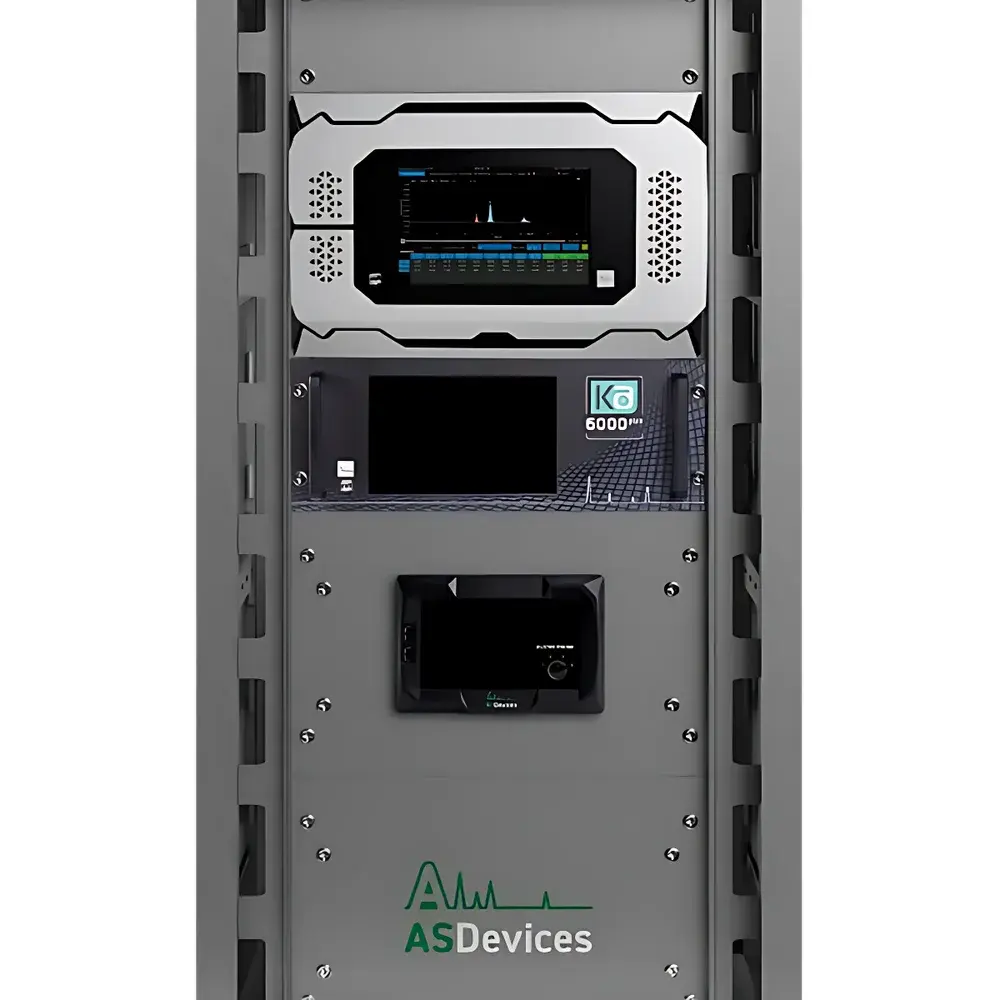
KA KA6000 Online Gas Chromatograph
| Brand | KA |
|---|---|
| Origin | Canada |
| Model | KA6000 |
| Repeatability | <1% |
| Detection Limit | 1 ppb |
| Detector Type | Enhanced Plasma Discharge Detector (EPD) |
| Column Oven Temperature Range | −5 °C to 300 °C |
| Carrier Gases | N₂, Ar, He |
| Compliance | Fully compatible with ASTM D7622, ISO 8573-5, USP <467>, and EPA Method TO-15/TO-17 workflows |
| Software | Embedded GC control platform with 21 CFR Part 11–compliant audit trail and GLP/GMP data integrity architecture |
Overview
The KA KA6000 Online Gas Chromatograph is an industrial-grade, continuous-duty analytical instrument engineered for real-time, unattended gas composition monitoring in demanding process environments. Built upon KA’s proprietary IMov modular architecture, the KA6000 implements high-resolution separation using capillary or packed column configurations, coupled with precise temperature-programmed elution and carrier gas flow regulation via patented Electronic Pressure Control (EPC). Its core measurement principle relies on differential retention time separation of volatile organic compounds (VOCs), permanent gases, and reactive species—including sulfur-containing compounds, benzene homologues, halogenated hydrocarbons, and ultra-pure electronic-grade gases—followed by selective detection using the Enhanced Plasma Discharge Detector (EPD). Unlike conventional pulsed discharge or FID-based systems, the EPD delivers stable, linear response across sub-ppb concentrations without hydrogen dependency or flame instability, making it uniquely suited for Class 1 hazardous area deployments and cleanroom-integrated installations.
Key Features
- Modular IMov platform: Pre-integrated, factory-calibrated GC system with plug-and-play column oven, detector module, and sample introduction manifold—reducing field commissioning time by >60%.
- Independently temperature-controlled column oven: Maintains ±0.1 °C stability across −5 °C to 300 °C range, supporting cryogenic trapping and high-temperature bake-out protocols.
- Patented EPC with purge-enabled dual-channel regulation: Eliminates dead volume in both carrier and sample gas paths; enables precise pressure ramping for gradient elution and backflush sequencing.
- Liplock zero-dead-volume fittings: Stainless-steel, metal-sealed chromatographic connections rated for ≤1×10⁻⁹ atm·mL/s helium leak rate—critical for trace-level reproducibility.
- Enhanced Plasma Discharge Detector (EPD): Optimized for electronegative and photoionizable species; achieves <1 ppb LOD with <1% RSD over 72-hour continuous operation.
- PLSV (Precision Linear Sample Valve): 1-million-cycle ceramic actuator valve with integrated purge path—ensures long-term carryover-free injection under variable matrix conditions.
Sample Compatibility & Compliance
The KA6000 accepts gaseous samples directly from process streams via heated sampling lines (up to 200 °C), with optional cryo-focusing for sub-ppb VOC enrichment. It supports analysis of complex matrices including semiconductor-grade nitrogen (99.9999% purity), refinery off-gas, biogas, ambient air, and tobacco pyrolyzates. Regulatory alignment includes full traceability to ASTM D7622 (trace hydrocarbon analysis in nitrogen), ISO 8573-5 (compressed air purity classes), USP (residual solvents), and EPA Methods TO-15 (canister-based air analysis) and TO-17 (sorbent tube thermal desorption). All firmware and data handling modules comply with FDA 21 CFR Part 11 requirements for electronic records and signatures, including role-based access control, immutable audit trails, and automated backup encryption.
Software & Data Management
The embedded GC control software runs on a deterministic Linux RT kernel, providing synchronized acquisition at 100 Hz sampling rate with onboard peak integration and retention time locking. Data export conforms to ASTM E1382-compliant .cdf format and supports direct OPC UA integration into DCS/SCADA systems (e.g., Siemens PCS7, Emerson DeltaV). Remote diagnostics, method scheduling, and predictive maintenance alerts are accessible via TLS 1.3–secured web interface. All raw chromatograms, calibration logs, and system suitability reports are stored in a tamper-evident SQLite database with SHA-256 hashing—fully auditable for GLP and GMP validation.
Applications
- Semiconductor manufacturing: Real-time monitoring of dopant gases (PH₃, AsH₃, B₂H₆), etchant residuals (Cl₂, NF₃), and moisture in bulk argon/nitrogen supply lines.
- Air separation units (ASUs): Continuous O₂/N₂/Ar ratio verification and CO/CO₂ impurity tracking per ISO 8573-1 Class 1 compliance.
- Electronic specialty gases: Certification of silane (SiH₄), germane (GeH₄), and arsine (AsH₃) purity down to 100 ppt levels per SEMI F57 standards.
- Environmental monitoring: Fixed-site detection of H₂S, SO₂, benzene, toluene, ethylbenzene, and xylenes (BTEX) in ambient air per EU Directive 2008/50/EC.
- Petrochemical refining: On-stream analysis of C₁–C₅ hydrocarbons, H₂S, and mercaptans in FCC off-gas and amine regenerator overheads.
- Food & tobacco: Quantification of volatile aldehydes, ketones, and furans associated with Maillard reaction pathways and shelf-life degradation.
FAQ
What carrier gases are supported, and how does EPC improve method robustness?
The KA6000 supports N₂, Ar, and He as carrier gases. Its dual-channel EPC system dynamically adjusts inlet pressure and column head pressure independent of ambient temperature fluctuations or supply pressure drift—ensuring consistent retention times and peak shape across multi-week unattended runs.
Is the EPD compatible with corrosive or reactive sample matrices?
Yes. The EPD features a chemically inert quartz plasma chamber and non-contact excitation design, eliminating electrode erosion or catalytic deactivation common in TCD/FID systems. It maintains calibration stability when analyzing H₂S, Cl₂, NH₃, and HF-laden streams.
Can the KA6000 be integrated into an existing DCS without third-party gateways?
Yes. Native OPC UA server functionality enables direct tag mapping to DCS controllers without protocol converters. Preconfigured function blocks support automatic alarm generation on out-of-spec concentration thresholds.
How is system suitability verified during routine operation?
Built-in autocalibration sequences execute daily using certified standard gas blends. System suitability criteria—including resolution (Rs ≥ 1.5), tailing factor (Tf ≤ 1.5), and %RSD of retention time (<0.1%)—are auto-logged and flagged if violated.
Does the KA6000 meet explosion-proof certification requirements for Zone 1 installations?
The standard configuration carries ATEX II 2G Ex db IIB T4 Gb and IECEx DBEX 21.0035X certifications. Optional purged cabinet variants are available for Class I Div 1 NEC 500 environments.
Related Products