
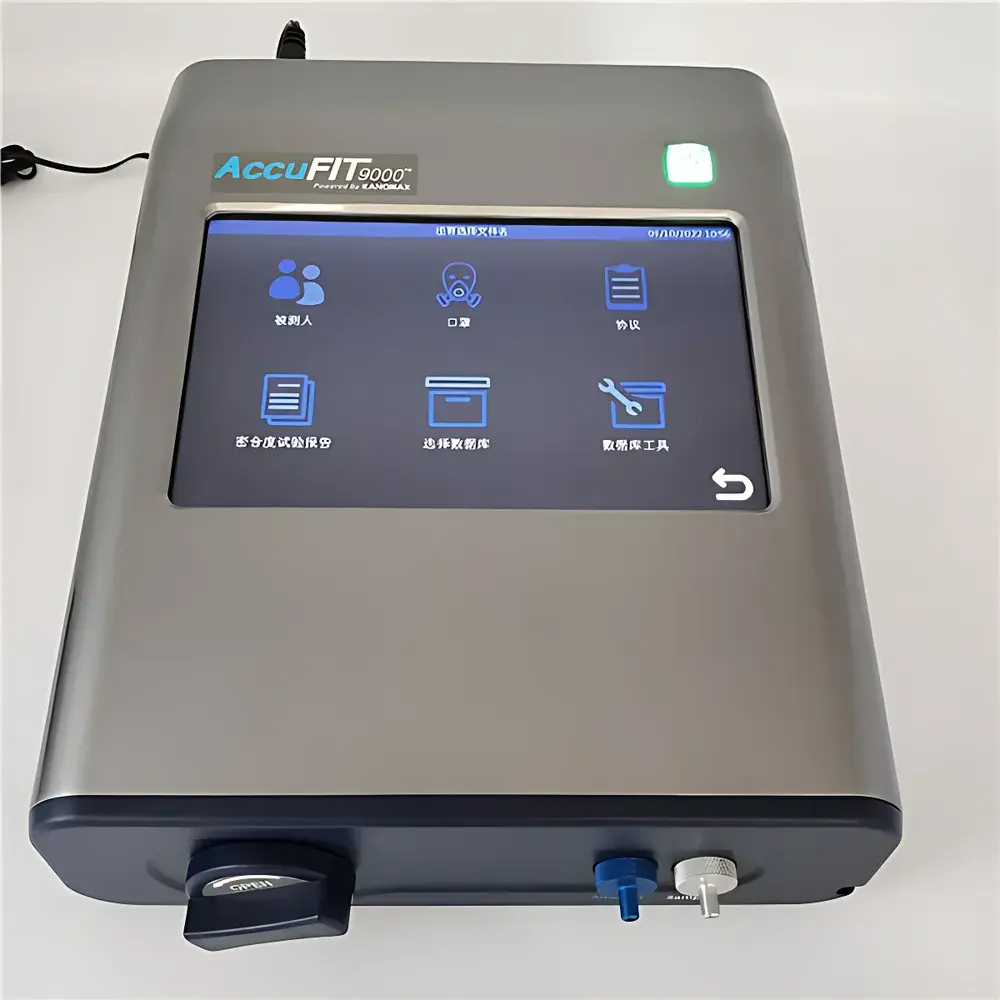
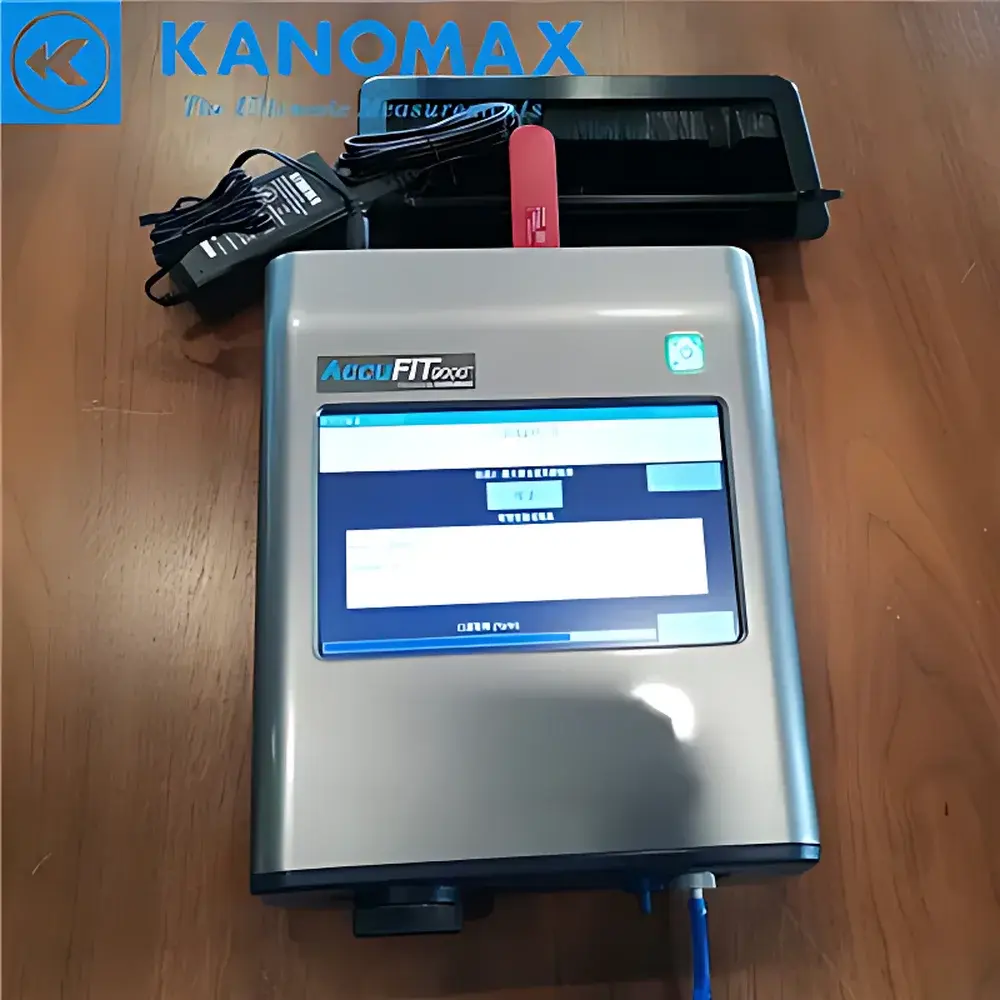
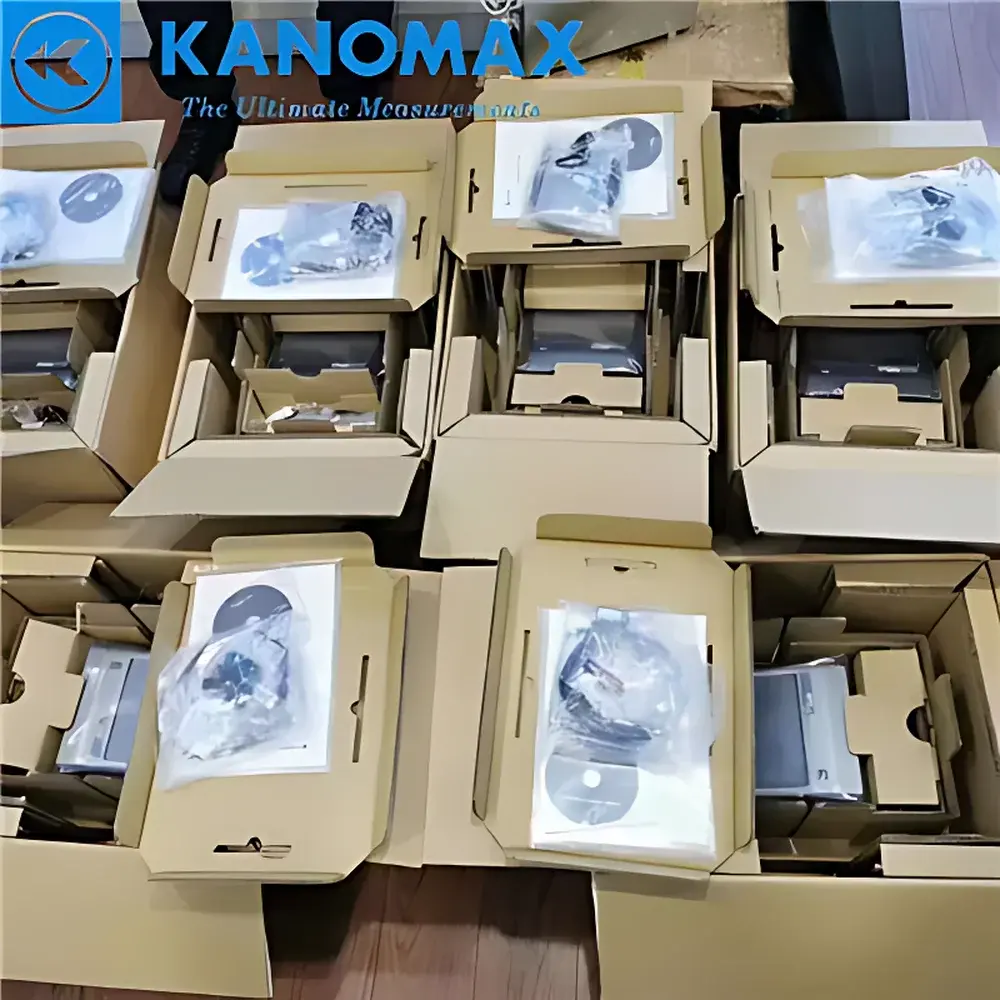
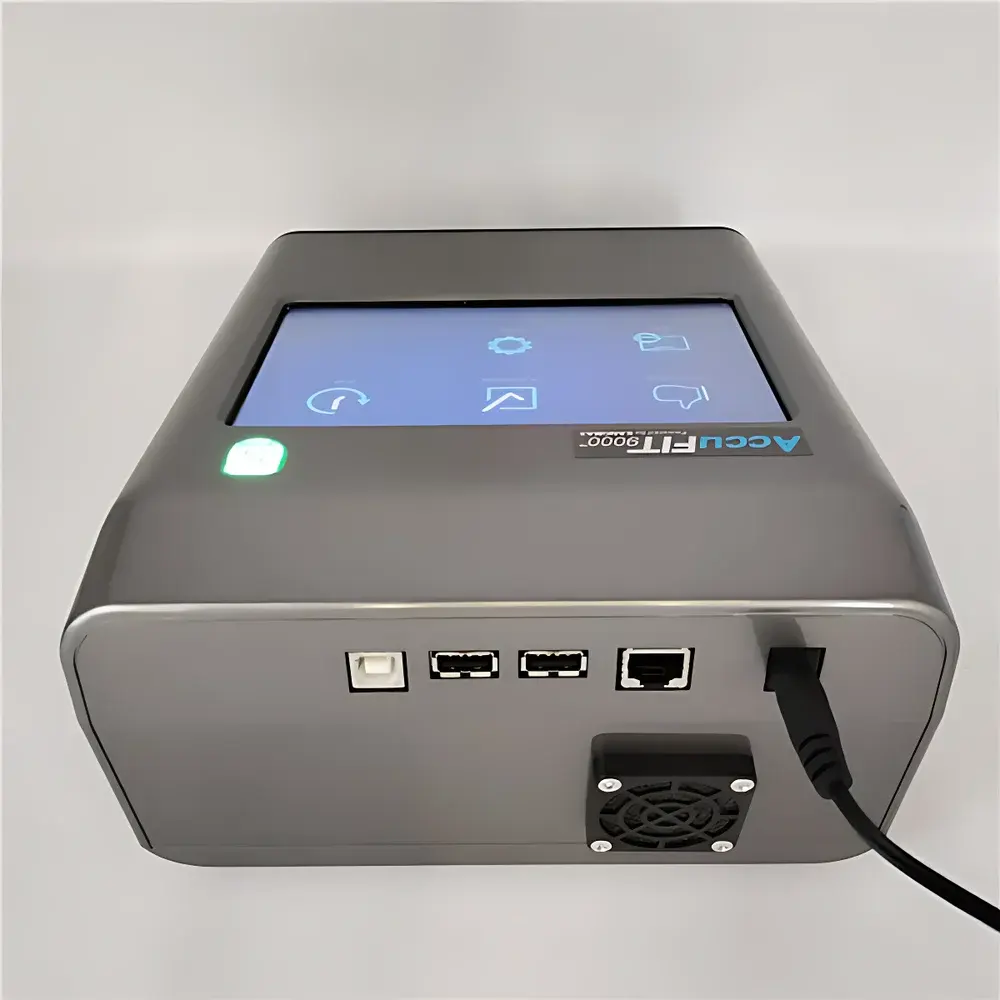
Kanomax 3000-0C Quantitative Respirator Fit Tester
| Brand | Kanomax |
|---|---|
| Origin | Japan |
| Model | 3000-0C |
| Particle Size Range | 0.02–1.0 µm |
| Count Concentration Range | 0–100,000 particles/cm³ |
| Sample Flow Rate | 100 cm³/min |
| Total Flow Rate | 700 cm³/min |
| Fit Factor Calculation Method | Direct (Cout/Cin) |
| Challenge Agent | ≥99.5% purity isopropanol or ethanol |
| Display | 7-inch full-color touchscreen |
| Operating Temperature | 10–35 °C |
| Relative Humidity | 20–85% RH (non-condensing) |
| Power Supply | AC 110–240 V, 50/60 Hz |
| Dimensions | 208 × 117 × 262 mm (W × H × D) |
| Weight | 2.3 kg |
| Compliance Standards | OSHA, CSA Z94.4, ANSI/AIHA Z88.10, UK HSE, GB 19083–2010, GB 2626–2019, GB/T 32610–2016 |
| Communication Interfaces | USB, Ethernet, Wi-Fi |
| Software Compatibility | Windows 7/8/10, .NET Framework 3.5 |
| Data Export Format | Microsoft Excel |
| Storage | USB flash drive |
Overview
The Kanomax 3000-0C Quantitative Respirator Fit Tester is an ISO-compliant, condensation particle counter (CPC)-based instrument engineered for precise, real-time measurement of respirator facepiece fit performance in occupational and clinical environments. Unlike qualitative fit testing methods that rely on subjective sensory responses to irritant aerosols (e.g., saccharin or Bitrex®), the 3000-0C employs a quantitative challenge-and-detection methodology grounded in aerosol science and particle counting physics. It generates a controlled, monodisperse challenge aerosol using high-purity isopropanol or ethanol vapor, which condenses into ultrafine particles (0.02–1.0 µm) under supersaturated conditions. These particles are then counted simultaneously inside and outside the respirator facepiece via dual-channel CPC detection—enabling direct calculation of the Fit Factor (FF = Cout/Cin). This principle ensures traceable, operator-independent results with high reproducibility across repeated tests, satisfying the technical requirements of OSHA 1910.134, CSA Z94.4, ANSI/AIHA Z88.10, and multiple Chinese national standards (GB 2626–2019, GB 19083–2010, GB/T 32610–2016).
Key Features
- Condensation Particle Counter (CPC) technology enabling quantitative fit assessment across the critical 0.02–1.0 µm size range—covering the most penetrating particle size (MPPS) for most mechanical filtration media.
- 7-inch full-color resistive touchscreen interface supporting six languages: English, Japanese, Chinese, French, Spanish, and Portuguese—optimized for multilingual field deployment.
- Dual-sampling architecture: independent atmospheric inlet (left) and internal respirator sampling port (right), each with dedicated flow control (100 cm³/min sample flow; 700 cm³/min total system flow).
- Modular challenge agent delivery using ≥99.5% pure isopropanol or ethanol—eliminating reliance on hazardous or regulated irritants and ensuring consistent aerosol generation without residue buildup.
- Compact, portable design (208 × 117 × 262 mm; 2.3 kg) with integrated AC adapter, making it suitable for mobile fit testing programs in hospitals, industrial facilities, fire stations, and regulatory laboratories.
- Robust environmental tolerance: operational within 10–35 °C and 20–85% RH (non-condensing), with storage capability from –20 to 50 °C.
Sample Compatibility & Compliance
The 3000-0C supports quantitative fit testing of all certified respirator types, including N95, KN95, FFP2, P2, P3, surgical N95s, elastomeric half- and full-facepieces, powered air-purifying respirators (PAPRs), self-contained breathing apparatus (SCBA), and chemical cartridge respirators. Its protocol engine embeds preconfigured test sequences aligned with OSHA, CSA Z94.4, ANSI/AIHA Z88.10, UK HSE guidance, and China’s GB-series standards—including mandatory pass/fail thresholds and exercise protocols (e.g., normal breathing, deep breathing, head side-to-side, head up-and-down, talking, bending over). All firmware and test logic are designed to support audit-ready documentation required under GLP and workplace health & safety compliance frameworks.
Software & Data Management
The companion Windows-based software (compatible with Windows 7/8/10 and .NET Framework 3.5) enables centralized control of up to four 3000-0C units from a single workstation. It provides real-time visualization of particle counts, dynamic Fit Factor calculation, and automated pass/fail classification per selected standard. Test data—including timestamps, operator ID, subject ID, respirator model, exercise sequence, ambient conditions, and raw Cout/Cin values—are stored locally and exportable directly to Microsoft Excel (.xlsx) for integration into enterprise EHS management systems. Data integrity is maintained through timestamped records and USB flash drive archiving. The software supports FDA 21 CFR Part 11–aligned user access controls when deployed in regulated clinical or pharmaceutical settings.
Applications
This instrument is deployed in occupational health departments for annual respirator certification, hospital infection control units verifying surgical N95 fit prior to high-risk procedures, industrial hygiene consultants conducting site-wide PPE validation, fire department safety officers certifying SCBA use, and national testing laboratories performing third-party conformity assessments against GB 2626–2019 or ISO 16900 series requirements. Its ability to quantify leakage across diverse facepiece geometries—including those worn with facial hair, eyewear, or communication devices—makes it indispensable for evidence-based respiratory protection program management.
FAQ
What challenge agent does the 3000-0C require?
Isopropanol or ethanol with ≥99.5% purity is used to generate the condensation nuclei aerosol. No additional reagents or consumables beyond the supplied alcohol cartridges are needed.
Can the 3000-0C be used for both qualitative and quantitative testing?
No—it is exclusively a quantitative fit tester. It does not support qualitative methods (e.g., saccharin or Bitrex® protocols) and is not intended for sensory threshold-based assessments.
Does the device meet FDA or ISO 16900 requirements?
While not an FDA-cleared medical device, its measurement principle and performance align with ISO 16900-1:2016 (respiratory protective devices — Methods of testing fit — Part 1: Determination of fit factor) and supports compliance with FDA-recommended fit testing practices for healthcare personnel.
How is calibration verified?
The instrument includes a zero-count filter and built-in diagnostics for flow verification and CPC response stability. Annual verification against traceable NIST-traceable particle counters is recommended per ISO/IEC 17025 laboratory practice.
Is remote monitoring supported?
Yes—via Ethernet or Wi-Fi, the unit can transmit live particle count streams and status data to networked PCs or cloud-based EHS dashboards when integrated with compatible middleware.
Related Products







