
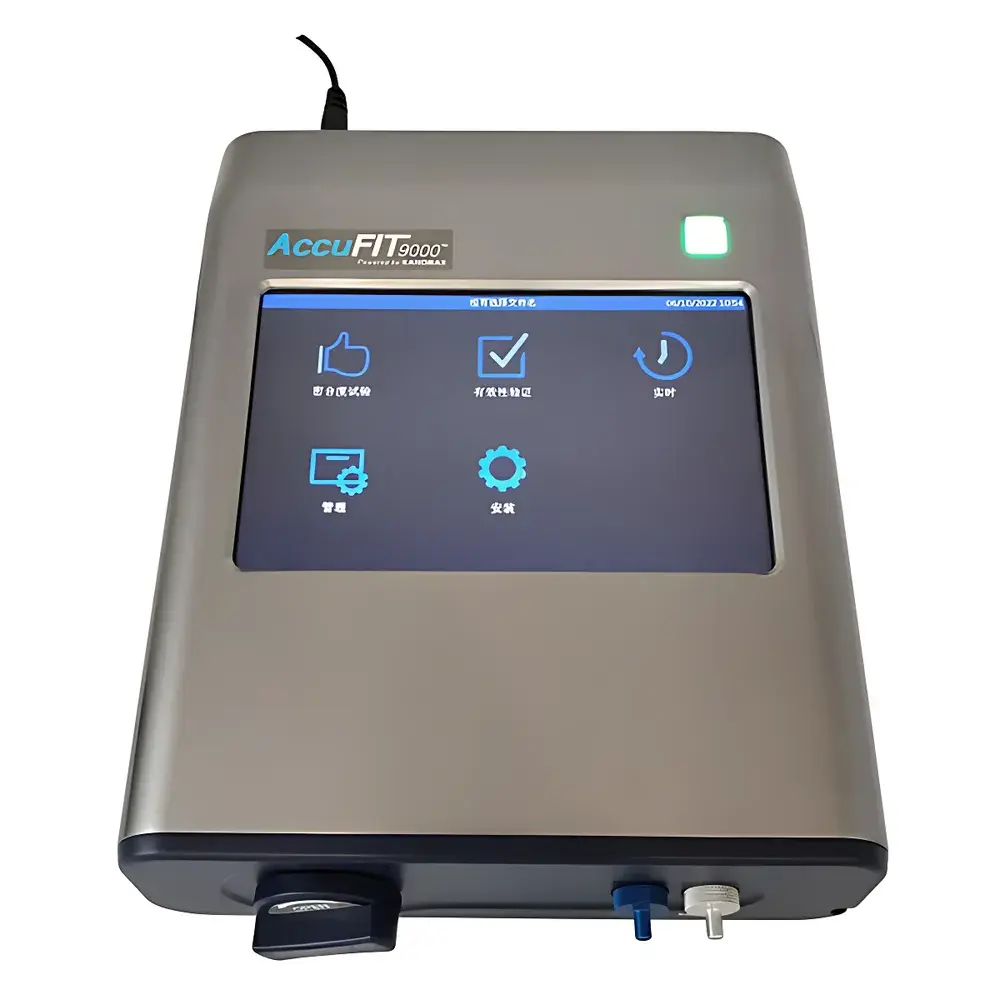
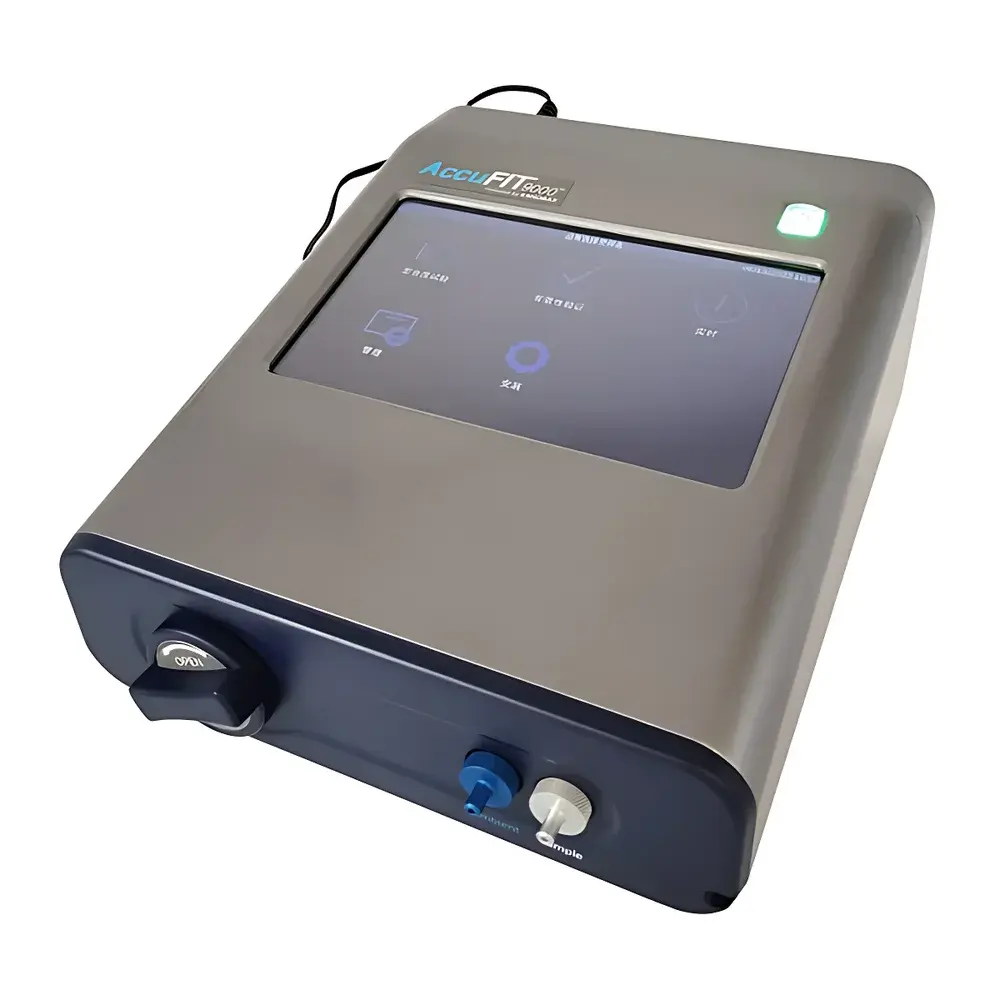
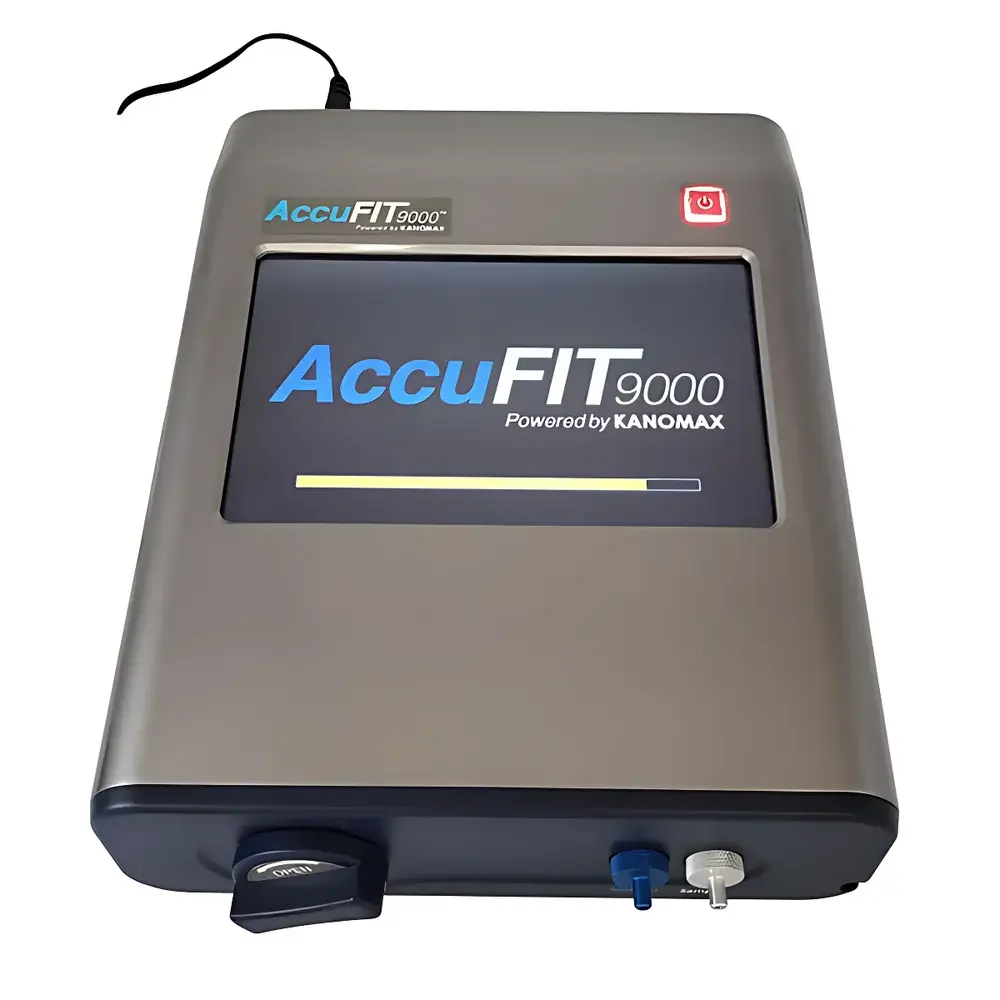
Kanomax 3000-0C Respirator Fit Testing System
| Brand | Kanomax |
|---|---|
| Origin | Japan |
| Model | 3000-0C |
| Particle Concentration Range | 0–100,000 particles/cm³ |
| Particle Size Range | 0.02–1.0 µm |
| Sampling Flow Rate | 100 cm³/min |
| Total Flow Rate | 700 cm³/min |
| Fit Factor Measurement Method | Direct (Cout/Cin) |
| Test Aerosol | 99.5% ethanol + analytical-grade isopropanol |
| Display | 7-inch true-color touchscreen |
| Communication Interfaces | USB (Host ×2, Device ×1), Ethernet ×1, Wi-Fi enabled |
| Language Options | English, French, Spanish, Portuguese, Chinese |
| Operating Temperature | 15–35 °C |
| Power Supply | AC 110–240 V, 50/60 Hz |
| Dimensions | 208 × 117 × 262 mm |
| Weight | 2.1 kg |
| Compliance | GB 2626–2019, GB 19083–2010, OSHA 1910.134, CSA Z94.4–22 |
Overview
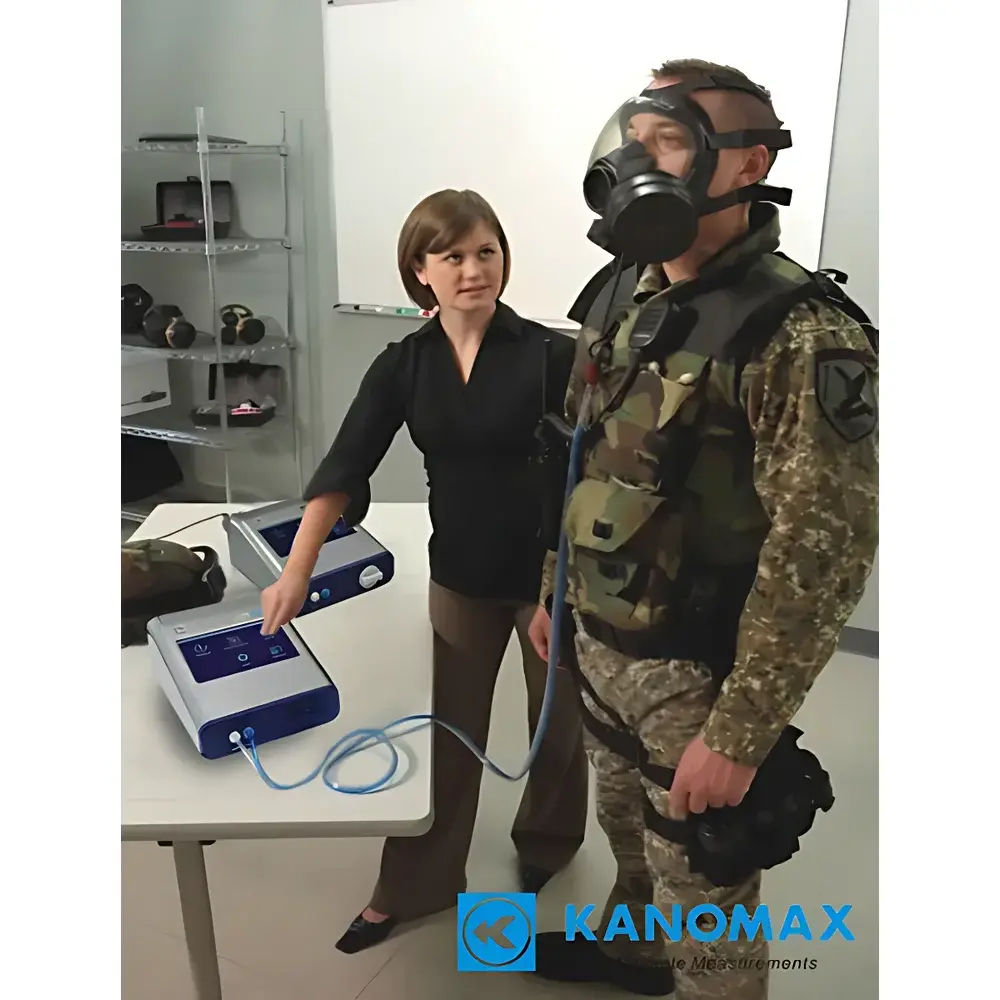
The Kanomax 3000-0C Respirator Fit Testing System is a precision-engineered instrument designed to quantitatively assess the facepiece-to-face seal integrity of filtering facepiece respirators (FFRs), half-mask and full-face respirators, and other air-purifying devices. It operates on the principle of ambient aerosol quantitative fit testing (QNFT), utilizing real-time particle counting to measure the ratio of ambient aerosol concentration outside the respirator (Cout) to the concentration inside the respirator (Cin)—yielding a numerical Fit Factor (FF). This method eliminates subjective pass/fail judgments and delivers objective, traceable, and auditable results required under occupational health and safety regulations.
Unlike qualitative methods relying on taste or smell detection, the 3000-0C employs a controlled challenge aerosol—ethanol/isopropanol mist—generated in situ and detected via a high-sensitivity optical particle counter with a validated size range of 0.02–1.0 µm. This range aligns with the most penetrating particle size (MPPS) for mechanical filtration media used in N95, KN95, P3, and HEPA-class respirators. The system meets the technical requirements of GB 2626–2019 (China’s standard for self-contained filtering particulate respirators), GB 19083–2010 (Medical Protective Masks), and international frameworks including OSHA 1910.134 (U.S.) and CSA Z94.4–22 (Canada), supporting both initial fit certification and periodic retesting protocols.
Key Features
- Real-time quantitative fit factor calculation using direct Cout/Cin methodology per ISO 16900-1:2016 and ANSI/ASSP Z88.10-2022 guidelines
- Integrated ambient aerosol generation and detection in a single compact unit (208 × 117 × 262 mm; 2.1 kg)
- High-resolution 7-inch true-color touchscreen interface with intuitive workflow navigation and on-device result review
- Multi-language support (English, French, Spanish, Portuguese, Chinese) for global laboratory and industrial deployment
- Flexible connectivity: dual USB host ports for peripheral integration, USB device port for data export, Gigabit Ethernet, and optional Wi-Fi for networked operation
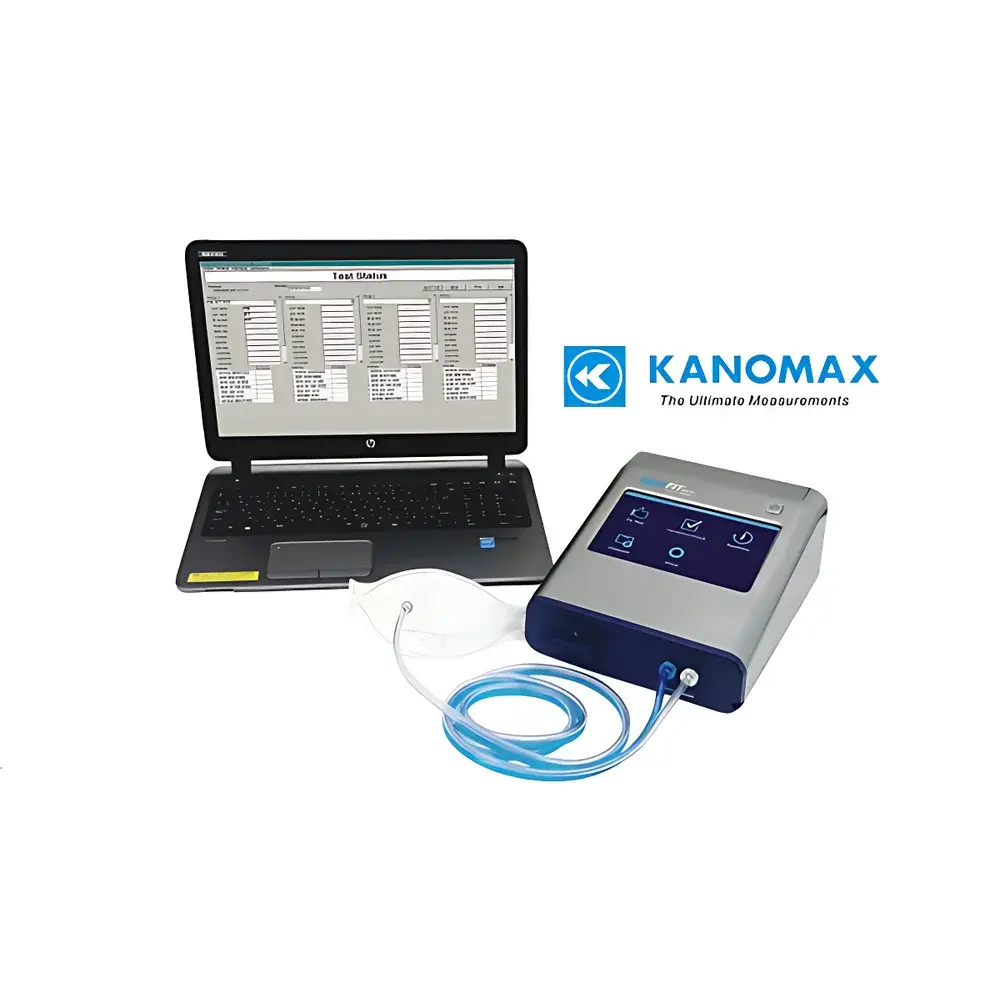
- Scalable control architecture: one PC can simultaneously manage up to four 3000-0C units via TCP/IP, enabling high-throughput occupational health screening
- Automated test sequence execution—including seven standardized exercises (e.g., normal breathing, deep breathing, head side-to-side)—ensuring procedural consistency across operators
- Onboard data logging with Excel-compatible output (.xlsx), supporting GLP-compliant record retention and audit readiness
Sample Compatibility & Compliance
The 3000-0C supports a broad spectrum of respiratory protection devices, including disposable N95/N90/KN95/KP95/KP100 respirators, reusable elastomeric half-masks and full-facepieces, and powered air-purifying respirators (PAPRs) with tight-fitting facepieces. Its aerosol delivery and sampling geometry are optimized for ISO-defined facial anthropometry and accommodates diverse facial structures without requiring mask-specific adapters.
Compliance is embedded at the system level: test algorithms implement the pass/fail thresholds defined in GB 2626–2019 (FF ≥ 100 for KN95/KP95; FF ≥ 1000 for KN100/KP100), OSHA 1910.134 Appendix A (FF ≥ 100 for half-masks, ≥ 500 for full-facepieces), and CSA Z94.4–22. All firmware and calibration routines are version-controlled and documented to support FDA 21 CFR Part 11 compliance when deployed in regulated pharmaceutical or clinical settings. The instrument includes zero-count verification filters and certified reference aerosols to ensure metrological traceability to NIST-traceable standards.
Software & Data Management
The Kanomax 3000-0C operates autonomously or integrates with Kanomax’s dedicated FitTest Manager software (Windows-based). The software provides centralized test scheduling, subject database management (including biometric identifiers and respirator model/lot tracking), automated report generation (PDF/Excel), and electronic signature capability for operator attestation. Audit trails log all user actions—including parameter changes, test initiations, and result approvals—with timestamps and operator IDs, satisfying GLP/GMP documentation requirements. Data exports include raw particle counts per exercise phase, cumulative fit factors, and statistical summaries (mean, min, max, SD) per subject and respirator type. Exported files are structured for seamless ingestion into LIMS or enterprise EHS platforms via RESTful API or flat-file import.
Applications
- Occupational health departments conducting mandatory annual or pre-shift respirator fit testing per OSHA, MSHA, or provincial regulations
- Hospital infection control units validating medical staff compliance with GB 19083–2010 and CDC-recommended PPE protocols
- Respirator manufacturers performing design validation and batch release testing against GB 2626–2019 Annex F
- Third-party certification laboratories accredited to CNAS, UKAS, or A2LA for ISO/IEC 17025 conformity assessments
- Research institutions studying facial fit variability across demographics, respirator models, or donning techniques
- Industrial hygiene consultants delivering auditable fit test services to multi-site clients with synchronized fleet management
FAQ
What aerosol agent does the 3000-0C use, and why is it suitable for fit testing?
It uses a mixture of 99.5% ethanol and analytical-grade isopropanol, atomized to generate a stable, monodisperse aerosol in the 0.02–1.0 µm range—the most challenging particle size for mechanical filter media. This ensures conservative, repeatable challenge conditions aligned with regulatory test protocols.
Does the system require external calibration or annual certification?
The optical particle counter is factory-calibrated against NIST-traceable polystyrene latex (PSL) spheres. Users perform daily zero-checks with included zero-count filters and verify aerosol generation stability before each test session. Full recalibration is recommended every 12 months by an authorized Kanomax service center.
Can the 3000-0C be used for qualitative fit testing?
No—it is exclusively a quantitative fit tester. Qualitative methods (e.g., saccharin or Bitrex™) are not supported, as the hardware and firmware are engineered solely for particle-counting-based FF computation.
Is the instrument compatible with existing enterprise IT infrastructure?
Yes. With native Ethernet and Wi-Fi support, it integrates into VLAN-segmented networks and supports DHCP, static IP, and TLS-secured data transmission. FitTest Manager software includes configurable data export paths and supports SFTP for secure automated backups.
How does the system handle environmental variability (e.g., HVAC airflow, ambient particle load)?
The 3000-0C continuously monitors background aerosol levels during the “outside” measurement phase and dynamically adjusts sampling duration to achieve statistically robust Cout baselines. Its flow-controlled sampling architecture minimizes turbulence-induced artifacts, ensuring reproducibility even in non-laminar environments.







