
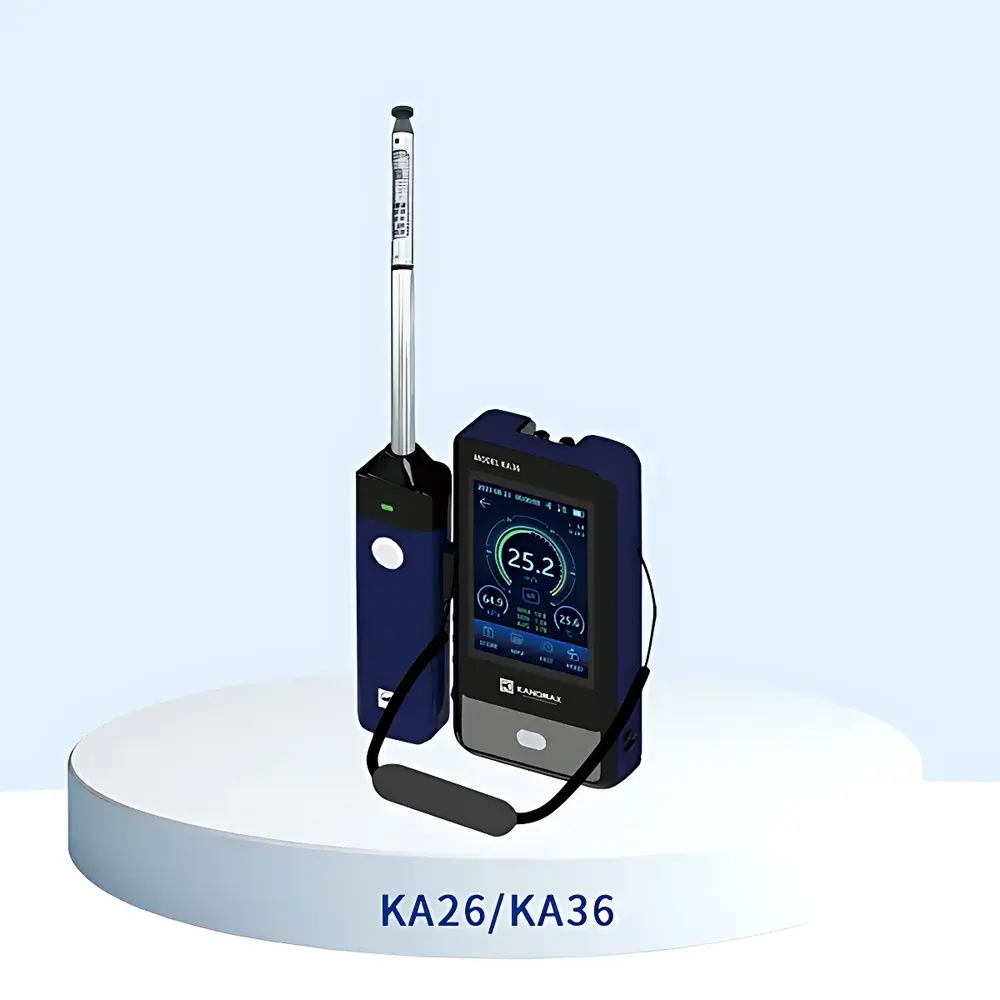
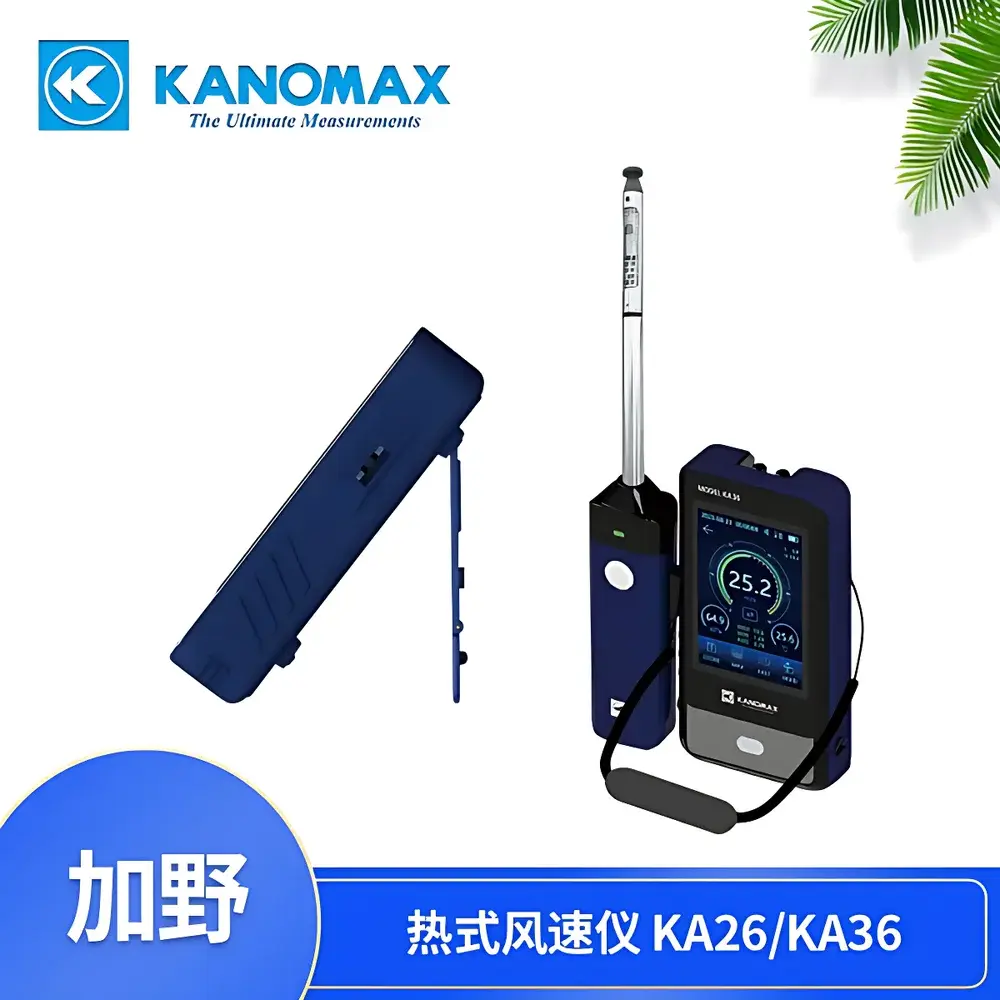
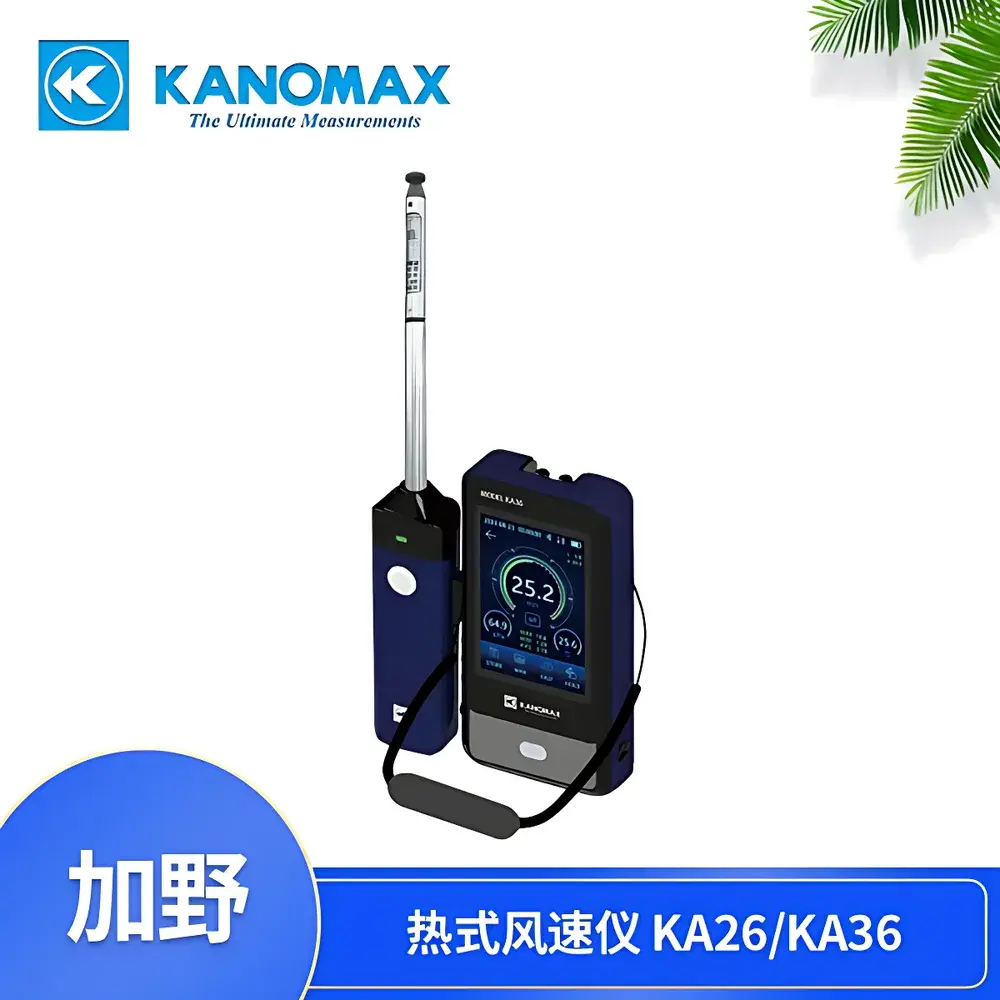
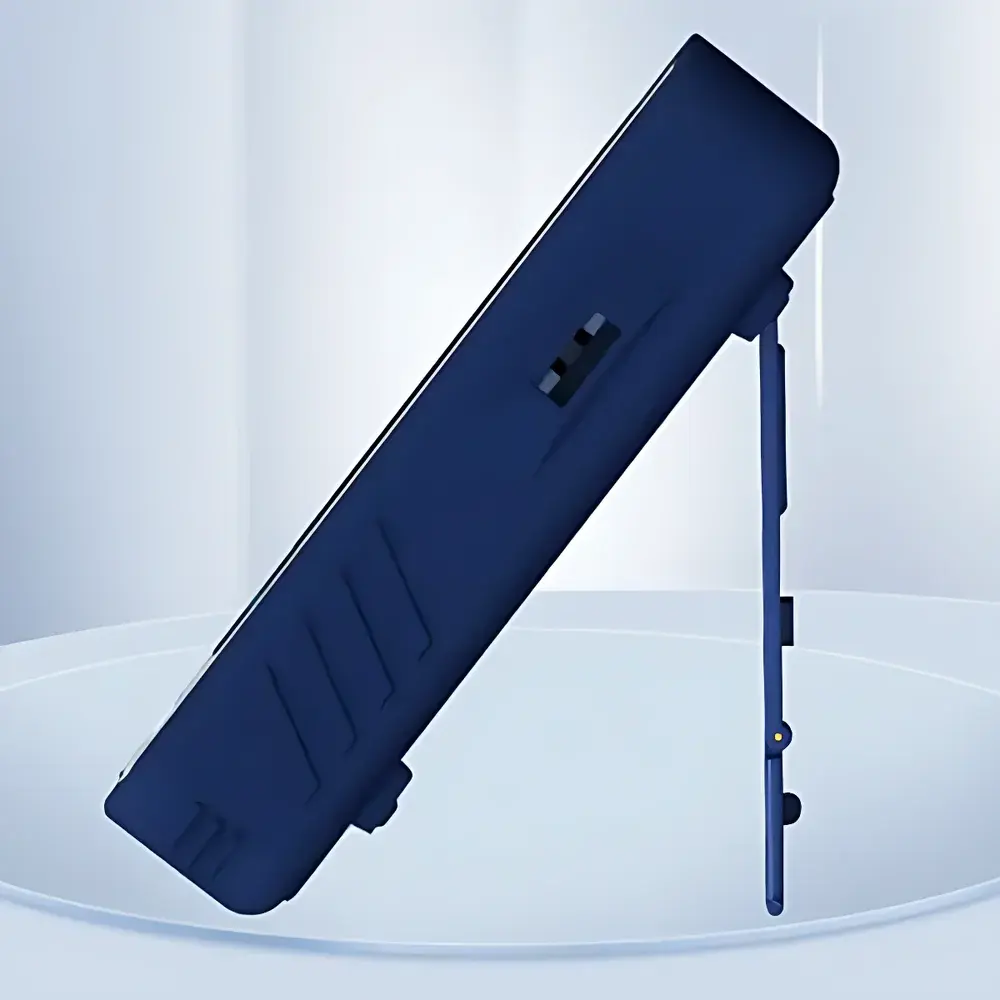
KANOMAX KA36 Portable Thermal Anemometer
| Brand | KANOMAX |
|---|---|
| Origin | Japan |
| Model | KA36 |
| Instrument Type | Thermal Anemometer |
| Resolution | 0.1 m/s (0.01 m/s in 0.00–9.99 m/s range) |
| Measurement Range | 0.00–50.0 m/s (air velocity), −20.0–100.0 °C (temperature), −5.00–+5.00 kPa (differential pressure) |
| Accuracy | ±3% of reading or ±0.015 m/s (whichever is greater) for air velocity |
| ±0.3 °C (−20.0–0.00 °C and 60.0–100.0 °C | ±0.5 °C) for temperature |
| Operating Temperature | −30–60 °C (storage) |
| Response Time | ~1 s (velocity & pressure), ~30 s (temperature) |
| Data Storage | 5,000 records |
| Battery Life | ~10 hours (at 5 m/s, 20 °C) |
| Weight | ~600 g |
| Dimensions (main unit) | 160 × 80 × 32 mm |
| Communication | Bluetooth 5.0, USB-C |
| Display | 3.5-inch resistive touchscreen |
Overview
The KANOMAX KA36 Portable Thermal Anemometer is a high-precision, multi-parameter environmental measurement instrument engineered for field-deployable airflow characterization in industrial, HVAC, cleanroom, and indoor air quality (IAQ) applications. Utilizing constant-temperature anemometry (CTA), the KA36 measures air velocity by detecting convective heat loss from a heated sensor element—enabling stable, low-inertia response across a wide dynamic range (0.00–50.0 m/s). Unlike cup or vane anemometers, thermal sensing provides true vector-agnostic velocity detection, making it suitable for turbulent, low-velocity, or bidirectional flows typical in ductwork, fume hoods, and laminar flow cabinets. Integrated temperature and differential pressure sensors enable simultaneous three-parameter acquisition—critical for volumetric flow calculation (Q = A × v), system balancing, and ASHRAE-compliant ventilation verification. Its compact, ergonomic design and battery-powered operation support unattended spot-checks, commissioning audits, and routine QA/QC in GMP-regulated environments.
Key Features
- Triple-sensor fusion: Simultaneous real-time measurement of air velocity, temperature (−20.0–100.0 °C), and differential pressure (±5.00 kPa) on a single platform.
- 3.5-inch resistive touchscreen display with dual-view mode: Numeric readout paired with analog bar graph visualization—enabling rapid assessment of trend dynamics and transient behavior.
- Bluetooth 5.0 wireless probe communication: Eliminates cable constraints during duct traverses, ceiling diffuser testing, or remote exhaust monitoring; supports probe-to-body distances up to 10 m in open-air conditions.
- Modular, articulating probe assembly: Interchangeable thermal probes with integrated 1240 mm extendable telescopic rod—no auxiliary fixtures required for hard-to-reach locations.
- On-device statistical processing: Automatic calculation and logging of minimum, maximum, and mean values over user-defined intervals—essential for ISO 14644-3 cleanroom airflow uniformity reporting.
- Configurable alarm thresholds: User-definable upper/lower limits per parameter trigger visual highlight and audible alert upon deviation—supporting GLP-aligned pass/fail documentation workflows.
- Robust data integrity architecture: Internal storage for 5,000 timestamped records (date/time-stamped, with probe ID and measurement mode metadata); export via USB-C to CSV-compatible formats.
Sample Compatibility & Compliance
The KA36 is calibrated for clean, dry air (ISO 8573-1 Class 4 or better) and is not intended for corrosive, particulate-laden, or high-humidity (>90% RH) gas streams without optional filtration. It meets JIS B 7554-2019 (anemometer performance requirements) and conforms to electromagnetic compatibility standards per IEC 61326-1:2020. While not intrinsically safe, its low-power electronics (Class II, double-insulated) are suitable for non-hazardous areas per NEC Article 500. The device supports audit-ready operation under FDA 21 CFR Part 11 when used with validated data export protocols and electronic signature controls implemented at the host system level.
Software & Data Management
No proprietary PC software is bundled; raw data export occurs via USB-C mass-storage mode (FAT32-formatted) or Bluetooth serial profile (SPP) to third-party platforms including LabVIEW, MATLAB, and Excel-based QA dashboards. Each record includes ISO 8601 timestamps, measurement units, sensor status flags (e.g., “probe disconnected”, “low battery”), and calibration due date metadata. Firmware updates are delivered via signed binary files through KANOMAX’s authorized service channels—ensuring traceability and version control in regulated settings.
Applications
- HVAC system commissioning and TAB (Testing, Adjusting, Balancing) per ANSI/ASHRAE Guideline 111–2020.
- Cleanroom airflow mapping and ISO 14644-3 velocity uniformity validation.
- Industrial ventilation assessment per OSHA Technical Manual Section III: Chapter 2.
- Indoor air quality (IAQ) surveys supporting LEED EQ Credit 1 compliance.
- Exhaust hood face velocity verification in laboratory safety programs (ANSI/AIHA Z9.5).
- Process air monitoring in pharmaceutical manufacturing (Annex 1, EU GMP).
FAQ
Is the KA36 suitable for outdoor wind speed measurement?
No. The KA36 is optimized for controlled indoor or semi-enclosed environments; its thermal sensor requires stable ambient temperature and is not rated for precipitation, UV exposure, or sustained wind gusts above 50 m/s.
Can the KA36 measure volumetric flow directly?
No. It measures velocity only. Volumetric flow must be calculated externally using cross-sectional area (Q = v × A), with corrections for temperature and pressure where required per ISO 5167.
What is the recalibration interval recommendation?
KANOMAX recommends annual calibration against NIST-traceable standards, or prior to critical qualification activities—documented per ISO/IEC 17025 procedures.
Does the device support multi-point traverse averaging?
Yes. Using the built-in min/max/avg function across sequential manual measurements, or via external scripting using exported timestamped datasets.
Is the pressure sensor absolute or differential?
Differential only. It measures ΔP between two ports (e.g., duct static vs. ambient), requiring connection of the included 1.5 m silicone tubing for pitot-static or filter pressure drop applications.
Related Products







