
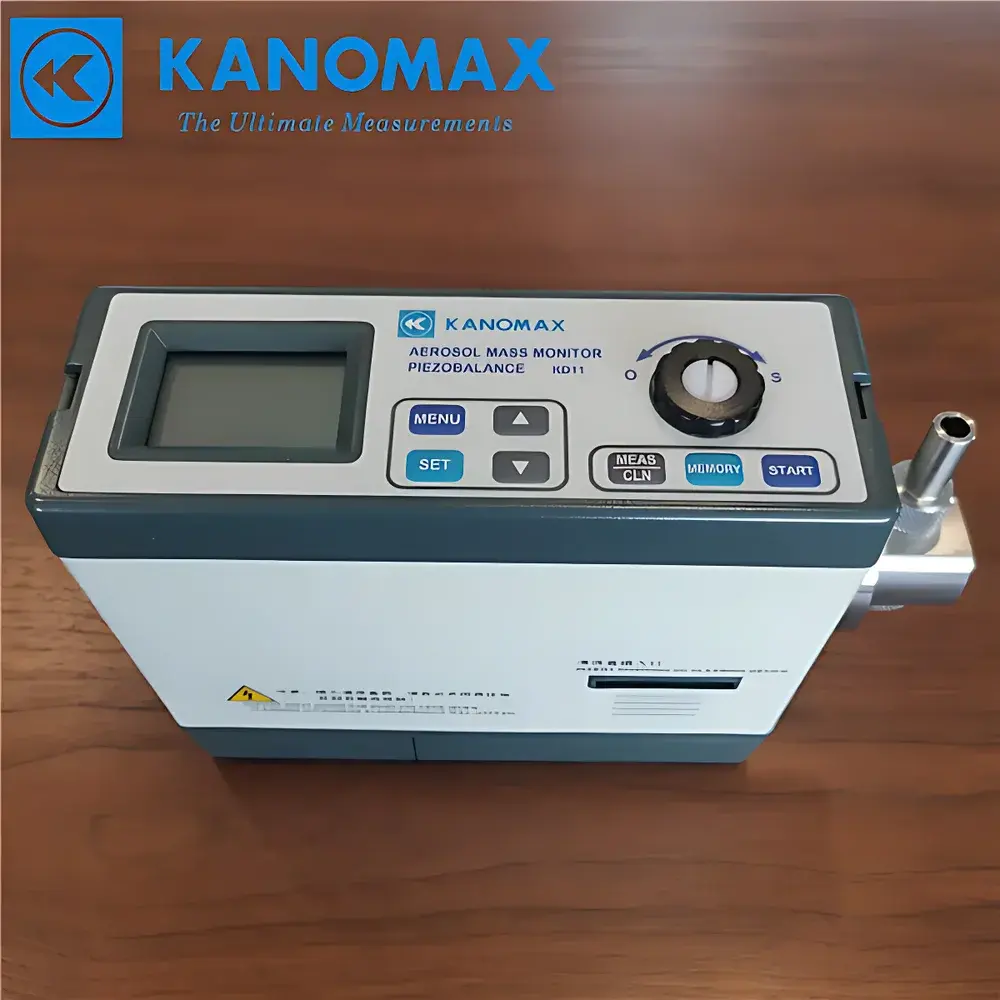
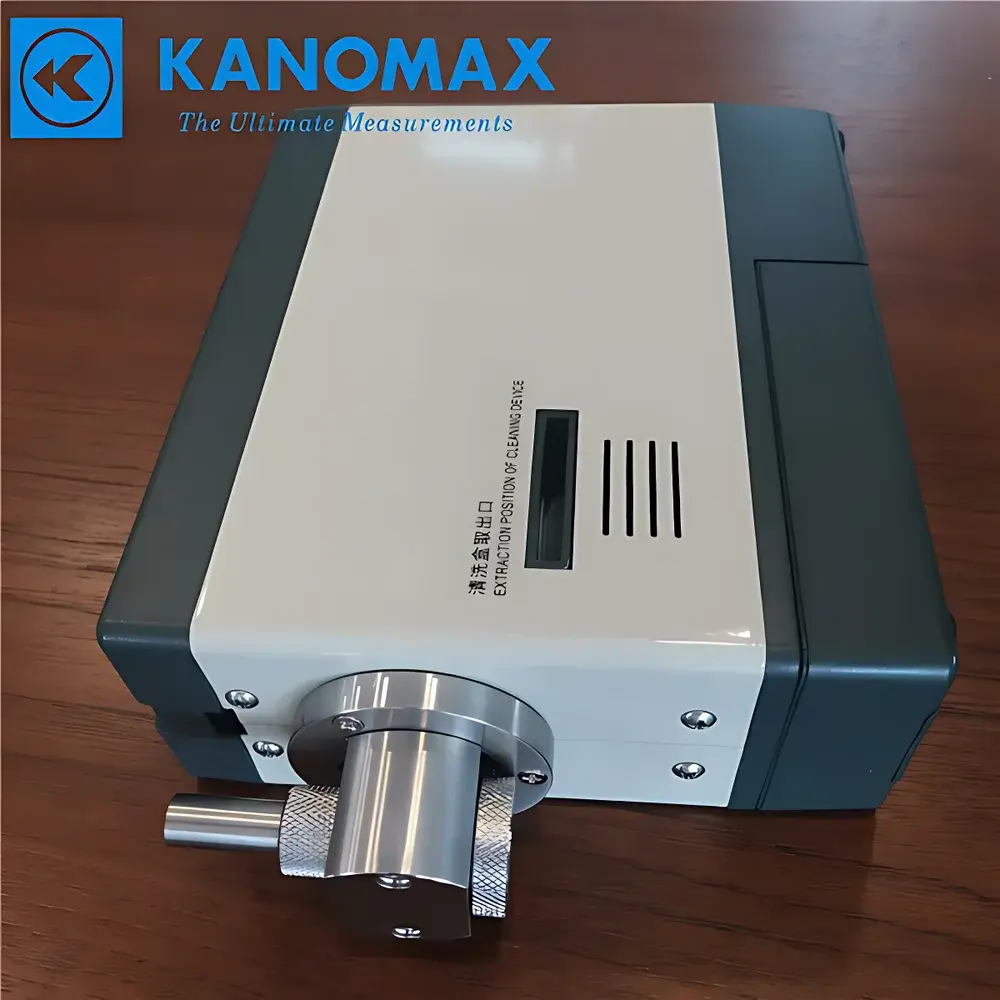
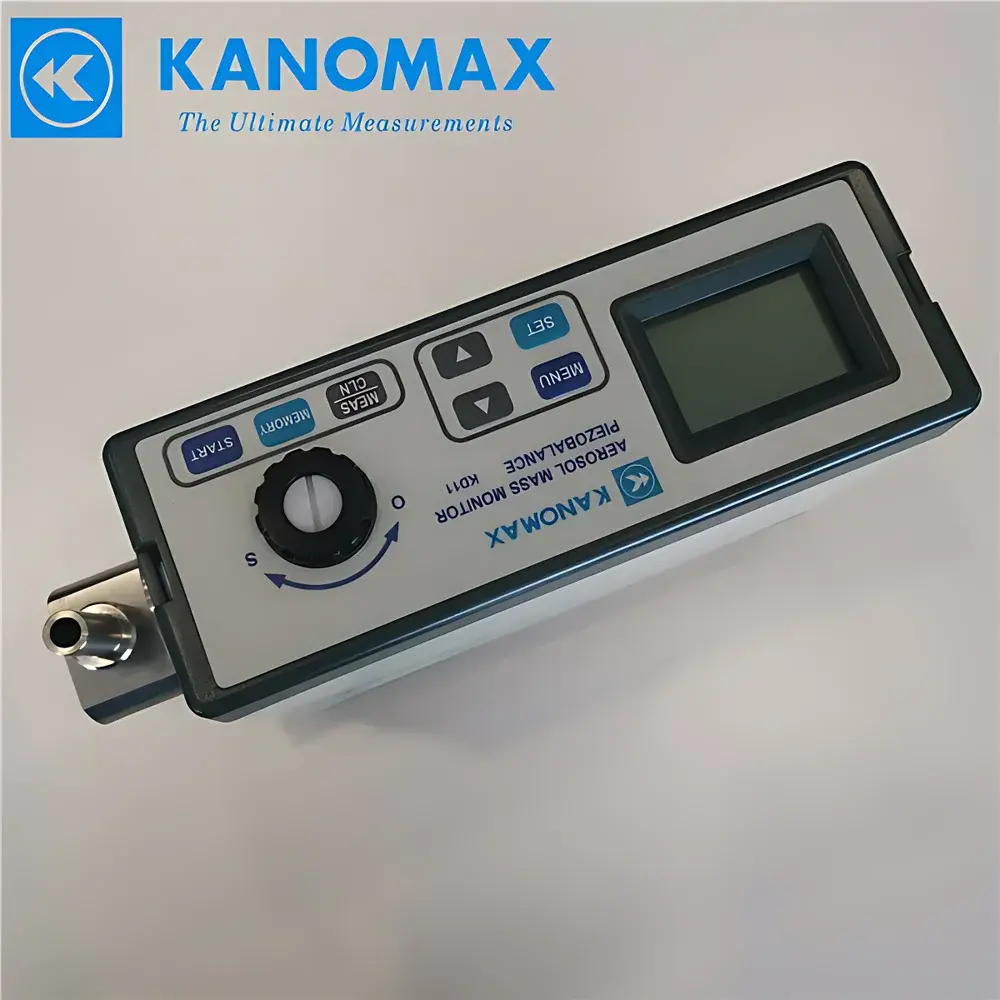
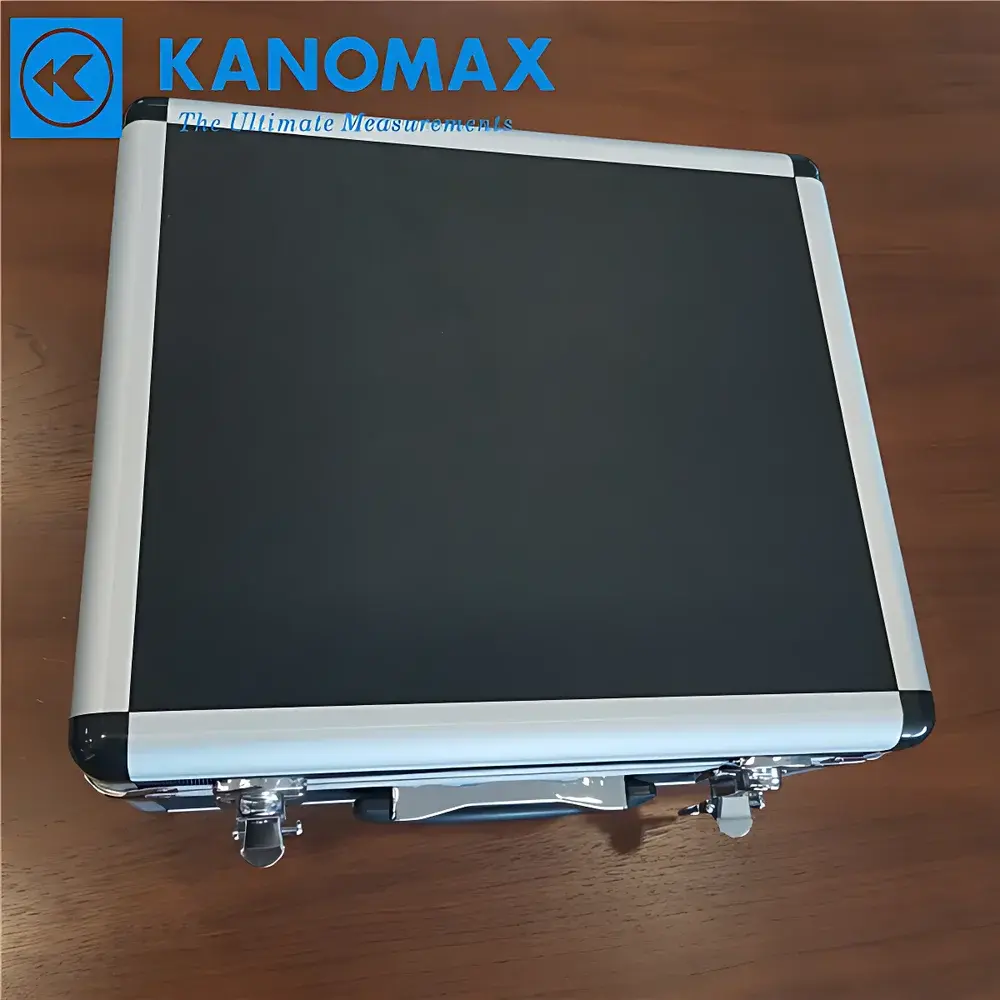
Kanomax KD11 Piezoelectric Microbalance Dust Monitor
| Brand | Kanomax |
|---|---|
| Origin | Liaoning, China |
| Manufacturer Type | Authorized Distributor |
| Country of Origin | China |
| Model | KD11 |
| Instrument Type | Thermal Anemometer (Integrated with Piezoelectric Dust Monitoring) |
| Resolution | 0.01 m/s (air velocity) |
| Measurement Range | Air velocity: configurable per probe (standard range 0.01–30.00 m/s) |
| Dust mass concentration | 0.01–10.00 mg/m³ |
| Accuracy | ±3% of reading (velocity) |
| Operating Temperature | −20 to +70 °C |
| Operating Humidity | 0–100 % RH (non-condensing) |
| Particle Size Detection | 0.1–10 µm (PM₁₀ mode) |
| Sampling Flow Rate | 1.0 L/min |
| Data Storage Capacity | 500 measurement records |
| Communication Interface | RS-232C (with dedicated PC software for data download, reporting, and printout) |
| Sampling Duration Options | Fixed modes (24 s, 120 s) |
| Cleaning Alert | Automatic crystal contamination warning when deposited mass exceeds calibration threshold |
| Power Supply | Rechargeable Ni-MH battery pack |
| Battery Life | ~4.5 h continuous operation |
| Charging Time | 5–8 h |
| Dimensions | 65 × 182 × 150 mm (W × L × H) |
| Weight | ~1.75 kg |
Overview
The Kanomax KD11 Piezoelectric Microbalance Dust Monitor is a dual-function environmental monitoring instrument engineered for simultaneous real-time assessment of airborne particulate mass concentration and local air velocity in occupational health, public hygiene, and indoor air quality (IAQ) applications. Unlike optical or beta-attenuation methods, the KD11 employs a resonant piezoelectric quartz crystal microbalance (QCM) principle: particulate matter deposited onto the oscillating crystal surface induces a measurable frequency shift proportional to mass accumulation—enabling direct gravimetric quantification of PM10 and PM2.5 without reliance on optical assumptions or density corrections. Integrated thermal anemometry provides concurrent airflow characterization at the same sampling point, supporting ventilation efficiency evaluation and source emission profiling per ISO 16890, EN 13779, and NIOSH Manual of Analytical Methods (NMAM) Method 0600.
Key Features
- Piezoelectric quartz crystal microbalance (QCM) sensor with calibrated sensitivity across 0.1–10 µm aerodynamic diameter range, traceable to NIST-traceable reference aerosols.
- Dual-mode particle sizing: switchable between PM10 (0.1–10 µm) and PM2.5 (0.1–2.5 µm) cut-points via firmware configuration.
- Real-time dust concentration output (0.01–10.00 mg/m³) with 0.001 mg/m³ resolution and linear response up to 10 mg/m³.
- Thermal anemometer module compliant with ISO 7726 for local air velocity measurement (0.01–30.00 m/s), resolution 0.01 m/s, accuracy ±3% of reading.
- Programmable sampling protocols: preset durations (24 s, 120 s) or user-defined intervals from 10 s to 3600 s, supporting both short-term exposure limit (STEL) and time-weighted average (TWA) assessments.
- Onboard memory stores 500 timestamped records with velocity, dust concentration, date/time, and sampling duration metadata.
- Automatic crystal contamination alert triggers when accumulated mass exceeds manufacturer-specified threshold—ensuring measurement integrity and guiding scheduled maintenance per GLP-aligned SOPs.
Sample Compatibility & Compliance
The KD11 is validated for use with ambient, workplace, and indoor air matrices containing non-volatile, non-corrosive particulates—including mineral dusts, carbonaceous aerosols, metal oxides, and bioaerosol-associated particulate matter (e.g., fungal spores, pollen fragments). It complies with requirements for personal exposure monitoring under OSHA 29 CFR 1910.1200 (Hazard Communication) and ACGIH TLV® documentation protocols. The instrument’s design meets IEC 61000-6-3 (EMC emissions) and IEC 61000-6-2 (immunity) standards. While not intrinsically safe, it is rated for non-hazardous area deployment per IP54 enclosure classification. Calibration verification procedures align with ISO/IEC 17025:2017 clause 7.6.3 for measurement equipment management.
Software & Data Management
The KD11 interfaces via RS-232C serial port with proprietary Windows-based software (KD11-PC Suite v3.x), enabling secure data retrieval, chronological export to CSV or Excel formats, graphical trend visualization, and customizable report generation—including header fields for operator ID, location tag, and sampling purpose. Audit trail functionality logs all data transfer events, user logins, and parameter changes—supporting compliance with FDA 21 CFR Part 11 requirements when deployed in regulated pharmaceutical or medical device manufacturing environments. Software-generated reports include uncertainty estimates derived from combined standard uncertainties (Type A and Type B) as defined in GUM (JCGM 100:2008).
Applications
- Occupational hygiene surveys for respirable dust compliance (OSHA PEL, ACGIH TLV®).
- Indoor air quality audits in hospitals, schools, and office buildings per ASHRAE Standard 62.1.
- Filter efficiency testing and HVAC system commissioning (supply/exhaust duct velocity + upstream/downstream dust load).
- Field validation of engineering controls during construction, demolition, or remediation activities.
- Research-grade particulate deposition studies in environmental science and aerosol physics laboratories.
- Public health surveillance during wildfire smoke events or industrial emission incidents.
FAQ
How does the piezoelectric microbalance principle differ from optical particle counters?
Unlike light-scattering instruments that infer mass from size and assumed density, the KD11 measures deposited mass directly via resonant frequency shift—eliminating errors from particle refractive index, shape, or hygroscopic growth.
Can the KD11 be used for regulatory compliance reporting?
Yes—when operated per documented SOPs, calibrated annually against traceable standards, and paired with validated software audit trails, it supports compliance with OSHA, NIOSH, and EU Directive 2004/108/EC reporting frameworks.
What maintenance is required between calibrations?
Crystal cleaning using isopropyl alcohol and lint-free swabs is recommended after each high-concentration sampling session or upon automatic alert; full recalibration is advised every 12 months or after 200 hours of cumulative operation.
Is the instrument suitable for outdoor long-term unattended monitoring?
No—the KD11 is designed for portable, operator-assisted field use; it lacks weatherproofing, solar power capability, or cellular telemetry required for autonomous outdoor deployments.
Does the RS-232 interface support Modbus or other industrial protocols?
No—the communication protocol is proprietary; integration with SCADA or BMS systems requires middleware conversion via serial-to-USB gateway and custom scripting using provided ASCII command set.
Related Products







