
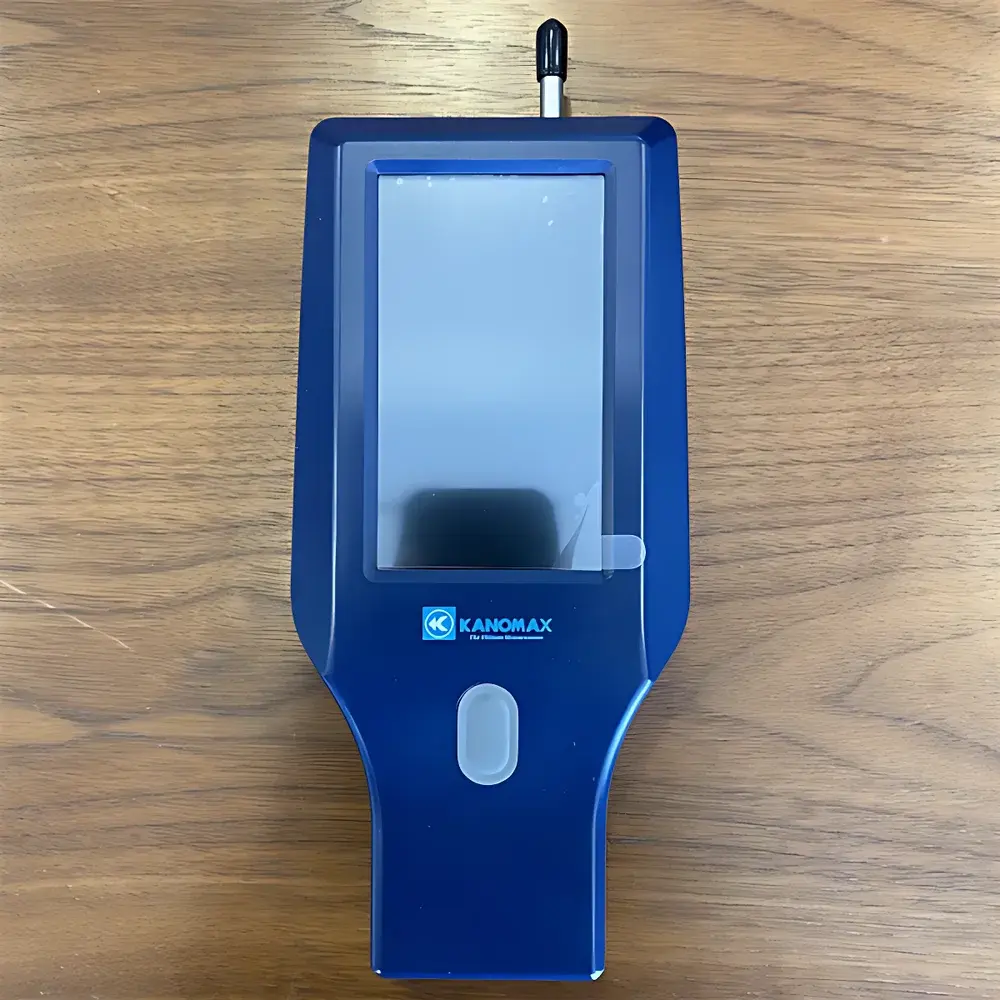
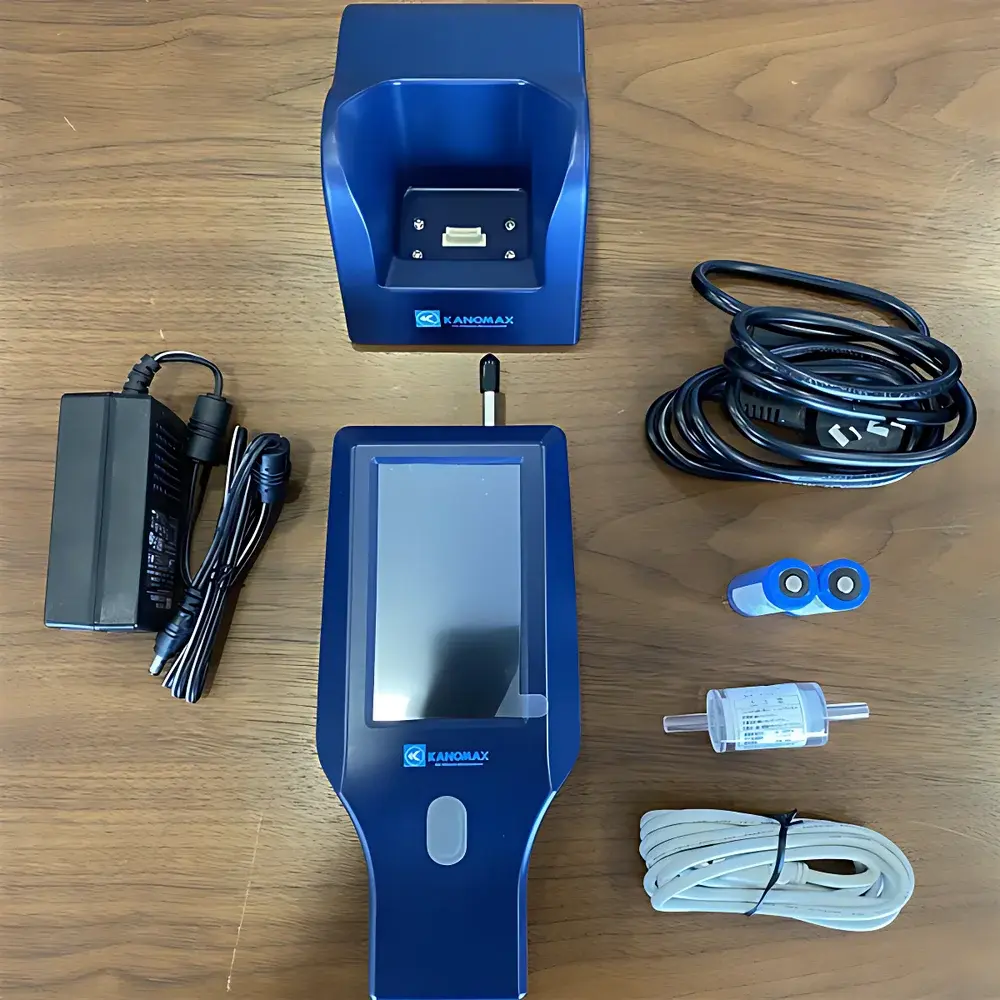
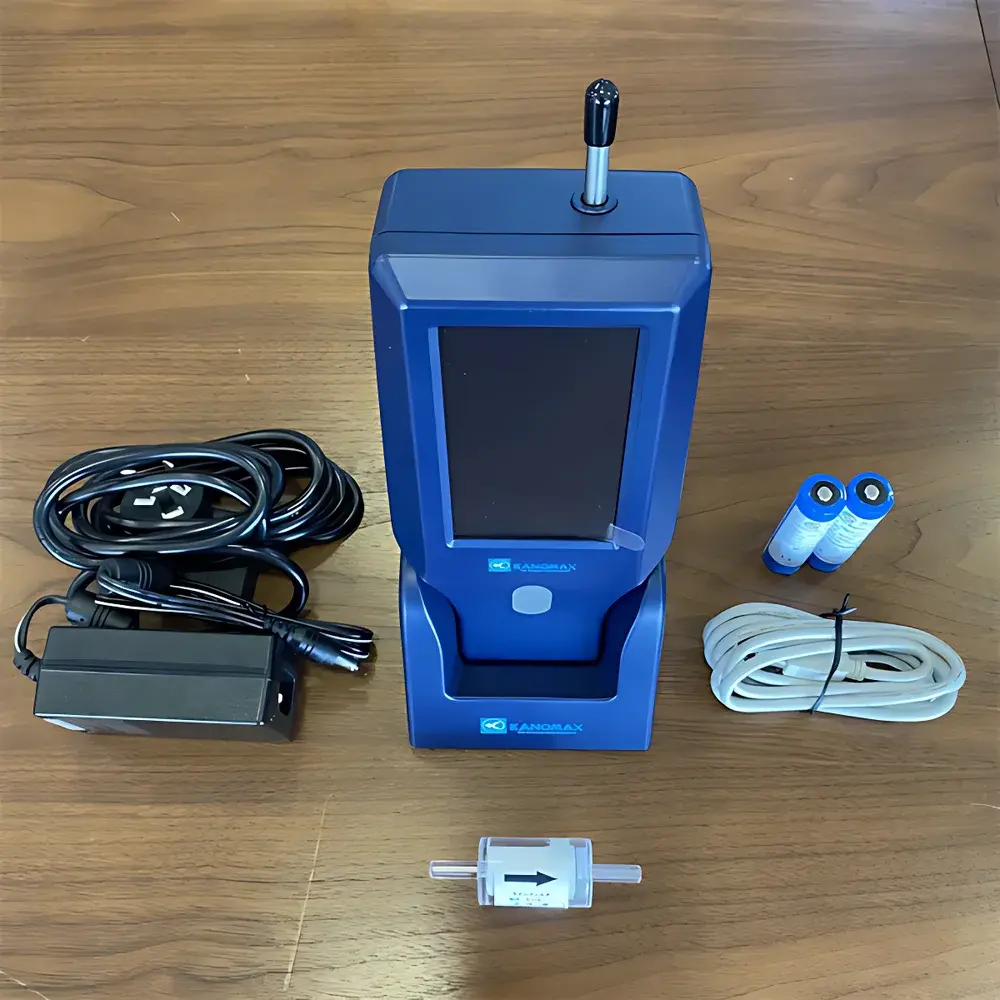
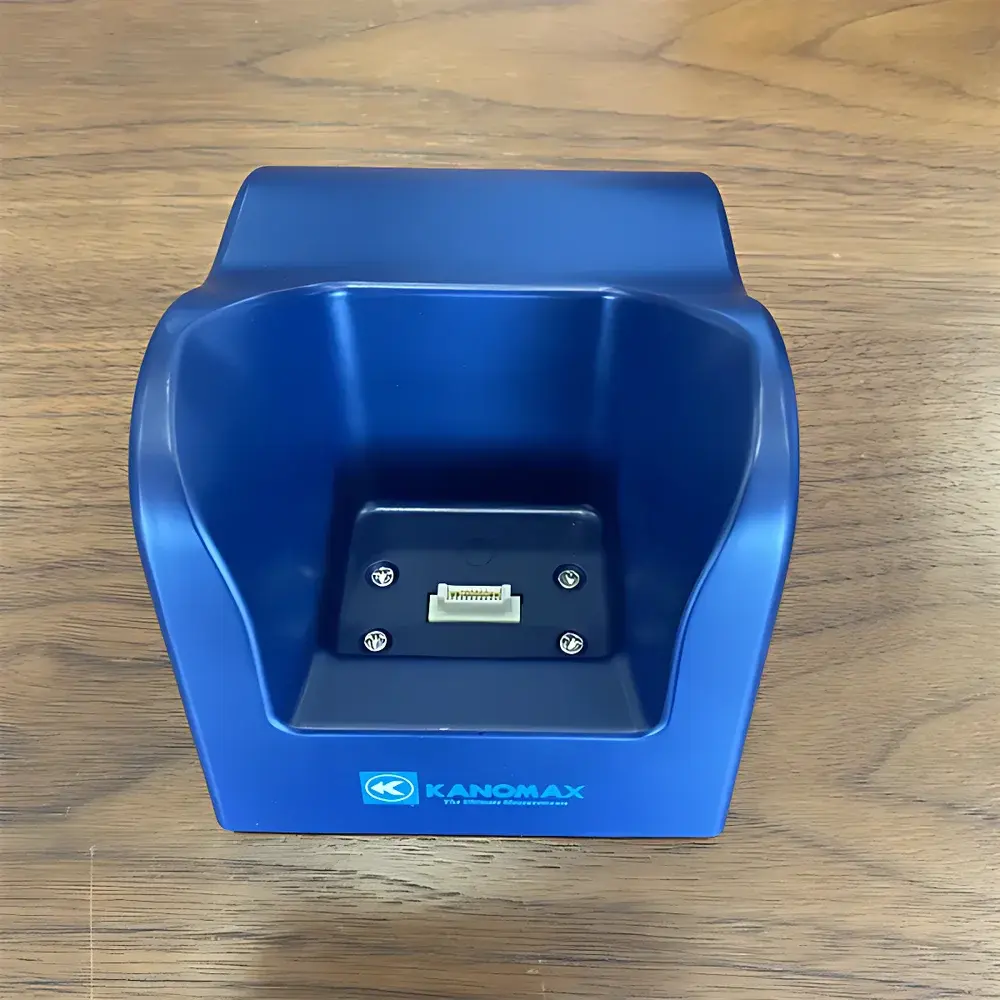
Kanomax Model 3888 / 3889 / 3889-01 Handheld Laser Particle Counter
| Brand | Kanomax |
|---|---|
| Origin | Japan |
| Model | 3888, 3889, 3889-01 |
| Flow Rate | 2.83 L/min |
| Particle Size Channels | 0.3/0.5/5.0 µm (3888) |
| Flow Accuracy | < ±1 particle per 5 min |
| Timing Accuracy | < ±1 s over 6-min sampling |
| Repeatability | ≤ ±10% FS |
| Size Distribution Error | ≤ ±30% |
| Indication Error | ≤ ±30% FS |
| Compliance | ISO 21501-4, JIS B9921, GB/T 16292–2010, Annex I of EU GMP Guidelines (2022), FDA Guidance for Aseptic Processing Environments |
| Data Storage | 10,000 sample records (CSV format) |
| Communication | Dual USB (Host/Device), RS485, Ethernet, Wi-Fi (via docking station) |
| Operating Temp. | 10–40 °C |
| RH | 0–85% non-condensing |
| Battery Life | Up to 5 h (single-test mode) |
| Weight | 650 g (body only, no battery) |
Overview
The Kanomax Model 3888, 3889, and 3889-01 are portable, laser-diode-based optical particle counters engineered for quantitative airborne particulate monitoring in controlled environments. These instruments operate on the principle of light scattering—where particles drawn through a focused laser beam generate scattered photons proportional to their size and refractive index—enabling real-time discrimination across discrete size bins. Designed specifically for compliance-driven applications including ISO Class 5–8 cleanroom qualification, pharmaceutical aseptic processing validation, and medical device manufacturing environmental control, each model meets the stringent calibration and performance requirements defined in ISO 21501-4:2018 (“Determination of particle size distribution — Single particle light interaction methods”) and JIS B9921:2010. The 3888 variant supports three size thresholds (0.3, 0.5, 5.0 µm), while the 3889 and 3889-01 extend resolution to six channels (0.3, 0.5, 1.0, 3.0, 5.0, 10.0 µm), enabling granular assessment of coarse particulate ingress or filter integrity failure modes.
Key Features
- Laser diode light source with stable output and low drift, ensuring consistent sizing response across extended operation cycles.
- Precise volumetric flow control at 2.83 L/min (0.1 CFM), calibrated traceably to NIST-traceable standards and validated per ISO 21501-4 Annex C.
- Integrated zero-count verification protocol—compatible with included HEPA-filtered zero-air adapter—to support pre-sampling baseline stability checks required under EU GMP Annex 1 and USP .
- Dual USB interface (Host and Device) enables direct connection to PC or peripheral storage; optional Wi-Fi and Ethernet connectivity via docking station facilitates networked deployment in multi-point monitoring systems.
- On-device language selection among English, Japanese, Chinese, and Spanish—optimized for multinational facility operations and audit readiness.
- Configurable sampling logic: single-shot, repeated interval, continuous logging, statistical calculation (e.g., mean, max, % deviation), ISO-compliant sequential sampling, and GB/T 16292–2010-defined protocols.
Sample Compatibility & Compliance
These instruments are validated for use in non-hazardous, non-corrosive ambient air environments within temperature and humidity ranges of 10–40 °C and 0–85% RH (non-condensing). They are not rated for explosive atmospheres (ATEX/IECEx) or high-particulate industrial ducts without optional isokinetic sampling probes. Regulatory alignment includes full conformance with ISO 21501-4’s metrological criteria for counting efficiency, false count rate, size resolution, and coincidence error limits. Data integrity is maintained through internal timestamping synchronized to UTC and audit-ready CSV export. All firmware and calibration parameters comply with ALCOA+ principles (Attributable, Legible, Contemporaneous, Original, Accurate, Complete, Consistent, Enduring, Available) and support 21 CFR Part 11-compliant software configurations when paired with Kanomax’s validated PC application.
Software & Data Management
The included Windows-compatible software provides real-time visualization of concurrent channel data, time-series trend overlays, and automated pass/fail evaluation against user-defined ISO class limits (e.g., ISO 14644-1:2015 tables). Each stored record contains full metadata: date/time stamp, location ID, operator ID, sampling duration, flow verification status, and raw channel counts. Exported CSV files include header rows compliant with LIMS ingestion standards and retain all traceable calibration identifiers. Remote instrument configuration—including alarm thresholds, sampling intervals, and reporting units—is supported over Ethernet or Wi-Fi. Docking stations enable daisy-chained deployments for synchronized multi-node mapping of cleanroom airflow patterns or localized contamination events.
Applications
- ISO 14644-1 cleanroom classification and routine surveillance per EU GMP Annex 1 §4.32–4.35.
- Filter leak testing (HEPA/ULPA) using challenge aerosols and downstream scanning per IEST-RP-CC001.5.
- Environmental monitoring during aseptic filling line qualification and media fill studies.
- Particle source identification and root cause analysis in semiconductor fabrication tool enclosures.
- Validation of laminar airflow workstations (LAFWs), isolators, and RABS per ISO 14644-3 and PDA TR27.
- Compliance documentation for FDA pre-approval inspections, MHRA audits, and PMDA certification pathways.
FAQ
What calibration standards does the 3889-01 reference for particle sizing?
It references polystyrene latex (PSL) spheres traceable to NIST SRM 1963 and ISO 21501-4 Annex D, with size assignment verified using differential mobility analysis (DMA) and centrifugal sedimentation.
Can the instrument be used for outdoor ambient air monitoring?
No—it is designed exclusively for indoor controlled environments; unfiltered outdoor air may exceed its maximum detectable concentration (2×10⁶ particles/ft³) and compromise optical chamber integrity.
Is the internal battery certified for air transport?
Yes—the 2600 mAh Li-ion battery complies with IATA Packing Instruction 965 Section II and carries UN3481 labeling for safe shipment.
Does the Wi-Fi interface support WPA3 encryption and enterprise authentication?
Wi-Fi operates in infrastructure mode with WPA2-PSK; WPA3 and 802.1X EAP-TLS require firmware v2.1+ and are enabled via docking station configuration.
How is measurement uncertainty quantified per ISO 21501-4?
Uncertainty budgets include contributions from flow rate stability (±0.8%), timing accuracy (±0.003%), counting statistics (Poisson-based), and size calibration (±12% at 0.3 µm, tightening to ±5% at ≥5.0 µm).







