
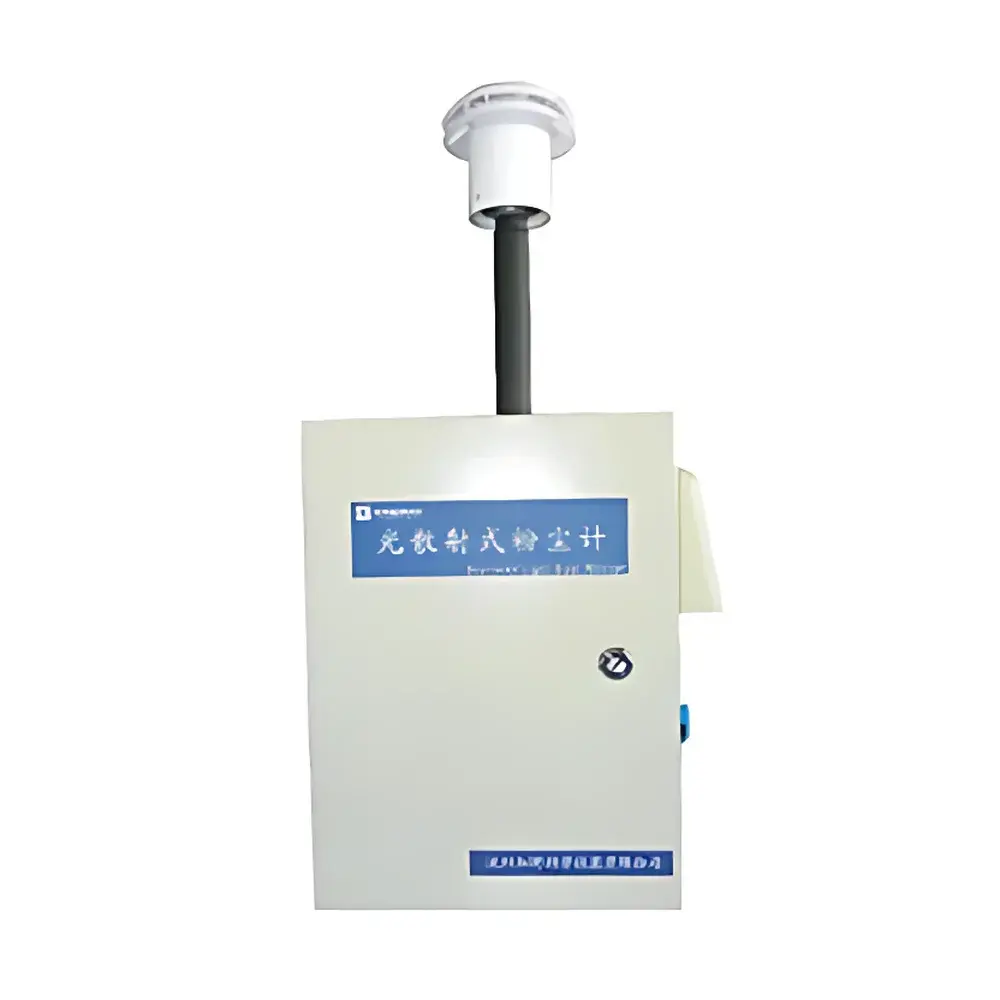
Kanomax SDM-II Laser Dust Monitor
| Brand | Kanomax |
|---|---|
| Origin | Japan |
| Model | SDM-II |
| Measurement Principle | Laser Light Scattering |
| Particle Size Range | PM2.5, PM10, TSP |
| Measurement Range | 0.001–30.000 mg/m³ |
| Resolution | 0.01 mg/m³ |
| Accuracy | ±10% |
| Relative Error | ≤±2% |
| Sampling Flow Rate | 1.7 L/min |
| Zero & Span Auto-Calibration | Yes |
| Alarm Threshold Setting | Yes |
| Automatic Dehumidification | Yes |
| Communication Interface | RS485 |
| Power Supply | DC 10–15 V, 2 A |
| Dimensions (w/o case) | 250 × 350 × 170 mm |
| Weight (w/o case) | ~4.5 kg |
| Weight (with case) | ~8 kg |
Overview
The Kanomax SDM-II Laser Dust Monitor is a precision-engineered environmental monitoring instrument designed for real-time, continuous measurement of airborne particulate mass concentration in ambient and occupational settings. Based on the principle of laser light scattering (nephelometry), the SDM-II detects scattered light intensity from suspended particles illuminated by a stable semiconductor laser source. This optical signal is converted into mass concentration values (mg/m³) using factory-calibrated algorithms traceable to gravimetric reference standards. The instrument is optimized for field-deployable operation in outdoor air quality surveillance, construction site dust monitoring, road dust assessment, and industrial perimeter monitoring. Its compact, ruggedized housing—engineered for long-term stability under variable temperature and humidity conditions—supports unattended deployment with minimal maintenance.
Key Features
- Laser-based nephelometric detection with dual-wavelength compensation for improved particle size response consistency across PM2.5, PM10, and total suspended particulates (TSP).
- Integrated automatic zero-point and span calibration system, enabling drift correction without manual intervention or external reference aerosols.
- Onboard automatic dehumidification module mitigates hygroscopic growth effects on particle sizing and mass estimation, enhancing reliability in high-humidity environments (RH > 80%).
- User-configurable concentration alarm thresholds with relay output for integration into facility-wide environmental alert systems.
- RS485 serial interface compliant with Modbus RTU protocol, supporting seamless integration into SCADA, BMS, or centralized data acquisition platforms.
- Dual-mode operation: real-time analog output (4–20 mA) and digital logging with internal timestamping; supports periodic data export via USB or remote retrieval over RS485.
Sample Compatibility & Compliance
The SDM-II is validated for use with ambient air, urban background aerosols, construction-generated dust (e.g., silica, limestone, cement), and road resuspension particulates. It complies with ISO 12103-1 (A2 test dust) and JIS Z 8901 for particulate reference materials. While not intrinsically safe or explosion-proof, it meets IP54 ingress protection rating for dust and water resistance during outdoor installation. The instrument supports gravimetric validation via its built-in filter sampling port (compatible with standard 47-mm quartz or PTFE filters), enabling direct comparison against EPA Method 201A or ISO 7708 reference procedures. Data integrity features—including time-stamped event logs and audit-trail-capable firmware—align with GLP documentation requirements for regulatory reporting.
Software & Data Management
The SDM-II operates independently but interfaces with Kanomax’s optional PC-based configuration and data analysis software (Kanomax DustView II). This application enables remote parameter setup, historical trend visualization, statistical summary generation (e.g., 1-hour/24-hour averages, exceedance counts), and export to CSV or Excel formats. All stored measurements include UTC timestamps, battery voltage, internal temperature/humidity readings, and diagnostic flags (e.g., “low flow,” “high RH warning”). Firmware updates are performed via USB, and the device retains full calibration history and configuration snapshots—supporting traceability per ISO/IEC 17025 and FDA 21 CFR Part 11 Annex 11 principles where electronic records are subject to review.
Applications
- Ambient air quality monitoring networks (AQMN) for municipal and national environmental agencies.
- Construction site compliance monitoring per local dust control ordinances (e.g., China’s GB 3095-2012, EU Directive 2008/50/EC).
- Industrial fence-line monitoring for cement plants, quarries, bulk material handling facilities, and waste transfer stations.
- Indoor air quality assessments in schools, hospitals, and public infrastructure undergoing renovation or remediation.
- Research-grade field studies requiring portable, real-time particulate mass data synchronized with meteorological sensors.
FAQ
What particle size fractions does the SDM-II report?
The SDM-II provides simultaneous real-time outputs for PM2.5, PM10, and TSP mass concentrations, derived from Mie scattering theory and calibrated against gravimetric reference methods.
Is the instrument suitable for indoor use?
Yes—the SDM-II is rated for indoor and outdoor deployment; however, for indoor applications requiring regulatory compliance (e.g., workplace exposure assessment), users must validate performance against local occupational hygiene standards (e.g., OSHA PELs, ACGIH TLVs).
Does the SDM-II require annual recalibration?
While no mandatory annual recalibration is specified, Kanomax recommends biannual verification using certified reference aerosols (e.g., Arizona Test Dust, ISO 12103-1 A2) and field gravimetric comparison at least once per year for audit readiness.
Can the SDM-II operate on battery power?
No—the SDM-II requires a stable DC 10–15 V, 2 A power supply; external battery packs must be regulated and filtered to avoid voltage ripple-induced measurement noise.
How is data security ensured during RS485 transmission?
RS485 communication is unencrypted by default; users deploying in secure environments should implement physical layer isolation, network segmentation, and access control at the host SCADA or data logger level.
Related Products







