
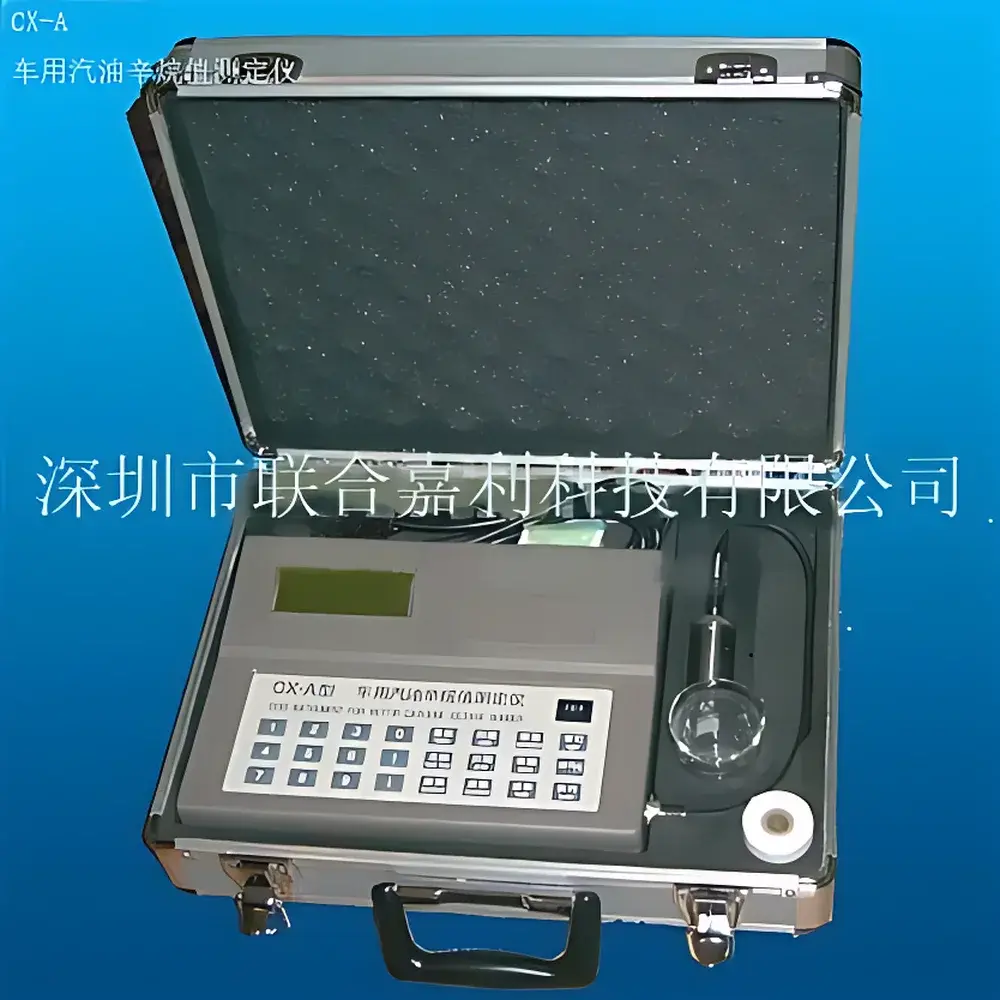
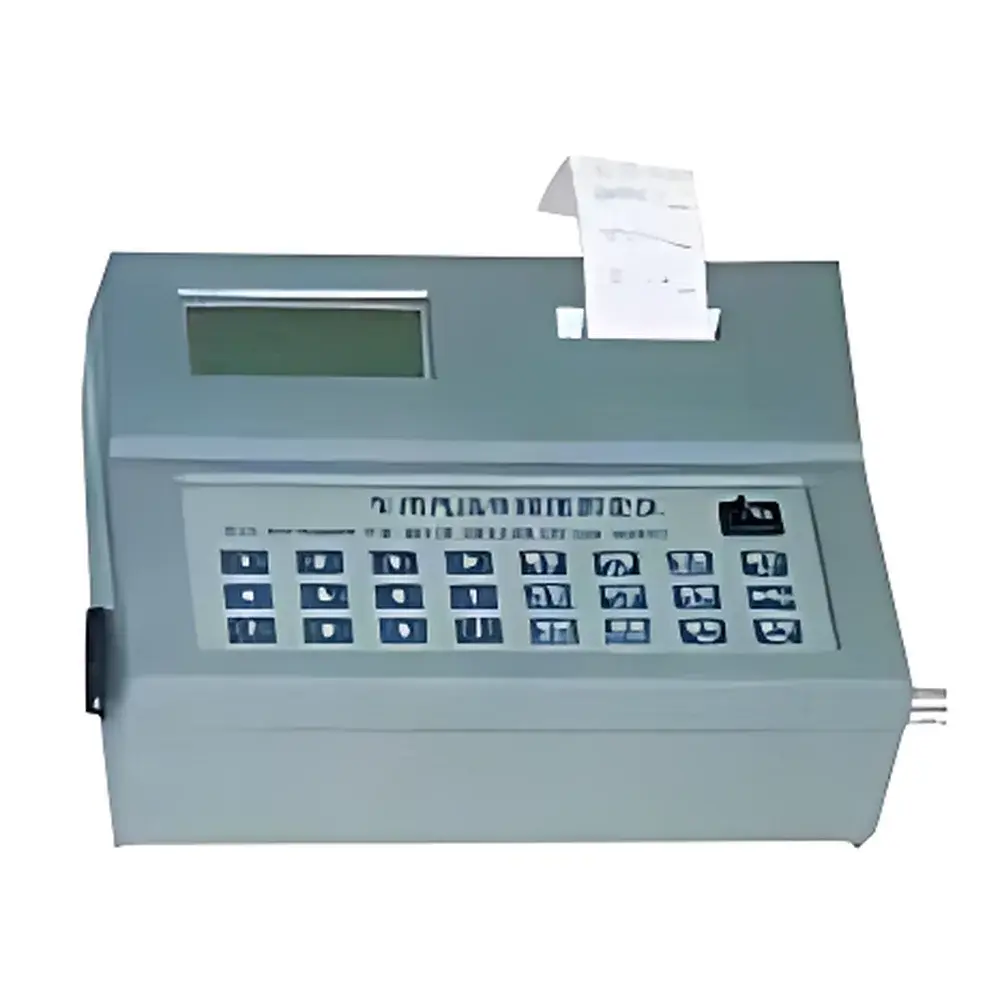
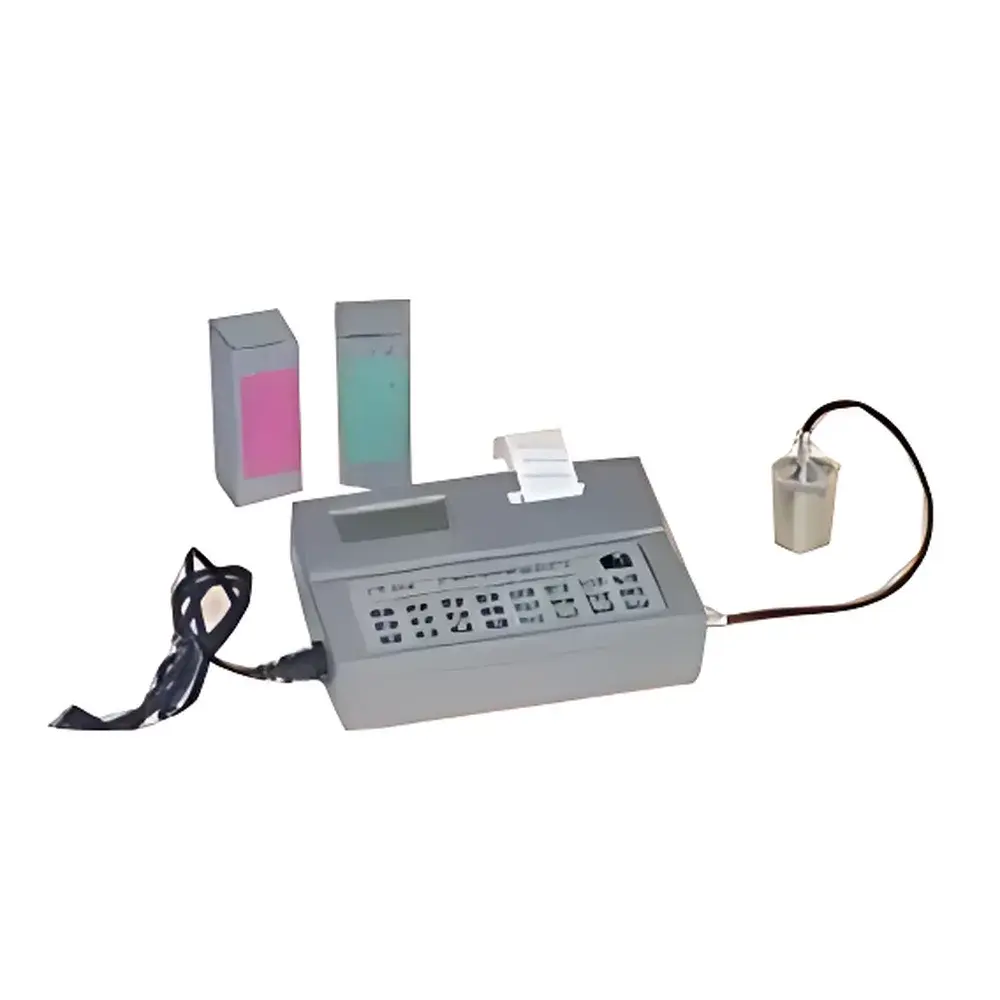
Karrie CX-A Automotive Gasoline Octane Number Analyzer
| Brand | Karrie |
|---|---|
| Model | CX-A |
| Measurement Principle | Dielectric Constant Method |
| Standards Compliance | GB/T 18339–2001 |
| RON Range | 84.5–99.9 |
| MON Range | 63.0–80.0 |
| Repeatability (RON) | ±0.3 |
| Reproducibility (RON) | ±0.6 |
| Resolution | 0.1 RON |
| Response Time | 1 s |
| Display | LCD with thermal printer interface |
| Power Supply | AC 220 V, 50 Hz / DC 4.8 V (rechargeable Ni-MH battery) |
| Dimensions | 275 × 200 × 85 mm |
| Weight | 1.6 kg |
Overview
The Karrie CX-A Automotive Gasoline Octane Number Analyzer is a dedicated, portable instrument engineered for rapid, non-destructive determination of research octane number (RON) and motor octane number (MON) in gasoline fuels using the dielectric constant measurement principle. Unlike conventional engine-based methods—such as ASTM D2699 (RON) and ASTM D2700 (MON)—which require standardized single-cylinder test engines, complex fuel conditioning, and lengthy combustion cycle protocols, the CX-A implements a static, physics-based correlation between bulk dielectric permittivity and hydrocarbon composition. This approach leverages the well-established relationship between molecular polarity, branching degree, aromatic content, and octane response. The analyzer employs a precision toroidal stainless-steel capacitive sensor immersed directly in the sample, enabling real-time capacitance-to-octane conversion via a multi-segment regression model calibrated against certified reference fuels traceable to NIST SRMs and CNAS-accredited laboratories. Its design fulfills the technical requirements of GB/T 18339–2001, China’s national standard for octane number determination by dielectric constant method, and serves as a validated screening tool compatible with quality control workflows under ISO/IEC 17025 and refinery GLP environments.
Key Features
- Static dielectric measurement eliminates need for combustion testing, reducing analysis time to ≤1 second per sample—approximately 40× faster than CFR engine methods.
- Integrated toroidal capacitive sensor ensures consistent field geometry, minimal sample volume requirement (≤20 mL), and immunity to electrode fouling or vapor-phase interference.
- Multi-point segmented calibration algorithm compensates for ambient temperature (10–35 °C) and relative humidity (30–80% RH), minimizing systematic drift without requiring on-site restandardization.
- Onboard microprocessor executes real-time signal conditioning, temperature-compensated permittivity calculation, and RON/MON dual-value estimation using empirically validated polynomial coefficients.
- Compact form factor (275 × 200 × 85 mm) and lightweight construction (1.6 kg) support field deployment at refineries, blending terminals, gas stations, and regulatory inspection sites.
- Dual power operation: AC mains (220 V, 50 Hz) for lab use; rechargeable 4.8 V Ni-MH battery pack for mobile applications with >8 hours continuous runtime.
Sample Compatibility & Compliance
The CX-A is validated for use with commercial unleaded gasoline formulations meeting GB 17930–2016 specifications, including RON 90, 92, 95, and 98 grades, as well as reformulated blends containing up to 15% (v/v) ethanol (E15) and ≤10% (v/v) MTBE. It does not support oxygenated fuels with >20% ethanol, high-olefin cracked stocks, or heavy naphtha fractions outside the C4–C12 hydrocarbon range. All measurement procedures comply with GB/T 18339–2001, which defines sampling protocol, sensor immersion depth, stabilization criteria, and uncertainty reporting conventions. While not an ASTM-equivalent primary method, the CX-A meets the performance criteria for intermediate precision screening per ASTM D8672 (Standard Guide for Field-Deployable Fuel Property Analyzers) and supports audit-ready documentation required under refinery QA/QC programs aligned with ISO 9001 and API RP 2550.
Software & Data Management
The device operates autonomously without external PC dependency. All calibration parameters, measurement logs, and environmental metadata are stored in non-volatile flash memory (≥10,000 records). Data export is supported via RS-232 serial interface to laboratory information management systems (LIMS) or Excel-compatible CSV files. Optional firmware updates maintain alignment with evolving national reference fuel databases and incorporate expanded correction factors for newly introduced bio-blend components. Audit trail functionality records operator ID (via manual entry), timestamp, ambient conditions, and calibration verification status—satisfying basic data integrity requirements under GLP and supporting 21 CFR Part 11 readiness when paired with secure LIMS integration.
Applications
- Rapid in-line quality verification during gasoline blending and batching operations.
- Field-based compliance checks at retail fuel dispensing points per provincial market supervision mandates.
- Technical service support for fuel distributors performing on-site octane verification prior to delivery.
- Educational demonstration of physical property–performance correlations in petroleum engineering curricula.
- Pre-screening tool to triage samples requiring confirmatory CFR engine testing per regulatory submission protocols.
FAQ
Is the CX-A suitable for regulatory certification of gasoline batches?
No—the CX-A is intended for rapid screening and process control. Final regulatory certification requires ASTM D2699/D2700 testing on certified CFR engines.
Does the instrument require daily recalibration with reference fuels?
No—segmented factory calibration remains stable for ≥3 months under normal operating conditions; quarterly verification with two-point RON 90/95 reference standards is recommended.
Can it measure ethanol-gasoline blends such as E10 or E15?
Yes—validated for E0–E15 gasoline blends meeting GB 17930–2016; accuracy degrades above 15% ethanol due to dielectric saturation effects.
What is the minimum sample volume required?
15–20 mL of homogenized, room-temperature gasoline, free of suspended water or particulates.
How is measurement traceability established?
Calibration models are derived from >1,200 empirical measurements against NIST-traceable octane reference fuels (NIST SRM 2710a, 2711a) and cross-verified by CNAS-accredited interlaboratory studies.
Related Products






