
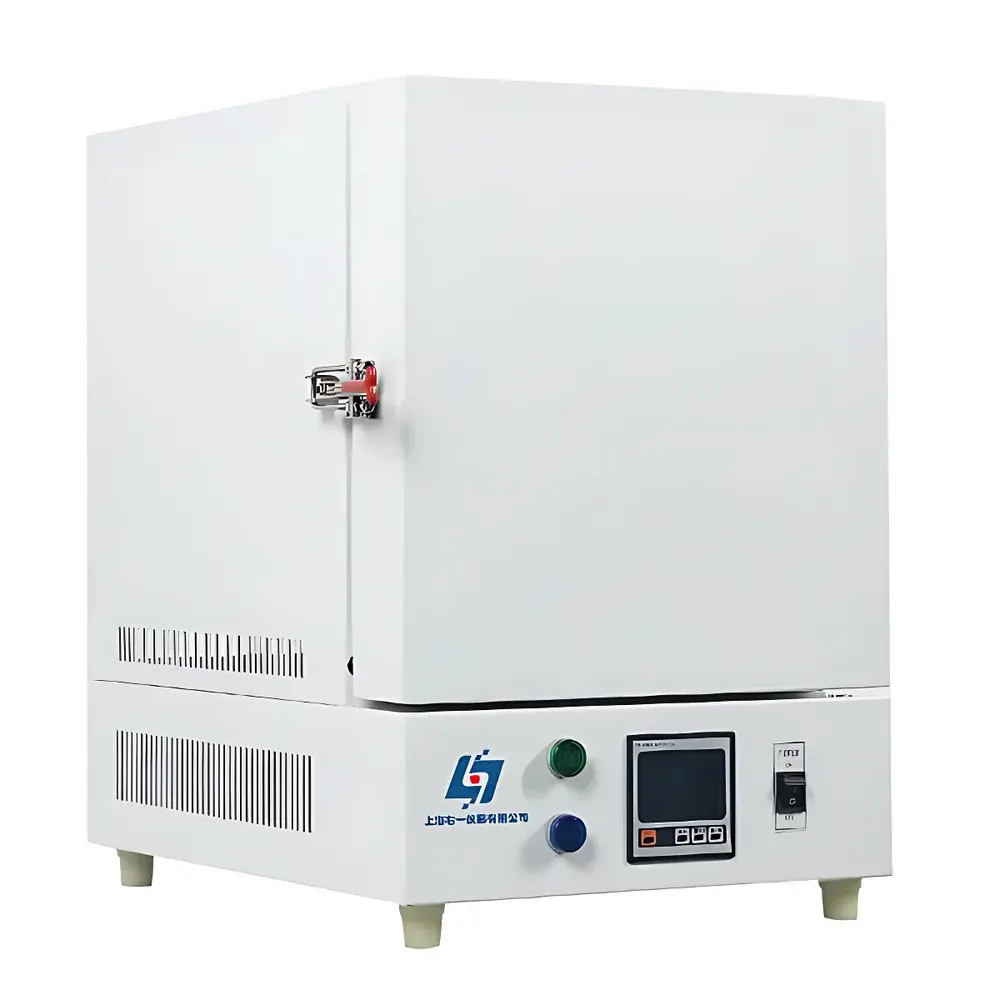
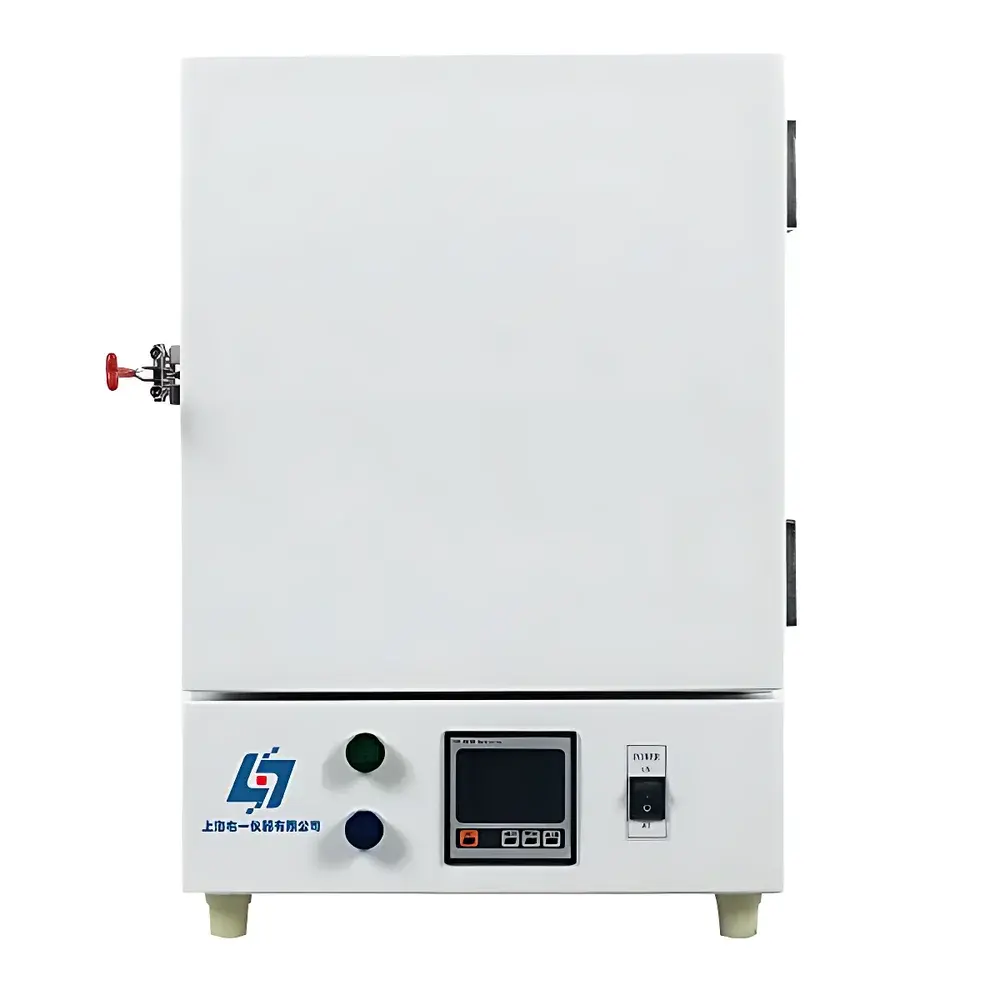
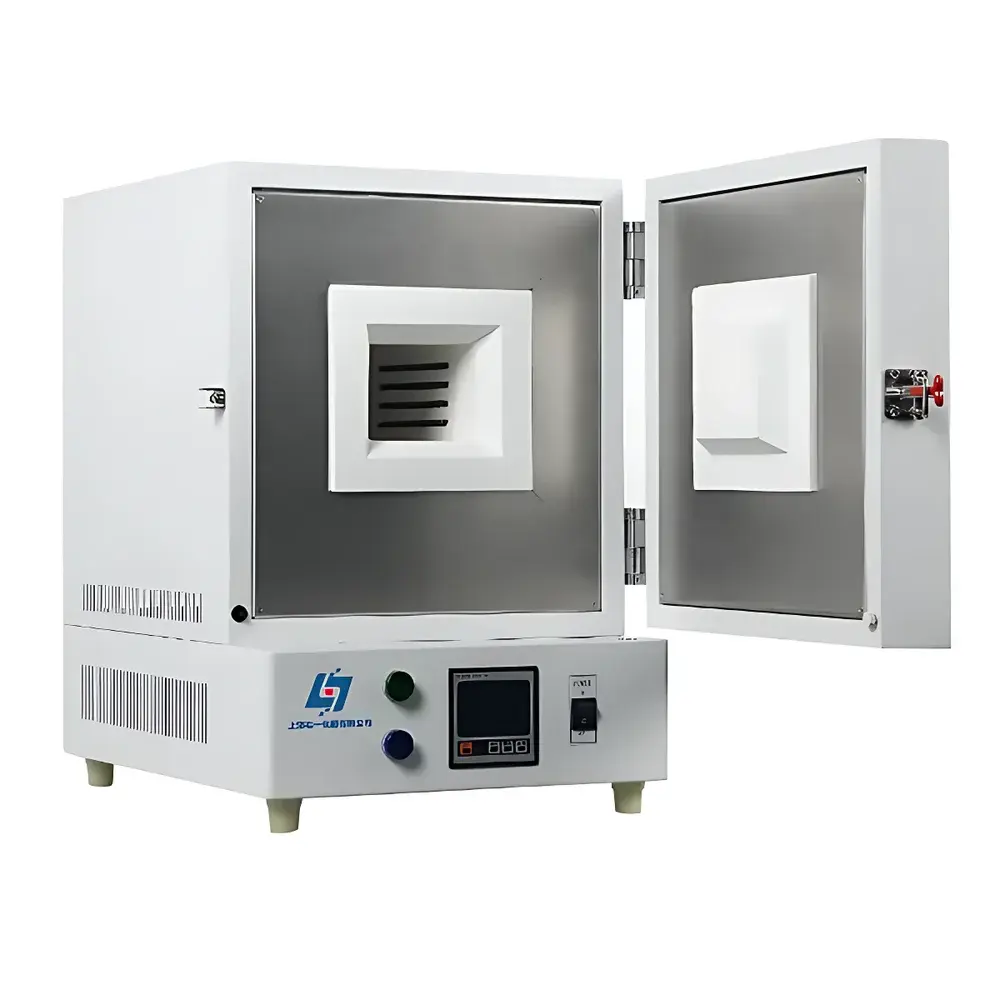
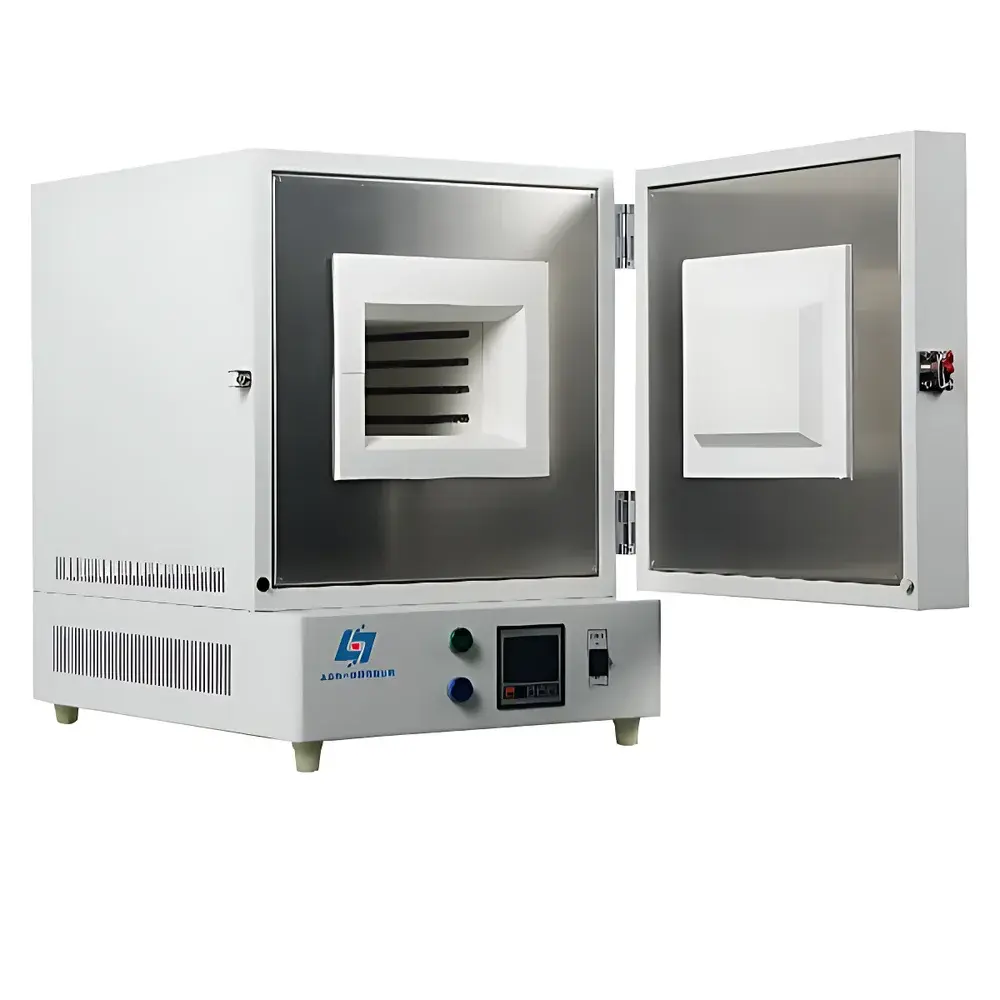
Yoyi SX2-2.5-12A Ceramic Fiber Muffle Furnace
| Brand | Yoyi |
|---|---|
| Origin | Shanghai, China |
| Manufacturer Type | Direct Manufacturer |
| Model | SX2-2.5-12A |
| Max Temperature | 1200 °C |
| Temperature Control Accuracy | ±1 °C |
| Rated Power | 2.5 kW |
| Heating Element | Ni-Cr Resistance Wire (Mo-doped for 1200 °C stability) |
| Internal Chamber Dimensions | 120 × 200 × 80 mm |
| Nominal Volume | 2 L |
| Voltage | 220 V AC |
| Control System | Microprocessor-based PID with LCD interface, programmable ramp/soak profiles, auto-recovery after power interruption |
| Safety Features | Over-current, over-voltage, over-temperature, earth leakage, and short-circuit protection |
| Insulation | Dual-layer ceramic fiber board (density ≥ 128 kg/m³), surface temperature ≤ 50 °C at 1000 °C chamber setpoint |
Overview
The Yoyi SX2-2.5-12A is a compact, high-efficiency ceramic fiber muffle furnace engineered for precision thermal processing in research laboratories, materials science departments, and quality control environments. Operating on resistive heating principles, it utilizes Mo-doped nickel-chromium (Ni-Cr) alloy wire embedded within a low-conductivity, high-purity alumina-silica ceramic fiber insulation matrix. This architecture enables rapid thermal response—achieving 1200 °C in under 35 minutes—and maintains exceptional temperature uniformity (±3 °C across the working zone at 1000 °C) while minimizing standby heat loss. Unlike traditional brick-lined furnaces, its lightweight ceramic fiber chamber (≈50% mass reduction) reduces thermal inertia and improves energy efficiency by approximately 60% compared to equivalent refractory brick units. The furnace conforms to standard laboratory safety and operational expectations for Class I electrical equipment per IEC 61010-1 and supports GLP-compliant workflows through traceable temperature logging and parameter retention.
Key Features
- Microprocessor-controlled PID temperature regulation with ±1 °C accuracy and adjustable ramp/soak programming via intuitive LCD interface
- Ceramic fiber chamber (120 × 200 × 80 mm internal dimensions, 2 L nominal volume) offering low thermal mass, high emissivity, and resistance to thermal shock
- Dual-layer insulation system: primary ceramic fiber board (≥128 kg/m³) + secondary air-gap barrier, limiting external surface temperature to ≤50 °C during sustained 1000 °C operation
- Robust cold-rolled steel housing with phosphated substrate and electrostatic epoxy coating for corrosion resistance and mechanical durability
- Comprehensive electrical safety suite: dual-stage over-temperature cutoff, ground-fault detection, current-limiting circuitry, and automatic shutdown on sensor failure
- Power-loss recovery function retaining all active parameters—including setpoints, timers, and program steps—for seamless resumption post-interruption
Sample Compatibility & Compliance
The SX2-2.5-12A accommodates crucibles up to Φ60 mm × 60 mm height (e.g., alumina, quartz, or silicon carbide) and supports open-air or inert-atmosphere (N₂/Ar purge via optional port) thermal treatments. It is routinely employed in ASTM C865 (sintering of advanced ceramics), ISO 11468 (thermal stability testing of polymers), and USP (heavy metal residue ashing). While not intrinsically rated for hazardous atmospheres, its sealed muffle design meets IEC 60529 IP20 requirements for indoor laboratory use. All electrical components comply with RoHS Directive 2011/65/EU and CE marking directives for low-voltage equipment (2014/35/EU).
Software & Data Management
The integrated controller supports RS485 Modbus RTU communication (optional add-on, part #Y-RS485-KIT) for integration into centralized lab management systems. When paired with Yoyi’s LabTemp v3.2 software (Windows-compatible), users can export time-stamped temperature logs (.CSV), define multi-step thermal profiles, and generate audit-ready reports compliant with FDA 21 CFR Part 11 requirements—including electronic signatures, operator ID tagging, and immutable change history. Data integrity is preserved via non-volatile memory with >100,000 write-cycle endurance and timestamped event logging (e.g., door opening, alarm triggers, manual overrides).
Applications
- Quantitative elemental analysis: ashing of biological, pharmaceutical, and environmental samples prior to AAS or ICP-OES
- Ceramic processing: sintering of oxide and non-oxide powders (Al₂O₃, ZrO₂, SiC), glaze firing, and crystallization annealing
- Metallurgical heat treatment: stress-relief, annealing, and tempering of small ferrous and non-ferrous components
- Materials characterization: TGA pre-conditioning, binder burnout in green bodies, and thermal gravimetric calibration
- Nanomaterial synthesis: calcination of sol-gel precursors and metal-organic frameworks (MOFs)
- Quality assurance: verification of thermal stability in battery cathode materials (e.g., NMC, LFP) per UL 1642 protocols
FAQ
What is the recommended maximum load volume for optimal temperature uniformity?
For ±3 °C uniformity across the working zone, loading should not exceed 30% of chamber volume (≤600 mL total sample + crucible volume).
Can this furnace operate continuously at 1200 °C?
Yes—rated for continuous duty at 1200 °C; however, sustained operation above 1100 °C for >100 hours requires periodic verification of thermocouple calibration and heater resistance.
Is inert gas purging supported natively?
No built-in gas inlet; an optional 6-mm BSP threaded port (accessory kit #Y-GAS-PORT) enables controlled N₂ or Ar flow at ≤0.5 L/min.
Does the controller support multi-segment programmable ramps?
Yes—the standard firmware includes up to 30 programmable segments with independent rate, dwell, and end-condition settings.
What maintenance intervals are advised for long-term reliability?
Inspect ceramic fiber integrity and heater alignment every 200 operating hours; recalibrate thermocouple annually or after 500 thermal cycles using NIST-traceable reference standards.



