
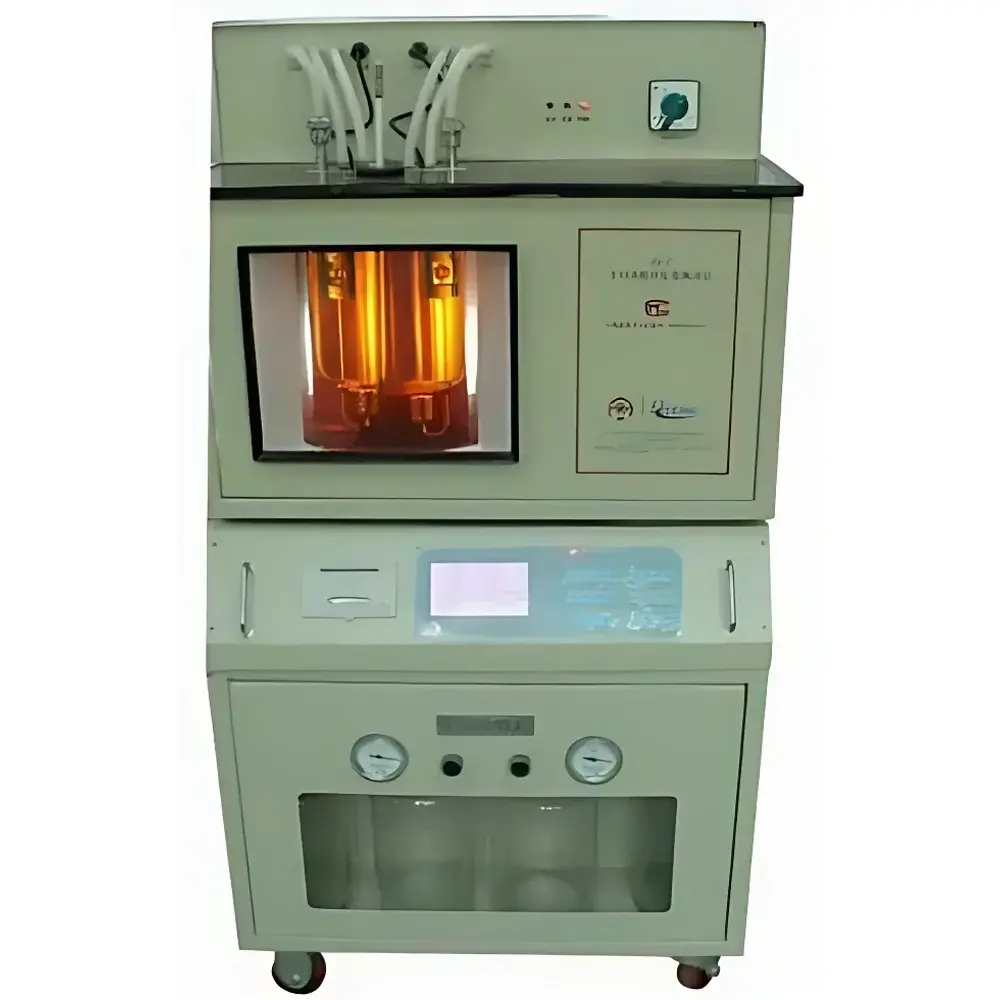
Karrie EKN-7 Automated Intrinsic Viscosity Tester for Polyester Chips
| Brand | Karrie |
|---|---|
| Model | EKN-7 |
| Measurement Principle | Capillary Viscometry (Ubbelohde-type) |
| Temperature Range | 10–120 °C |
| Temp. Stability | ±0.01 °C |
| Timing Accuracy | ±0.01 s |
| Capillary ID | 0.88 mm |
| Intrinsic Viscosity Range | 0.1–4.0 dL/g |
| Repeatability | ≤0.001 dL/g |
| Reproducibility (A/B dual-cell) | ≤0.003 dL/g |
| Compliance | GB/T 14190–2008, GB/T 17931–2008, GB/T 17932–1999 |
| Interface | RS-232 |
| Power | 2000 W |
| Dimensions | 573 × 780 × 1360 mm |
| Weight | 95 kg |
Overview
The Karrie EKN-7 Automated Intrinsic Viscosity Tester is a dedicated capillary viscometer engineered for high-precision, fully automated intrinsic viscosity (IV) determination of polyester chips—specifically bottle-grade, fiber-grade, film-grade, and high-viscosity PET and PBT materials. It operates on the Ubbelohde capillary principle, where solution flow time through a calibrated, thermostatically stabilized capillary is measured under gravity-driven laminar flow conditions. Intrinsic viscosity is calculated using the Huggins or Martin equation from efflux times of polymer solutions and solvent blanks, enabling direct correlation with molecular weight distribution and average degree of polymerization (DP ≈ 100–10,000). Designed for QC laboratories in synthetic fiber, packaging film, and engineering plastic manufacturing, the EKN-7 eliminates manual handling errors associated with traditional glass capillary methods—particularly those arising from inconsistent rinsing, drying artifacts, thermal drift during manual timing, and operator-dependent pipetting. Its dual independent test cells (A and B) support parallel analysis, significantly increasing throughput without compromising metrological integrity.
Key Features
- Dual independent Ubbelohde capillary units with metal-sheathed oil bath cups—enabling simultaneous or staggered testing while maintaining full operational autonomy between cells.
- High-stability temperature control system with programmable range from 10 °C to 120 °C and certified stability of ±0.01 °C, verified via NIST-traceable calibration protocols.
- Fiber-optic detection system replacing legacy photodiode sensors—delivering sub-20 ms timing resolution across repeated efflux measurements (≤0.02 s deviation over five consecutive runs).
- Non-volatile memory storage for up to 400 test records, including user-defined parameters (temperature setpoint, equilibration time, cleaning cycles, drying duration, capillary constants), retained after power loss.
- Intelligent valve sequencing with precision fluid metering—minimizing solvent consumption and preventing overfilling or siphon-induced errors during rinse/dry phases.
- Integrated fault diagnostics with real-time error logging, over-temperature alarm, and self-recovery routines for common operational anomalies (e.g., air bubble detection, capillary blockage, thermal overshoot).
- RS-232 serial interface compliant with standard laboratory data acquisition frameworks; supports bidirectional communication with LIMS or custom QA software for audit-ready data export.
Sample Compatibility & Compliance
The EKN-7 is optimized for intrinsic viscosity measurement of polyethylene terephthalate (PET), polybutylene terephthalate (PBT), and related aromatic polyesters dissolved in phenol/1,1,2,2-tetrachloroethane (60/40 v/v) or o-chlorophenol—solvents specified in ISO 1628-5, ASTM D4603, and GB/T 14190–2008. It accommodates chip samples ranging from 0.1 to 4.0 dL/g IV (typical film-grade PET: 0.5–1.5 dL/g), corresponding to average DP values of ~1200 under standard test conditions. All hardware and firmware design elements adhere to GLP-aligned instrumentation requirements, including secure parameter locking, timestamped event logs, and traceable calibration history. While not inherently 21 CFR Part 11-compliant out-of-the-box, the instrument’s deterministic behavior, non-erasable result storage, and external data export capability facilitate integration into validated GMP environments when paired with appropriate software validation packages.
Software & Data Management
The EKN-7 includes embedded microcontroller firmware with a menu-driven LCD interface for local operation, but its full analytical utility is realized via optional PC-based software. This Windows-compatible application provides real-time monitoring of both A and B cell status—including temperature ramp profiles, efflux timing traces, solvent blank validation flags, and automatic IV calculation per GB/T 17931–2008 Annex A. All raw timing data, environmental metadata (ambient pressure, humidity), and operator inputs are logged with ISO 8601 timestamps. Export formats include CSV (for Excel or statistical process control tools) and PDF reports compliant with internal QA templates. The software supports user role-based access control (administrator/operator modes), electronic signature prompts for critical actions, and configurable auto-backup to network drives—aligning with laboratory data integrity best practices per ALCOA+ principles.
Applications
- Quality release testing of PET chip batches prior to melt spinning or solid-state polymerization (SSP) processing.
- In-process monitoring of IV drift during SSP line commissioning and routine maintenance cycles.
- Raw material qualification for film extrusion lines requiring tight IV consistency (±0.005 dL/g tolerance).
- R&D evaluation of catalyst systems and polymerization kinetics by tracking IV evolution across reaction timepoints.
- Inter-laboratory comparison studies supporting method transfer between production sites and third-party certification labs.
- Regulatory submission support for medical-grade polyester devices, where IV serves as a critical quality attribute (CQA) linked to mechanical performance and extractables profile.
FAQ
What solvents are compatible with the EKN-7 for PET intrinsic viscosity testing?
The instrument is validated for use with phenol/1,1,2,2-tetrachloroethane (60/40 v/v) and o-chlorophenol—both referenced in GB/T 14190–2008 and ISO 1628-5. Solvent compatibility must be confirmed for non-standard formulations via preliminary capillary wetting and thermal stability tests.
Can the EKN-7 be integrated into an existing LIMS environment?
Yes—via its RS-232 port and ASCII-based command protocol, the EKN-7 supports structured data output (efflux times, calculated IV, temperature logs) suitable for ingestion by most LIMS platforms with serial interface modules. Custom drivers are available upon request.
Is temperature calibration traceable to national standards?
The built-in Pt100 sensor is factory-calibrated against NIST-traceable reference thermometers at three points (25 °C, 60 °C, 90 °C); users may perform field verification using certified liquid-in-glass thermometers per ISO/IEC 17025 guidelines.
How does the EKN-7 handle air bubbles in the capillary during measurement?
The fiber-optic detection system continuously monitors meniscus position; if anomalous transit velocity or signal dropout is detected during the efflux phase, the run is automatically aborted and flagged in the error log—with no result recorded.
What maintenance intervals are recommended for long-term accuracy?
Capillary cleaning with appropriate solvents after every 20–30 tests; annual verification of temperature uniformity across both oil baths using a calibrated immersion probe; biannual inspection of solenoid valves and tubing for solvent degradation. Full service documentation is provided with each unit.
Related Products






