
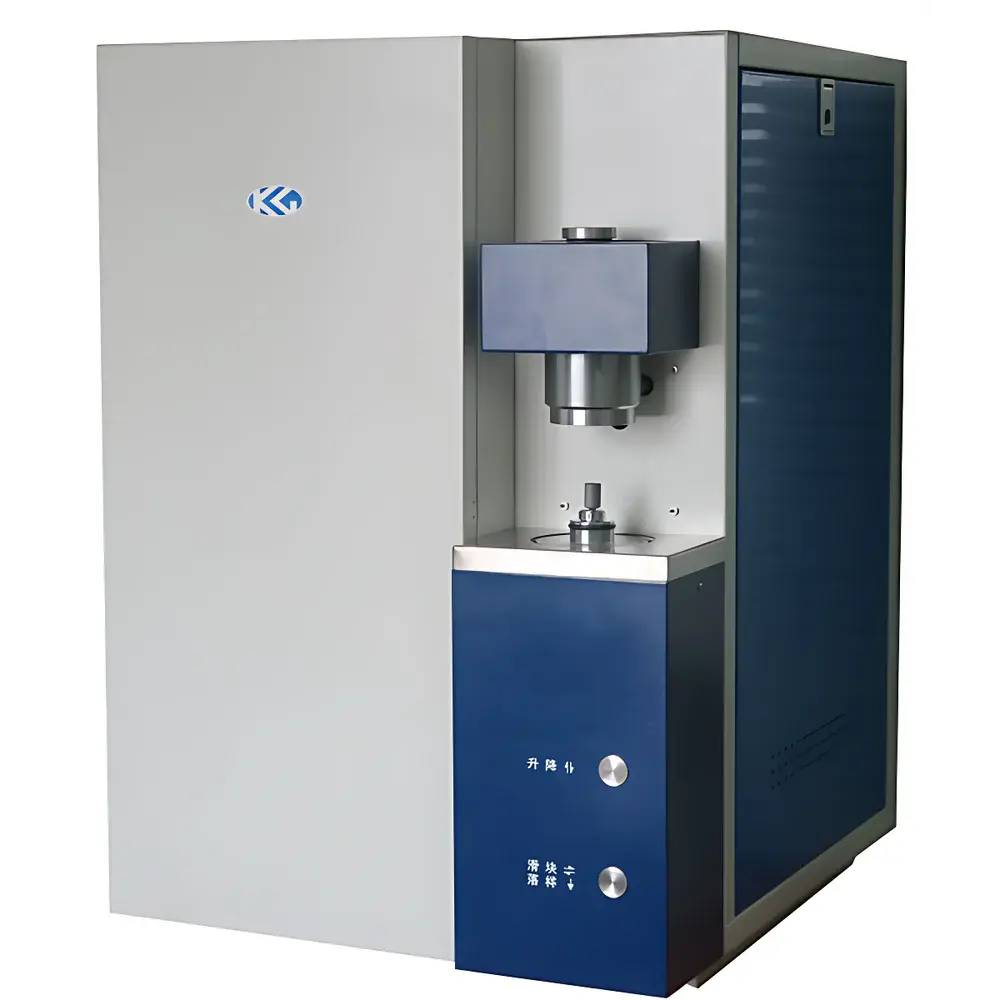
KEGUO ONH-506 Oxygen-Nitrogen-Hydrogen Analyzer (Fusion Method)
| Brand | KEGUO |
|---|---|
| Origin | Shanghai, China |
| Model | ONH-506 |
| Instrument Type | Oxygen-Nitrogen-Hydrogen Analyzer |
| Hydrogen Detector | Thermal Conductivity Detector (TCD) |
| Analytical Range | O₂: 0.1 ppm – 20% |
| N₂ | 0.1 ppm – 50% |
| H₂ | 0.01 ppm – 2.0% |
| Accuracy | O₂: ±1 ppm or RSD ≤ 1.0% |
| N₂ | ±1 ppm or RSD ≤ 1.0% |
| H₂ | ±0.2 ppm or RSD ≤ 2.0% |
| Sensitivity | 0.001 ppm |
| Analysis Time | 120–240 s |
| Pulse Furnace Power | 8.5 kVA |
Overview
The KEGUO ONH-506 Oxygen-Nitrogen-Hydrogen Analyzer is a high-precision, fusion-based elemental analyzer engineered for quantitative determination of interstitial oxygen, nitrogen, and hydrogen in metallic and inorganic materials—including steels, titanium alloys, zirconium, copper, rare-earth metals, ceramics, and powder metallurgy samples. It operates on the principle of inert gas fusion coupled with sequential detection: samples are thermally decomposed in a high-temperature graphite crucible under controlled helium or nitrogen carrier gas flow, releasing gaseous species that are subsequently separated and quantified using non-dispersive infrared (NDIR) absorption for oxygen and hydrogen, and thermal conductivity detection (TCD) for nitrogen. The pulse-heated furnace achieves up to 3000 °C, ensuring complete liberation of bound elements from refractory matrices. This method conforms to internationally recognized standards for interstitial gas analysis, including ASTM E1019, ISO 14284, and GB/T 11261—providing trace-level sensitivity and robust reproducibility required for quality control in aerospace, nuclear, and advanced materials manufacturing.
Key Features
- Integrated pulse furnace with closed-loop power feedback control (8.5 kVA, max. 3000 °C), delivering stable thermal output and minimizing baseline drift.
- Dual-detector architecture: German-sourced pyroelectric NDIR CO₂ sensor for oxygen/hydrogen quantification; high-sensitivity modular TCD with platinum filament for nitrogen measurement.
- Optimized gas routing system enabling rapid mode switching between O/N and H analysis—no hardware reconfiguration required.
- Thermally stabilized TCD cell with ±0.1 °C temperature control and protective gas interlock to prevent filament oxidation during idle periods.
- Fast baseline compensation algorithm achieving operational readiness within 30 minutes after startup.
- Intelligent software with automatic range switching, real-time furnace temperature monitoring, coolant temperature alarm, and programmable heating profiles (constant-power or linear ramp).
- Helium-conserving gas management design—reducing carrier gas consumption by ~50% versus conventional systems without compromising analytical integrity.
- Ergonomic benchtop configuration (W 600 × D 700 × H 900 mm; 160 kg) with CAMOZZI-sourced pneumatic components and water-cooled transformer for long-term reliability.
Sample Compatibility & Compliance
The ONH-506 supports solid metallic and ceramic specimens weighing 0.1–1.0 g, accommodated in disposable graphite crucibles (standard outer/inner configurations included). Its fusion methodology ensures full decomposition of oxides, nitrides, and hydrides—even in high-melting-point alloys such as Ti-6Al-4V or Inconel 718. The system complies with GLP and GMP data integrity requirements through audit-trail-enabled software logging, user-access controls, and electronic signature support aligned with FDA 21 CFR Part 11 principles. All calibration protocols support single-point, multi-point, and user-defined curve generation per ISO/IEC 17025 guidelines. Reagent handling follows standard safety practices: anhydrous magnesium perchlorate (desiccant), rare-earth copper oxide (CO → CO₂ converter), and soda lime (CO₂ scrubber) are supplied with validated shelf life and performance specifications.
Software & Data Management
The Windows-based analytical software provides full instrument control, method development, and report generation. Each analysis session records raw detector signals, furnace power curves, gas flow rates, temperature profiles, and calibration metadata. Data export is supported in CSV, XML, and PDF formats compatible with LIMS integration. Built-in statistical tools calculate RSD, confidence intervals, and detection limit estimates per IUPAC recommendations. Audit trails capture operator ID, timestamp, parameter changes, and result modifications—with immutable storage preventing post-acquisition editing. Software validation documentation (IQ/OQ/PQ templates) is available upon request for regulated environments.
Applications
- Quality assurance of aerospace-grade titanium and nickel superalloys where hydrogen embrittlement thresholds are below 2 ppm.
- Verification of oxygen content in silicon carbide ceramics used in nuclear fuel cladding.
- Hydrogen analysis in zirconium sponge for nuclear reactor components per ASTM C1595.
- Trace nitrogen quantification in high-purity copper conductors to assess electrical resistivity impact.
- Routine QC testing of stainless steel welds and additive-manufactured metal parts for interstitial gas segregation.
- Research applications in metallurgy labs studying phase stability in high-entropy alloys under varying O/N/H stoichiometries.
FAQ
What carrier gases are required for operation?
High-purity helium (≥99.99%) is mandatory for oxygen/nitrogen analysis; high-purity nitrogen (≥99.999%) is required for hydrogen analysis. Both must be delivered at regulated pressure (He: 0.20 MPa; N₂: 0.20 MPa).
Is external cooling water necessary?
Yes—a recirculating chiller (2 HP, 5200 W cooling capacity) is required unless facility-supplied chilled water (10–25 °C) is available and stable.
How often must the conversion furnace be regenerated?
Under typical usage (≤20 samples/day), the CuO catalyst requires replacement every 6–12 months; quartz tube and reagent beds should be inspected quarterly.
Can the instrument be integrated into an existing laboratory network?
Yes—the system supports Ethernet connectivity, OPC UA protocol, and secure remote diagnostics via encrypted VNC sessions.
What sample preparation is needed prior to analysis?
Samples must be clean, dry, and free of surface oxides or lubricants; machining chips or drill swarf are acceptable if representative of bulk composition.




