
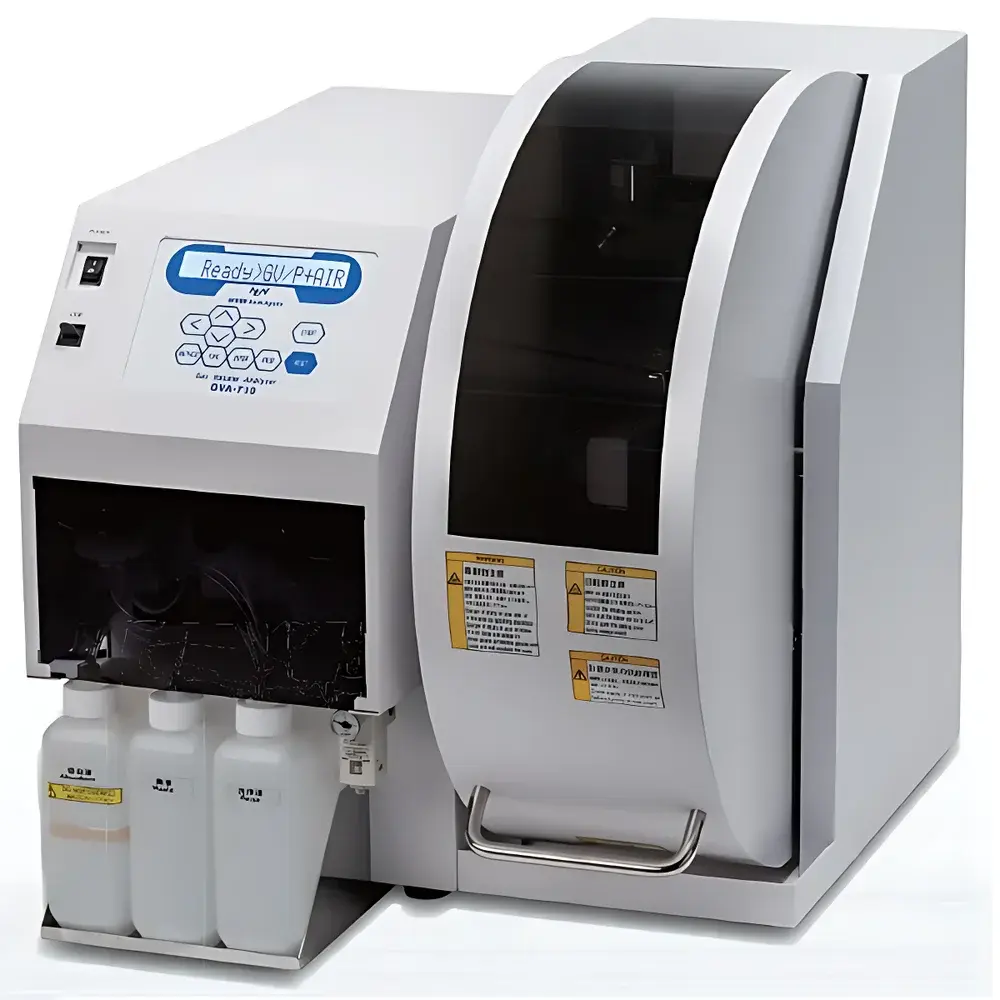
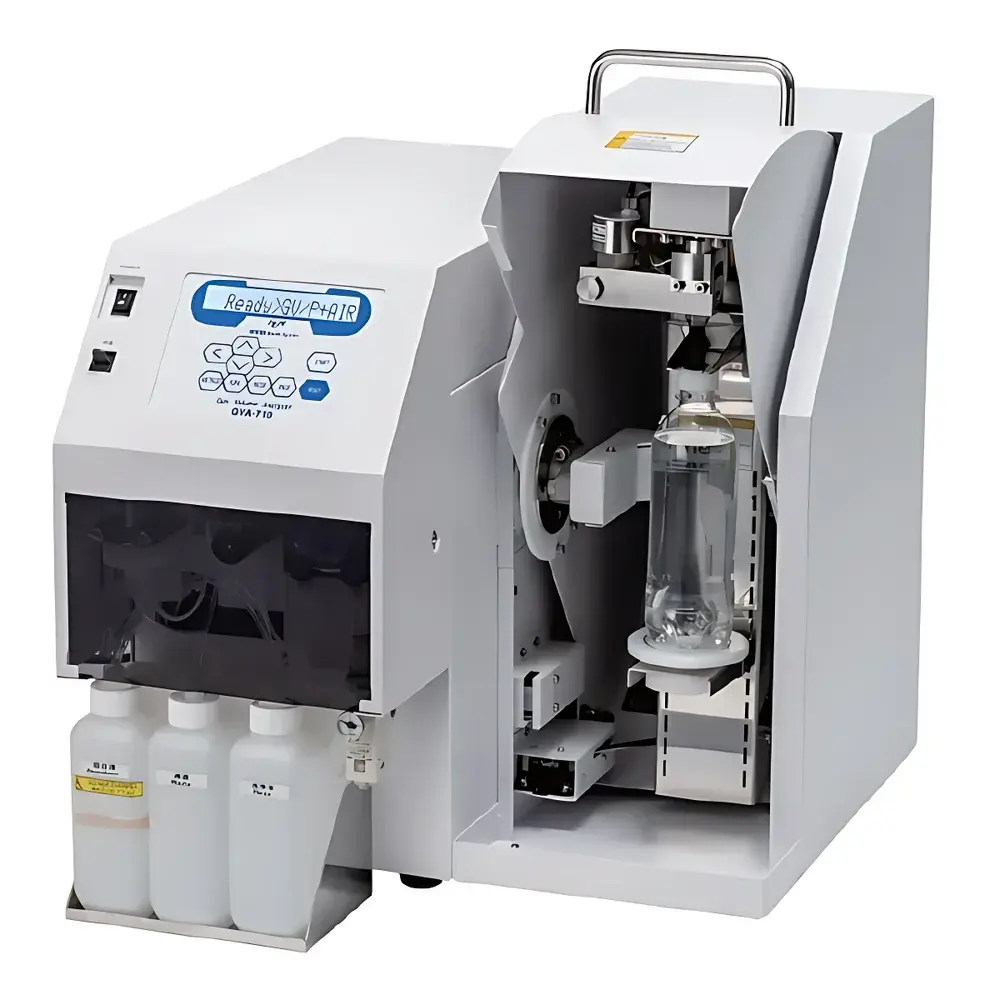
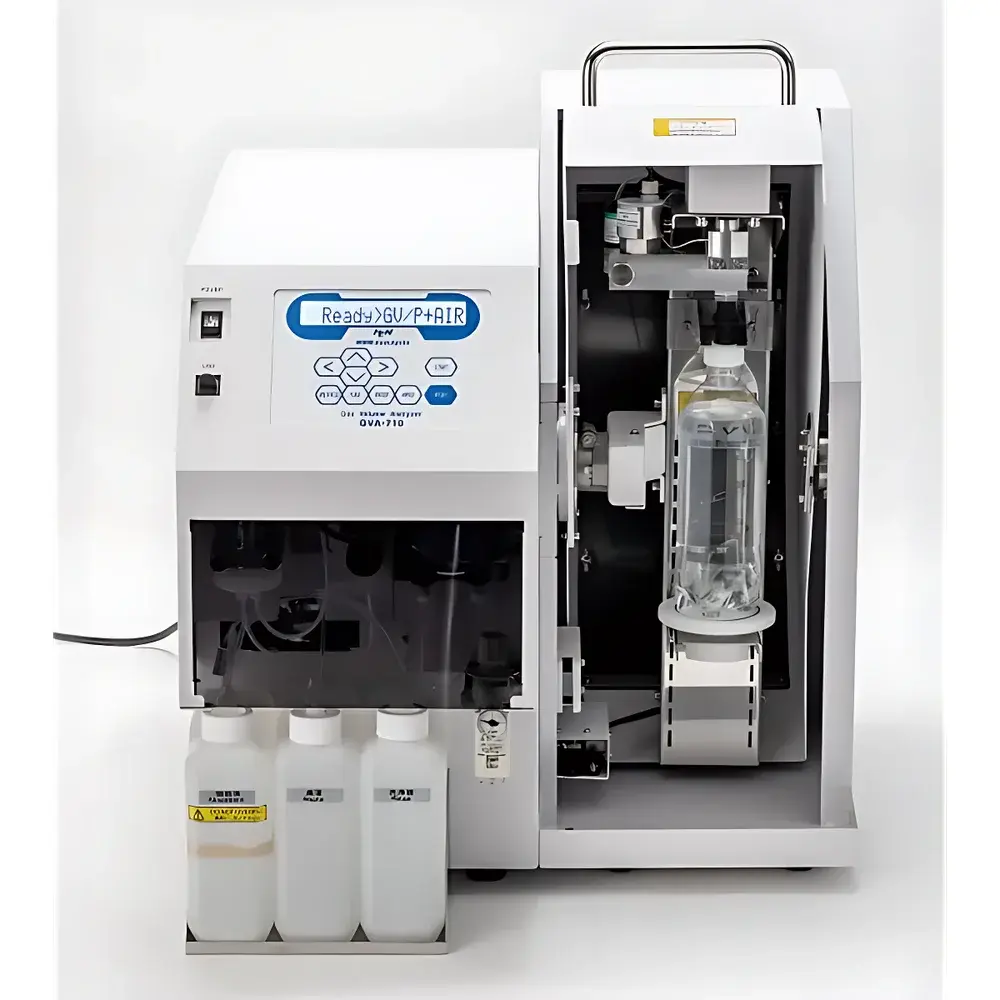
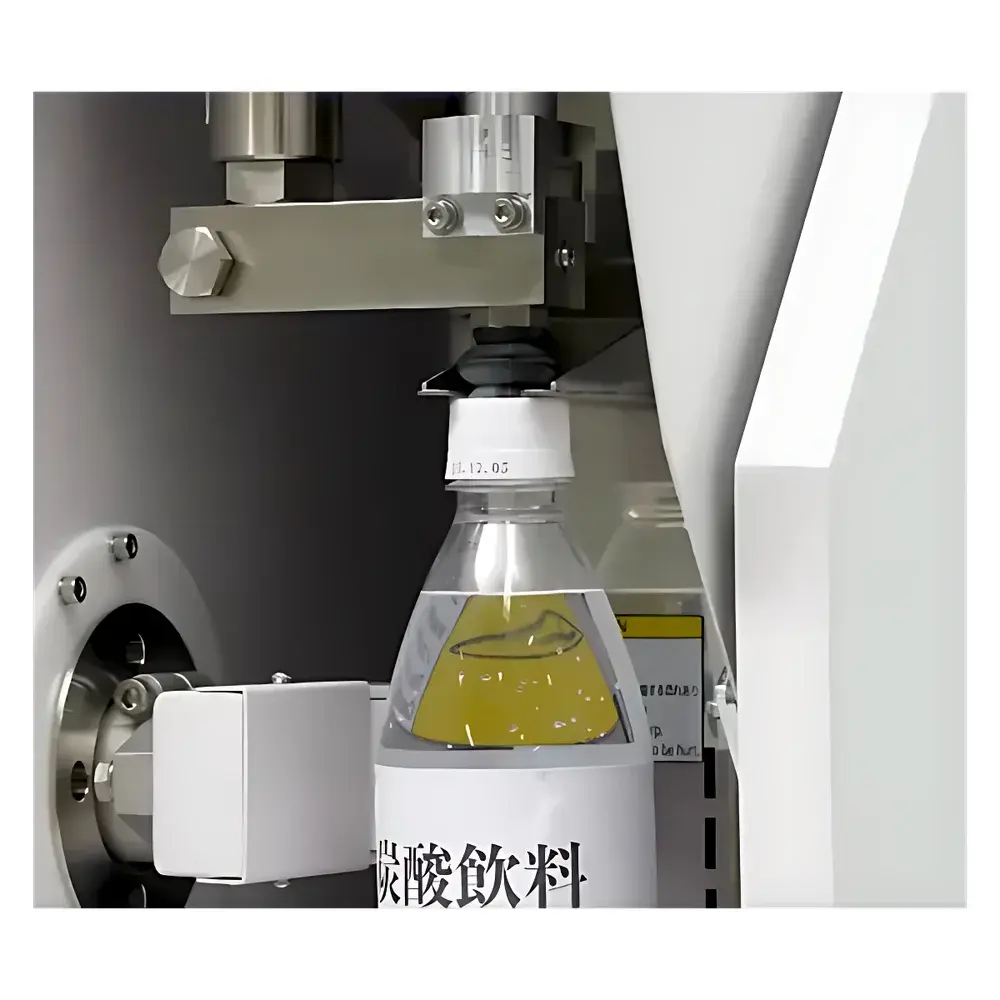
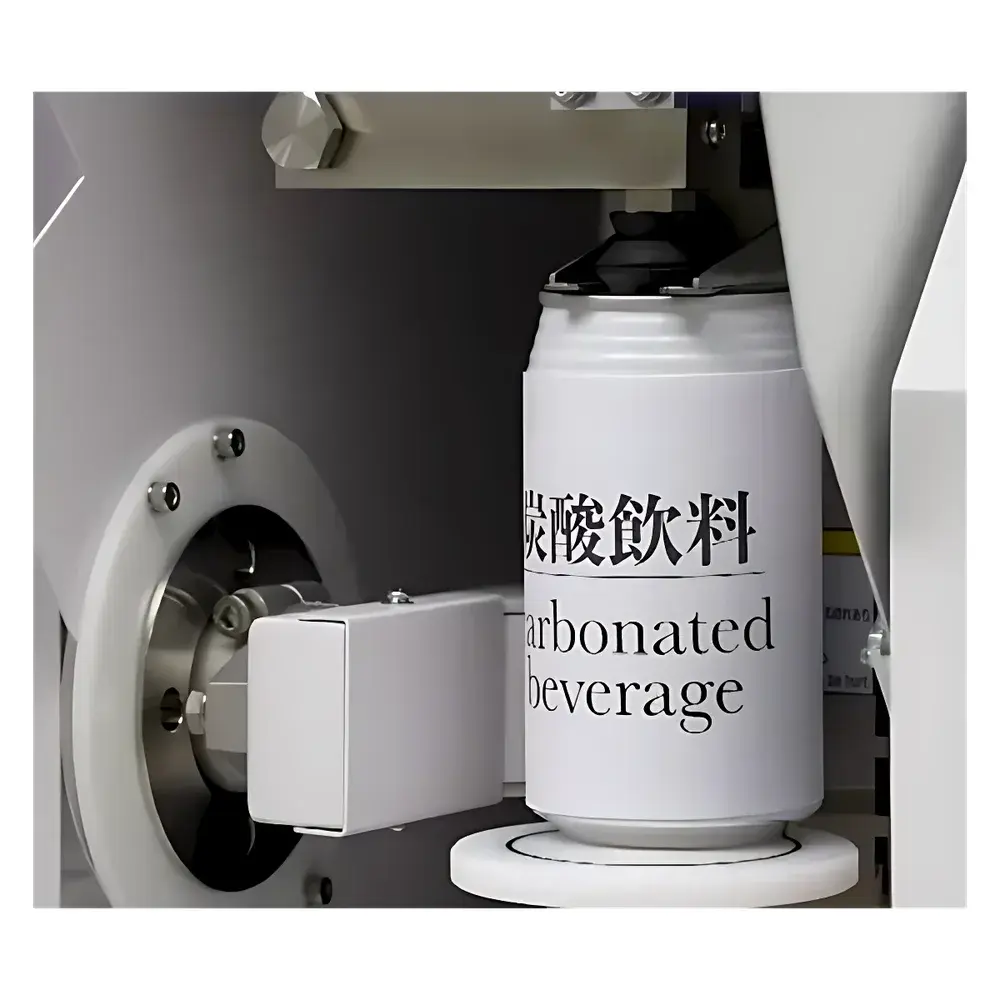
KEM GVA-710 Automated Carbon Dioxide Volume Analyzer (Compliant with GB/T 10792-2008)
| Brand | KEM (Kyoto Electronics Manufacturing) |
|---|---|
| Origin | Japan |
| Manufacturer Type | Original Equipment Manufacturer (OEM) |
| Product Category | Imported Instrument |
| Model | GVA-710 |
| Measurement Time | ~90 sec (CO₂ volume only) |
| pH Range | 0–14 |
| Dimensions (W×D×H) | 495 × 555 × 570 mm |
| Weight | ~38 kg |
| Pressure Range | 0.010–0.500 MPaG |
| Temperature Range | 0–50 °C |
| Residual Gas Volume | 0–30 mL |
| O₂ Concentration | 0–21% (detection limit: >8 mL residual gas) |
| Accuracy | ±0.001 MPa (pressure), ±0.05 °C (temperature), ±2% rel. (residual gas ≥5 mL), ±0.1 mL (residual gas <5 mL), ±0.2% (O₂) |
Overview
The KEM GVA-710 Automated Carbon Dioxide Volume Analyzer is a precision-engineered, fully automated instrument designed for the quantitative determination of CO₂ volumetric capacity (expressed as volume of CO₂ per volume of beverage at 0 °C and 101.325 kPa) in carbonated beverages—including soft drinks, beer, sparkling water, and flavored sodas—according to the Chinese national standard GB/T 10792-2008. It operates on the principle of pressure equilibration and selective chemical absorption: after controlled puncturing and mechanical agitation of sealed containers, the instrument measures the equilibrium headspace pressure and sample temperature; calculates theoretical CO₂ content using the CO₂ solubility coefficient (based on temperature-dependent Henry’s law constants); then quantifies residual air volume and oxygen concentration following alkaline solution (e.g., NaOH) absorption of CO₂. This dual-phase measurement protocol ensures metrological traceability and eliminates operator-induced variability inherent in manual pressure-depression methods. The GVA-710 integrates high-stability pressure transducers, platinum resistance temperature sensors (Pt100), and electrochemical O₂ sensors calibrated against certified reference gases, delivering reproducible results under routine laboratory conditions.
Key Features
- Fully automated workflow: container puncture, pressure release, standardized reciprocating agitation (40 s), thermal equilibration, CO₂ absorption, and residual gas analysis—all executed without manual intervention.
- Reduced total assay time: CO₂ volume determination completed in approximately 90 seconds per sample; full CO₂ + air + O₂ analysis within 5–12 minutes.
- Multi-format compatibility: accommodates cans (160 mL minimum), glass bottles, PET containers, and lightweight packaging up to 2.0 L, with maximum dimensions of Ø110 × 315 mm (height).
- Method flexibility: stores up to 20 user-defined test protocols; parameters—including agitation duration, absorption time, sensor thresholds, and calculation coefficients—can be edited locally or via PC software.
- Integrated barcode scanning support: enables automatic sample identification and result traceability when paired with optional USB barcode readers.
- Dual-sensor verification: transparent absorption chamber allows visual confirmation of CO₂ dissolution completeness and residual gas phase homogeneity prior to O₂ measurement.
- Safety-enhanced mechanical design: includes hinged safety guard over the agitation chamber to prevent accidental contact during operation and pressure containment compliance per ISO 13857.
Sample Compatibility & Compliance
The GVA-710 meets critical regulatory and methodological requirements for quality control laboratories in beverage manufacturing and contract testing facilities. It is validated for use with GB/T 10792-2008 (carbonated soft drinks), GB/T 4928-2008 (beer CO₂ by pressure method), and GB/T 28596-2012 (PET bottle CO₂ loss rate assessment). Its pressure and temperature measurement subsystems are traceable to NIST-certified standards; sensor calibrations follow documented procedures aligned with ISO/IEC 17025:2017 clause 6.4. The instrument supports audit-ready data integrity through time-stamped, non-editable result storage (500 entries) and optional GLP-compliant electronic signatures when connected to KEM’s proprietary LabManager software. All internal wetted components comply with FDA CFR Title 21 Part 177 (food-contact polymers), and electrical safety conforms to IEC 61010-1:2010.
Software & Data Management
Data acquisition, method configuration, and report generation are managed via KEM LabManager PC software (Windows 10/11 compatible), accessible through RS-232 or USB interface. The software provides real-time monitoring of pressure/temperature curves during agitation, post-absorption residual gas profiling, and automated calculation of CO₂ volume (mL CO₂ / 100 mL beverage), air content (% v/v), and O₂ concentration (%). Export formats include CSV, PDF, and XML for integration into LIMS or ERP systems. Audit trail functionality records all user actions—including method edits, calibration events, and result modifications—with timestamps and operator IDs, satisfying 21 CFR Part 11 requirements for electronic records and signatures when configured with user authentication and digital certificate support.
Applications
- QC/QA laboratories verifying CO₂ fill consistency across production batches of cola, lemon-lime sodas, energy drinks, and mineral waters.
- Brewery process control: rapid CO₂ quantification pre- and post-filtration, during forced carbonation, and before bottling/canning.
- Packaging R&D: evaluation of CO₂ permeation rates through PET, aluminum, and multilayer barrier materials under accelerated aging conditions.
- Regulatory compliance testing for domestic and export markets requiring adherence to GB, ISO 20457 (soft drinks), or AOAC Official Method 966.11 (carbonated beverages).
- Stability studies tracking CO₂ loss kinetics in shelf-life trials under varying temperature/humidity profiles.
FAQ
Does the GVA-710 require daily calibration?
No—routine calibration is performed only at installation, after sensor replacement, or per scheduled maintenance intervals (typically every 6–12 months). Zero and span checks for pressure, temperature, and O₂ sensors can be executed in under 5 minutes using built-in calibration routines and certified reference standards.
Can the instrument analyze non-carbonated beverages?
Yes—it measures internal container pressure in still beverages (e.g., fruit juices, teas) to detect unintended fermentation or microbial spoilage indicated by elevated headspace pressure.
What is the minimum residual gas volume required for reliable O₂ measurement?
O₂ concentration is reported only when residual gas volume exceeds 8 mL; below this threshold, the electrochemical sensor lacks sufficient signal-to-noise ratio for accurate quantification.
Is external compressed air mandatory for operation?
Yes—the system requires a clean, oil-free compressed air supply at 0.6–0.7 MPaG for actuating the puncture needle, agitation mechanism, and pneumatic valve sequencing.
How is temperature uniformity ensured during measurement?
The sample chamber incorporates a Peltier-cooled thermal block with active feedback control, maintaining ±0.1 °C stability across the 0–50 °C operating range during pressure equilibration and absorption phases.





