
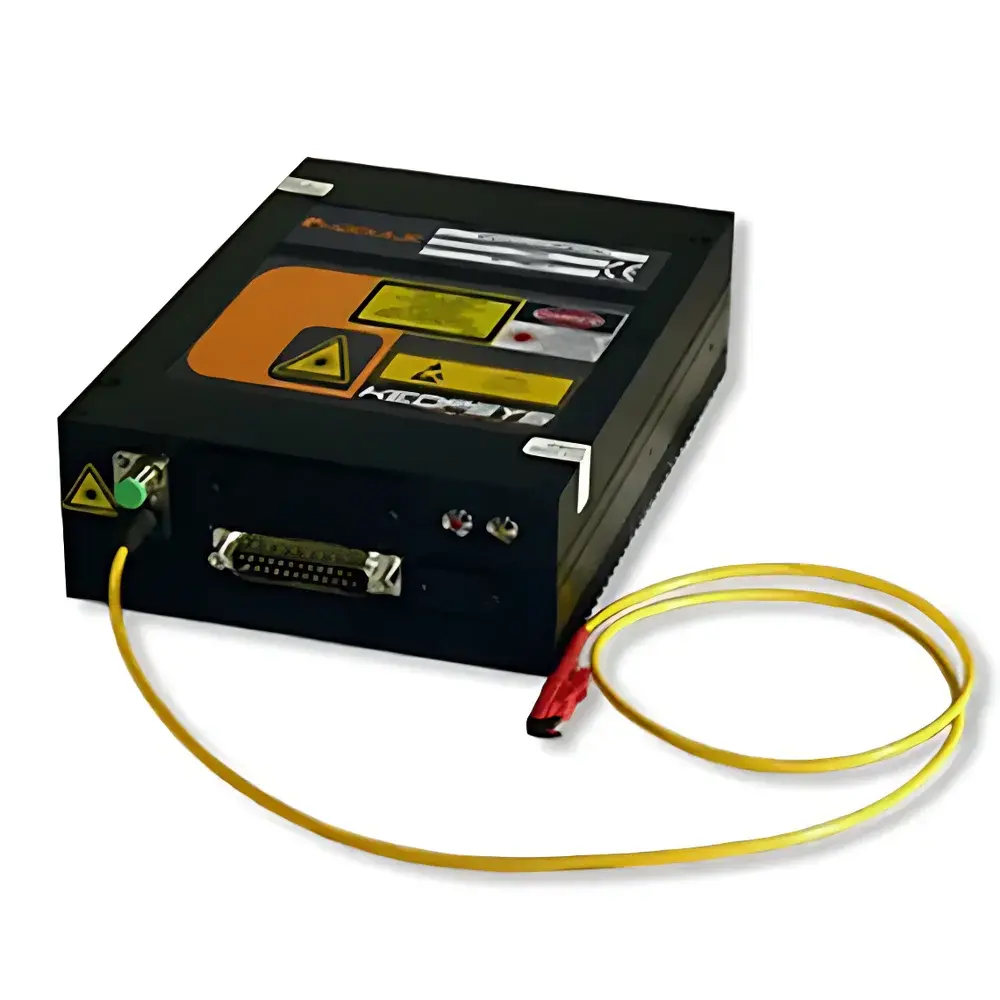
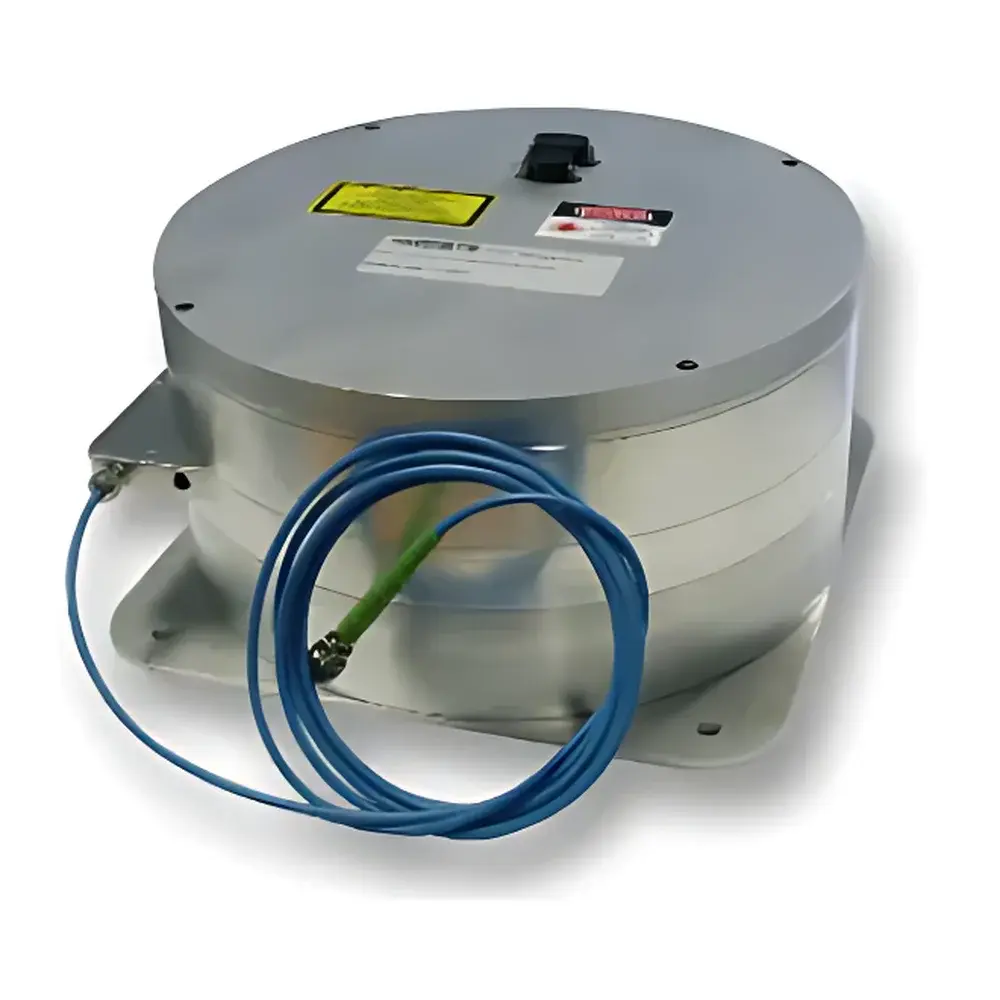
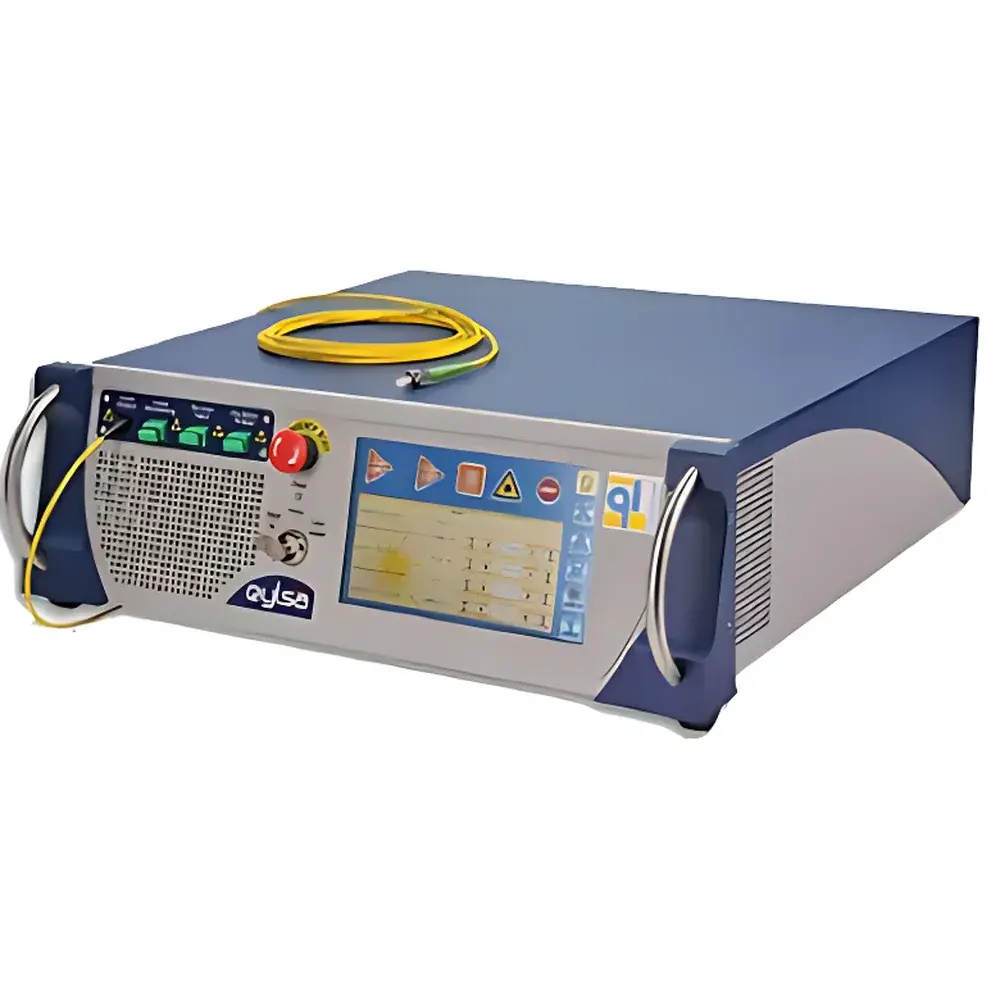
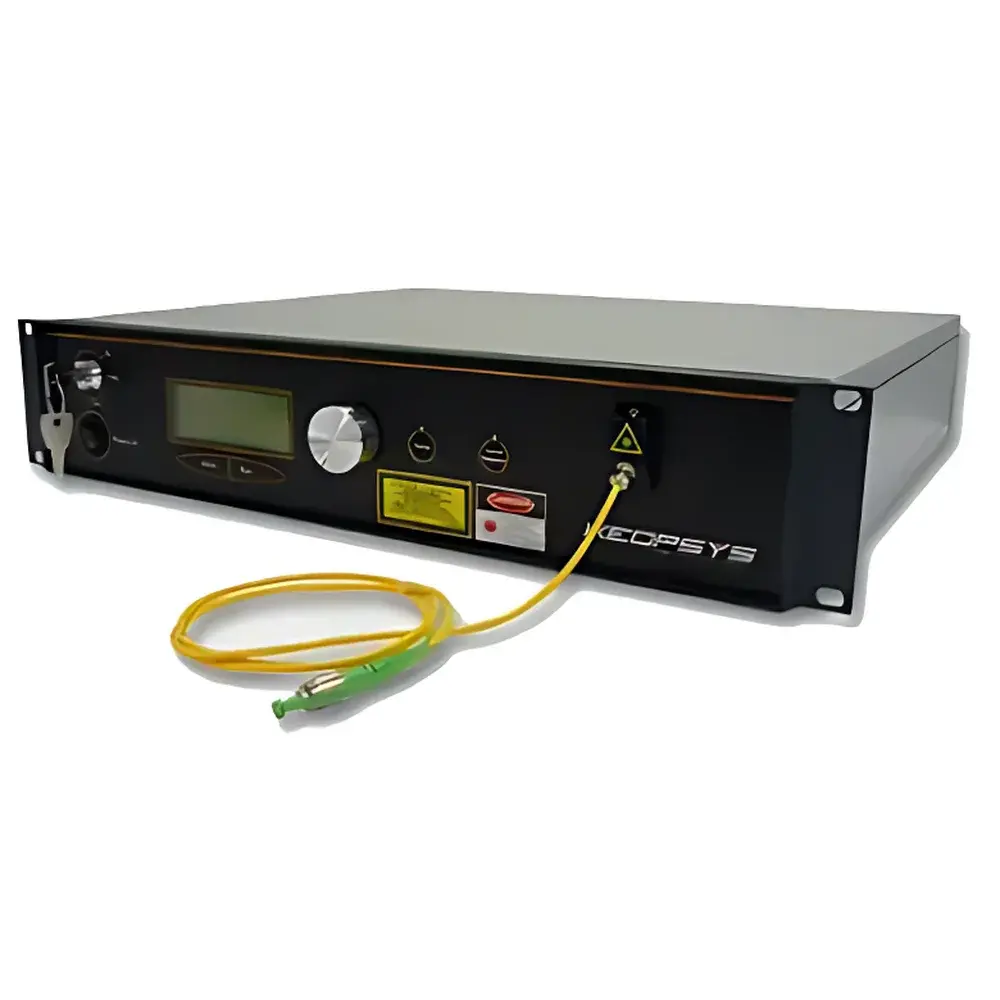
Keopsys KILO & MEGA Series CW Narrow-Linewidth Fiber Lasers
| Brand | Keopsys |
|---|---|
| Origin | France |
| Model Variants | CVFL-KILO, CYFL-KILO, CYFL-MEGA, CEFL-KILO |
| Output Power Range | 1–10 W (single-mode fiber) |
| Linewidth | <1 kHz (typical, single-frequency operation) |
| Polarization | Linear |
| Wavelength Options | 530–560 nm, 630–650 nm, 676–790 nm, 1064 nm, 1083 nm, 1545–1565 nm |
| SMSR | >60 dB |
| RIN | <−150 dB/Hz (10 MHz–1 GHz) |
| Phase Noise | <−120 dBc/Hz @ 10 kHz offset |
| Environmental Stability | <±1 pm wavelength drift over 0–40 °C |
| Optional Features | Wavelength tuning, frequency modulation, mid-stage amplification |
| Compliance | CE, RoHS, IEC 60825-1 Class 4 Laser Product |
Overview
The Keopsys KILO & MEGA Series CW Narrow-Linewidth Fiber Lasers are high-stability, single-frequency laser sources engineered for demanding scientific and industrial applications requiring exceptional spectral purity, long-term frequency stability, and robust environmental immunity. Based on monolithic all-fiber architecture with integrated Bragg grating stabilization and active thermal management, these lasers operate on the principle of distributed feedback (DFB) or external cavity control—depending on model—to achieve sub-kilohertz intrinsic linewidths and diffraction-limited beam quality (M² < 1.1). Designed and manufactured in France by Keopsys—a wholly owned subsidiary of Lumibird—the series delivers continuous-wave output from 1 W to 10 W via polarization-maintaining single-mode fiber, with wavelength coverage spanning visible (530–790 nm), near-infrared (1064 nm, 1083 nm), and C-band telecom (1545–1565 nm) regions. Their hermetically sealed, vibration-damped mechanical design ensures operational reliability across laboratory, airborne, and field-deployable environments without active realignment.
Key Features
- Single-frequency operation with intrinsic linewidth <1 kHz (measured via delayed self-heterodyne interferometry)
- Diffraction-limited Gaussian beam profile (M² 20 dB
- High side-mode suppression ratio (SMSR >60 dB), ensuring minimal parasitic lasing contributions
- Ultra-low relative intensity noise (RIN <−150 dB/Hz over 10 MHz–1 GHz bandwidth) and phase noise <−120 dBc/Hz at 10 kHz offset
- Thermal and mechanical insensitivity: wavelength drift <±1 pm over 0–40 °C ambient range; insensitive to 0.5 g RMS broadband vibration (5–500 Hz)
- Integrated diagnostics: real-time input power monitoring, output power feedback loop, and optional mid-stage tap for amplifier staging
- Optional wavelength tuning (up to ±5 GHz via temperature or current actuation) and analog/digital frequency modulation (up to 100 MHz bandwidth)
Sample Compatibility & Compliance
These lasers interface directly with standard PM fiber components (FC/APC or collimated free-space outputs available), supporting integration into ultra-high-vacuum optical tables, atomic beam lines, and fiber-based interferometric sensors. All models comply with IEC 60825-1:2014 for Class 4 laser safety, CE marking per EU Directive 2014/35/EU (Low Voltage Directive) and 2014/30/EU (EMC Directive), and RoHS 2011/65/EU. For regulated environments—including GLP-compliant metrology labs and quantum technology qualification programs—the systems support optional firmware-locked audit trails and configurable interlock protocols compatible with ISO/IEC 17025 documentation workflows.
Software & Data Management
Laser operation is managed via RS232, USB-C, or Ethernet (TCP/IP) interfaces using Keopsys’ LabControl Suite—a cross-platform application providing real-time parameter logging (power, temperature, current), remote setpoint adjustment, and automated calibration routines. The SDK (C/C++, Python, MATLAB APIs) enables integration into LabVIEW-based DAQ systems and custom quantum control stacks (e.g., QUA, ARTIQ). All configuration changes are timestamped and stored locally with SHA-256 integrity hashing; optional 21 CFR Part 11 compliance mode adds electronic signature enforcement and role-based access control for FDA-regulated applications.
Applications
- Atomic physics: laser cooling and trapping of Rb, K, Yb, CaF, and other species requiring narrow-linewidth, low-noise pumping at D1/D2 transitions
- Quantum optics: generation of squeezed states, Bell-state measurement, and heralded photon sources via parametric down-conversion seeding
- Optical tweezers: high-fidelity manipulation of dielectric nanoparticles and biological specimens with minimized photothermal perturbation
- Precision metrology: optical clock interrogation, cavity ring-down spectroscopy, and heterodyne interferometry with sub-nanometer resolution
- LIDAR & coherent detection: Doppler wind sensing, differential absorption LIDAR (DIAL), and fiber-optic distributed acoustic sensing (DAS) systems
- Atomic interferometry: matter-wave inertial sensing platforms requiring long coherence times (>100 ms) and sub-Hz frequency agility
FAQ
What wavelengths are available in the KILO and MEGA series?
Standard configurations cover 532 nm, 635 nm, 671 nm, 780 nm, 1064 nm, 1083 nm, and C-band (1545–1565 nm); custom wavelengths within the specified ranges can be quoted upon request.
Is active cooling required for continuous operation?
No—these lasers employ passive conduction cooling with thermally optimized housings; ambient air convection is sufficient up to 40 °C ambient temperature.
Can the laser be integrated into a vacuum chamber environment?
Yes—fiber-coupled versions eliminate internal optics exposure; optional hermetic feedthroughs and low-outgassing materials (per ASTM E595) are available for UHV (<10⁻⁹ mbar) compatibility.
Do you provide OEM support for system integration?
Yes—Keopsys offers mechanical, electrical, and firmware co-design services including custom form factors, embedded control logic, and qualification testing per MIL-STD-810G or ECSS-E-ST-20-07C.
How is wavelength stability verified during factory calibration?
Each unit undergoes 72-hour thermal soak testing (0–40 °C ramp cycles) while monitoring absolute wavelength via NIST-traceable wavemeter (High Finesse WS8-2), with results documented in the Certificate of Conformance.



