
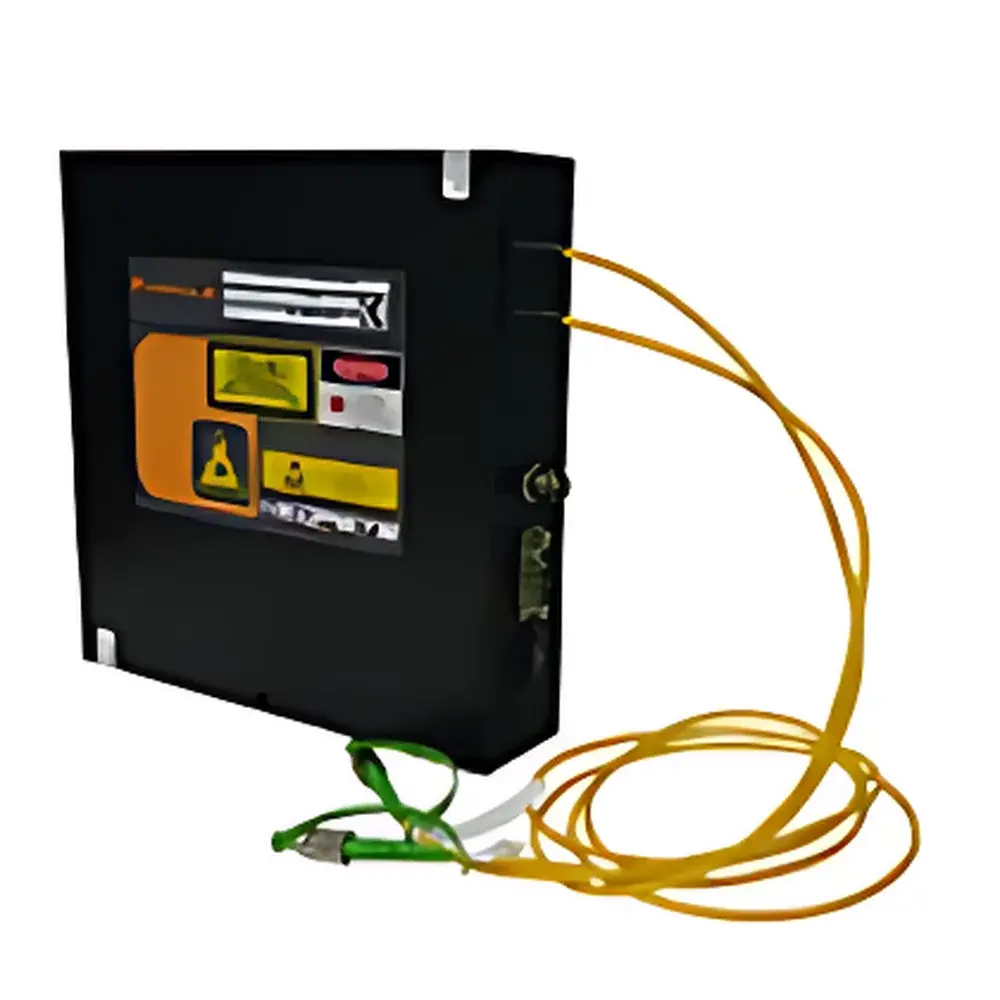
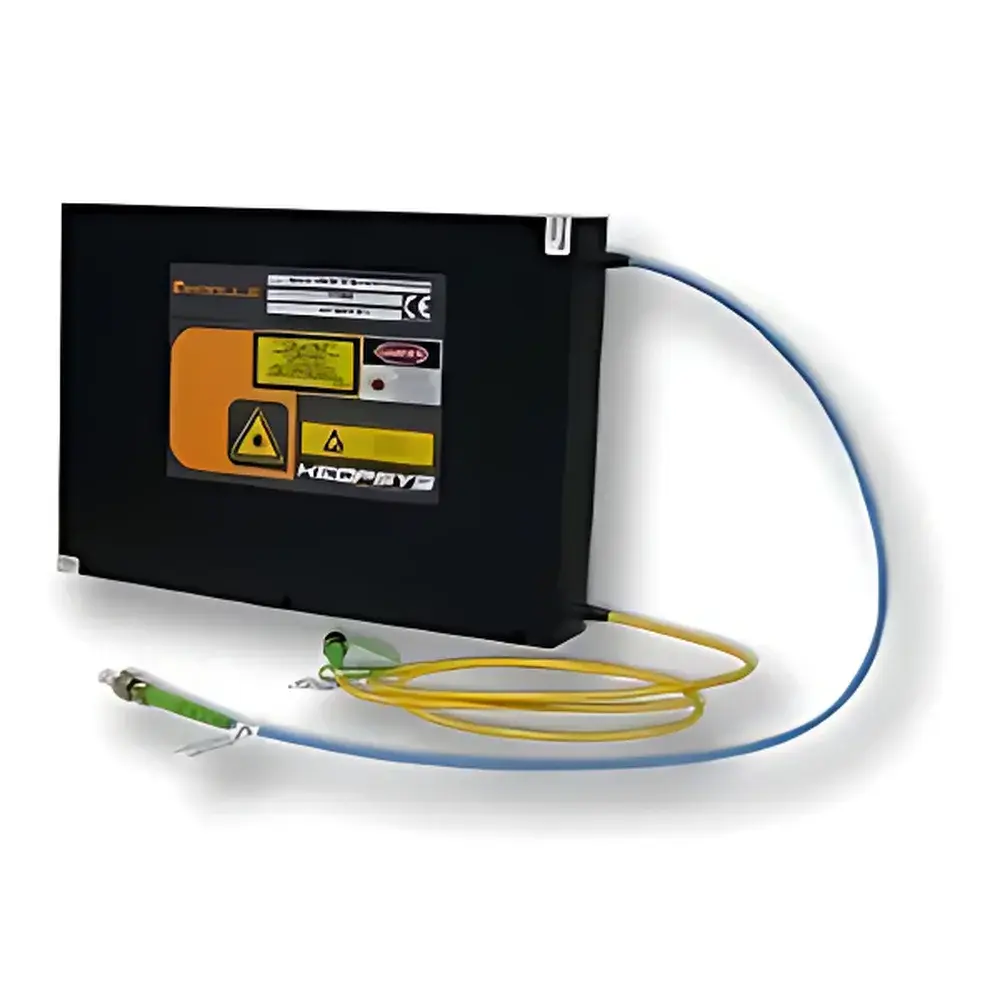
Keopsys PEFL-EOLA Pulsed Narrow-Linewidth Fiber Laser
| Brand | Keopsys |
|---|---|
| Origin | France |
| Model | PEFL-EOLA Pulsed Narrow-Linewidth Fiber Laser |
| Wavelength | 1550 nm |
| Operation Mode | Pulsed |
| Linewidth | <100 kHz (typ.) |
| Pulse Width | 1–200 ns (adjustable) |
| Repetition Rate | 1–200 kHz |
| Average Power | Up to 2 W |
| Peak Power | >10 kW |
| Beam Quality | M² < 1.1 |
| Polarization Extinction Ratio | >20 dB |
| Operating Temperature | −10 °C to +60 °C |
| Power Consumption | <30 W |
| Cooling | Conduction-cooled |
| Compliance | IEC 60825-1:2014 (Class 1M), RoHS, CE |
Overview
The Keopsys PEFL-EOLA Pulsed Narrow-Linewidth Fiber Laser is a high-stability, eye-safe laser source engineered for coherent Doppler wind lidar (DWL) systems and other precision optical metrology applications requiring exceptional spectral purity and temporal coherence. Operating at the telecommunications-compatible wavelength of 1550 nm, it delivers narrow instantaneous linewidth (<100 kHz typical) with low phase noise—critical for high-fidelity heterodyne detection in coherent lidar architectures. Its monolithic all-fiber architecture eliminates free-space alignment, ensuring robustness against mechanical vibration and thermal drift across industrial and field-deployable environments. Designed for continuous operation under varying ambient conditions (−10 °C to +60 °C), the PEFL-EOLA integrates advanced active temperature stabilization and polarization-maintaining (PM) fiber delivery, enabling consistent interferometric performance without recalibration.
Key Features
- Ultra-narrow instantaneous linewidth (<100 kHz) optimized for coherent detection sensitivity and velocity resolution in Doppler wind sensing
- 1550 nm emission wavelength compliant with Class 1M laser safety per IEC 60825-1:2014—enabling unenclosed deployment in outdoor and airborne platforms
- Pulsed operation with adjustable pulse width (1–200 ns) and repetition rate (1–200 kHz), supporting flexible ranging and signal-to-noise optimization
- High peak power (>10 kW) and excellent beam quality (M² < 1.1) ensure efficient atmospheric backscatter coupling and minimal divergence loss
- Conduction-cooled, low-power design (<30 W total consumption) facilitates integration into size-, weight-, and power-constrained (SWaP-C) systems including UAV-mounted and mobile lidar units
- Integrated polarization extinction ratio >20 dB ensures stable interference contrast in polarization-sensitive coherent receivers
Sample Compatibility & Compliance
The PEFL-EOLA is designed for direct integration into coherent Doppler lidar transceivers and does not require sample preparation or physical interaction with materials. It interfaces seamlessly with standard PM-pigtailed optical components (e.g., acousto-optic modulators, fiber couplers, and balanced photodetectors). All units comply with EU directives including CE marking, RoHS 2011/65/EU, and laser safety standards IEC 60825-1:2014 (Class 1M). The system supports GLP/GMP-aligned operational documentation protocols when deployed in regulated environmental monitoring infrastructure, and its stable output enables traceable calibration against NIST-traceable wavemeters and RF spectrum analyzers.
Software & Data Management
While the PEFL-EOLA operates as a standalone optical source, its electrical interface includes TTL-compatible trigger input and analog monitor output for real-time pulse synchronization and power diagnostics. Integration with host lidar control software (e.g., LabVIEW, Python-based DAQ frameworks, or custom FPGA firmware) is supported via RS-232 or optional USB-C digital interface. Firmware updates and parameter configuration are performed using Keopsys’ standardized Laser Control Utility (LCU), which logs operational timestamps, temperature telemetry, and pulse energy history—supporting audit-ready data integrity in long-term atmospheric observation campaigns. Output metadata conforms to NetCDF-4 and HDF5 formats for compatibility with NOAA, EUMETSAT, and ESA atmospheric data processing pipelines.
Applications
- Coherent Doppler wind lidar for atmospheric boundary layer profiling, wind turbine site assessment, and aviation turbulence monitoring
- Differential absorption lidar (DIAL) subsystems for trace gas concentration mapping (e.g., H₂O, CH₄) when combined with wavelength-tunable seed sources
- Interferometric fiber optic sensing (IFOS) for distributed acoustic sensing (DAS) and seismic waveform analysis
- Optical frequency domain reflectometry (OFDR) systems requiring high coherence length (>1 km)
- Time-of-flight (ToF) metrology and absolute distance interferometry in vacuum or air environments
- Seed laser for high-energy pulsed fiber amplifiers used in nonlinear frequency conversion experiments
FAQ
What is the typical coherence length of the PEFL-EOLA laser?
The coherence length exceeds 1 km under standard operating conditions, derived from its sub-100 kHz linewidth and stable cavity design.
Can the laser be synchronized with external acquisition hardware?
Yes—TTL-compatible trigger input allows precise pulse timing alignment with digitizers, cameras, or RF receivers at jitter <1 ns RMS.
Is the output polarization maintained over temperature and time?
Yes—the integrated polarization-maintaining fiber output ensures PER >20 dB across the full operating temperature range and after 10,000 hours of continuous operation.
Does Keopsys provide OEM integration support?
Yes—Keopsys offers mechanical housing customization, electrical interface adaptation (e.g., 24 V DC input, CAN bus), and application-specific firmware development under NDA.
How is laser wavelength stability verified during production?
Each unit undergoes multi-point wavelength verification using an ICSA-certified high-resolution optical spectrum analyzer and is certified against ±1 pm drift over 8-hour thermal soak testing.





