
Kipp & Zonen CMP Series Pyranometer
| Brand | Kipp & Zonen |
|---|---|
| Origin | Imported |
| Manufacturer Type | Authorized Distributor |
| Model | CMP Series |
| Output Signal | ~10 mV per 1000 W/m² (typical) |
| Calibration | Individually calibrated with traceable certificate |
| Power Requirement | None (passive thermopile sensor) |
| Desiccant Life | ≥10 years (CMP3/CMP10 integrated) |
| Compliance | ISO 9060:2018 Class C (formerly Secondary Standard),符合WMO Guide to Meteorological Instruments and Methods of Observation |
Overview
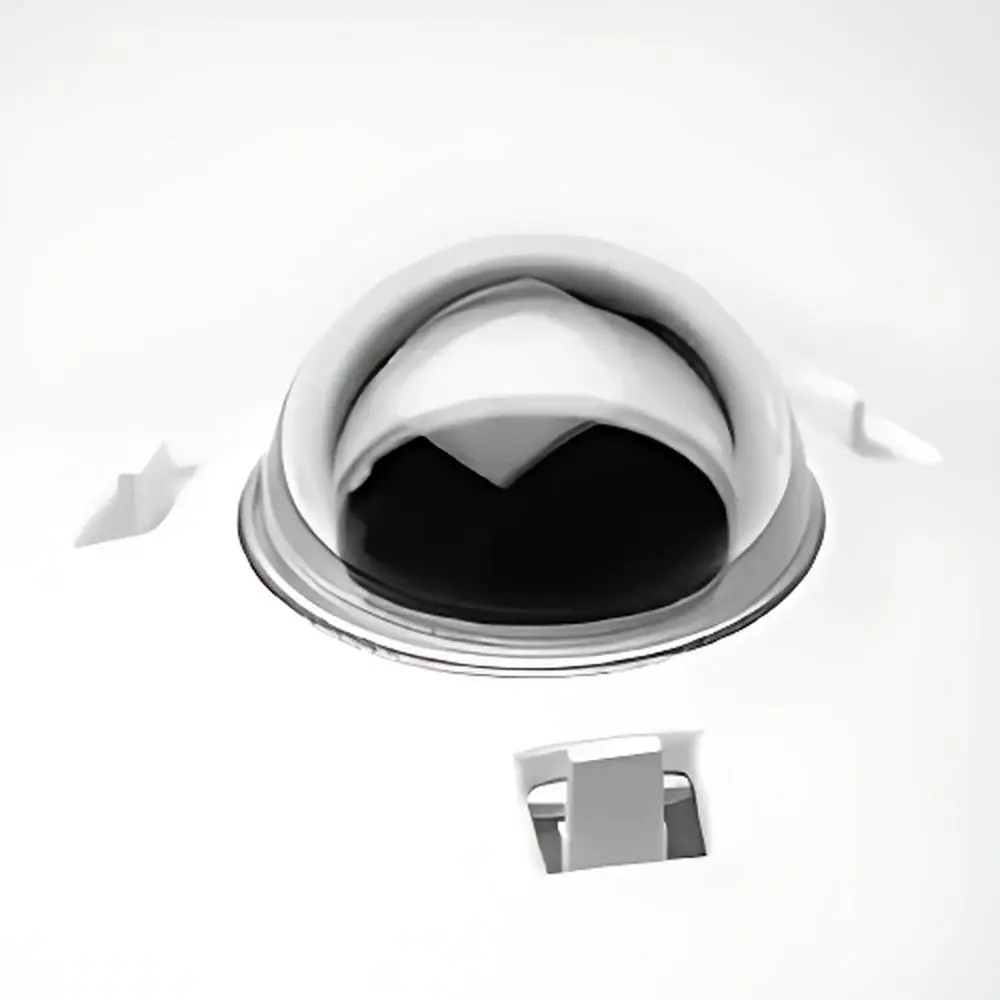
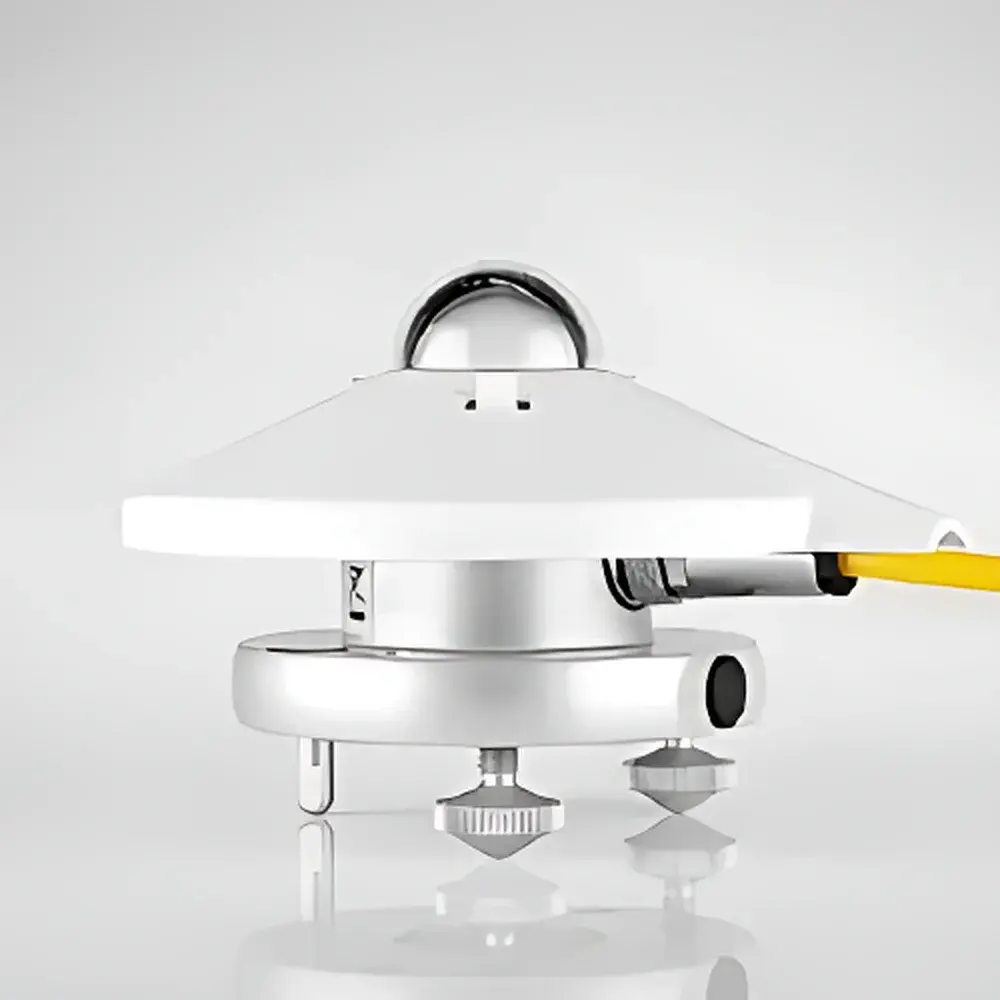
The Kipp & Zonen CMP Series Pyranometer is a passive, thermopile-based radiometric instrument engineered for the precise measurement of global horizontal irradiance (GHI)—the total solar radiation flux received on a horizontal surface from the entire hemisphere (180° field of view), spanning the spectral range of approximately 285–2800 nm. Its operational principle relies on the Seebeck effect: incident solar radiation is absorbed by a blackened thermopile hot junction mounted beneath a precision-ground, spectrally neutral quartz dome; the resulting temperature gradient between this junction and a reference (cold) junction—thermally anchored to the instrument body—generates a proportional millivolt-level output signal. This design ensures spectral flatness, minimal thermal offset, and long-term stability without requiring external power. The CMP series conforms to ISO 9060:2018 classification as Class C (equivalent to the former “Secondary Standard” designation), meeting the performance criteria specified in the World Meteorological Organization (WMO) Guide to Meteorological Instruments and Methods of Observation for climate monitoring and solar resource assessment.
Key Features
- Passive operation: No power supply required—ideal for remote, off-grid, or battery-constrained installations including unmanned weather stations and field-deployed solar monitoring networks.
- Individually calibrated: Each unit ships with a NIST-traceable calibration certificate reporting its unique sensitivity factor (µV per W/m²), enabling direct conversion of raw voltage output to irradiance values with metrological rigor.
- Integrated desiccation system: CMP3 and CMP10 models feature permanently sealed, maintenance-free desiccant cartridges with ≥10-year service life; other CMP variants include user-accessible desiccant chambers requiring monthly visual inspection and periodic replacement to prevent internal fogging and signal drift.
- Dual-dome configuration (CMP10/21): Optional second outer dome minimizes convective heat loss and improves response time under rapidly changing sky conditions, while reducing thermal offset errors in low-wind environments.
- Robust mechanical architecture: Anodized aluminum housing, stainless steel hardware, and UV-stabilized silicone sealants ensure durability across extreme ambient temperatures (−40°C to +80°C) and high-humidity tropical or coastal deployments.
Sample Compatibility & Compliance
The CMP pyranometer is designed for outdoor, fixed-mount installation on leveled, unobstructed surfaces—typically integrated into automated weather stations (AWS), solar irradiance monitoring systems, or research-grade meteorological observatories. It complies with international standards governing solar radiation instrumentation, including ISO 9060:2018 (Class C), IEC 61724-1:2021 (Photovoltaic system performance monitoring), and ASTM E892 (Standard Test Method for Spectral Match of Solar Simulators). While not intrinsically compliant with FDA 21 CFR Part 11 or GLP/GMP audit trails (as it produces analog output only), its calibration traceability and documented uncertainty budget support data integrity requirements in regulatory-grade solar forecasting and bankable energy yield assessments.
Software & Data Management
The CMP outputs a low-level analog signal (typically 0–20 mV for 0–2000 W/m²), necessitating high-resolution analog-to-digital conversion. Accurate GHI quantification requires data loggers with ≥16-bit resolution, input noise < 2 µV RMS, and cold-junction compensation for thermopile reference temperature. Compatible platforms include Campbell Scientific CR1000X, HOBO U30-NRC, and Delta-T Devices DL2e. Kipp & Zonen recommends pairing CMP units with their SMP series smart sensors (which digitize, linearize, and temperature-compensate the signal onboard) when interfacing with SCADA systems or cloud-based monitoring platforms such as PVOutput or Solargis. Raw voltage data must be scaled using the unit-specific calibration coefficient; no proprietary firmware or driver installation is needed for basic integration.
Applications
- Solar resource assessment for utility-scale photovoltaic (PV) plant feasibility studies and site selection.
- Long-term climate monitoring networks (e.g., BSRN, GCOS, national meteorological services).
- Performance ratio (PR) and degradation rate analysis in operational PV power plants.
- Validation of satellite-derived irradiance datasets (e.g., NASA POWER, CAMS Radiation Service).
- Research in atmospheric science, agronomy, and building energy modeling where broadband shortwave radiation is a boundary condition.
FAQ
What is the typical output signal level under clear-sky conditions?
Under peak irradiance (~1000 W/m²), the CMP generates approximately 10 mV—requiring high-precision data acquisition systems with sub-10 µV resolution.
Does the CMP require regular recalibration?
While stable over time, ISO 9060:2018 recommends recalibration every two years for critical applications; annual verification against a reference pyranometer is advised for bankable solar projects.
Can the CMP be used indoors or under artificial light sources?
No—it is optimized for natural solar spectra; artificial lighting (e.g., LED, halogen) introduces significant spectral mismatch and invalidates calibration.
Is the desiccant replaceable in all CMP models?
Only CMP6, CMP11, and CMP21 feature user-serviceable desiccant chambers; CMP3 and CMP10 integrate non-replaceable desiccant with guaranteed 10-year lifetime.
How should the instrument be leveled and oriented during installation?
It must be mounted horizontally (±0.5° tolerance) using a built-in bubble level, with no shading from structures, vegetation, or mounting hardware within its full 180° field of view.
Related Products







