
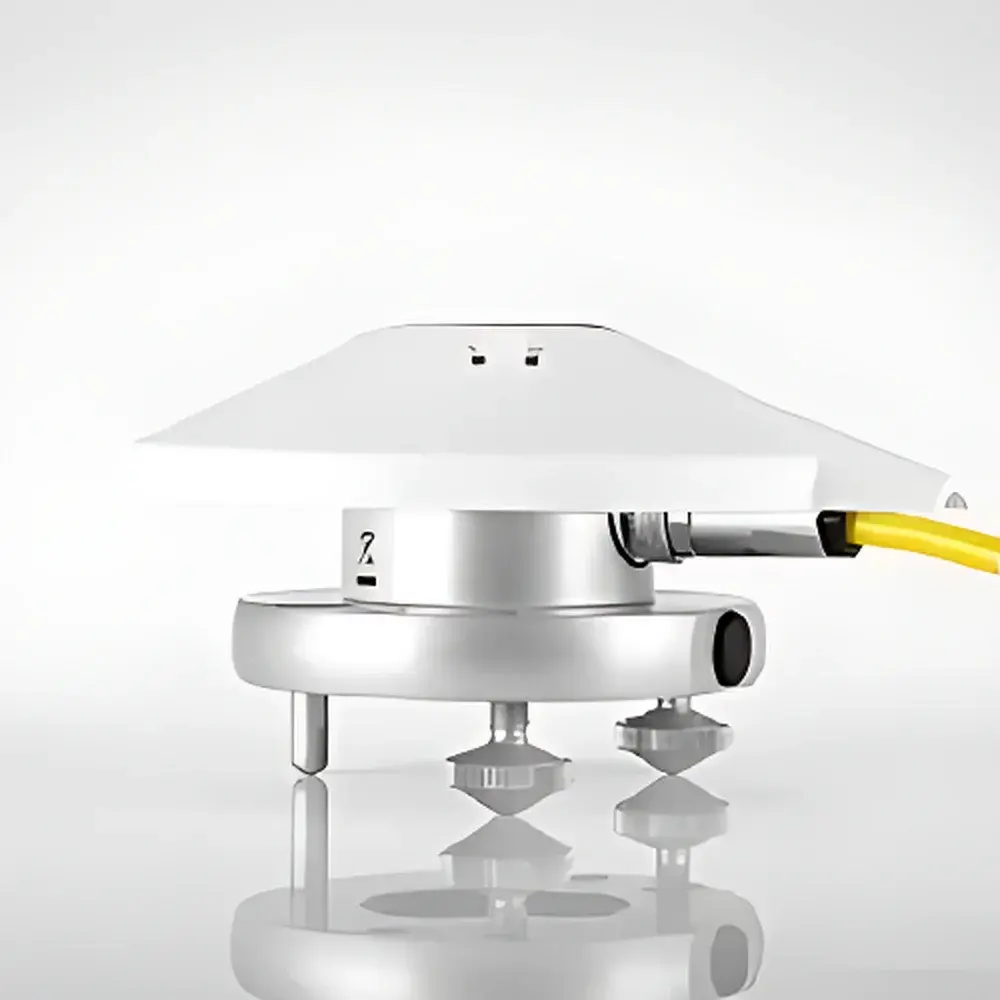
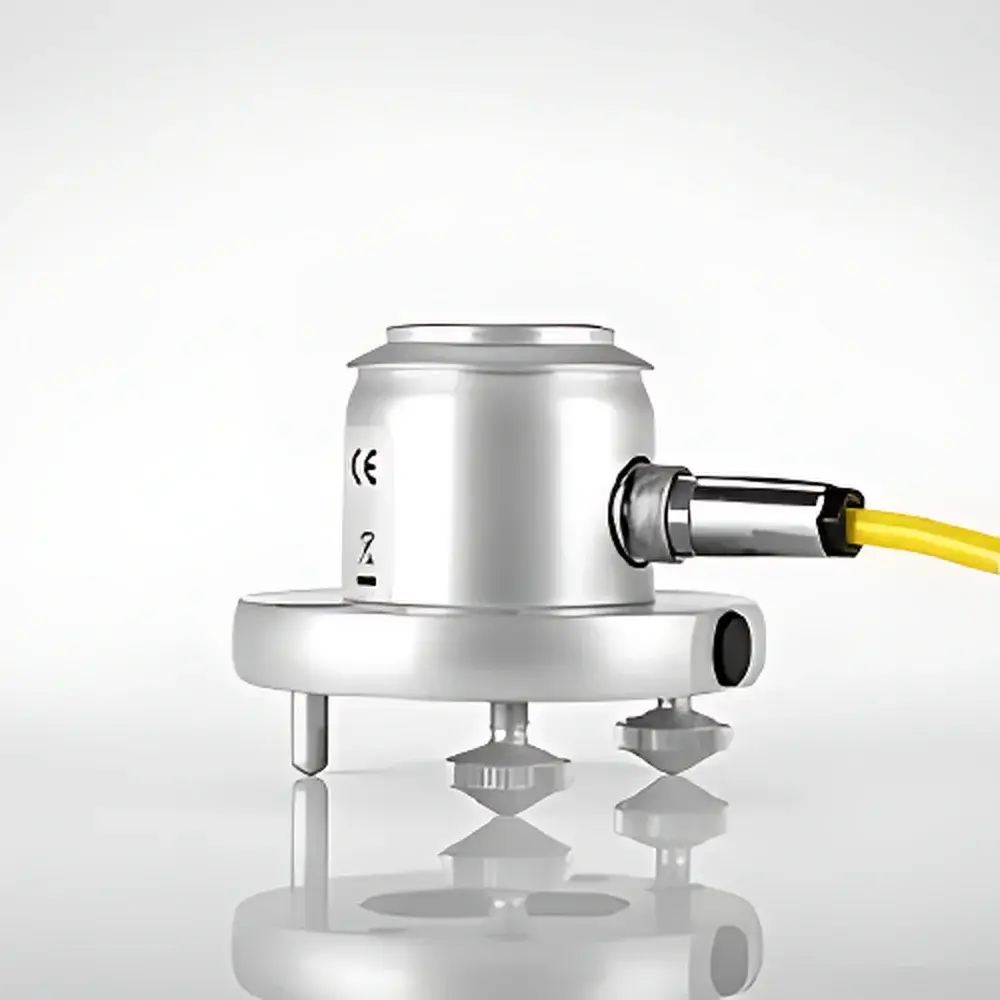
Kipp&Zonen CGR3 Longwave Infrared Radiometer
| Brand | Kipp&Zonen |
|---|---|
| Origin | Imported |
| Manufacturer Type | Authorized Distributor |
| Model | CGR3 |
| Pricing | Upon Request |
Overview
The Kipp&Zonen CGR3 is a precision thermopile-based longwave infrared (LWIR) radiometer engineered for continuous, high-stability measurement of downward or upward terrestrial far-infrared radiation in the spectral range of 4.5–42 µm. Unlike shortwave radiometers that capture solar irradiance (300–4000 nm), the CGR3 operates on the principle of net radiative heat exchange between a blackened thermopile sensor and its environment—detecting emitted thermal energy from the atmosphere or surface. Its fundamental measurement equation follows the Stefan–Boltzmann law, where net longwave radiation (L↓ or L↑) is derived from the thermopile output voltage, corrected for instrument body temperature measured via an integrated Pt-100 RTD. This correction is essential for accurate flux quantification under varying ambient conditions and complies with the physical basis outlined in ISO 9060:2018 (Class C specification for pyrgeometers) and ASTM E1918-22 for net radiation measurement.
Key Features
- Thermopile detector with blackened absorber surface and temperature-stabilized housing for low thermal drift (<0.5 W/m²/K)
- Hermetically sealed, weatherproof aluminum housing rated IP67, suitable for unattended outdoor deployment
- Optical system featuring a silicon dome (transmission window) optimized for 4.5–42 µm spectral response, coupled with an internal shortwave-blocking interference filter to suppress solar contamination
- Field-of-view (FOV) of 150° full-angle, enabling hemispherical (sky or ground) radiation capture without cosine error correction at zenith angles up to 75°
- Integrated Pt-100 resistance temperature detector (RTD) for real-time instrument body temperature measurement—required for post-processing compensation per ISO 18434-1
- Low power consumption (<10 mW standby), compatible with standard data loggers (e.g., Campbell Scientific CR1000X, Delta-T DL2e) via analog ±10 mV output
Sample Compatibility & Compliance
The CGR3 is designed for direct mounting on meteorological masts, eddy covariance towers, agricultural monitoring stations, and ecological flux networks. It requires no external power supply beyond signal conditioning and is compatible with both upward- and downward-facing configurations. The instrument meets international standards for environmental radiation monitoring, including compliance with WMO Guide to Meteorological Instruments and Observing Methods (Chapter 12), ISO 9060:2018 (as a Class C pyrgeometer), and supports traceable calibration against reference instruments maintained at the Physikalisch-Technische Bundesanstalt (PTB) or NOAA/ESRL. Its construction adheres to GLP-aligned quality control protocols during manufacturing and is supplied with a factory calibration certificate valid for 12 months.
Software & Data Management
Raw CGR3 output is analog voltage (±10 mV), requiring concurrent digitization of thermopile signal and body temperature for net longwave flux computation:
Lnet = S × (V − V0) + σ × (Tbody4 − Tsky4),
where S is sensitivity (µV/(W/m²)), V0 is zero-offset voltage, and σ is the Stefan–Boltzmann constant. Data acquisition systems must support dual-channel synchronous sampling. Kipp&Zonen’s optional “CGR3 Data Processing Module” (sold separately) provides automated offset correction, temperature compensation, and output in standard units (W/m²). All processed datasets are compatible with CF-netCDF metadata conventions and support audit trails required under ISO/IEC 17025-accredited laboratories.
Applications
- Surface energy balance studies in micrometeorology and land-atmosphere interaction research
- Long-term climate monitoring networks (e.g., BSRN, FLUXNET, ICOS)
- Validation of satellite-derived longwave radiation products (e.g., CERES, MODIS LWUP/LWDN)
- Greenhouse microclimate control and precision horticulture—enabling dynamic canopy energy budget modeling
- Soil heat flux partitioning in agricultural hydrology and irrigation scheduling models
- Urban heat island assessment through rooftop and pavement longwave emission profiling
FAQ
What is the recommended recalibration interval for the CGR3?
Kipp&Zonen recommends recalibration every 24 months under routine field use; annual verification against a reference pyrgeometer is advised for critical applications.
Can the CGR3 be used indoors or in controlled-environment chambers?
Yes—provided ambient temperature remains within −40°C to +70°C and relative humidity does not exceed 95% non-condensing; condensation on the silicon dome must be avoided.
Is the CGR3 compatible with solar radiation sensors like the CMP3 or CMP6?
Yes—the CGR3 is physically and electrically interoperable with Kipp&Zonen’s CMP-series pyranometers; combined mounting kits and synchronized data logging configurations are available.
Does the CGR3 require desiccant maintenance?
No—the instrument features a permanent hermetic seal with internal desiccant pre-loaded at factory; no user-serviceable desiccant chamber exists.
How is zero-offset determined and corrected?
Zero-offset (V0) is measured during factory calibration under thermal equilibrium conditions; field-based zero-checks can be performed using a calibrated blackbody source or by overnight sky-view measurements under clear, dry conditions.
Related Products







