
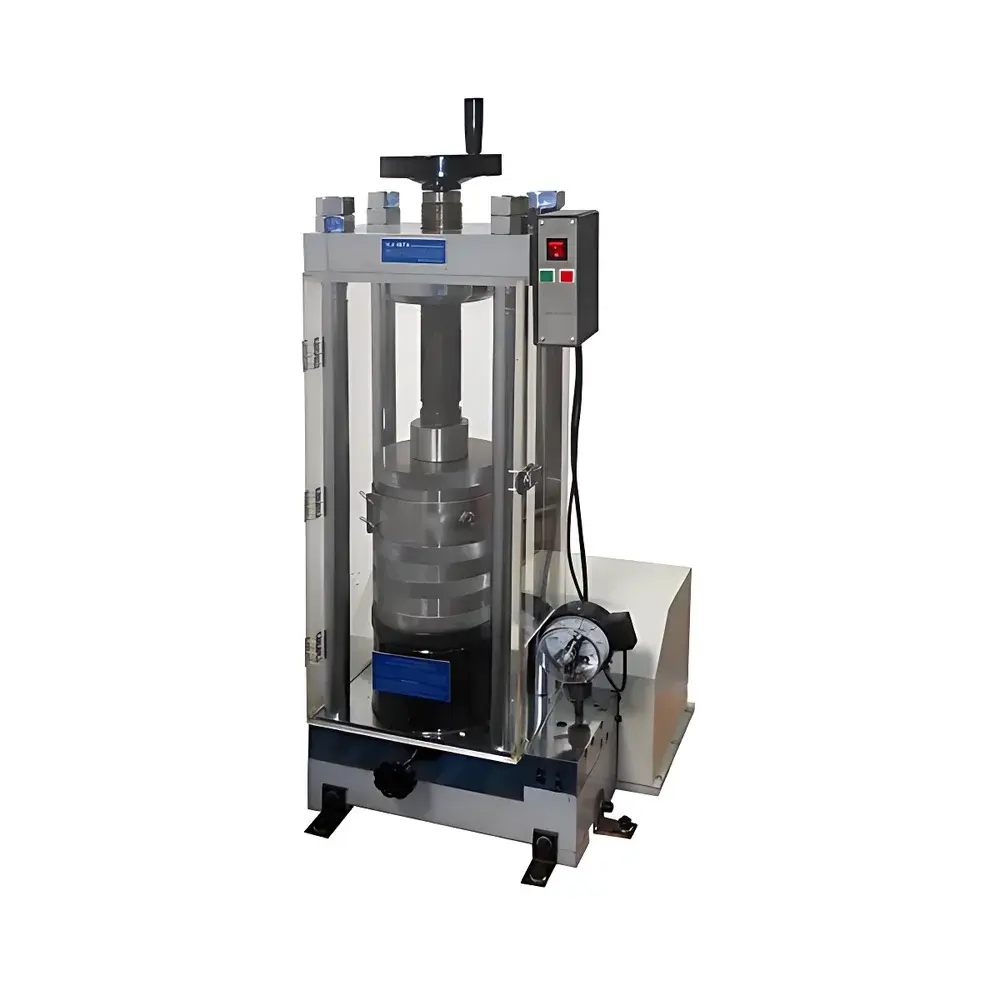
KJ GROUP CIP-50MA Electric Cold Isostatic Press
| Brand | KJ GROUP |
|---|---|
| Origin | Liaoning, China |
| Manufacturer Type | Authorized Distributor |
| Country of Origin | China |
| Model | CIP-500MA |
| Power Supply | AC 208–240 V, 50/60 Hz, 330 W |
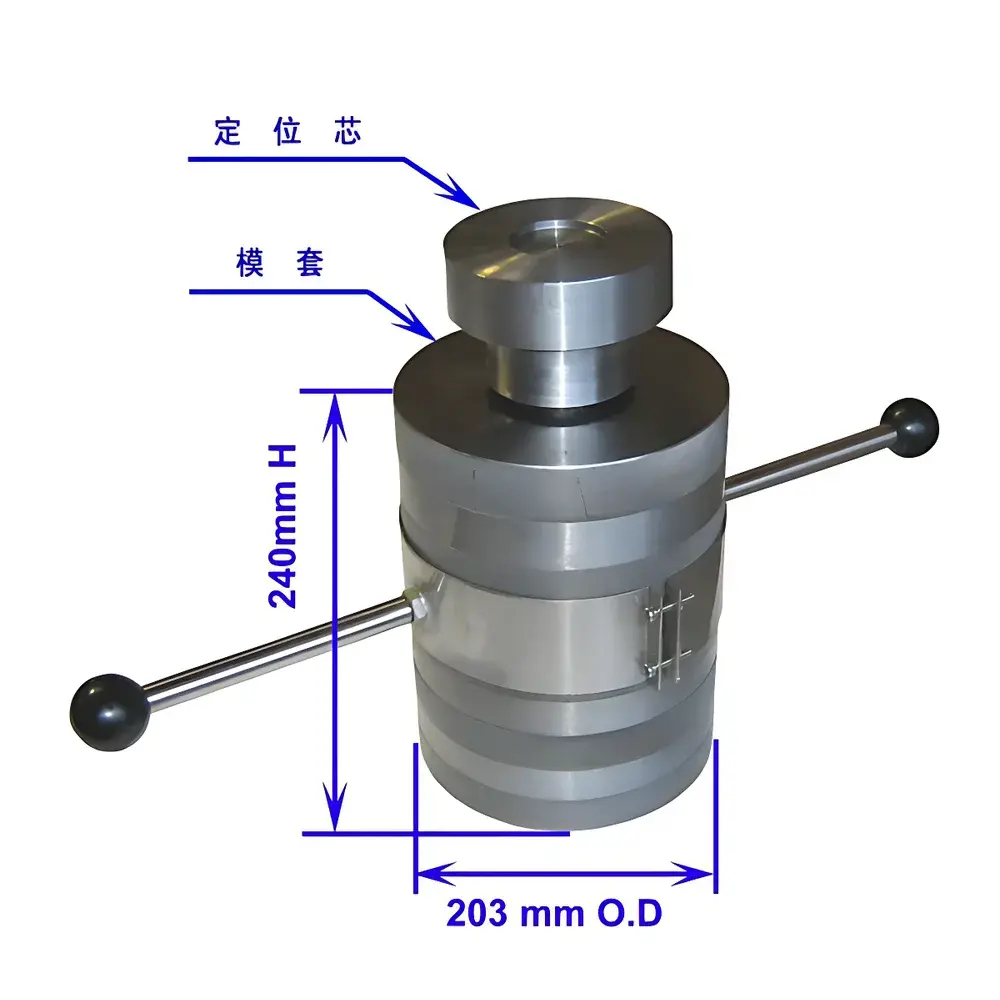
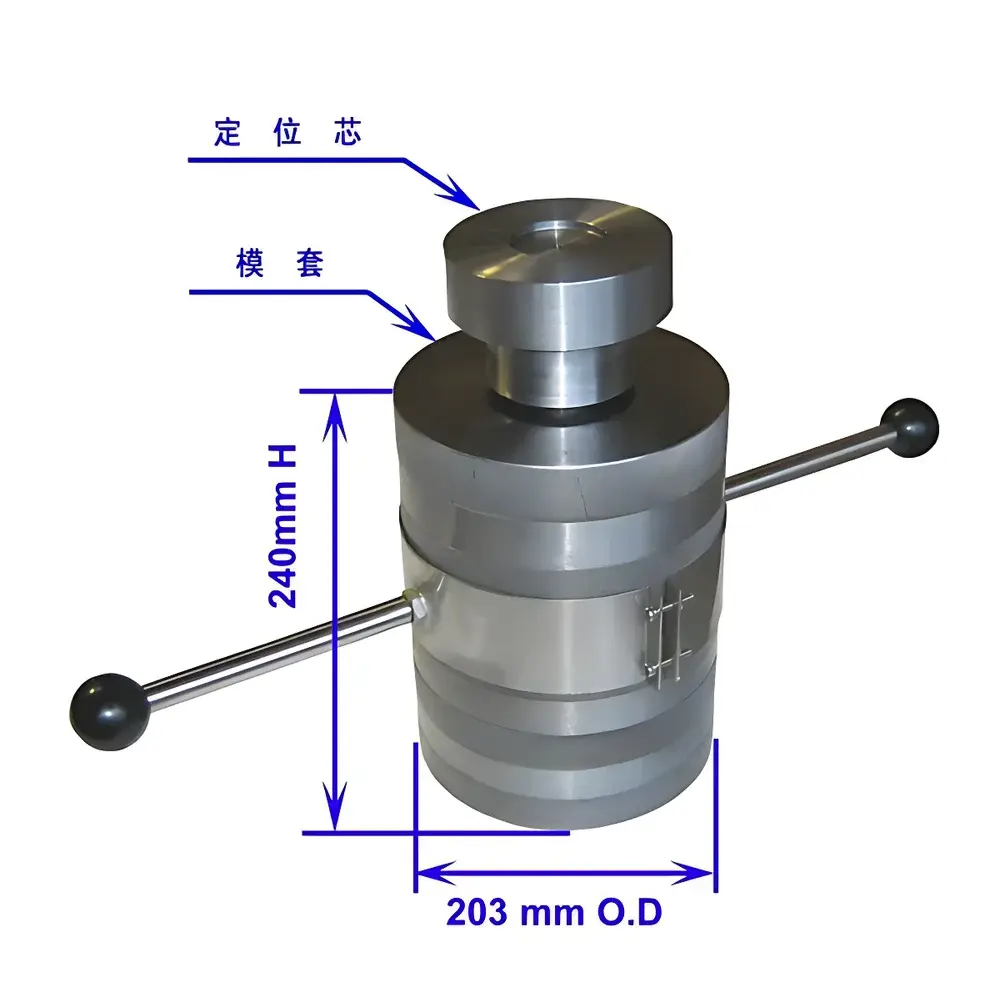
| Chamber Dimensions | Ø51 mm × 150 mm |
| Maximum Chamber Pressure | 0–288 MPa (custom options up to 500 MPa available upon request) |
| Press Force Range | 0–60 metric tons (equivalent to 0–34 MPa system pressure) |
| Overall Dimensions | 450 mm × 420 mm × 1010 mm |
| Net Weight | 200 kg |
Overview
The KJ GROUP CIP-50MA Electric Cold Isostatic Press is a precision-engineered laboratory-scale isostatic compaction system designed for controlled, uniform densification of advanced powder materials under hydrostatic pressure. Operating on the principle of Pascal’s law, the unit transmits applied mechanical force—via an electrically driven hydraulic intensifier—to a high-purity dielectric fluid (typically silicone oil or mineral oil), which in turn exerts equal pressure in all directions on a sealed elastomeric mold containing the powder sample. This isotropic stress state eliminates directional bias during consolidation, enabling near-theoretical density achievement with minimal green-body distortion and exceptional inter-particle bonding integrity. Unlike hot isostatic pressing (HIP), the CIP-50MA operates at ambient temperature, making it ideal for thermally sensitive powders—including metastable alloys, polymer-filled composites, and reactive ceramics—where thermal degradation or phase segregation must be avoided. Its compact footprint and modular architecture align with ISO/IEC 17025-compliant laboratory environments, supporting method development, process qualification, and small-batch prototyping in academic and industrial R&D settings.
Key Features
- Electrically actuated hydraulic intensifier system with closed-loop pressure regulation, ensuring stable pressure hold within ±0.5% of setpoint over extended dwell periods.
- Stainless steel pressure vessel with integrated O-ring sealing and rupture disc safety relief (rated at 320 MPa), compliant with ASME BPVC Section VIII Div. 1 design standards.
- Digitally programmable pressure ramping profiles (0–288 MPa) with adjustable rate control (0.1–5 MPa/s) and multi-step dwell capability for graded densification protocols.
- Integrated real-time pressure monitoring via calibrated piezoresistive transducer (0.1 MPa resolution) and dual-stage overpressure cutoff logic.
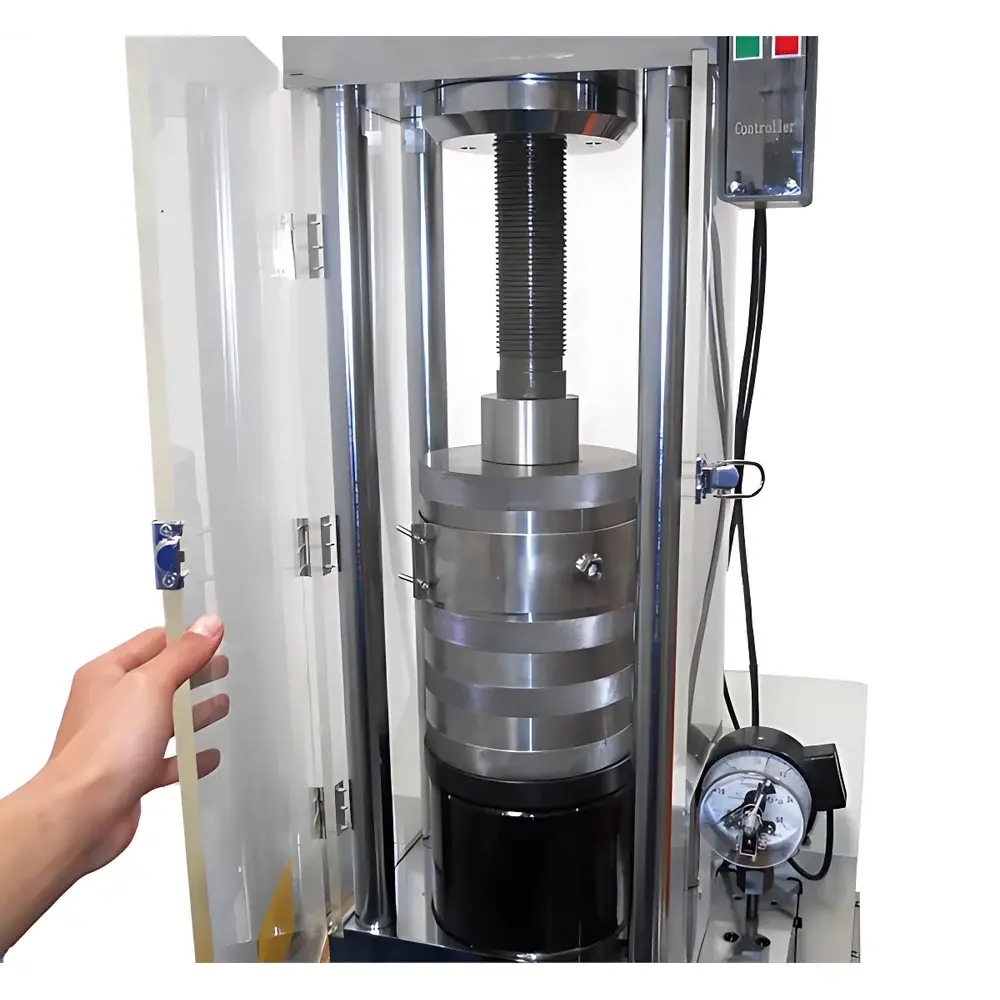
- Ergonomic front-access loading chamber with quick-clamp lid mechanism and vacuum-assisted mold evacuation port (≤10 mbar residual pressure) to minimize entrapped air in green bodies.
- CE-marked electrical enclosure with IP54-rated housing, emergency stop circuit, and redundant thermal overload protection on motor drive electronics.
Sample Compatibility & Compliance
The CIP-50MA accommodates cylindrical, rectangular, and toroidal elastomeric molds (e.g., nitrile rubber, Viton®, or polyurethane) with maximum internal dimensions of Ø51 mm × 150 mm. It supports dry, granulated, or slurry-derived powders across metallurgical (e.g., stainless steel 316L, Ti-6Al-4V), ceramic (Al₂O₃, Si₃N₄, ZrO₂), refractory (WC-Co, Mo, Ta), and composite systems (CNT-reinforced Al, SiCp/Al). All operational parameters comply with ASTM B964–22 (Standard Practice for Cold Isostatic Pressing of Powder Metallurgy Parts) and ISO 3252 (Metallic Powders — Determination of Apparent Density by Isostatic Pressing Method). The system meets GLP documentation requirements for audit-ready pressure log export (CSV format) and supports 21 CFR Part 11–compliant electronic signatures when paired with validated third-party LIMS integration.
Software & Data Management
The press operates via a dedicated embedded controller with a 7-inch capacitive touchscreen HMI running real-time Linux OS. All pressure cycles are stored locally with timestamped metadata (date/time, operator ID, mold ID, target pressure, dwell duration, actual pressure curve). Export functionality includes USB 2.0 mass storage and Ethernet TCP/IP interface for remote SCADA integration. Optional KJ-PressLog™ software (v3.2+) enables automated report generation per ISO/IEC 17025 Annex A.3, including uncertainty budgeting for pressure calibration traceability to NIST SRM 2803c (hydraulic pressure standard). Audit trails record all parameter modifications, user logins, and alarm events with immutable SHA-256 hashing.
Applications
- Pre-sintering densification of ceramic green bodies for structural and electronic applications (e.g., LTCC substrates, piezoelectric actuators).
- Consolidation of nanostructured metal powders without cold welding or agglomeration artifacts.
- Manufacturing of porous scaffolds for biomedical implants (e.g., β-TCP, HA) with controlled pore interconnectivity.
- Development of binder-free electrode architectures for solid-state batteries (LiCoO₂, NMC, LFP cathodes).
- Qualification of powder flow and compressibility behavior per ASTM B527 and ISO 4490.
- Teaching laboratories for materials science curricula covering powder processing, rheology of particulate systems, and solid-state sintering kinetics.
FAQ
What is the maximum recommended operating pressure for routine use?
The standard rated working pressure is 288 MPa. For continuous operation above 250 MPa, we recommend biannual recalibration of the pressure transducer and inspection of the O-ring seal integrity per maintenance schedule.
Can the system accommodate custom mold geometries beyond Ø51 mm × 150 mm?
Yes—KJ GROUP offers optional extended-height chambers (up to Ø51 mm × 300 mm) and custom-machined stainless steel mandrels for non-cylindrical preforms; lead time is 6–8 weeks.
Is vacuum degassing integrated into the standard configuration?
A vacuum evacuation port (KF16 flange) is included; users must supply an external two-stage rotary vane pump (≤10⁻² mbar ultimate vacuum) and connect via ISO-KF fittings.
Does the CIP-50MA support automated pressure cycling for fatigue testing?
Yes—the controller firmware supports up to 99 sequential pressure steps with programmable ramp rates, dwell times, and pressure decay profiles, suitable for cyclic densification studies.
What documentation is provided for regulatory validation?
Each unit ships with Factory Acceptance Test (FAT) report, pressure calibration certificate (traceable to national metrology institute), CE Declaration of Conformity, and full electrical schematics for IQ/OQ protocol development.



