
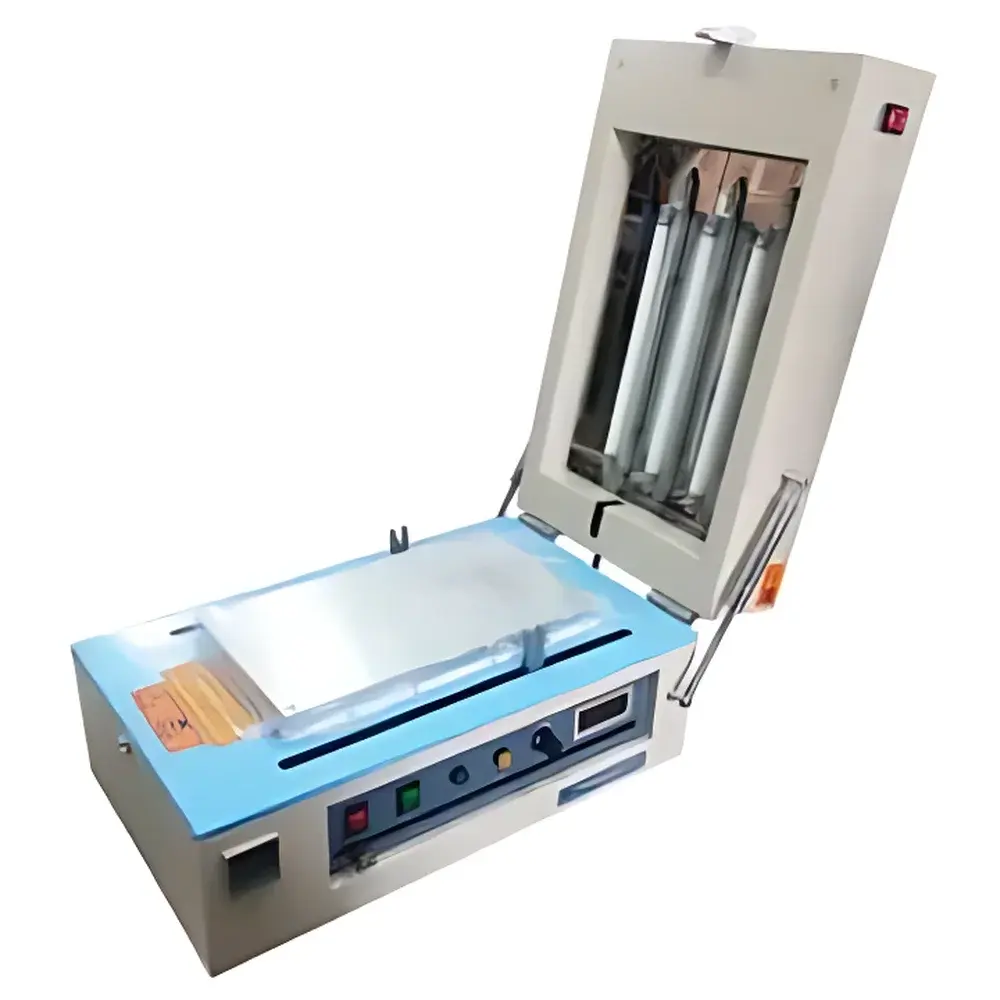
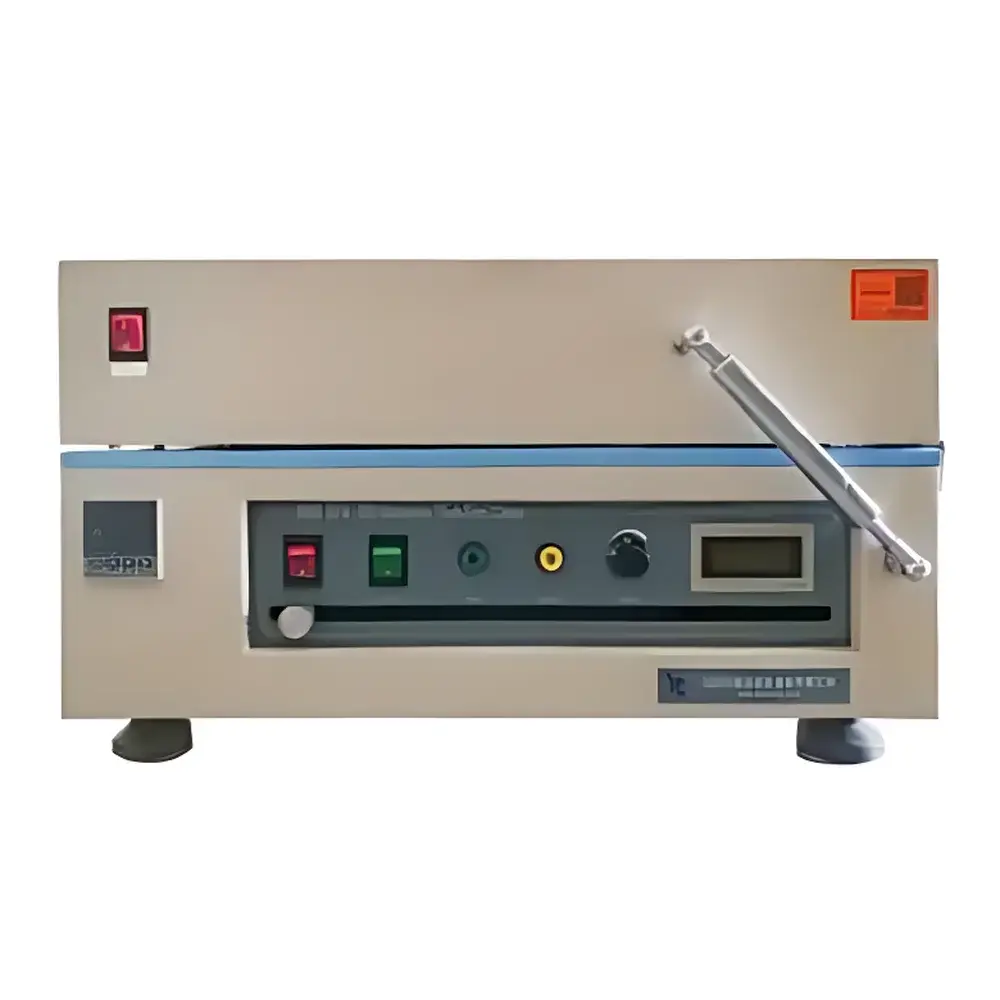
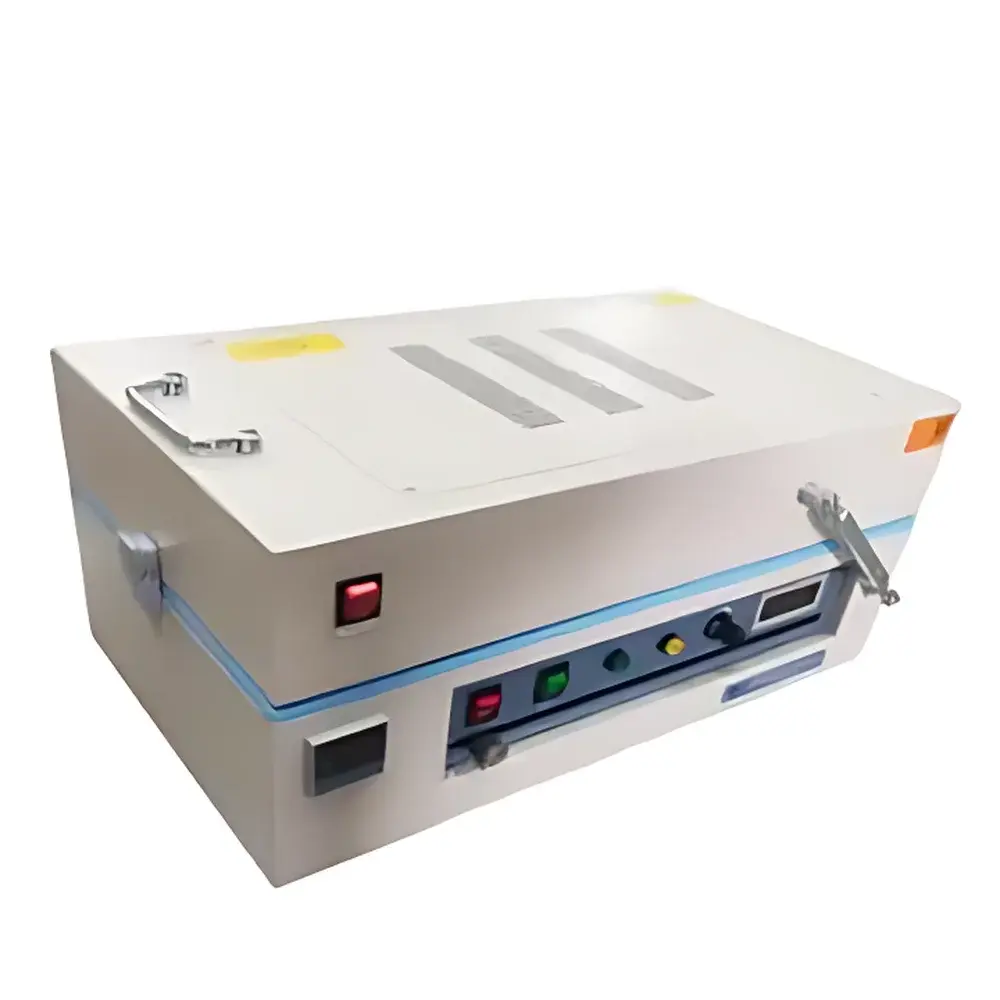
KJ GROUP MSK-AFA-IIID-UV UV-Curable Automatic Doctor Blade Coater with Bottom Heating and Vacuum Substrate Fixation
| Brand | KJ GROUP |
|---|---|
| Origin | Liaoning, China |
| Manufacturer Type | Authorized Distributor |
| Country of Origin | China |
| Model | MSK-AFA-IIID-UV |
| Pricing | Available Upon Request |
| Power Supply | Dual AC220V 50Hz (10A each), 1080W Total |
| Coating Speed | 10–100 mm/s (infinitely variable) |
| Coating Length | 0–300 mm (adjustable) |
| Vacuum Adsorption Area | 300 × 150 mm |
| Heating Temperature Range | RT–120 °C (±2 °C accuracy) |
| UV Source | Three 8 W lamps, peak wavelength 365 nm |
| Adjustable刮刀 | KTQ150, 150 mm wide, film thickness range 0–5000 µm |
| Base Plate Dimensions | 360 × 200 mm |
| Overall Dimensions (closed) | 610 × 390 × 350 mm |
| Weight | 42 kg |
Overview
The KJ GROUP MSK-AFA-IIID-UV UV-Curable Automatic Doctor Blade Coater is a precision-engineered laboratory-scale thin-film fabrication system designed for reproducible, controllable deposition of liquid or colloidal precursors onto rigid or flexible substrates. It integrates three core functional modules: (1) a motor-driven, infinitely variable-speed doctor blade mechanism for uniform wet-film formation; (2) a vacuum-assisted, temperature-controlled heated substrate stage for simultaneous thermal drying; and (3) an integrated 365 nm UV irradiation module for photochemical crosslinking or polymerization of UV-sensitive formulations. Unlike conventional hotplate-based dryers or standalone UV chambers, this coater enables real-time, in-situ curing—eliminating post-deposition transfer steps that risk film delamination, contamination, or stress-induced cracking. Its architecture follows the Couette-flow principle for shear-controlled coating, where the relative motion between the stationary substrate and the moving blade governs rheological thinning and meniscus stability. The system is optimized for R&D workflows in battery electrode slurry development, perovskite photovoltaic layer processing, conductive polymer film synthesis, and functional ceramic ink formulation—where precise control over film thickness, solvent evaporation kinetics, and crosslink density is essential.
Key Features
- Infinitely variable-speed DC motor drive (10–100 mm/s) ensures consistent shear rate across coating length, minimizing edge effects and thickness gradients.
- Vacuum-substrate fixation (300 × 150 mm active area) prevents lateral drift during high-speed coating, critical for multilayer alignment in stacked device architectures.
- Intelligent bottom-heating stage with PID-controlled thermal regulation (RT–120 °C, ±2 °C) supports solvent boiling point matching and controlled crystallization kinetics; heating automatically throttles to ≤50 °C during UV exposure to prevent thermal degradation of photoinitiators.
- Triple 8 W UV-A lamps (365 nm, narrow-band emission) deliver uniform irradiance (>15 mW/cm² at substrate surface) for rapid free-radical or cationic polymerization—enabling sub-second gelation of acrylate, epoxy, or siloxane-based resins.
- Stainless-steel KTQ150 adjustable doctor blade (150 mm width, 0–5000 µm gap range) provides mechanical stability and corrosion resistance against aggressive solvents (e.g., NMP, DMF, chlorobenzene).
- Dual independent power circuits (2 × AC220V/10A) isolate heating and UV subsystems, ensuring electromagnetic compatibility and facilitating modular maintenance.
- Integrated waste collection tray positioned at left edge of vacuum platen captures excess slurry, preventing cross-contamination between runs and simplifying cleaning protocols.
Sample Compatibility & Compliance
The MSK-AFA-IIID-UV accommodates rigid substrates (glass, silicon wafers, stainless steel foils) and flexible films (PET, PI, aluminum foil) up to 360 × 200 mm. Substrate flatness tolerance is ±15 µm over the vacuum zone. The system complies with EU Machinery Directive 2006/42/EC and carries CE marking, confirming conformity with EN 61000-6-2 (EMC immunity) and EN 61000-6-4 (EMC emissions). All electrical enclosures meet IP20 ingress protection requirements. While not GMP-certified out-of-the-box, its digital temperature logging, UV intensity monitoring (via optional external radiometer), and vacuum pressure traceability support GLP-aligned documentation for academic and industrial preclinical material qualification. It meets ASTM D823 (Standard Practice for Producing Films of Uniform Thickness) for wet-film preparation and ISO 2137 (Penetration of Lubricating Grease) for controlled shear application—making it suitable for comparative viscosity screening and formulation benchmarking.
Software & Data Management
This model operates via front-panel tactile interface with dual digital displays: one for real-time heater setpoint/actual temperature, another for UV lamp status and elapsed exposure time. No embedded software or cloud connectivity is included; however, all operational parameters—including speed, temperature setpoint, vacuum pressure (via analog gauge), and UV activation duration—are manually recorded for audit trail compliance. Optional RS-485 or USB-to-serial adapters enable integration with LabVIEW™ or Python-based data acquisition systems for automated parameter logging and synchronization with external environmental sensors (e.g., ambient RH monitoring). For regulated environments requiring FDA 21 CFR Part 11 compliance, users may deploy third-party electronic lab notebook (ELN) platforms to capture timestamped operator entries, instrument ID, and batch-specific coating metadata.
Applications
- Battery R&D: Slurry coating of LiCoO₂, NMC, or Si/C anodes on Al/Cu current collectors with concurrent solvent removal and binder crosslinking.
- Perovskite PV: Sequential deposition of precursor inks (e.g., MAPbI₃ in DMF/DMSO) followed by immediate UV-assisted crystallization to suppress halide segregation.
- Flexible electronics: Patterning of PEDOT:PSS or silver nanowire dispersions on PET with <5% thickness variation across 100 mm spans.
- Functional coatings: Fabrication of antireflective, hydrophobic, or antimicrobial sol-gel films using UV-curable silica hybrids.
- Academic thin-film physics: Controlled study of Marangoni flow, coffee-ring suppression, and dewetting thresholds under coupled thermal–photonic stimuli.
FAQ
What vacuum pump specifications are required?
A two-stage rotary vane pump capable of achieving ≥−80 kPa (gauge) is recommended; ultimate vacuum is not required—stable −60 to −75 kPa suffices for reliable substrate adhesion across common polymer and metal foils.
Can the UV intensity be calibrated or adjusted?
The lamp output is fixed; however, intensity can be modulated indirectly via exposure duration or by inserting neutral-density filters (optional accessory) into the optical path to achieve dose control in mJ/cm².
Is the KTQ150 blade compatible with other KJ GROUP coaters?
Yes—the KTQ150 is standardized across the AFA-II series; blades and holders are mechanically interchangeable with MSK-AFA-IIA and MSK-AFA-IIB models.
Does the system support inert-atmosphere operation?
No built-in glovebox integration is provided, but the chamber can be externally purged via inlet/outlet ports (M6 threaded) when mounted inside nitrogen- or argon-filled enclosures.
What maintenance intervals are recommended?
Vacuum seal inspection every 200 operating hours; UV lamp replacement every 1,000 hours (typical lifetime); stainless-steel blade cleaning with IPA after each solvent-based run to prevent residue buildup.



